Artwork
A Crow Village of Skin Tents on the Salmon River
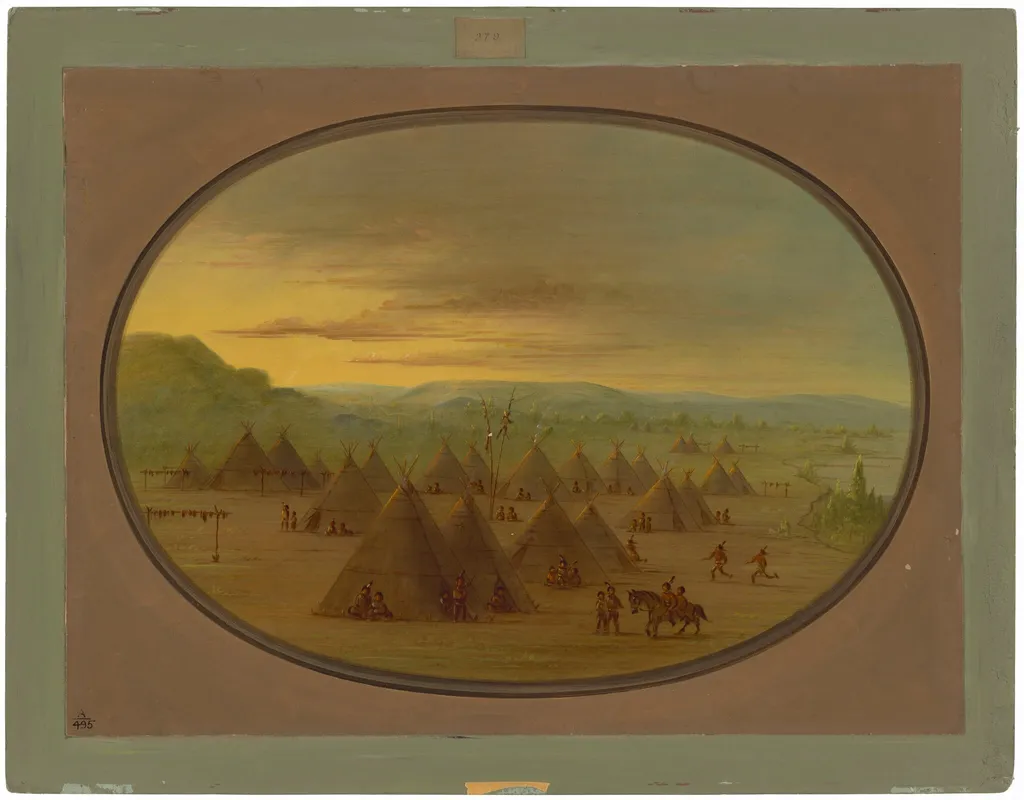
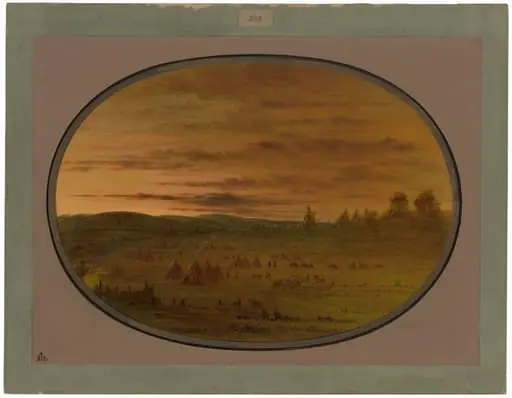
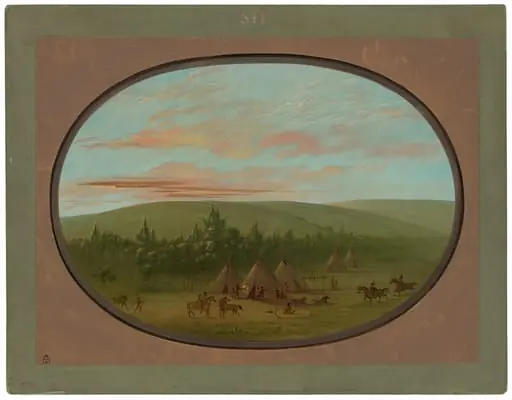
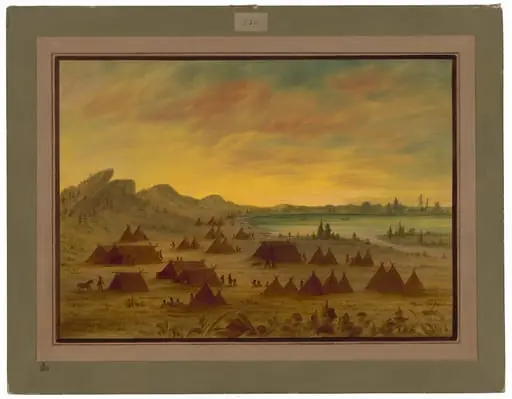
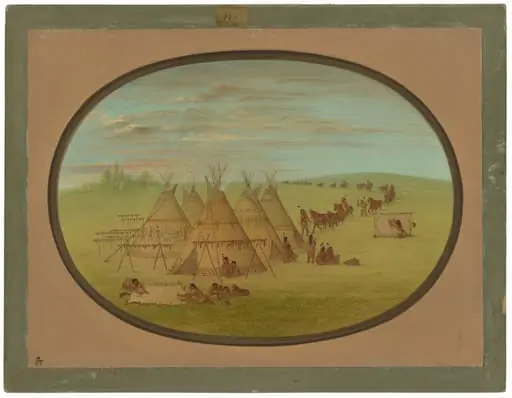
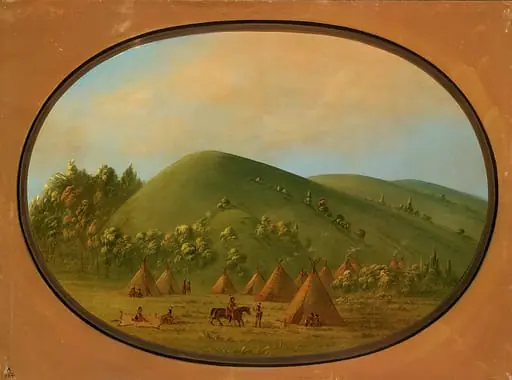
A Crow Village of Skin Tents on the Salmon River is an oil painting by the Impressionist artist George Catlin. It dates from 1862 and is held in the collection of the National Gallery of Art. Created in 1862, this oil painting on card, later mounted on paperboard, portrays a Crow village situated beside the Salmon River.
About this work
Subject & Meaning
The composition features skin tents, which serve as the primary dwellings for the community, set within a natural environment that includes trees.
Painted in 1862, this work presents a landscape view of a Crow village situated along the Salmon River. The composition features skin tents, which serve as the primary dwellings for the community, set within a natural environment that includes trees. As a genre painting by George Catlin, the piece documents the living arrangements and settlement patterns of the Crow people in their territory.
The imagery functions as an ethnographic record, capturing the visual reality of the tribe's habitation and their relationship to the riverine landscape during the mid-19th century.
Technique & Style
Created in 1862, this landscape painting uses oil paint applied to a card support, which is subsequently mounted on paperboard. The work measures 47 cm in height and 62.8 cm in width. The composition functions as a depiction of a Crow village situated along the Salmon River, featuring skin tents as the primary architectural elements within the scene, with trees as significant visual components of the environment.
The piece is classified as a painting within the landscape genre, reflecting the artist's approach to documenting Indigenous settlements through this combination of materials and subject matter.
History & Provenance
Painted in 1862, the oil-on-card work was executed by George Catlin during his later years of documenting Indigenous life in the American West. It descended to his daughters, Clara Gregory Catlin, Louise Catlin Kinney, and Elizabeth Wing Catlin, before being sold in 1912 to the American Museum of Natural History, which purchased it from Elizabeth Wing Catlin. In 1959 the museum deaccessioned the painting through Kennedy Galleries, New York, to Paul Mellon of Upperville, Virginia.
Mellon gifted it in 1965 to the National Gallery of Art, Washington, D.C., where it was accessioned and remains in the collection.
Overview
Created in 1862, this oil painting on card, later mounted on paperboard, portrays a Crow village situated beside the Salmon River. A solitary tree rises amid a cluster of round, buffalo‑hide dwellings, offering a quiet snapshot of life along the riverbank during the mid‑nineteenth century.
Context
At the time of its creation, the Crow nation was undergoing significant change due to increased contact with Euro‑American settlers. Catlin’s commitment to portraying indigenous life “as it was” placed his work within a broader movement of ethnographic documentation, contrasting with contemporary romanticized or fictionalized depictions of Native peoples.
Own this work as a print
Artist & collection

Artist
George Catlin ( KAT-lin; July 26, 1796 – December 23, 1872) was an American lawyer, painter, author, and traveler, who specialized in portraits of Native Americans in the American frontier.

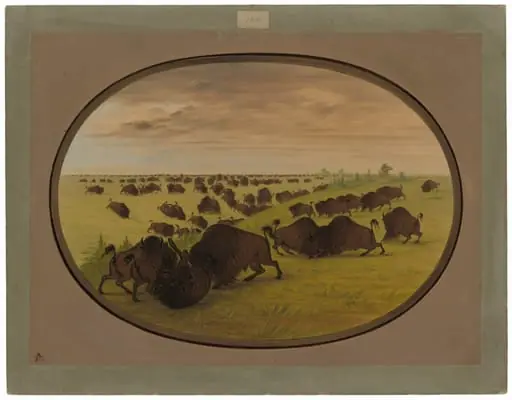 Bulls Fighting
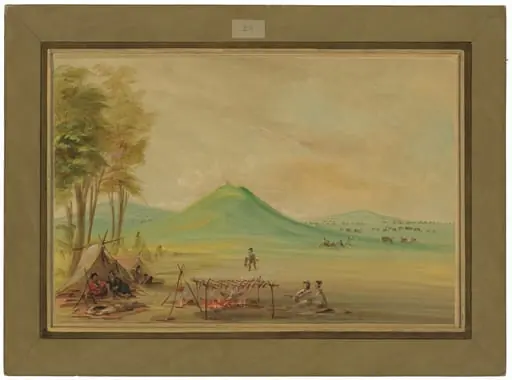 Expedition Encamped on a Texas Prairie. April 1686
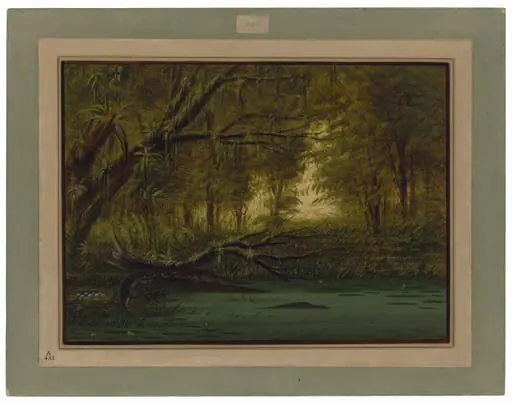 An Alligator's Nest
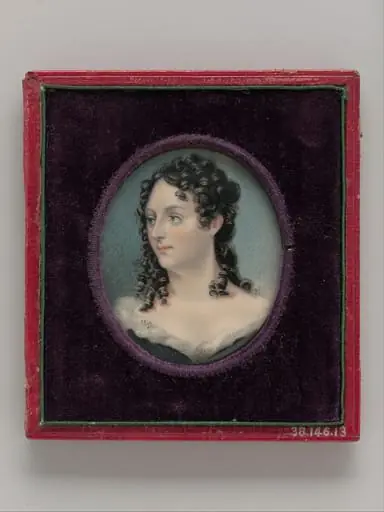 Mrs. George Catlin (Clara Bartlet Gregory)
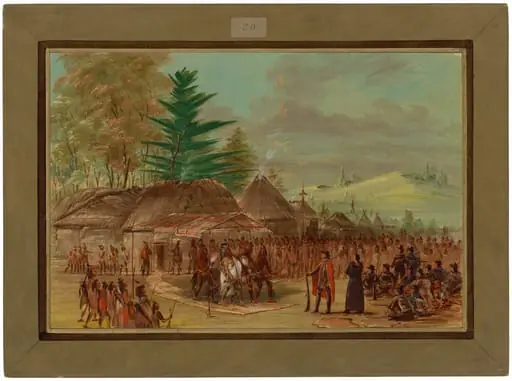 Chief of the Taensa Indians Receiving La Salle. March 20, 1682
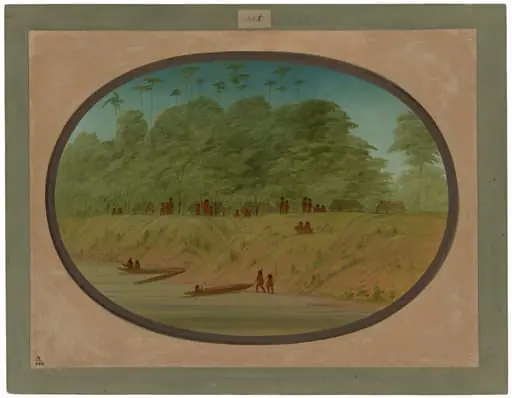 A Small Village - Payaguas Indians
 Omaha Chief, His Wife, and a Warrior
 Father Hennepin Leaving the Mississippi to Join La Salle. May 8, 1680