Artwork
A Yahua Village
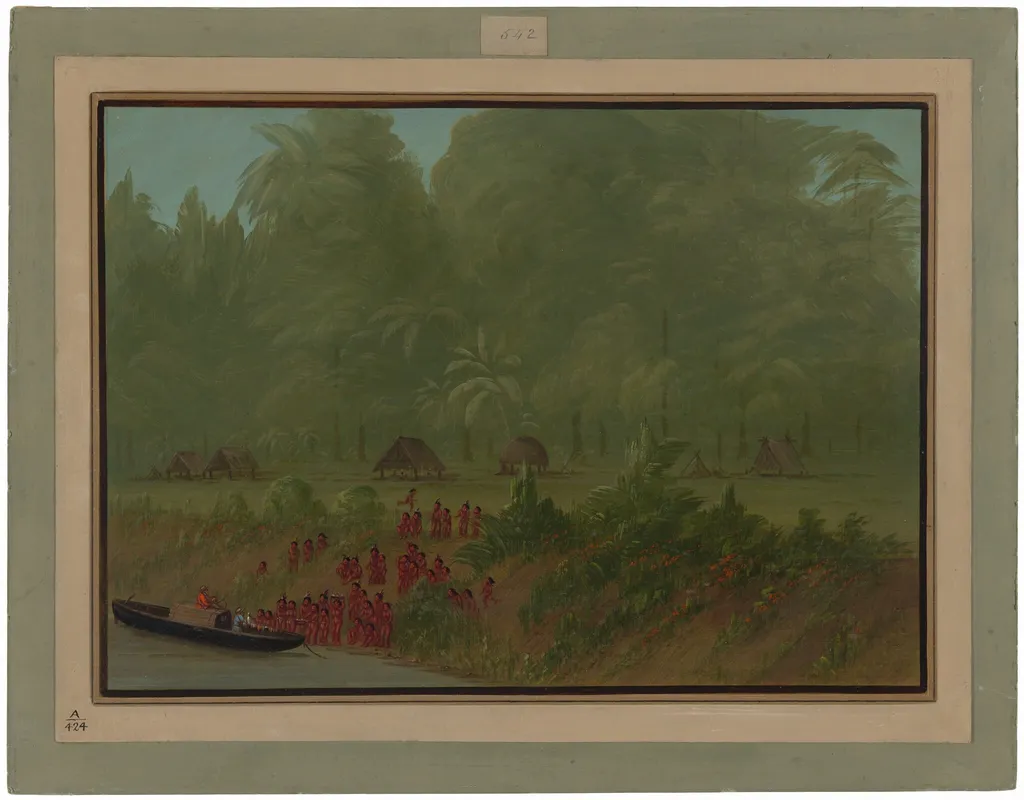
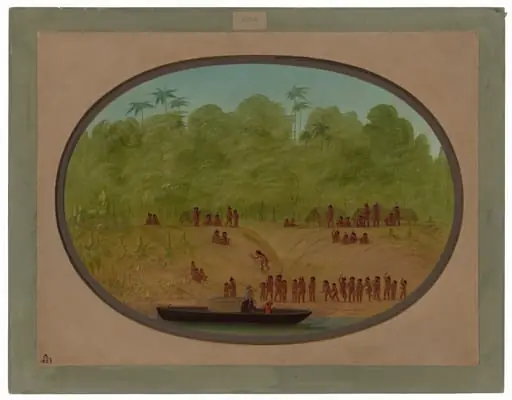
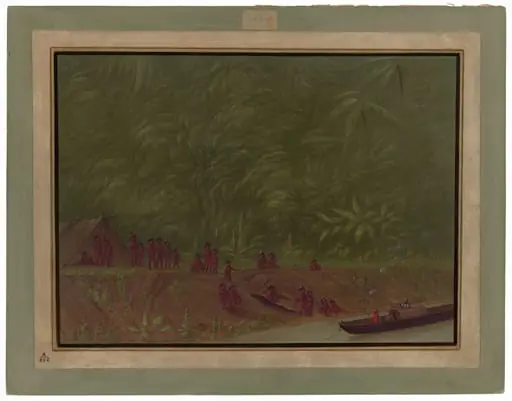
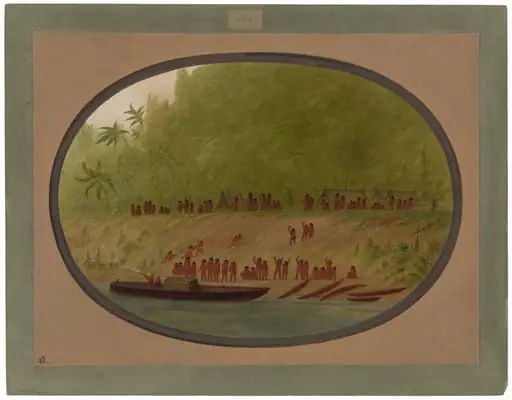
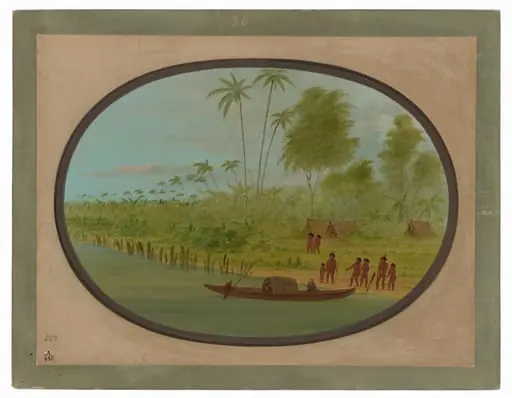
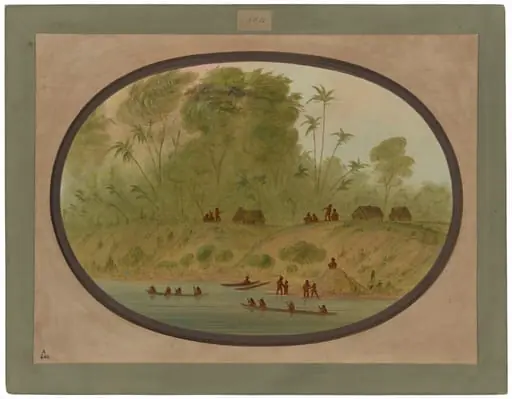
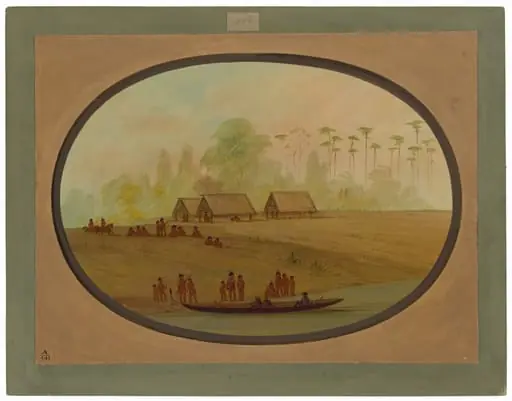
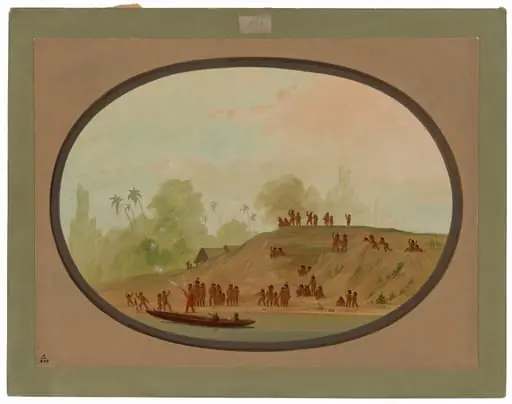
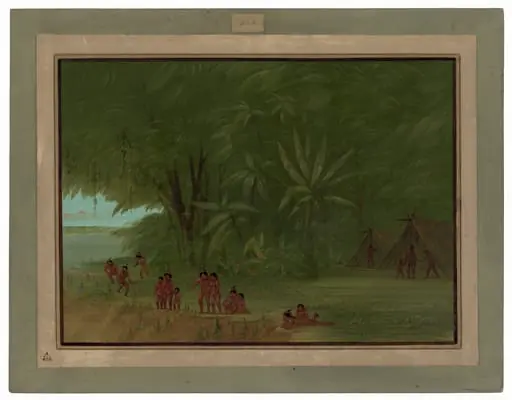
A Yahua Village is an oil painting by the Impressionist artist George Catlin. It dates from 1862 and is held in the collection of the National Gallery of Art.
About this work
Subject & Meaning
The painting portrays a solitary tree set within a rural village scene, a motif that Catlin used to evoke the quiet resilience of frontier life.
The painting portrays a solitary tree set within a rural village scene, a motif that Catlin used to evoke the quiet resilience of frontier life. The tree functions symbolically as a marker of place and continuity amid the expanding American landscape, reflecting 19th‑century Romantic ideals of nature as both refuge and witness. Executed in oil on card mounted on paperboard in 1868, the work measures 48 cm by 64 cm and belongs to the landscape genre, underscoring Catlin’s interest in documenting the natural environment of early American settlements.
Technique & Style
Created in 1868, A Yahua Village is an oil painting executed on a card support that has been mounted onto paperboard. The work measures 48 cm in height and 64 cm in width. Classified as a landscape, the composition features trees as its primary subject matter. The artwork is currently held in the collection of the National Gallery of Art in Washington, D.C.
History & Provenance
George Catlin executed this oil painting on card in 1868. Following the artist's death in 1872, the work passed by descent to his three daughters: Clara Gregory Catlin, Louise Catlin Kinney, and Elizabeth Wing Catlin. In 1912, the American Museum of Natural History purchased the piece directly from Elizabeth Wing Catlin.
The museum retained the work until 1959, when it was sold through Kennedy Galleries in New York to Paul Mellon of Upperville, Virginia. Mellon subsequently donated the painting to the National Gallery of Art in Washington, D.C., in 1965.
The painting A Yahua Village is currently held in the collection of the National Gallery of Art in Washington, D.C. Its provenance traces back to the artist George Catlin, passing by descent to his daughters before being purchased in 1912 by the American Museum of Natural History from Elizabeth Wing Catlin. The work was sold in 1959 through Kennedy Galleries in New York to Paul Mellon of Upperville, Virginia, who subsequently gifted it to the National Gallery of Art in 1965. The provided sources do not list a specific inventory or accession number, nor do they record any exhibition history for the work.
Overview
Created in 1862, A Yahua Village is an oil painting executed on card that has been mounted to a paperboard support. The composition presents a settlement framed by a prominent central tree, around which modest dwellings and figures are arranged. The work belongs to the landscape genre and reflects the artist’s interest in documenting frontier life.
Context
The painting emerges at a time when the United States was undergoing rapid territorial expansion and cultural displacement of Native peoples. Catlin’s oeuvre, which includes both portraiture and landscape, aimed to preserve visual records of cultures he feared were vanishing. This work thus functions both as an artistic composition and as a historical document of a specific village setting.
Own this work as a print
Artist & collection

Artist
George Catlin ( KAT-lin; July 26, 1796 – December 23, 1872) was an American lawyer, painter, author, and traveler, who specialized in portraits of Native Americans in the American frontier.

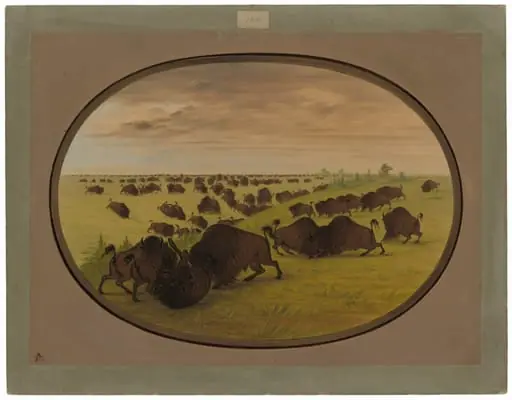 Bulls Fighting
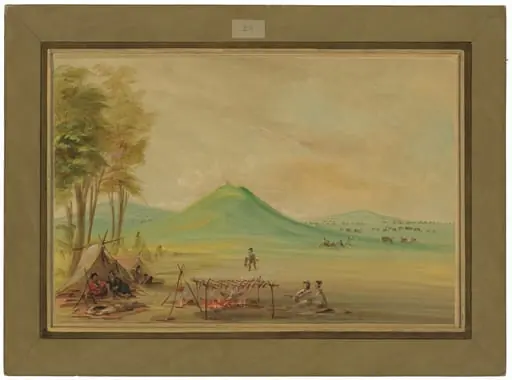 Expedition Encamped on a Texas Prairie. April 1686
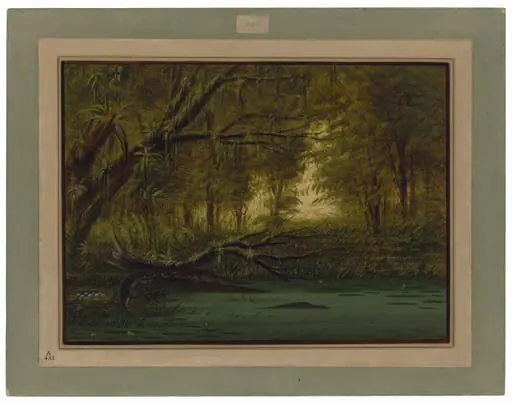 An Alligator's Nest
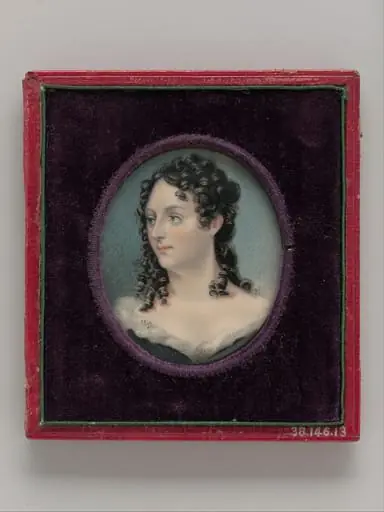 Mrs. George Catlin (Clara Bartlet Gregory)
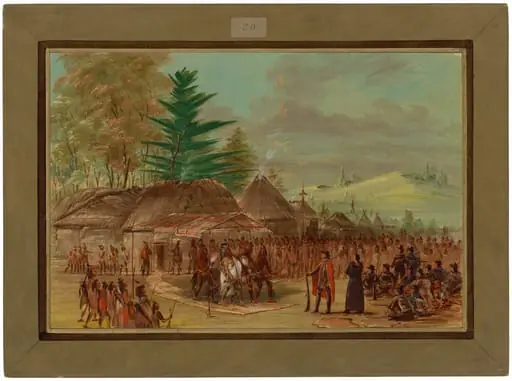 Chief of the Taensa Indians Receiving La Salle. March 20, 1682
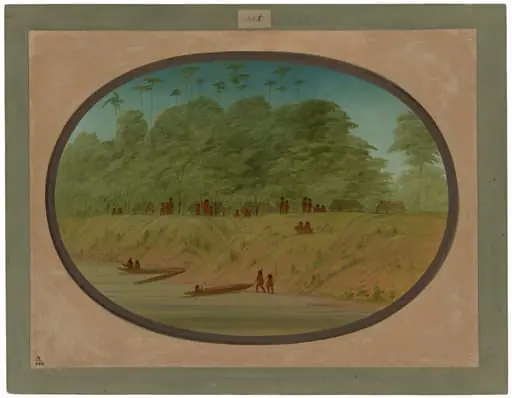 A Small Village - Payaguas Indians
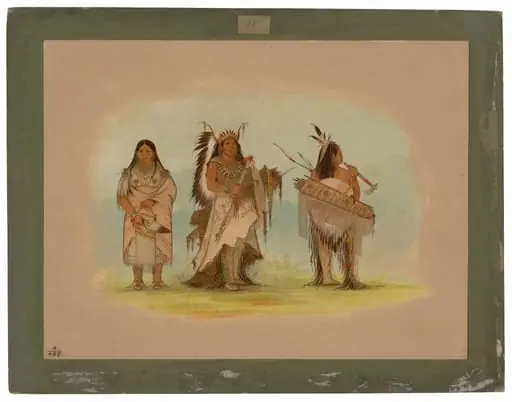 Omaha Chief, His Wife, and a Warrior
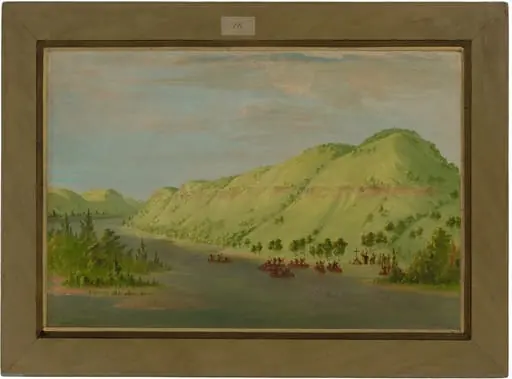 Father Hennepin Leaving the Mississippi to Join La Salle. May 8, 1680