Artwork
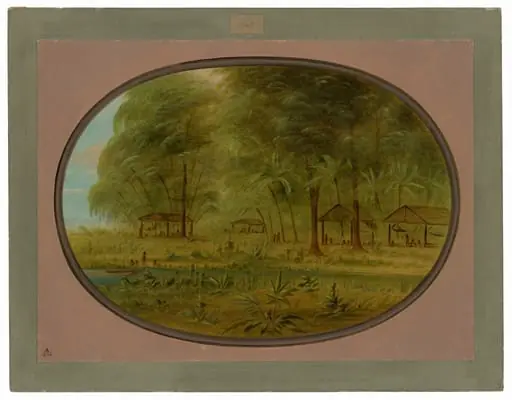
Arowak Village
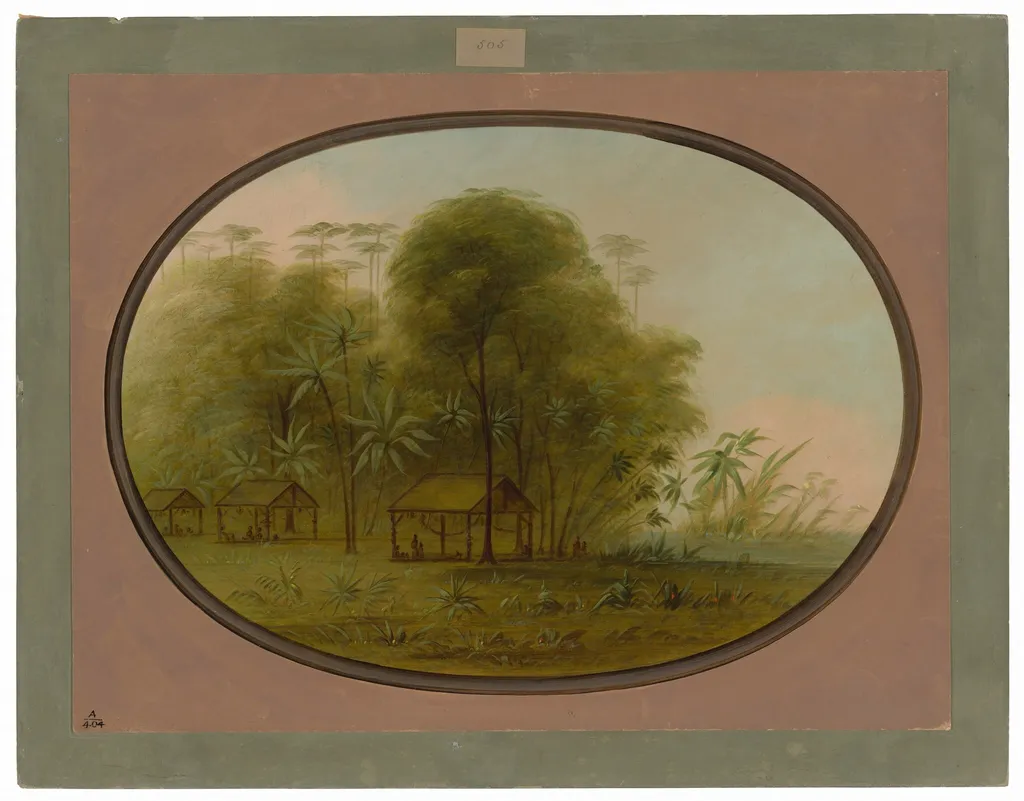
Arowak Village is an oil painting by the Impressionist artist George Catlin. It dates from 1862 and is held in the collection of the National Gallery of Art.
About this work
Subject & Meaning
George Catlin's 1861 painting Arowak Village is classified as a genre scene that depicts a tree as its primary visual subject.
George Catlin's 1861 painting Arowak Village is classified as a genre scene that depicts a tree as its primary visual subject. While the title suggests a representation of an indigenous settlement, the available documentation explicitly identifies the tree as the specific element depicted in the work. The painting does not provide further elaborated iconography or symbolic meaning regarding the village itself within the provided records, focusing instead on the natural element.
Technique & Style
The work is an oil painting executed on card that is mounted on paperboard, a support typical of mid‑nineteenth‑century genre scenes. Its formal qualities reflect the naturalistic rendering of a tree within a village setting, characteristic of George Catlin’s documentary style. The dimensions recorded are 45.9 cm in height and 62.3 cm in width, matching the canvas size noted in the catalog description.
The surface shows careful handling of oil pigments, with a smooth application that preserves the delicate tonal transitions of the foliage and ground. No significant condition issues are documented, and the painting remains well‑preserved within the National Gallery of Art’s collection.
History & Provenance
George Catlin executed Arowak Village in 1861 as an oil painting on card mounted to paperboard. Following the artist's death in 1872, the work passed by descent to his three daughters: Clara Gregory Catlin, Louise Catlin Kinney, and Elizabeth Wing Catlin. In 1912, the American Museum of Natural History acquired the piece directly from Elizabeth Wing Catlin.
The museum subsequently sold the painting in 1959 through Kennedy Galleries of New York to Paul Mellon of Upperville, Virginia. Mellon retained ownership until 1965, at which point he donated the work to the National Gallery of Art in Washington, D.C., where it remains in the collection.
The painting Arowak Village is held in the National Gallery of Art in Washington, D.C. Its accession occurred in 1965 as a gift from Paul Mellon to the National Gallery of Art. Prior to its donation, the work passed through several owners and dealers: it descended through George Catlin’s daughters, was purchased in 1912 from Elizabeth Wing Catlin, then sold in 1959 via Kennedy Galleries in New York to Paul Mellon. The work has not been documented in major public exhibitions beyond its inclusion in the National Gallery of Art’s collection.
Overview
George Catlin’s 1862 work Arowan Village presents a modestly sized oil painting on card, later affixed to paperboard. The composition centers on a Native American settlement framed by a solitary, prominent tree, with figures engaged in daily activities. The piece reflects Catlin’s ongoing effort to record frontier life through direct observation.
Own this work as a print
Artist & collection

Artist
George Catlin ( KAT-lin; July 26, 1796 – December 23, 1872) was an American lawyer, painter, author, and traveler, who specialized in portraits of Native Americans in the American frontier.

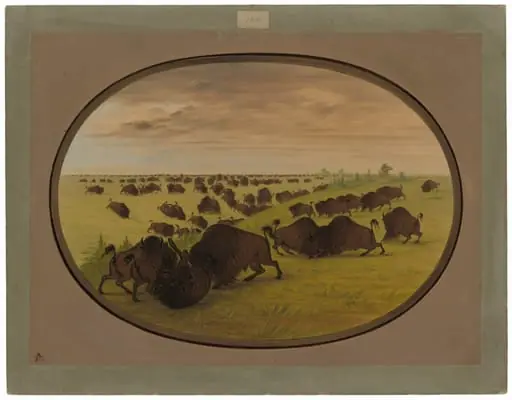 Bulls Fighting
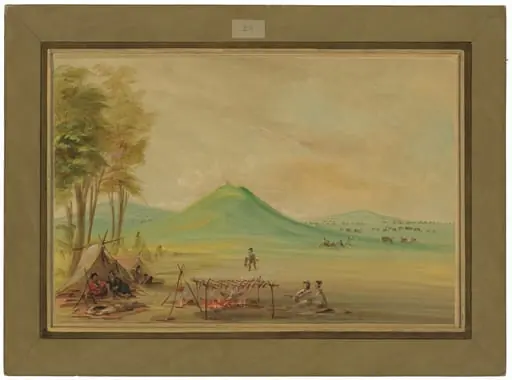 Expedition Encamped on a Texas Prairie. April 1686
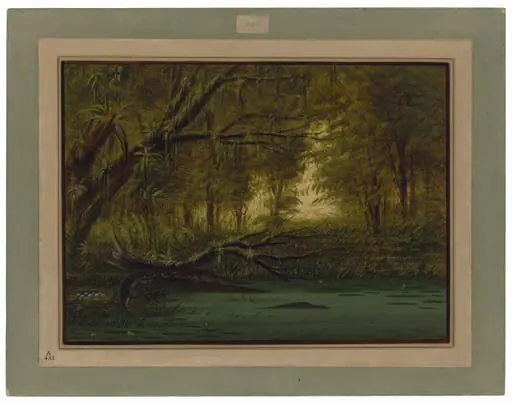 An Alligator's Nest
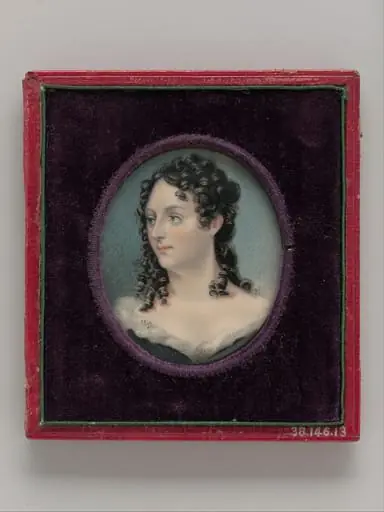 Mrs. George Catlin (Clara Bartlet Gregory)
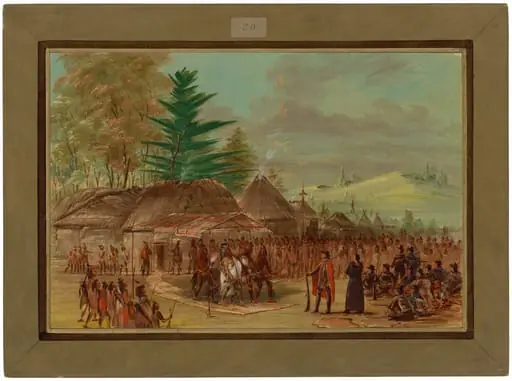 Chief of the Taensa Indians Receiving La Salle. March 20, 1682
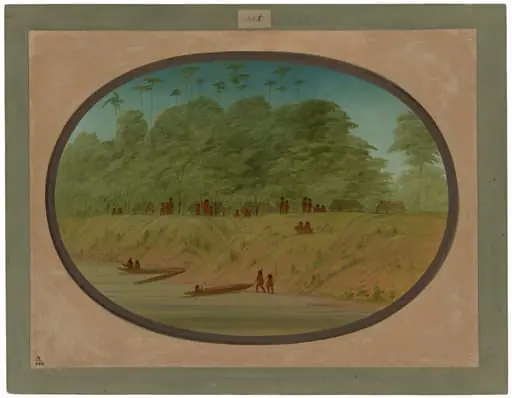 A Small Village - Payaguas Indians
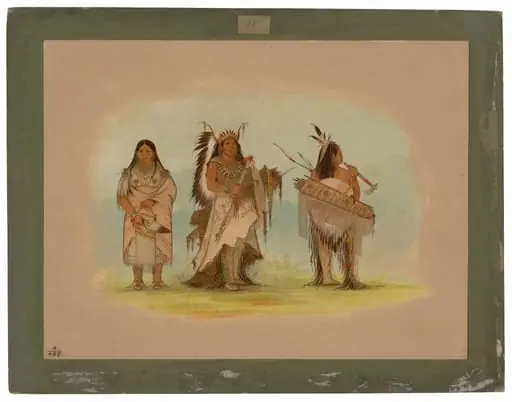 Omaha Chief, His Wife, and a Warrior
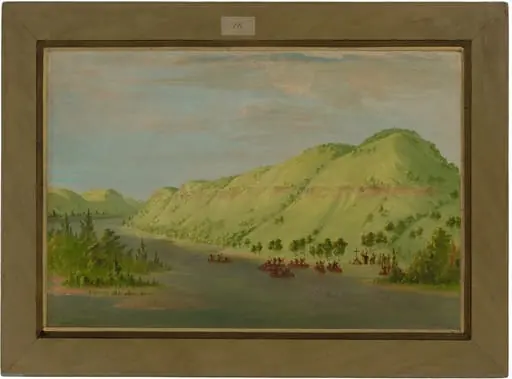 Father Hennepin Leaving the Mississippi to Join La Salle. May 8, 1680