Artwork
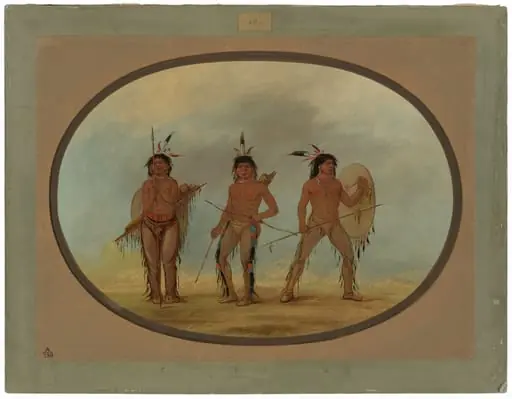
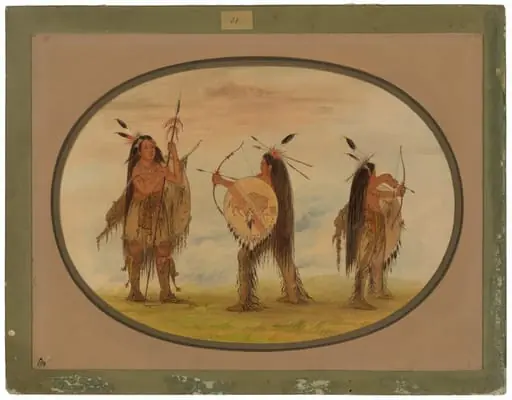
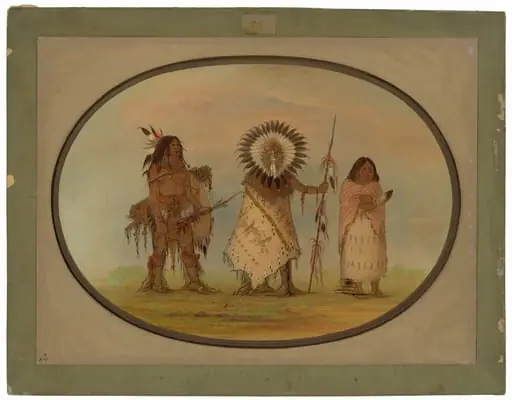
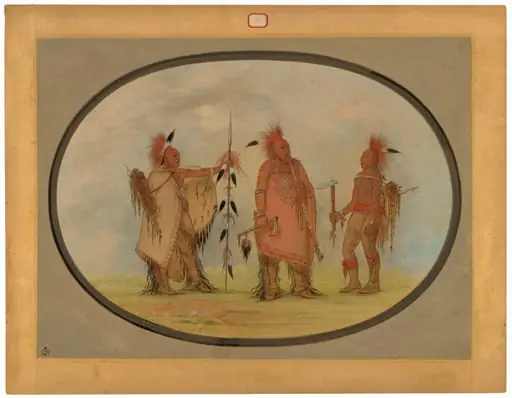
Camanchee Chief with Three Warriors
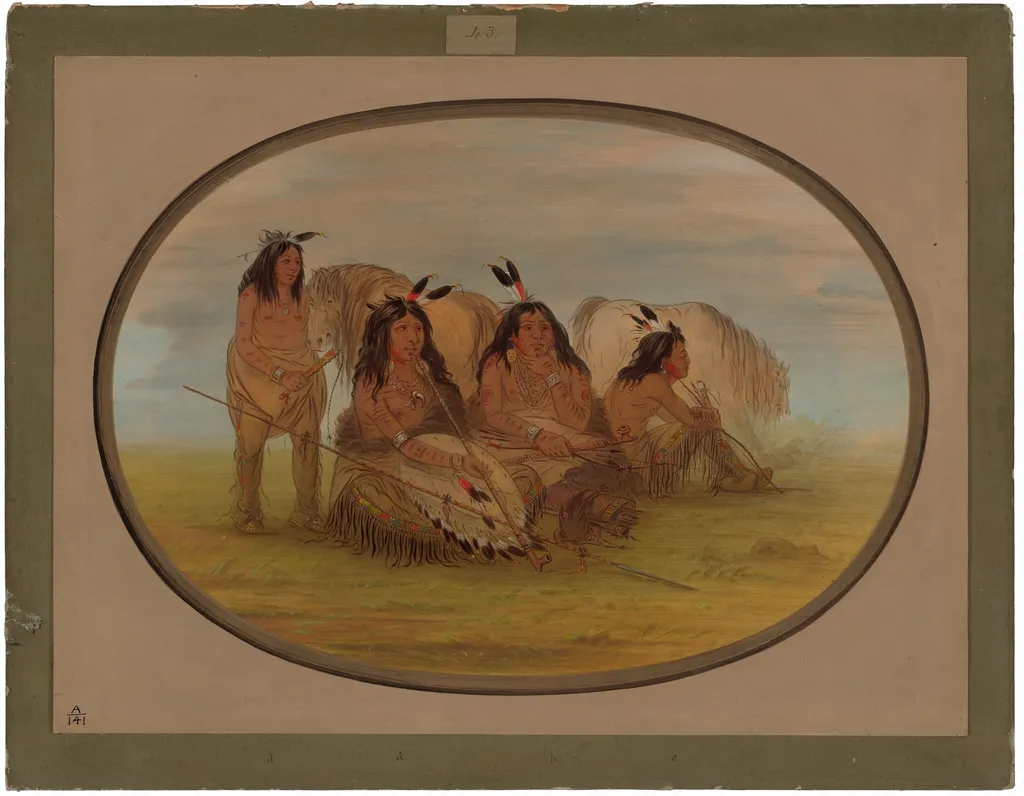
Camanchee Chief with Three Warriors is an oil painting by the Impressionist artist George Catlin. It dates from 1865 and is held in the collection of the National Gallery of Art.
About this work
Overview
8 centimeters, is executed in oil on card mounted on paperboard and is held in the collection of the National Gallery of Art in Washington, D.
Camanchee Chief with Three Warriors is an oil painting by the American artist George Catlin, completed in 1861. The work, measuring 47.4 by 63.8 centimeters, is executed in oil on card mounted on paperboard and is held in the collection of the National Gallery of Art in Washington, D.C., where it entered in 1965 as part of the Paul Mellon Collection. The painting belongs to Catlin's extensive documentation of Indigenous North American peoples, a project thateno consumed much of his career and established him as one of the foremost visual chroniclers of Native American life in the nineteenth century.
Subject & Meaning
The painting depicts four Indigenous men identified as Comanche, arranged in a grassy landscape with three horses standing behind them. One figure stands holding a spear, two others sit at the center, and the fourth reclines to the right holding a bow. All wear feathered headdresses, fringed garments with decorative bands, and multiple necklaces, with body paint visible on their skin. Weapons including spears, a bow, arrows, and a quiver rest among the group. The composition emphasizes traditional clothing, posture, and cultural elements that Catlin sought to record. The arrangement of figures in various poses, some active and some at rest, suggests both the martial identity and the social structure of the group. The inclusion of horses, weapons, and ornamented dress serves to document what Catlin understood to be characteristic aspects of Comanche life and status.
Technique & Style
Catlin employed oil on card mounted on paperboard, a support that allowed for detailed brushwork and portability. The palette consists of earthy browns, tans, and greens with touches of red and blue in ornaments and sky. The brushwork appears smooth and detailed, with careful attention to textiles, jewelry, and facial features. The sky shows soft clouds with warm light suggesting either dawn or dusk. The composition is circular within its rectangular format, set within a beige mat and darker green border. A small label reading 43 appears at top center, and A 141 is inscribed at lower left, suggesting its place within Catlin's larger systematic documentation project. The handling demonstrates Catlin's characteristic approach to ethnographic portraiture, combining documentary intent with aesthetic composition.
History & Provenance
The painting remained in Catlin's possession until his death ^ in 1872, after which it passed by descent to his daughters Clara Gregory Catlin, Louise Catlin Kinney, and Elizabeth Wing Catlin. In 1912, Elizabeth Wing Catlin sold the work to the American Museum of Natural History. The museum deaccessioned it in 1959, selling it through Kennedy Galleries in New York to Mr. Paul Mellon of Upperville, Virginia. Mellon gave the painting to the National Gallery of Art in 1965, where it received accession number 1965.16.47 as part of the Paul Mellon Collection.
Legacy
The painting's afterlife has been shaped by its inclusion in major institutional collections, first at the American Museum of Natural History and then at the National Gallery of Art. Its transfer from a natural history museum to an art museum reflects evolving understandings of Catlin's work as art rather than mere documentation. As part of the National Gallery's Paul Mellon Collection, it contributes to one of the most significant holdings of American art. The work continues to serve as a focal point for discussions about representation, the ethics of ethnographic art, and the complex legacy of Catlin's project. Its public domain status has facilitated widespread reproduction and circulation, including in digital archives and educational materials, extending its reach beyond the museum walls.
Own this work as a print
Artist & collection

Artist
George Catlin ( KAT-lin; July 26, 1796 – December 23, 1872) was an American lawyer, painter, author, and traveler, who specialized in portraits of Native Americans in the American frontier.

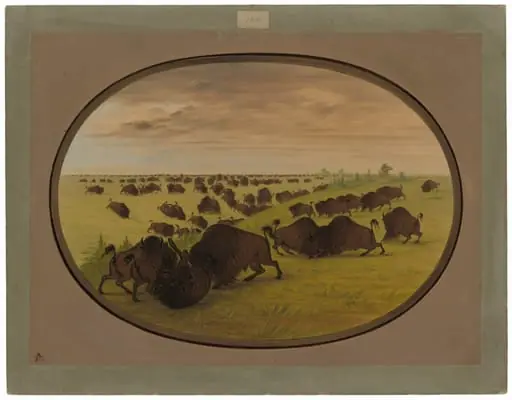 Bulls Fighting
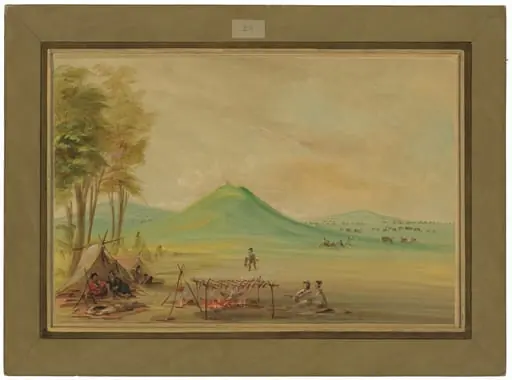 Expedition Encamped on a Texas Prairie. April 1686
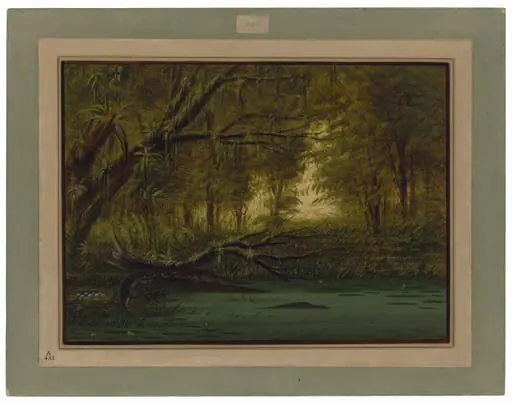 An Alligator's Nest
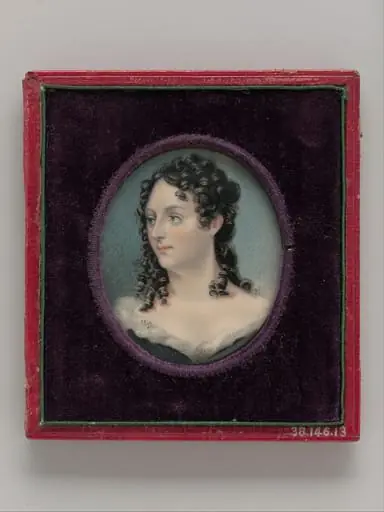 Mrs. George Catlin (Clara Bartlet Gregory)
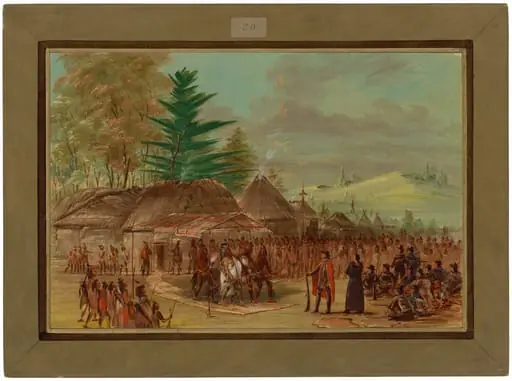 Chief of the Taensa Indians Receiving La Salle. March 20, 1682
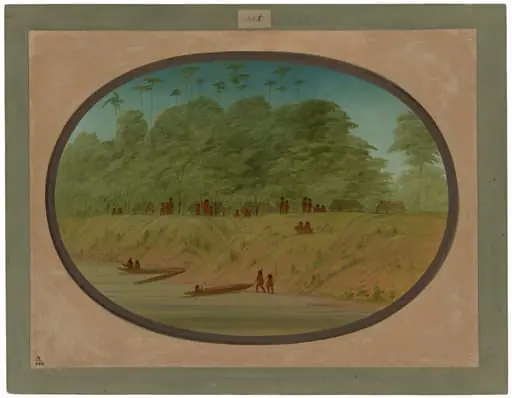 A Small Village - Payaguas Indians
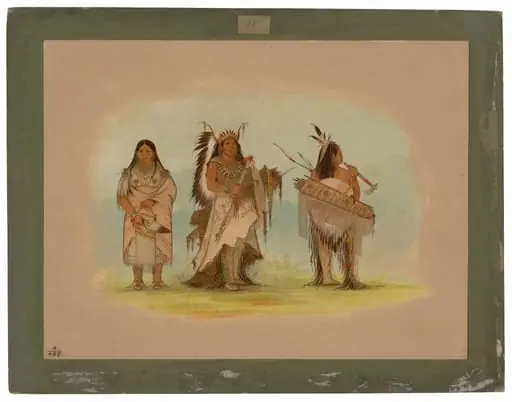 Omaha Chief, His Wife, and a Warrior
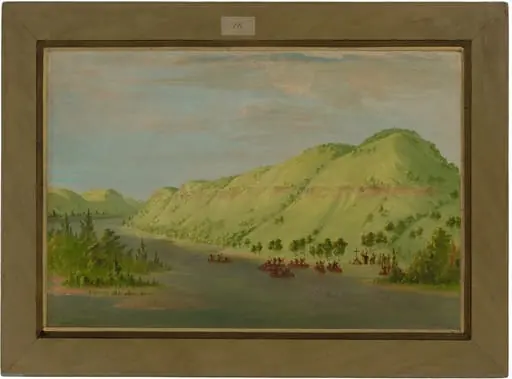 Father Hennepin Leaving the Mississippi to Join La Salle. May 8, 1680