Artwork
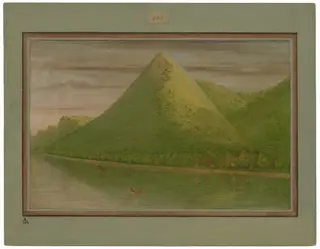
Curious Grassy Bluffs, St. Peter's River
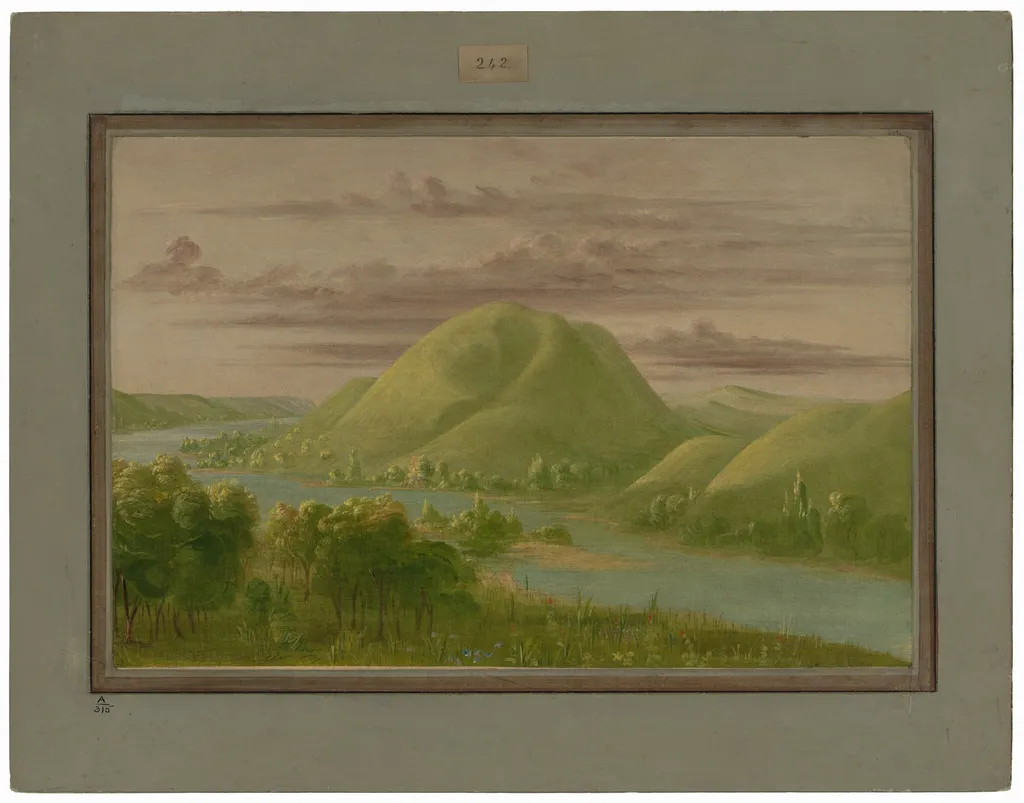
Curious Grassy Bluffs, St. Peter's River is an oil painting by the Impressionist artist George Catlin. It dates from 1865 and is held in the collection of the National Gallery of Art.
About this work
Subject & Meaning
The painting depicts a rugged river landscape centered on towering grassy bluffs and dense groves of trees along the St.
The painting depicts a rugged river landscape centered on towering grassy bluffs and dense groves of trees along the St. Peter’s River, emphasizing the wild, untamed character of the American frontier in the 1860s. Catlin’s composition foregrounds the natural grandeur of the bluffs, rendered with textured brushwork that conveys both their solidity and the lush vegetation clinging to their slopes.
The scene likely represents a specific site Catlin encountered during his travels in the Upper Midwest, reflecting his broader project of documenting Indigenous life and the North American landscape. While the work does not include human figures, the title and setting evoke the region’s significance as a crossroads of Indigenous cultures and European-American expansion, underscoring themes of exploration, land, and the sublime in 19th-century American art.
Technique & Style
Curious Grassy Bluffs, St. Peter's River is an oil painting executed on canvas by George Catlin in 1861. The work is classified as a landscape painting and depicts natural features including mountains and trees, rendered in oil paint applied to a canvas support. The canvas measures 37.5 cm in height by 56.3 cm in width, giving the composition a horizontal orientation suited to its expansive landscape subject.
The medium and support are consistent with Catlin's broader landscape practice, with the oil paint on canvas allowing for the layered handling typical of mid-nineteenth-century landscape painting.
History & Provenance
The work was commissioned and painted by George Catlin in 1861, as recorded in his corpus records.
By descent, it passed to his daughters, Clara Gregory Catlin, Louise Catlin Kinney, and Elizabeth Wing Catlin, before being purchased in 1912 by the American Museum of Natural History from Elizabeth Wing Catlin. In 1959, the museum sold the painting through Kennedy Galleries in New York to Paul Mellon, who later gifted it to the National Gallery of Art in 1965, where it remains.
Following its creation in 1861, the painting remained within the artist George Catlin's family, passing to his daughters upon his death. The American Museum of Natural History acquired the work from Elizabeth Wing Catlin in 1912. In 1959, the museum sold the canvas through Kennedy Galleries of New York to collector Paul Mellon of Upperville, Virginia.
Mellon subsequently donated the piece to the National Gallery of Art in Washington, D.C., in 1965, where it currently resides in the permanent collection.
Overview
George Catlin's 1865 oil on canvas, Curious Grassy Bluffs, St. Peter's River, presents a serene landscape. The painting features a prominent tree and rolling grassy bluffs, characteristic of the natural scenery along the St. Peter's River. This work aligns with Catlin's broader artistic endeavors, which often explored the American frontier's natural environment and its Indigenous inhabitants through a direct, observational approach.
Context
George Catlin was a significant figure in the artistic documentation of the American frontier. Throughout the 1830s, he embarked on multiple journeys across the American West, meticulously recording his observations of both the landscape and Indigenous cultures through paintings and written accounts. Curious Grassy Bluffs, St. Peter's River was created during a period when many artists were drawn to the West, seeking to capture its unique natural beauty.
Own this work as a print
Artist & collection

Artist
George Catlin ( KAT-lin; July 26, 1796 – December 23, 1872) was an American lawyer, painter, author, and traveler, who specialized in portraits of Native Americans in the American frontier.

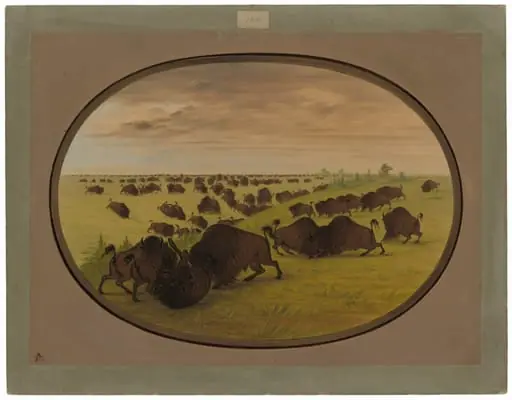 Bulls Fighting
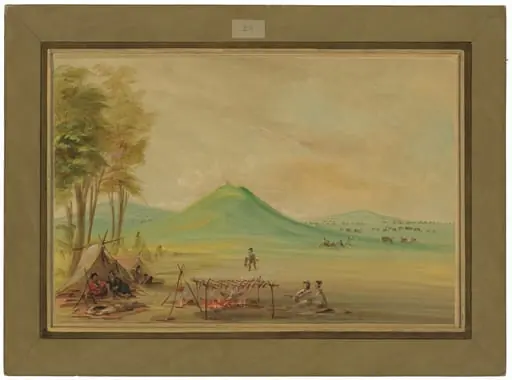 Expedition Encamped on a Texas Prairie. April 1686
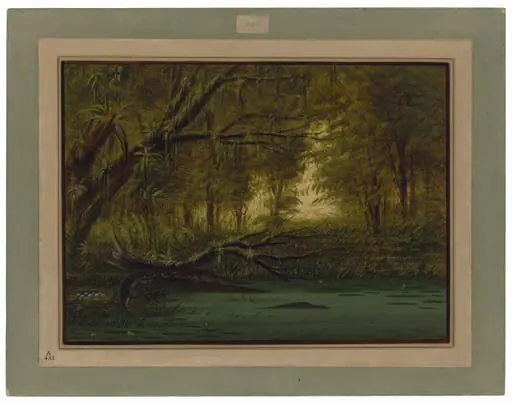 An Alligator's Nest
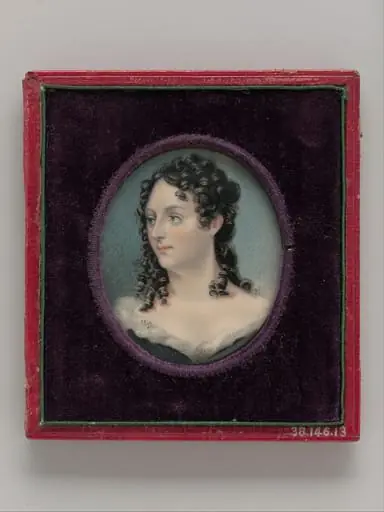 Mrs. George Catlin (Clara Bartlet Gregory)
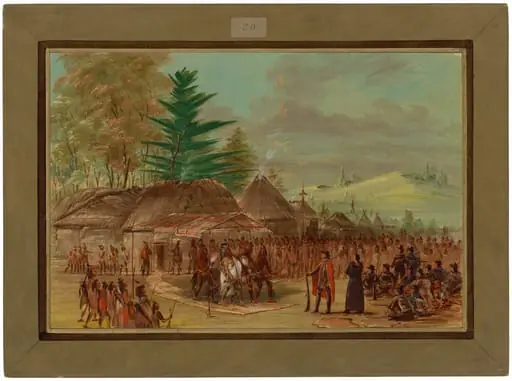 Chief of the Taensa Indians Receiving La Salle. March 20, 1682
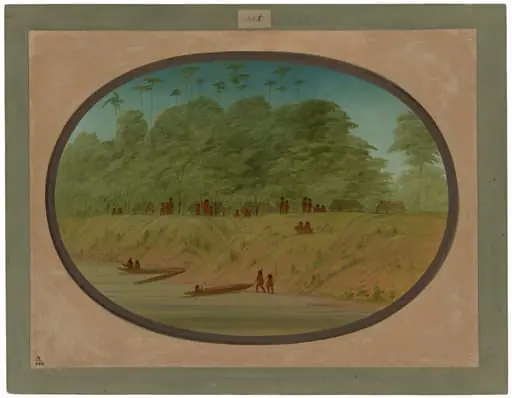 A Small Village - Payaguas Indians
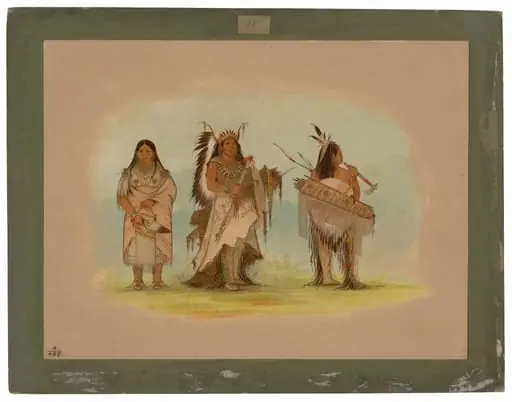 Omaha Chief, His Wife, and a Warrior
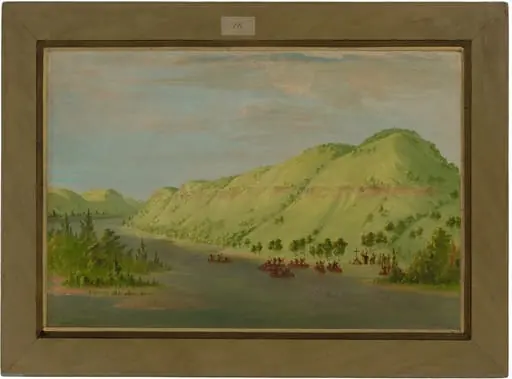 Father Hennepin Leaving the Mississippi to Join La Salle. May 8, 1680