Artwork
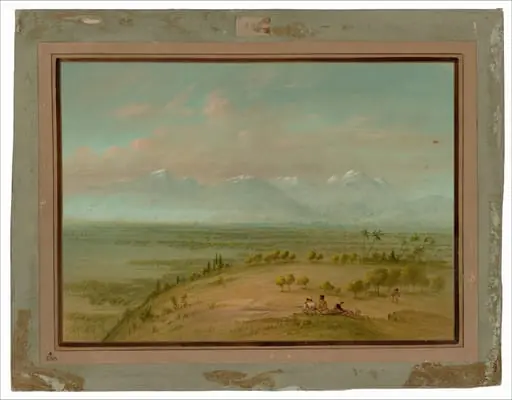
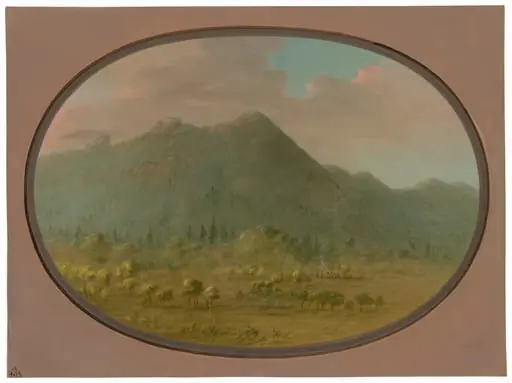
View of the Crystal Mountains, Brazil
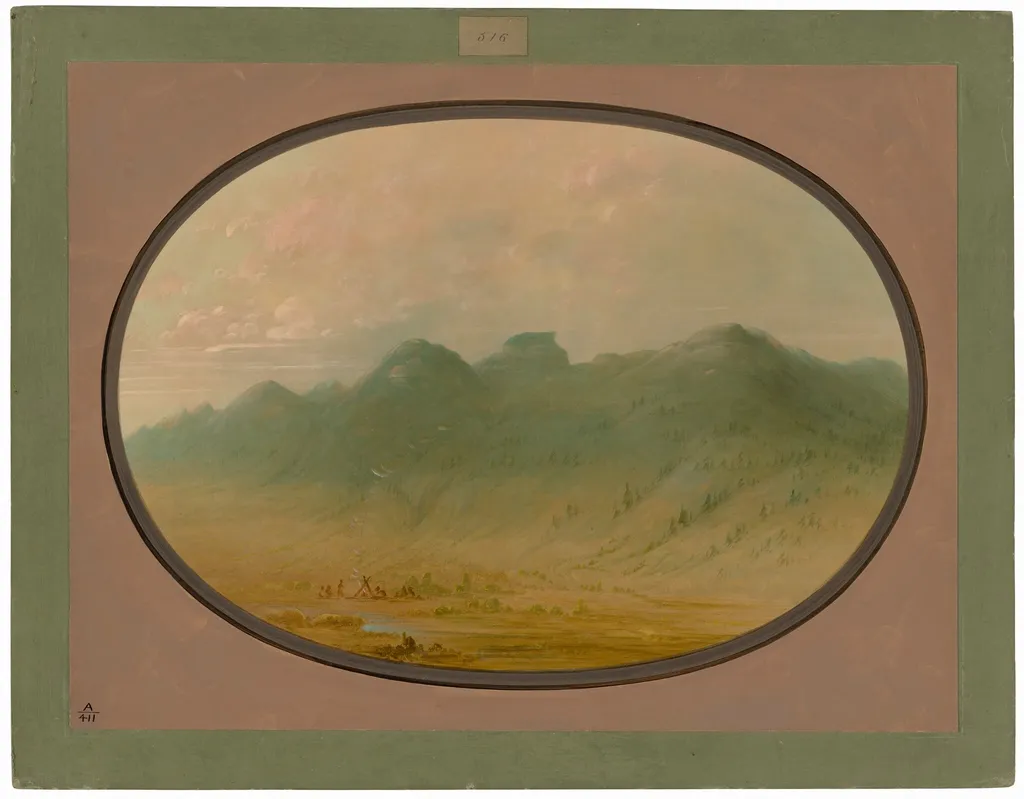
View of the Crystal Mountains, Brazil is an oil painting by the Impressionist artist George Catlin. It dates from 1862 and is held in the collection of the National Gallery of Art.
About this work
Overview
It represents a significant component of Catlin's South American oeuvre, extending his documentary ambitions beyond North America into the Brazilian interior.
View of the Crystal Mountains, Brazil is an oil painting on card mounted on paperboard created by the American artist George Catlin between 1854 and 1869. Measuring 47 by 62.4 centimeters, the work belongs to Catlin's later series known as the Cartoon Collection, which documented indigenous populations and landscapes of the Americas. The painting is currently held in the National Gallery of Art in Washington, D.C., as part of the Paul Mellon Collection, accessioned under the number 1965.16.274. It represents a significant component of Catlin's South American oeuvre, extending his documentary ambitions beyond North America into the Brazilian interior.
Subject & Meaning
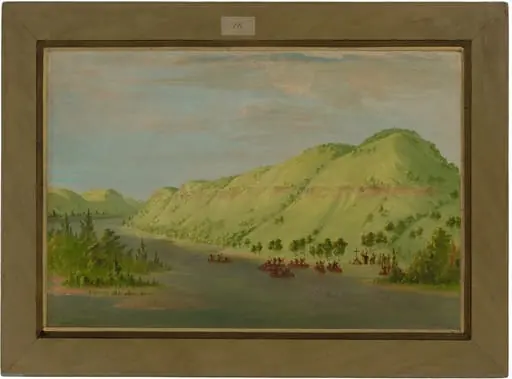
The painting depicts the Tumucamache, or Crystal, Mountains in northern Brazil. The composition centers on layered mountain ranges receding into an atmospheric haze, their rounded peaks blanketed in dense green vegetation. A pale sky with pink tinged clouds hovers above, while a flat golden brown plain stretches into the foreground, interrupted by a small body of water reflecting light. Near the water, tiny figures gather around a triangular structure, possibly a sail or tent, providing a sense of scale and human presence within the vast landscape. When Catlin exhibited the Cartoon Collection in New York in 1871, his catalog entry for this work was listed as Cart. No. 516, titled View in the Crystal Mountains, Brazil.
Technique & Style
Executed in oil on card mounted on paperboard, the painting is presented in an oval format set within a rectangular mount featuring green outer borders and a mauve inner field. Small labels reading 516 and A 411 appear on the mount. Catlin employed smooth, blended brushwork to create a misty, unified effect across the composition. The palette is dominated by muted greens, warm ochres, and soft rose tones. Light is diffused throughout the scene, lacking harsh shadows, which suggests either dawn or dusk and contributes to an overall finish that is polished and idealized rather than ruggedly naturalistic.
History & Provenance
Following Catlin's death in 1872, the painting descended to his three daughters, Clara Gregory Catlin, Louise Catlin Kinney, and Elizabeth Wing Catlin. In 1912, the American Museum of Natural History in New York purchased the surviving works of the Cartoon Collection from Elizabeth Wing Catlin. The museum deaccessioned the collection in 1959, selling the works through Kennedy Galleries in New York to Paul Mellon of Upperville, Virginia. Mellon donated 351 works from this group, including this painting, to the National Gallery of Art in 1965. The artwork was included in a 1970 exhibition at the Norfolk Museum of Arts and Sciences, an international traveling exhibition organized by the United States Information Agency from 1989 to 1990, and National Lending Service exhibitions in Oneonta, New York, in 1992, and Coral Gables, Florida, in 1994 and 1995.
Context
During the mid nineteenth century, George Catlin produced two major bodies of work. His first, the Indian Gallery, comprised more than 500 portraits and genre scenes of Native Americans completed in the 1830s, with most surviving works now at the Smithsonian American Art Museum. Decades later, during the 1850s and 1860s, Catlin produced a second collection of more than 600 works, which he termed the Cartoon Collection. This later series expanded his focus to include South American landscapes and indigenous communities. The painting of the Crystal Mountains fits directly within this second endeavor, reflecting Catlin's ongoing effort to document the Western Hemisphere's peoples and geographies. The work has been cataloged in National Gallery of Art publications in 1970, 1980, and 1992.
Legacy
As a component of the Cartoon Collection gifted to the National Gallery of Art, the painting remains a vital record of Catlin's South American expeditions and his broader ethnographic and geographic project. Its inclusion in international exhibitions, such as the Sudamerica traveling exhibition in Mexico City, Buenos Aires, and Santiago, underscores its role in representing nineteenth century North American perspectives on South American landscapes. The preservation of the collection at a major national institution ensures the continued study and visibility of Catlin's later career, broadening the historical understanding of his work beyond his earlier, more famous North American portraits.
Own this work as a print
Artist & collection

Artist
George Catlin ( KAT-lin; July 26, 1796 – December 23, 1872) was an American lawyer, painter, author, and traveler, who specialized in portraits of Native Americans in the American frontier.

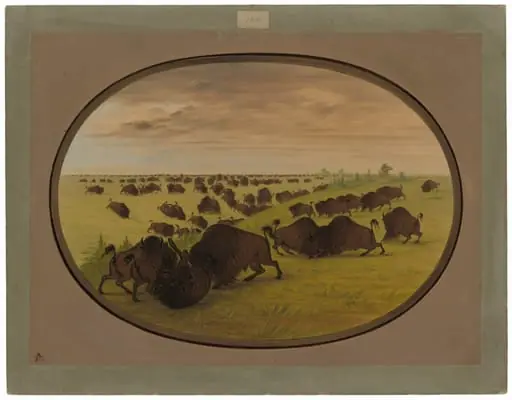 Bulls Fighting
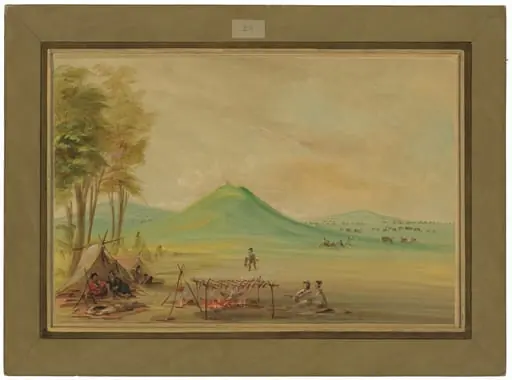 Expedition Encamped on a Texas Prairie. April 1686
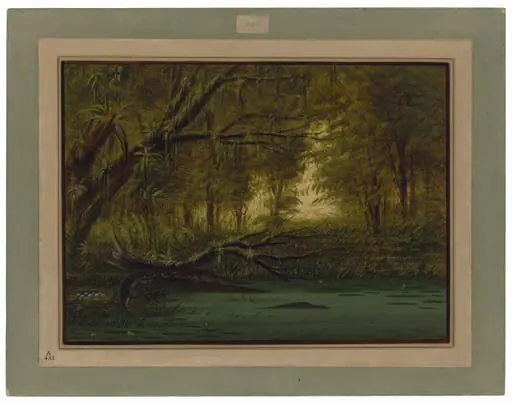 An Alligator's Nest
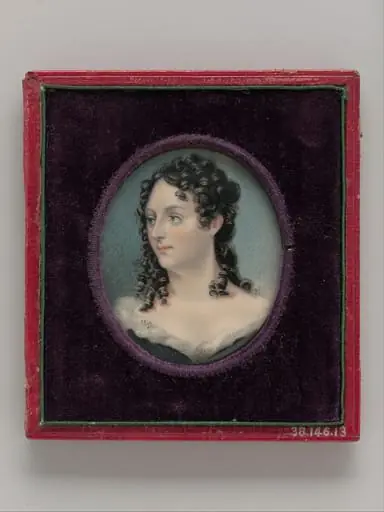 Mrs. George Catlin (Clara Bartlet Gregory)
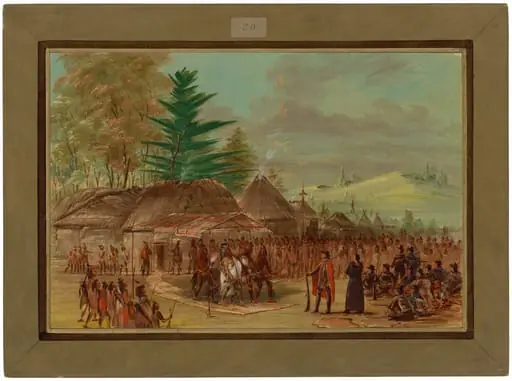 Chief of the Taensa Indians Receiving La Salle. March 20, 1682
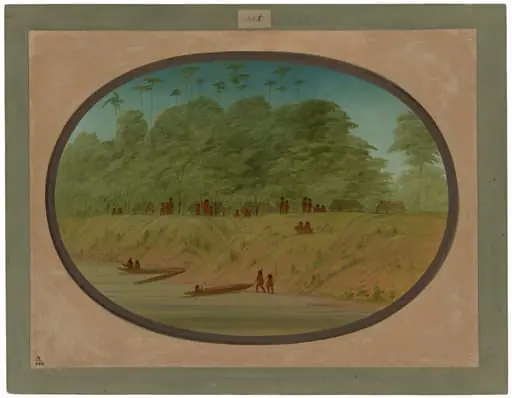 A Small Village - Payaguas Indians
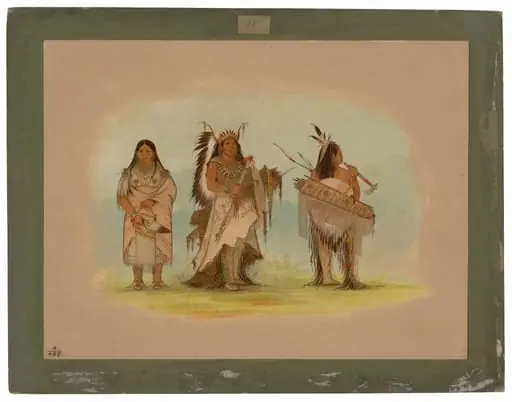 Omaha Chief, His Wife, and a Warrior
 Father Hennepin Leaving the Mississippi to Join La Salle. May 8, 1680