Artwork
Falls of the Snake River
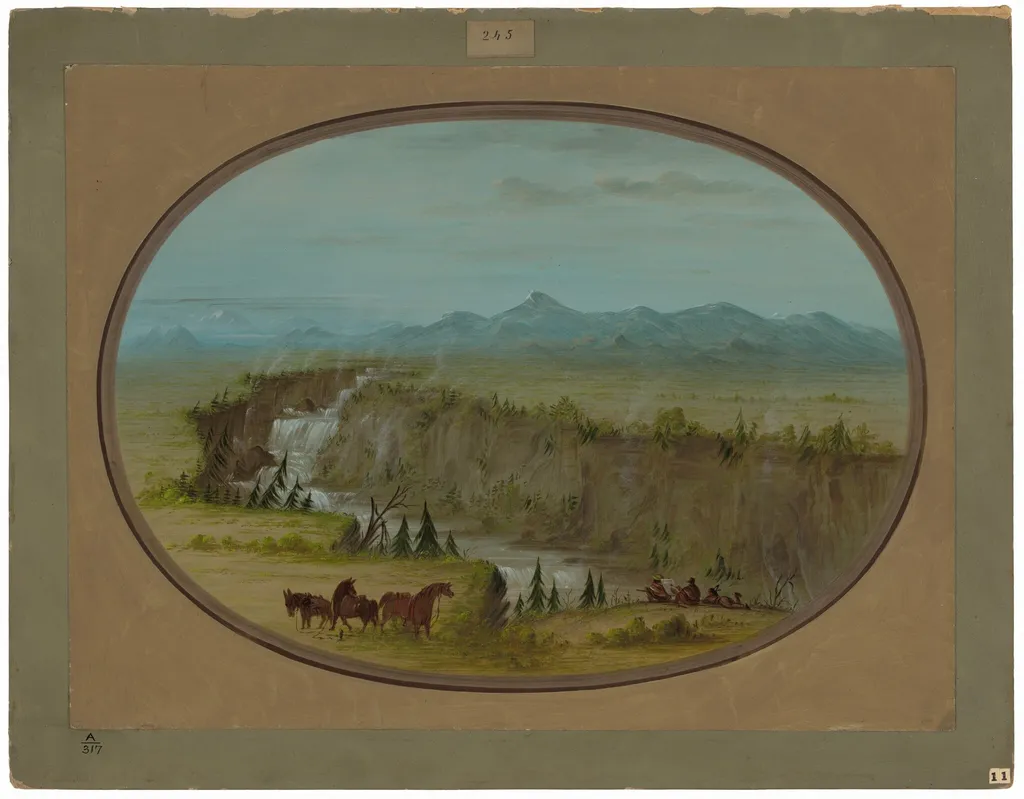
Falls of the Snake River is an oil painting by the Impressionist artist George Catlin. It dates from 1862 and is held in the collection of the National Gallery of Art.
About this work
Subject & Meaning
Today it resides in the National Gallery of Art, where it continues to inform discussions on 19th-century landscape painting and environmental perception.
The painting portrays the Snake River’s dramatic waterfalls framed by a dense stand of trees, emphasizing the untamed character of the American West. The surrounding forest underscores the wilderness as both a physical landscape and a symbolic space of exploration and natural abundance. Executed in 1872 by George Catlin, the work reflects his interest in documenting frontier environments and indigenous life, aligning with his broader effort to preserve visual records of vanishing cultures and ecosystems.
Today it resides in the National Gallery of Art, where it continues to inform discussions on 19th-century landscape painting and environmental perception.
Technique & Style
George Catlin painted Falls of the Snake River in 1872 using oil on card that is mounted on paperboard, classifying it as an oil painting in the landscape genre. The work measures 62.2 cm in width by 46.5 cm in height and portrays a tree, reflecting Catlin's interest in depicting natural scenery. Currently held by the National Gallery of Art in Washington, D.C., the painting entered the museum's collection through a series of inheritances from the artist's daughters and a subsequent sale and gift in the mid-20th century.
Its formal qualities are defined by the handling of oil medium on a mounted support, contributing to a distinct stylistic presence within the landscape tradition.
History & Provenance
Painted in 1872, Falls of the Snake River was created by George Catlin and has remained in the National Gallery of Art's collection since its acquisition. The work entered the museum in 1965 as a gift from Paul Mellon, following its 1959 sale from Kennedy Galleries to him. Prior to this, it descended through Catlin's daughters and was purchased from Elizabeth Wing Catlin in 1912 by the American Museum of Natural History.
Falls of the Snake River is held by the National Gallery of Art in Washington, D.C., where it entered the collection in 1965 as a gift from Paul Mellon. The work was acquired from Kennedy Galleries in 1959 by Paul Mellon and subsequently donated to the museum.
Context
George Catlin painted Falls of the Snake River in 1872, a landscape that captures the dramatic cascade of the Snake River through a rugged gorge. The work demonstrates Catlin's enduring fascination with untouched American wilderness, a theme central to his broader oeuvre of frontier subjects. After leaving the National Academy of Design, Catlin devoted his later career to documenting indigenous cultures and natural scenery across North America.
The painting entered the National Gallery of Art's collection in 1965 through the bequest of Paul Mellon, ensuring its preservation within a major American institution. Its depiction of a specific geographical feature reflects 19th-century artistic efforts to document and interpret the continent's geography. Catlin's shift from portraiture to landscape painting during this period marked a significant evolution in his artistic focus, aligning with broader 19th-century American movements that celebrated the sublime in nature.
Overview
Created in 1862, Falls of the Snake River is a modestly sized oil painting executed on card that has been affixed to a paperboard backing. The composition presents a tranquil waterfall set within a wooded gorge, with surrounding rocks and foliage framing the cascade. The work exemplifies the artist’s interest in the natural scenery of the western United States.
Own this work as a print
Artist & collection

Artist
George Catlin ( KAT-lin; July 26, 1796 – December 23, 1872) was an American lawyer, painter, author, and traveler, who specialized in portraits of Native Americans in the American frontier.

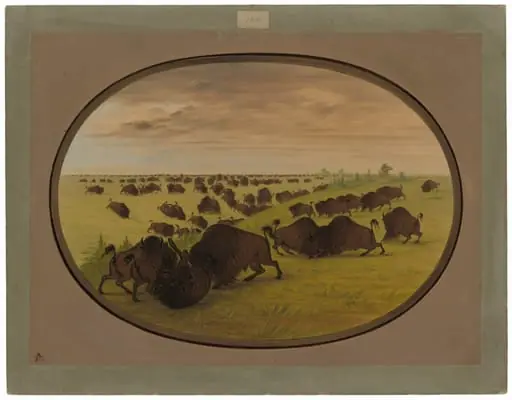 Bulls Fighting
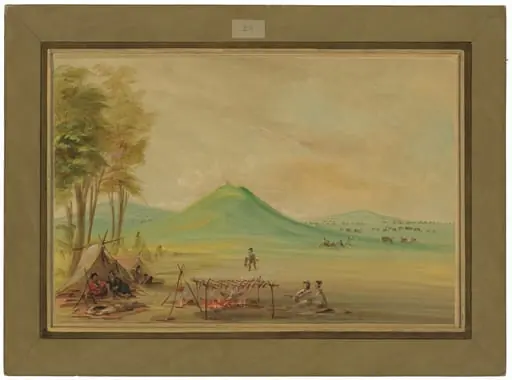 Expedition Encamped on a Texas Prairie. April 1686
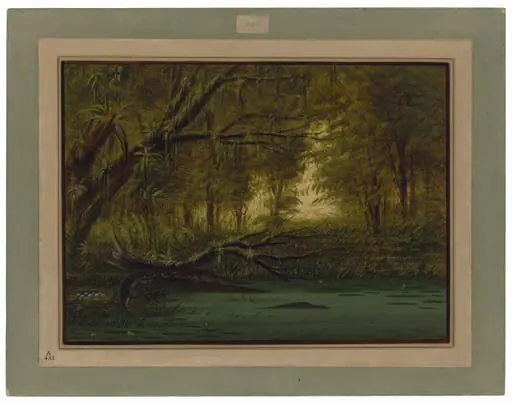 An Alligator's Nest
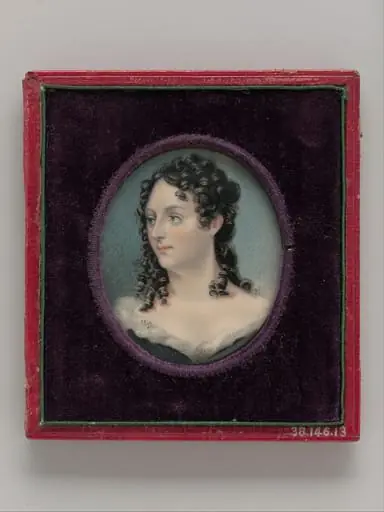 Mrs. George Catlin (Clara Bartlet Gregory)
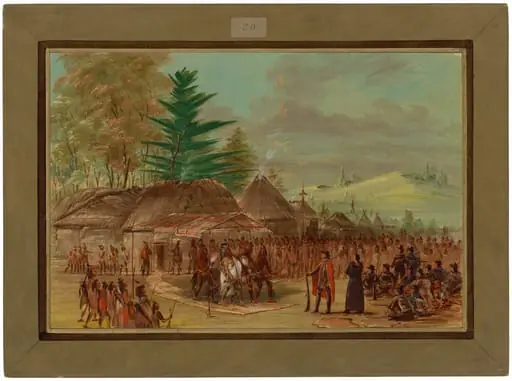 Chief of the Taensa Indians Receiving La Salle. March 20, 1682
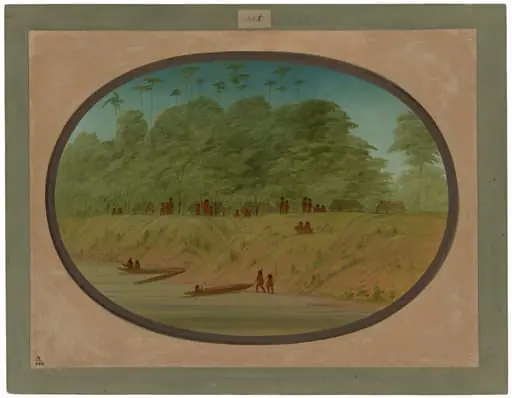 A Small Village - Payaguas Indians
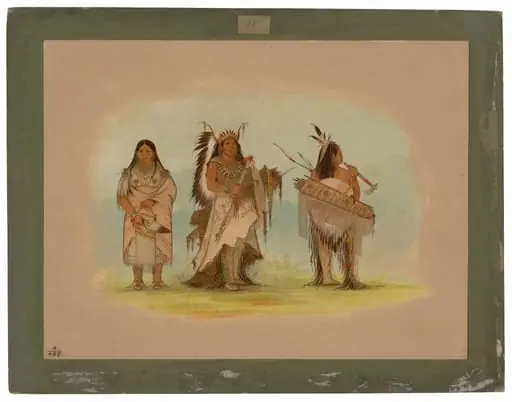 Omaha Chief, His Wife, and a Warrior
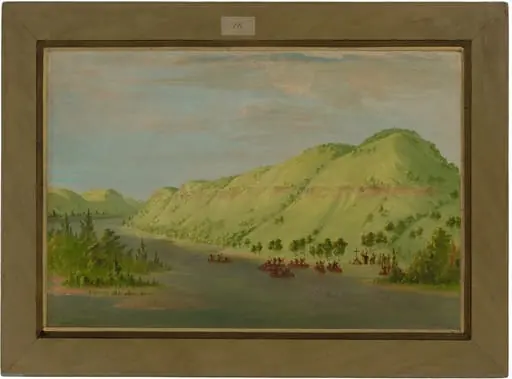 Father Hennepin Leaving the Mississippi to Join La Salle. May 8, 1680