Artwork
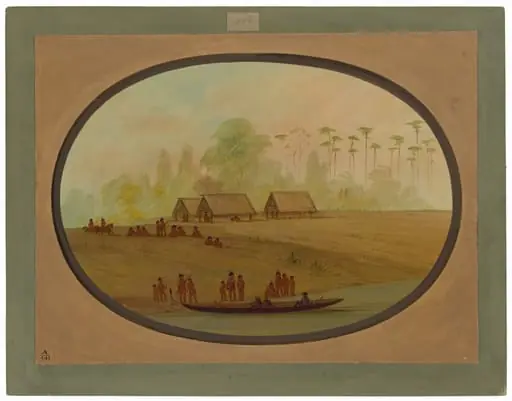
Pacapacurus Village
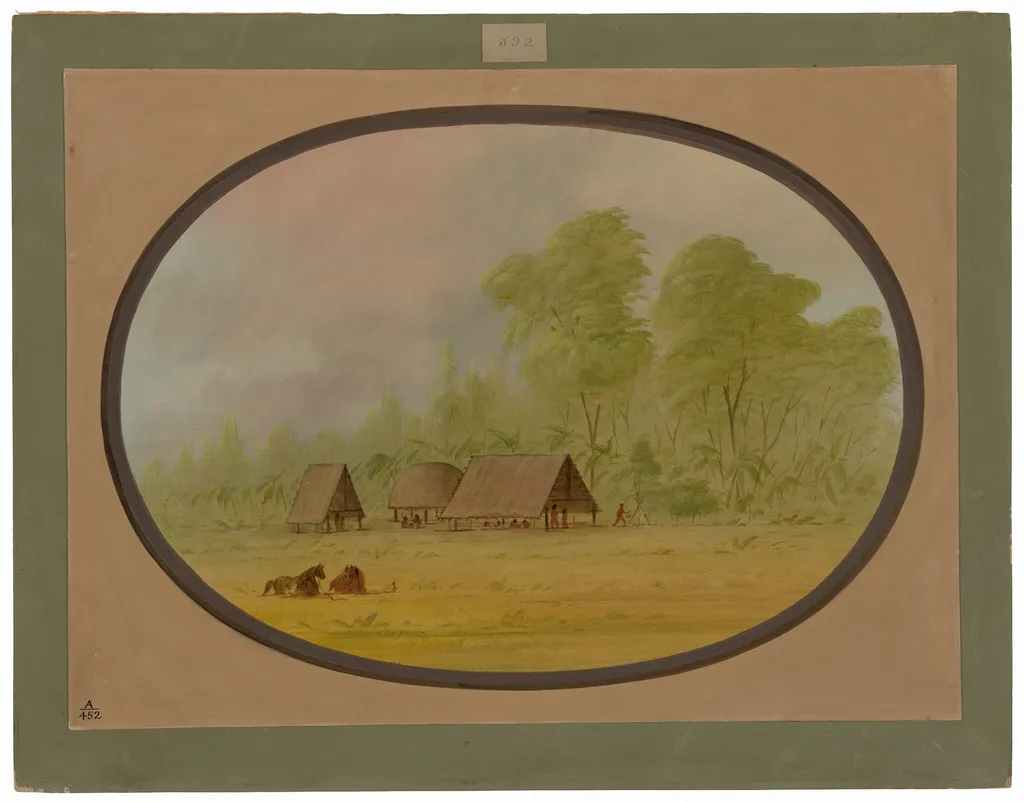
Pacapacurus Village is an oil painting by the American Folk Art artist George Catlin. It dates from 1862 and is held in the collection of the National Gallery of Art.
About this work
Subject & Meaning
The house, rendered with modest detail, serves as a visual marker of habitation, while the solitary tree introduces a natural element that frames the dwelling.
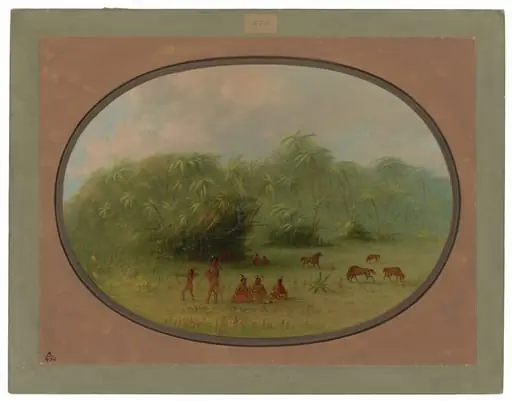
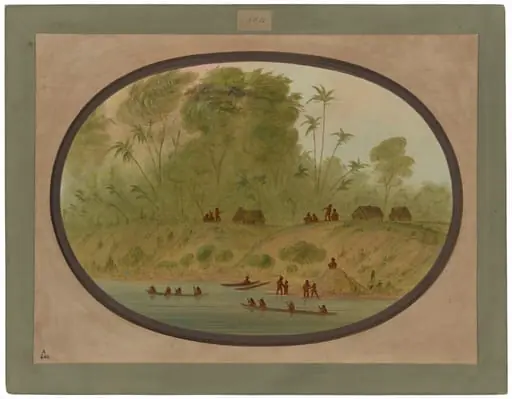
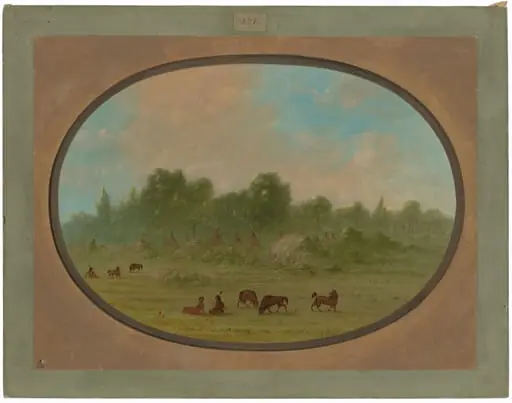
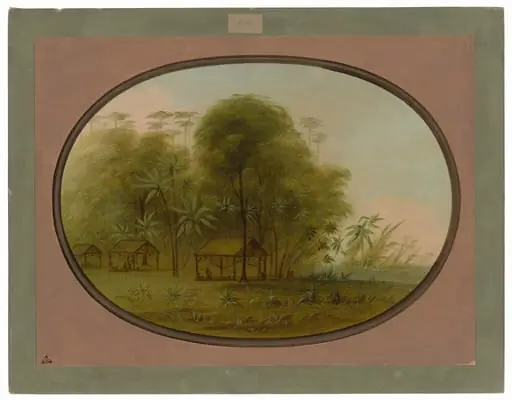
The painting Pacapacurus Village presents a modest thatched house set beside a lone tree against a sparse landscape. The house, rendered with modest detail, serves as a visual marker of habitation, while the solitary tree introduces a natural element that frames the dwelling. Together they suggest a quiet, self‑sufficient community integrated within its environment, emphasizing themes of settlement and the relationship between human shelter and the surrounding terrain.
The composition reflects Catlin’s interest in documenting indigenous structures and their immediate surroundings, using simple iconography to convey a sense of place and daily life.
Technique & Style
Pacapacurus Village is executed in oil paint, though sources present a discrepancy regarding the specific support. One record identifies the medium as oil on card mounted on paperboard, while another lists the material as oil paint on canvas. The work is classified as a landscape painting depicting houses and trees.
The composition measures approximately 46.1 centimeters in height and 62.9 centimeters in width. Created in 1873, the piece reflects George Catlin's landscape genre focus. No specific details regarding the painting's current condition, handling history, or fine stylistic brushwork are provided in the available documentation, though the physical dimensions and material composition are recorded as part of its formal description.
History & Provenance
Pacapacurus Village is an oil painting created by George Catlin in 1873. The work depicts a landscape featuring a house and trees, executed in oil on card mounted on paperboard. Following the artist's death in 1872, the painting passed by descent to his daughters: Clara Gregory Catlin, Louise Catlin Kinney, and Elizabeth Wing Catlin.
In 1912, Elizabeth Wing Catlin sold the piece to the American Museum of Natural History. The museum later sold the work in 1959 through Kennedy Galleries in New York to Paul Mellon of Upperville, Virginia. Finally, in 1965, Paul Mellon gifted the painting to the National Gallery of Art in Washington, D.C., where it remains part of the collection.
The painting is held by the National Gallery of Art, Washington, D.C., where it is accessioned as part of the museum’s permanent collection. It entered the NGA in 1965 as a gift from Mr. Paul Mellon, Upperville, VA, having previously been purchased in 1959 through Kennedy Galleries, New York, from Elizabeth Wing Catlin, one of the artist’s daughters. No exhibition history is recorded in the cited sources.
Overview
Pacapacurus Village is an oil painting from 1862 by George Catlin, executed on card and mounted on paperboard. This work exemplifies Catlin's broader artistic endeavor to document landscapes and daily life encountered during his extensive travels. The painting depicts a secluded cabin nestled beneath a large tree, with a low stone wall marking the foreground. Its earthy palette and detailed rendering reflect the artist's characteristic approach to capturing specific scenes.
Context
George Catlin, who transitioned from a legal career to painting, dedicated much of his life to documenting the indigenous cultures and landscapes of the American West. His extensive travels involved living among various Native American tribes, allowing him to observe and record their daily existence. Pacapacurus Village fits within this larger project, alongside earlier studies of regions like the Erie Canal route, showcasing his consistent practice of visual ethnography.
Legacy
This painting contributes to Catlin's substantial body of work, which includes numerous portraits of Native American individuals and depictions of their communities. His efforts to preserve these images through art have provided significant historical and cultural documentation. Other notable works by Catlin, particularly his portraits of Native Americans, are housed in prominent collections such as the National Gallery of Art in Washington, D.C.
Own this work as a print
Artist & collection

Artist
George Catlin ( KAT-lin; July 26, 1796 – December 23, 1872) was an American lawyer, painter, author, and traveler, who specialized in portraits of Native Americans in the American frontier.

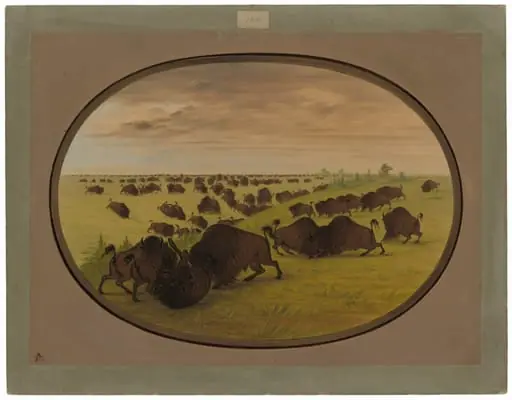 Bulls Fighting
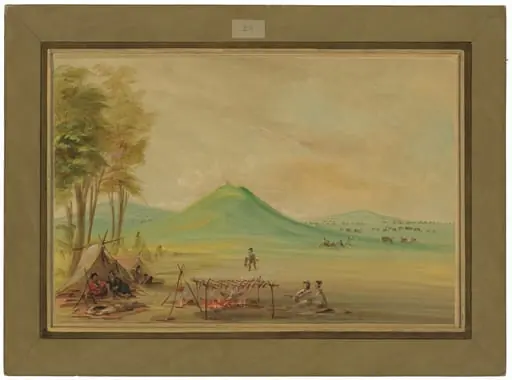 Expedition Encamped on a Texas Prairie. April 1686
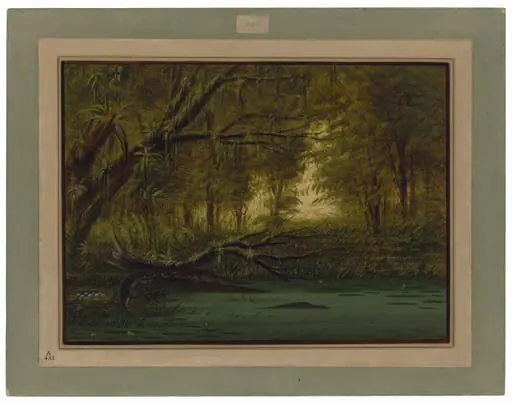 An Alligator's Nest
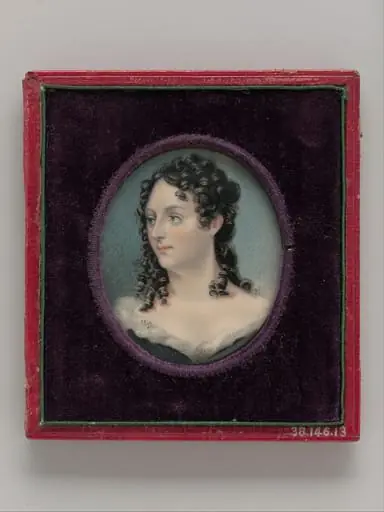 Mrs. George Catlin (Clara Bartlet Gregory)
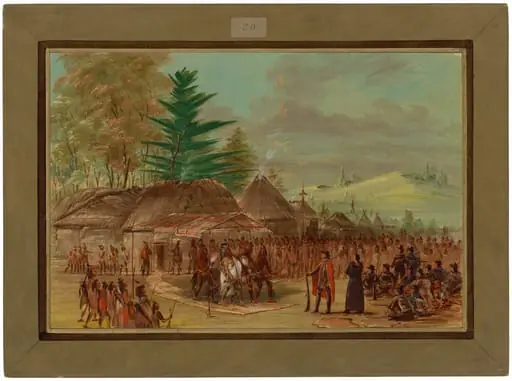 Chief of the Taensa Indians Receiving La Salle. March 20, 1682
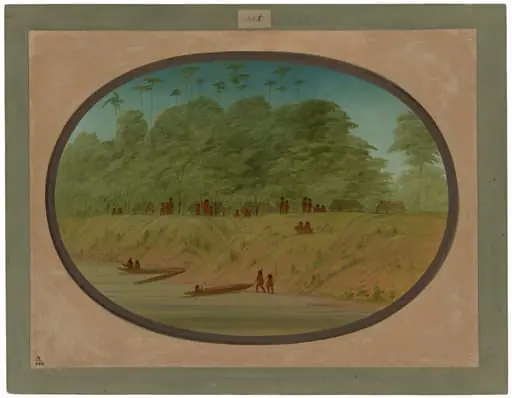 A Small Village - Payaguas Indians
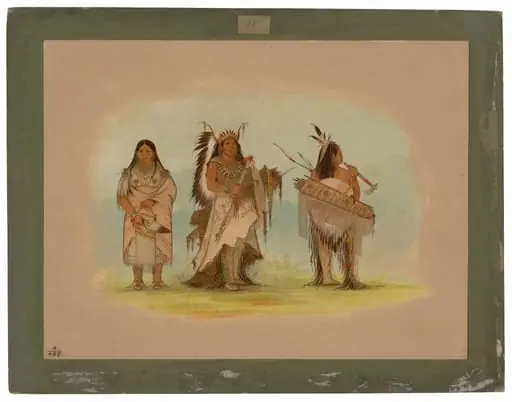 Omaha Chief, His Wife, and a Warrior
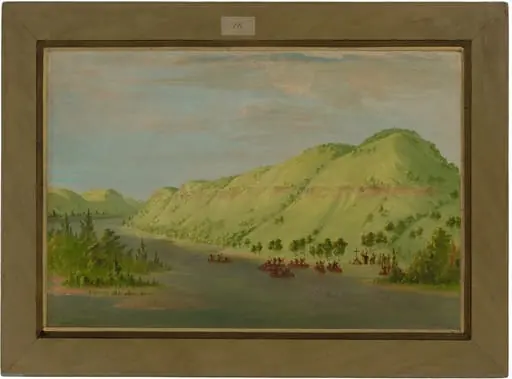 Father Hennepin Leaving the Mississippi to Join La Salle. May 8, 1680