Artwork
La Salle and Party Arrive at the Village of the Illinois. January 1, 1680
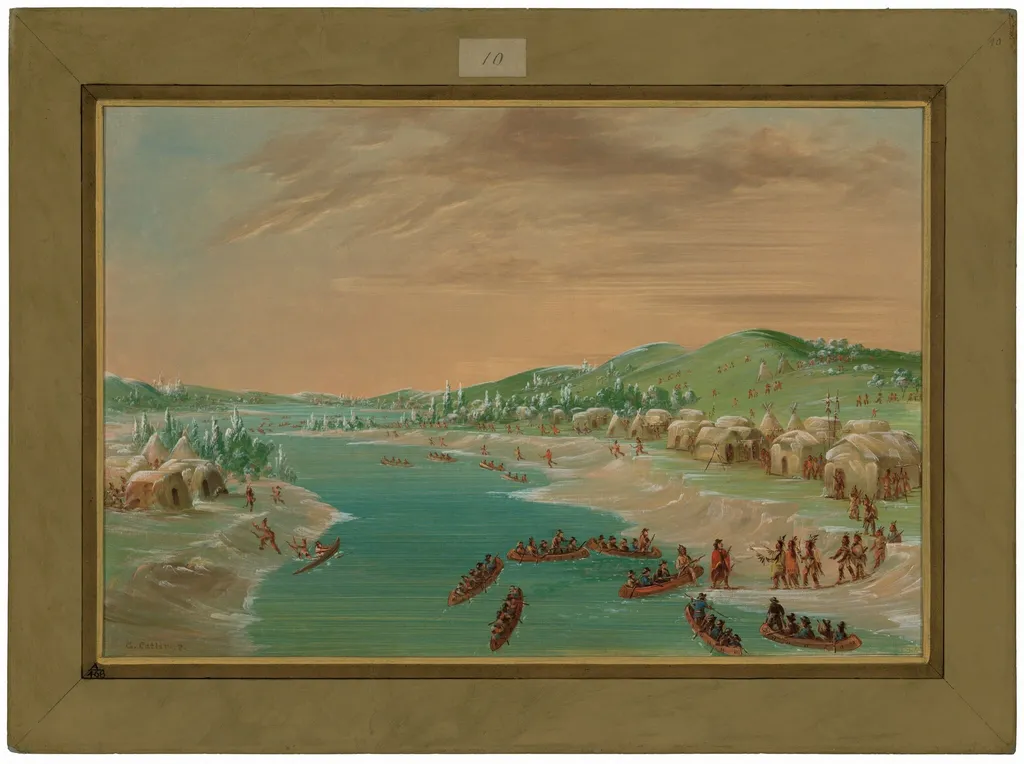
La Salle and Party Arrive at the Village of the Illinois. January 1, 1680 is an oil painting by the Romanticist artist George Catlin. It dates from 1848 and is held in the collection of the National Gallery of Art.
- Inscription
- Inscribed:lower left: G. Catlin. P.
About this work
This painting shows a group of people in a wooden boat arriving at a Native village. Snow covers the ground and smoke rises from the homes. The Illinois tribe waits on the shore with fur robes and bows.
George Catlin painted this scene from memory. He never actually visited Illinois in 1680. He met trappers and traders who told him stories instead.
George Catlin
Technique & Style
The medium is oil paint, applied to a relatively modest support measuring 37.
The work is an oil painting executed on card mounted on paperboard, a support choice characteristic of Catlin's field practice rather than the more durable canvas typically associated with studio history paintings. The medium is oil paint, applied to a relatively modest support measuring 37.8 cm in height by 56.2 cm in width. As a history painting genre work, the composition organizes a narrative encounter around a boat, with the small horizontal format suited to documentary reportage of the 1680 event. No condition notes are recorded in the available sources.
History & Provenance
George Catlin painted La Salle and Party Arrive at the Village of the Illinois in 1850, depicting the 1680 encounter between French explorer René-Robert Cavelier, Sieur de la Salle, and members of the Illinois people. The work was created as an oil on canvas history painting, reflecting Catlin’s lifelong focus on documenting Native American cultures and French colonial expeditions. After Catlin’s death, the painting descended through his daughters, Clara Gregory Catlin, Louise Catlin Kinney, and Elizabeth Wing Catlin, before being sold in 1912 to the American Museum of Natural History.
It later passed through Kennedy Galleries in New York and was acquired by Paul Mellon in 1959, who subsequently gifted it to the National Gallery of Art in 1965.
The provenance chain is well documented, tracing ownership from Catlin’s family to institutional and private collectors, with the National Gallery of Art now holding the work in its permanent collection.
The painting is held by the National Gallery of Art, Washington, D.C., where it is recorded with accession number 1965.1.88.
Its exhibition history begins with its acquisition by the American Museum of Natural History in 1912, followed by a sale in 1959 through Kennedy Galleries to Paul Mellon, who gifted it to the National Gallery of Art in 1965.
Legacy
The painting influenced later American historical art and was collected by major institutions. It entered the National Gallery of Art's collection through the bequest of Paul Mellon in 1965, affirming its significance in American art history.
Its depiction of French explorer René-Robert Cavelier, Sieur de La Salle arriving at an Illinois village has become an iconic representation of early colonial encounters, frequently referenced in scholarship on 19th-century American historical painting and the visual culture of westward expansion.
Overview
George Catlin’s 1848 oil painting on card, titled La Salle and Party Arrive at the Village of the Illinois, January 1, 1680, portrays a winter scene in which a wooden boat approaches a native settlement. Snow blankets the ground, smoke curls from the dwellings, and members of the Illinois tribe stand on the shore in fur robes, holding bows.
Subject & Meaning
The work imagines the historic encounter between French explorer René R. La Salle’s expedition and the Illinois people. By depicting the tribe awaiting the newcomers, Catlin emphasizes early contact between European explorers and Indigenous communities, reflecting his interest in recording frontier encounters.
Context
During the 1830s Catlin traveled extensively through the American West, creating portraits and scenes of Indigenous peoples. His later historical works, such as this one, blend personal memory with second‑hand accounts, illustrating the 19th‑century fascination with early colonial encounters.
Own this work as a print
Artist & collection

Artist
George Catlin ( KAT-lin; July 26, 1796 – December 23, 1872) was an American lawyer, painter, author, and traveler, who specialized in portraits of Native Americans in the American frontier.

 Bulls Fighting
 Expedition Encamped on a Texas Prairie. April 1686
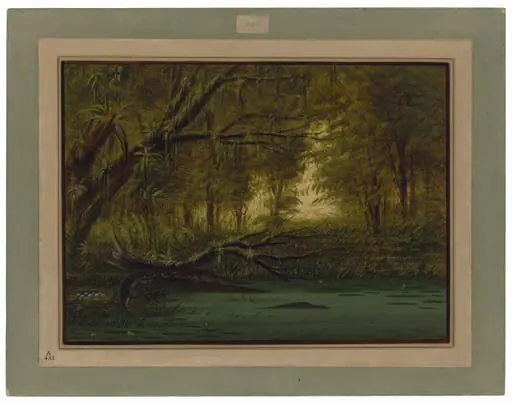 An Alligator's Nest
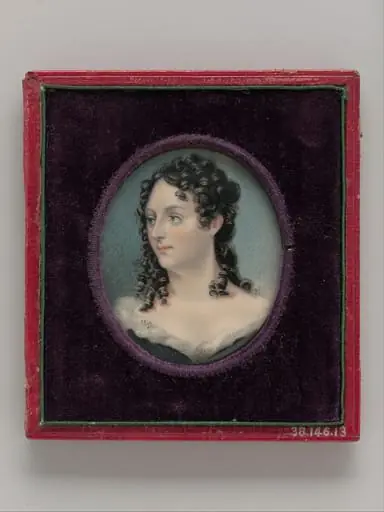 Mrs. George Catlin (Clara Bartlet Gregory)
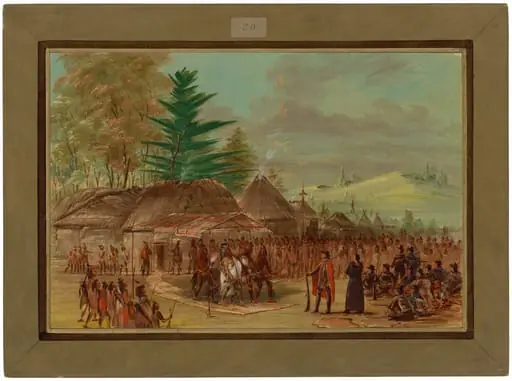 Chief of the Taensa Indians Receiving La Salle. March 20, 1682
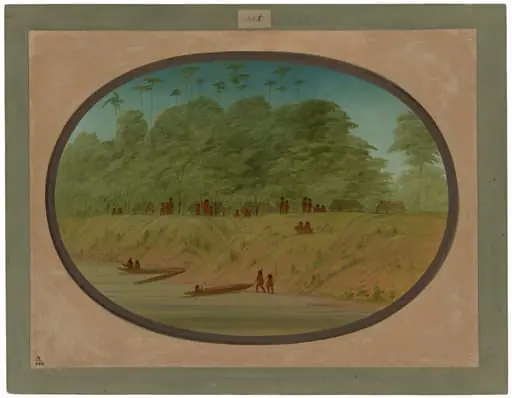 A Small Village - Payaguas Indians
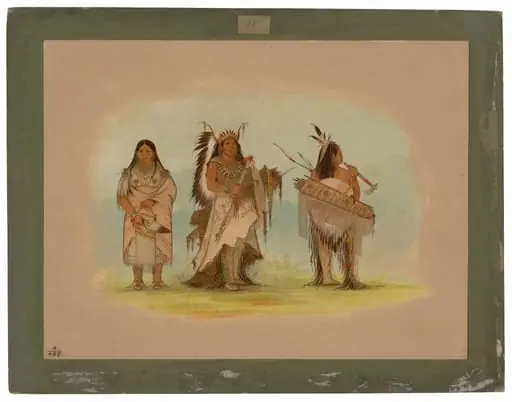 Omaha Chief, His Wife, and a Warrior
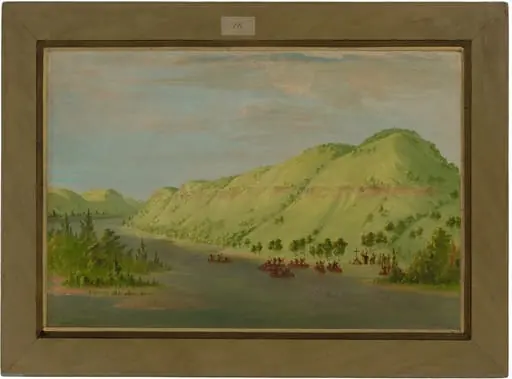 Father Hennepin Leaving the Mississippi to Join La Salle. May 8, 1680
- La Salle Claiming Louisiana for France. April 9, 1682
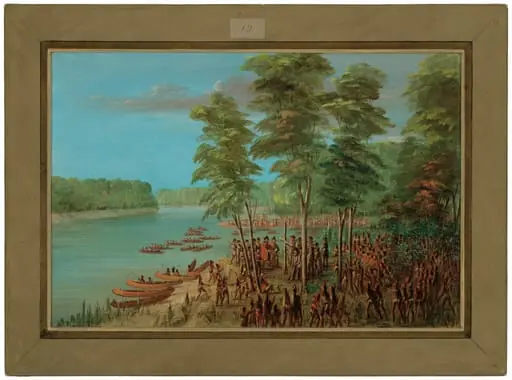 La Salle Taking Possession of the Land at the Mouth of the Arkansas. March 10, 1682
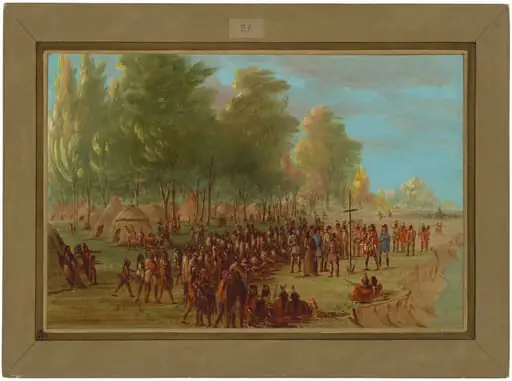 La Salle Erecting a Cross and Taking Possession of the Land. March 25, 1682
 La Salle Driving the First Bolt for the Griffin. January 26, 1679
 La Salle's Party Entering the Mississippi in Canoes. February 6, 1682
 La Salle Received in the Village of the Cenis Indians. May 6, 1686
 La Salle Crossing Lake Michigan on the Ice. December 8, 1681
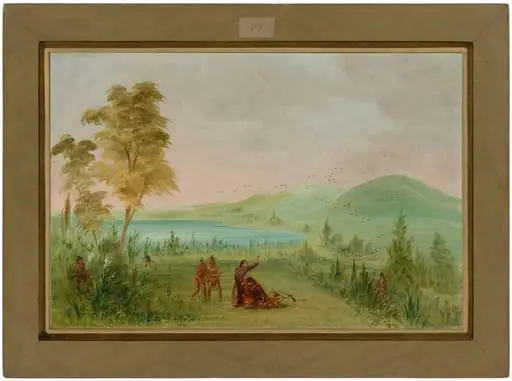 La Salle Assassinated by Duhaut. May 19, 1686
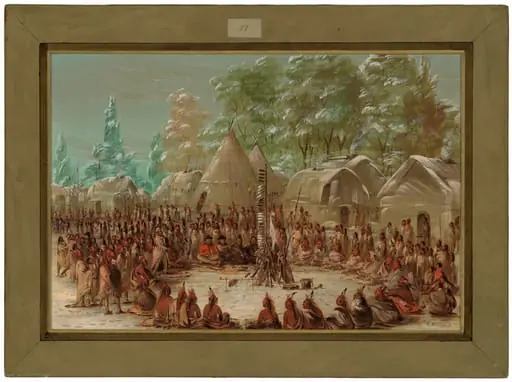 La Salle's Party Feasted in the Illinois Village. January 2, 1680
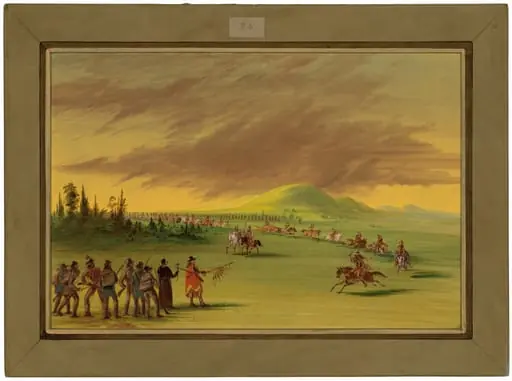 La Salle Meets a War Party of Cenis Indians on a Texas Prairie. April 25, 1686
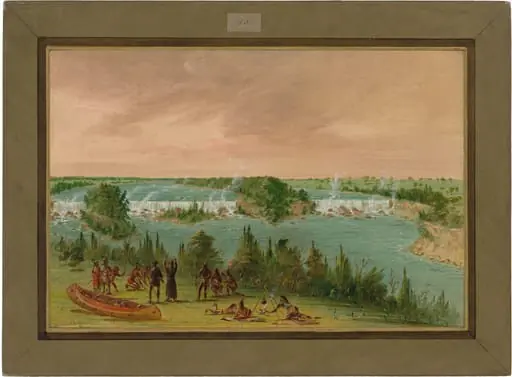 Father Hennepin and Companions at the Falls of St. Anthony. May 1, 1680