Artwork
Ostrich Chase, Buenos Aires - Auca
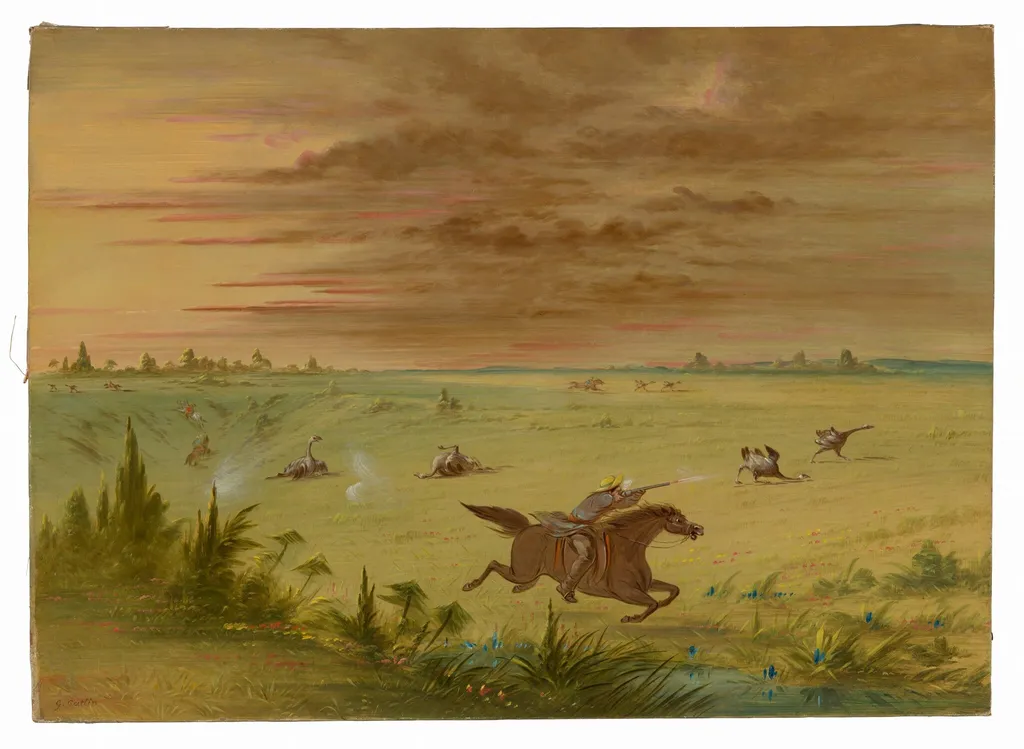
Ostrich Chase, Buenos Aires - Auca is an oil painting by the Impressionist artist George Catlin. It dates from 1862 and is held in the collection of the National Gallery of Art.
- Inscription
- Inscribed:lower left: G. Catlin
About this work
George Catlin painted a wild hunt scene on a river. A boat races past trees. Men with hats and sticks chase an ostrich in the water.
This looks like a real event but it’s also a made-up story. Catlin never went to Buenos Aires. He painted it from notes and guesses years later, in 1869.
He used quick brushwork and bright colors to show motion. Check out Catlin, George next.
Technique & Style
The composition is a genre scene depicting an ostrich chase set in Buenos Aires, with the imagery incorporating a boat and trees within the landscape.
Ostrich Chase, Buenos Aires - Auca is classified as a painting executed in oil on card mounted on paperboard, a relatively modest support choice characteristic of Catlin's later field work. The National Gallery of Art's cataloguing records this oil-based medium on a lightweight card-and-paperboard substrate rather than canvas, distinguishing it from his larger studio canvases. The composition is a genre scene depicting an ostrich chase set in Buenos Aires, with the imagery incorporating a boat and trees within the landscape.
The work measures 47.3 cm in height by 65.8 cm in width, giving it a horizontal orientation suited to its expansive subject matter. The painting dates to 1873, falling within the final period of Catlin's career, when he was producing smaller-format works documenting scenes from South America.
History & Provenance
Ostrich Chase, Buenos Aires - Auca was painted by George Catlin in 1873, executed in oil on card that is mounted on paperboard. The work measures 47.3 cm by 65.8 cm. After Catlin’s death the painting passed to his daughters Clara Gregory Catlin, Louise Catlin Kinney and Elizabeth Wing Catlin, and remained in the family until 1912 when Elizabeth sold it to the American Museum of Natural History. Five years later Kennedy Galleries in New York sold the piece to Paul Mellon, who later gifted it to the National Gallery of Art in 1965.
The painting Ostrich Chase, Buenos Aires - Auca is currently held by the National Gallery of Art in Washington, D.C., where it was accessioned as a gift in 1965. Prior to this acquisition, the work was sold in 1959 through Kennedy Galleries in New York to collector Paul Mellon of Upperville, Virginia. Its earlier provenance traces to the American Museum of Natural History, which purchased the piece in 1912 from Elizabeth Wing Catlin, a daughter of the artist George Catlin.
The work remained in the Catlin family until that 1912 transaction, having descended from the artist to his daughters Clara Gregory Catlin, Louise Catlin Kinney, and Elizabeth Wing Catlin.
While the artwork has a documented chain of custody involving major institutions and private collectors, the provided sources do not list specific exhibition histories or public display dates for the painting.
Overview
Ostrich Chase, Buenos Aires - Auca is an oil painting by American artist George Catlin, executed on card and mounted on paperboard. This work presents a lively genre scene, capturing a moment of intense action on a river. It features a boat carrying several figures, who are depicted in the midst of pursuing an ostrich through the water, alongside a backdrop of trees.
Subject & Meaning
The painting illustrates a dramatic chase unfolding on a river, where figures in a boat, identifiable by their hats and sticks, are shown actively pursuing an ostrich. While the scene appears to capture a specific, authentic event, it is in fact an imaginative reconstruction. Catlin never traveled to Buenos Aires, the purported setting, instead composing this work years later based on various notes and speculative details.
Own this work as a print
Artist & collection

Artist
George Catlin ( KAT-lin; July 26, 1796 – December 23, 1872) was an American lawyer, painter, author, and traveler, who specialized in portraits of Native Americans in the American frontier.

 Bulls Fighting
 Expedition Encamped on a Texas Prairie. April 1686
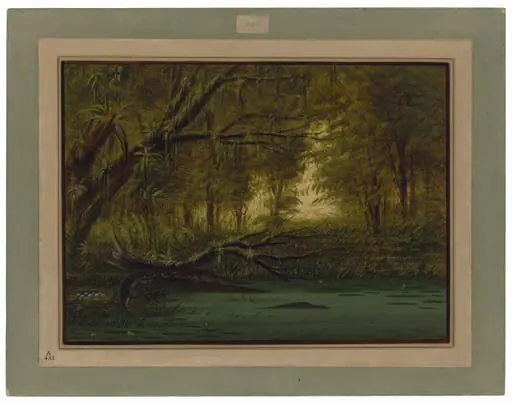 An Alligator's Nest
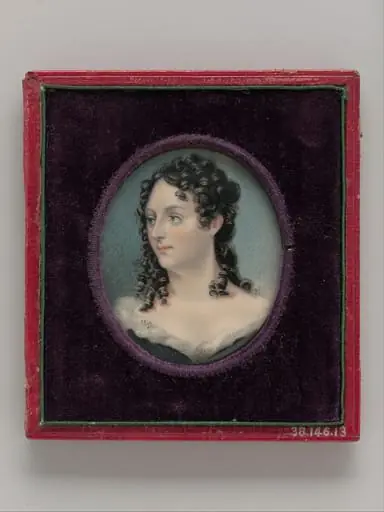 Mrs. George Catlin (Clara Bartlet Gregory)
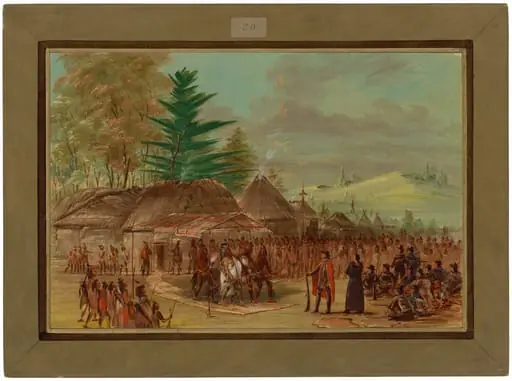 Chief of the Taensa Indians Receiving La Salle. March 20, 1682
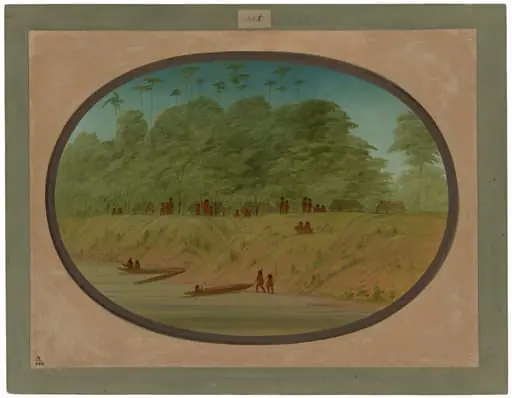 A Small Village - Payaguas Indians
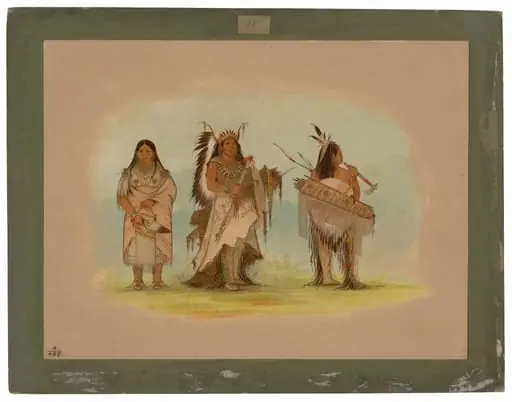 Omaha Chief, His Wife, and a Warrior
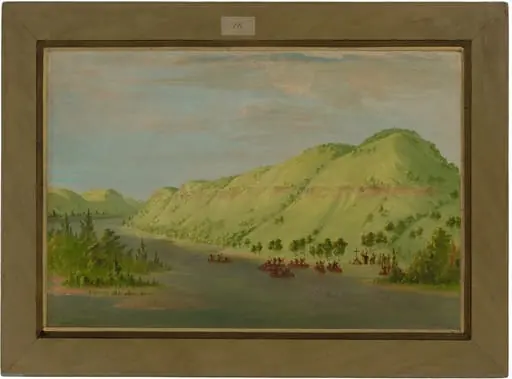 Father Hennepin Leaving the Mississippi to Join La Salle. May 8, 1680
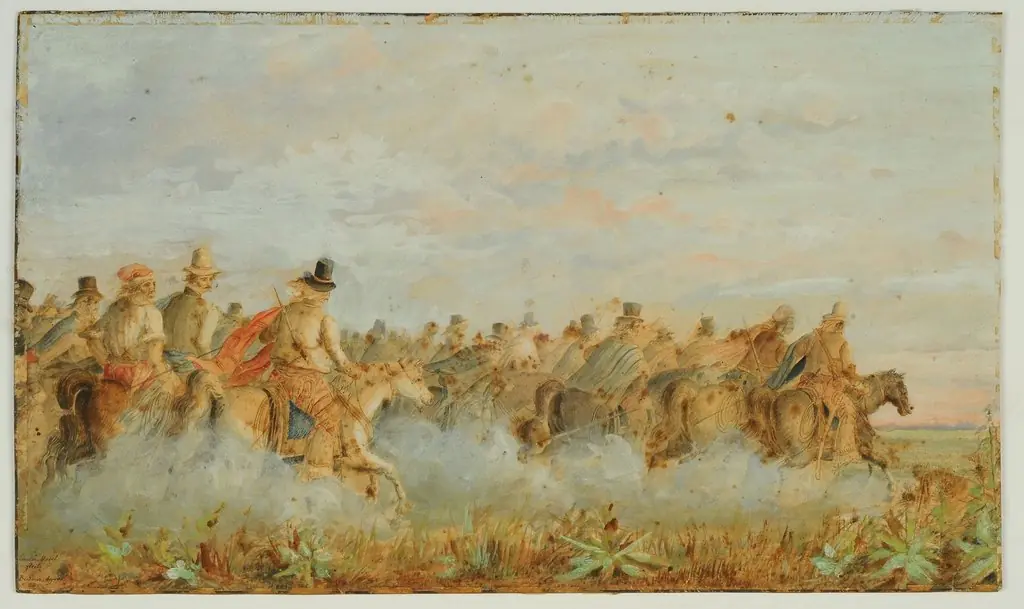 Caballería Gaucha
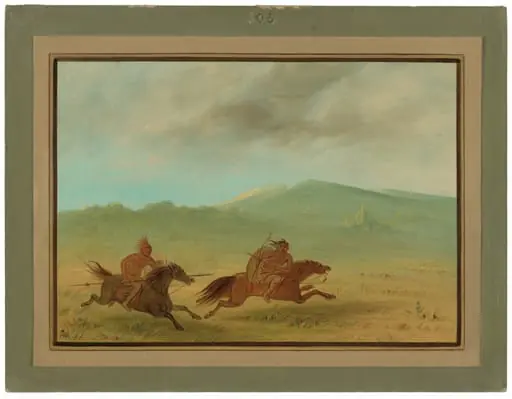 An Osage Indian Pursuing a Camanchee
 Battle between the Jiccarilla Apachees and Camanchees
 The Challenge
 Connibos Starting for Wild Horses
 Rushing Red Lodges Passed through the Line
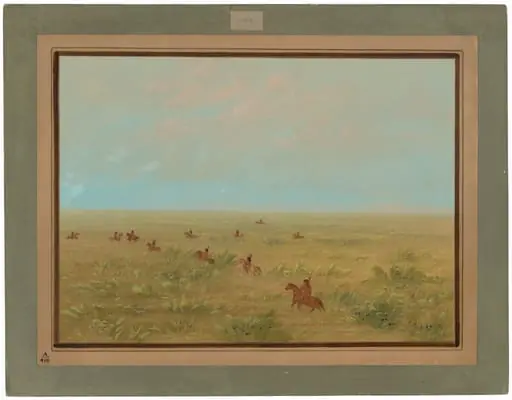 Driving the Pampas for Wild Cattle - Connibo
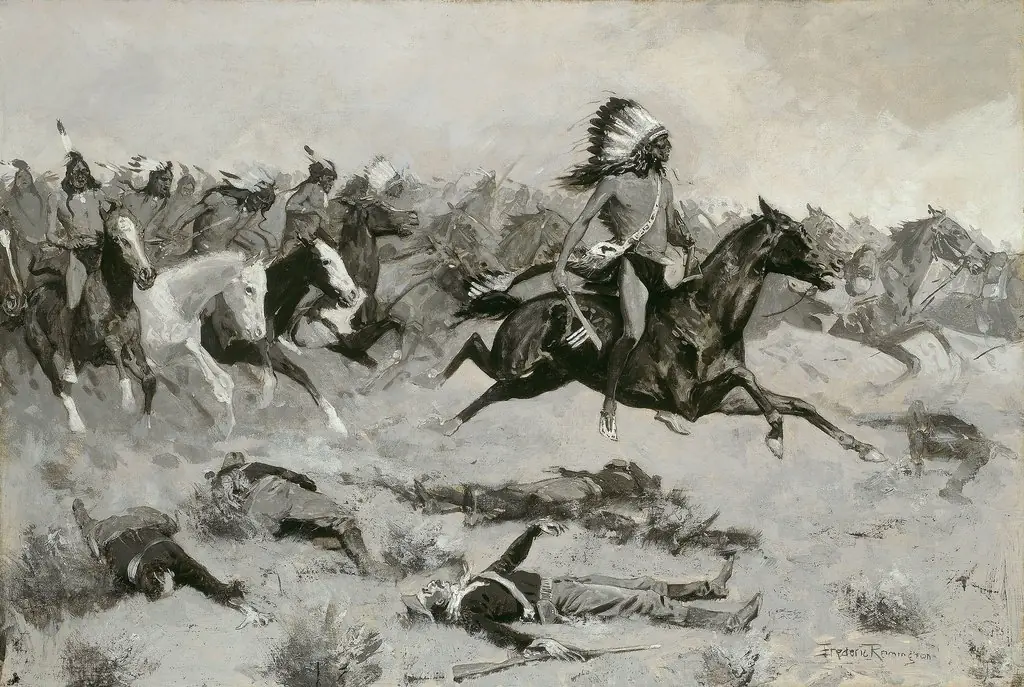 Rushing Red Lodges Passed through the Line
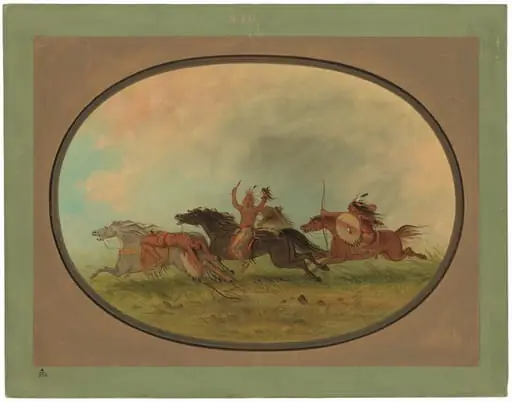 The Scalper Scalped - Pawnees and Cheyennes
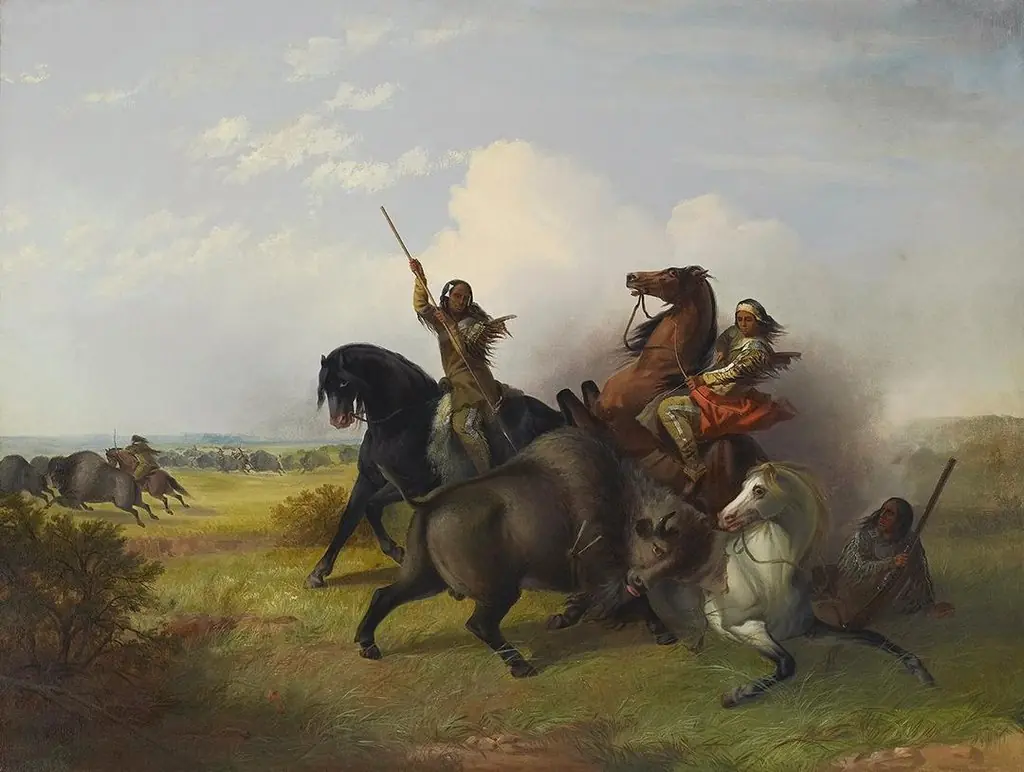 The Buffalo Hunt