Artwork
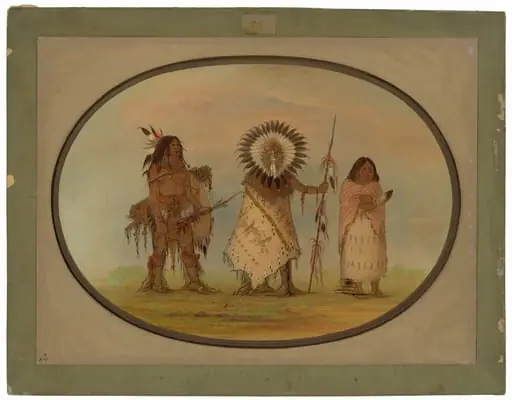
Three Blackfoot Men
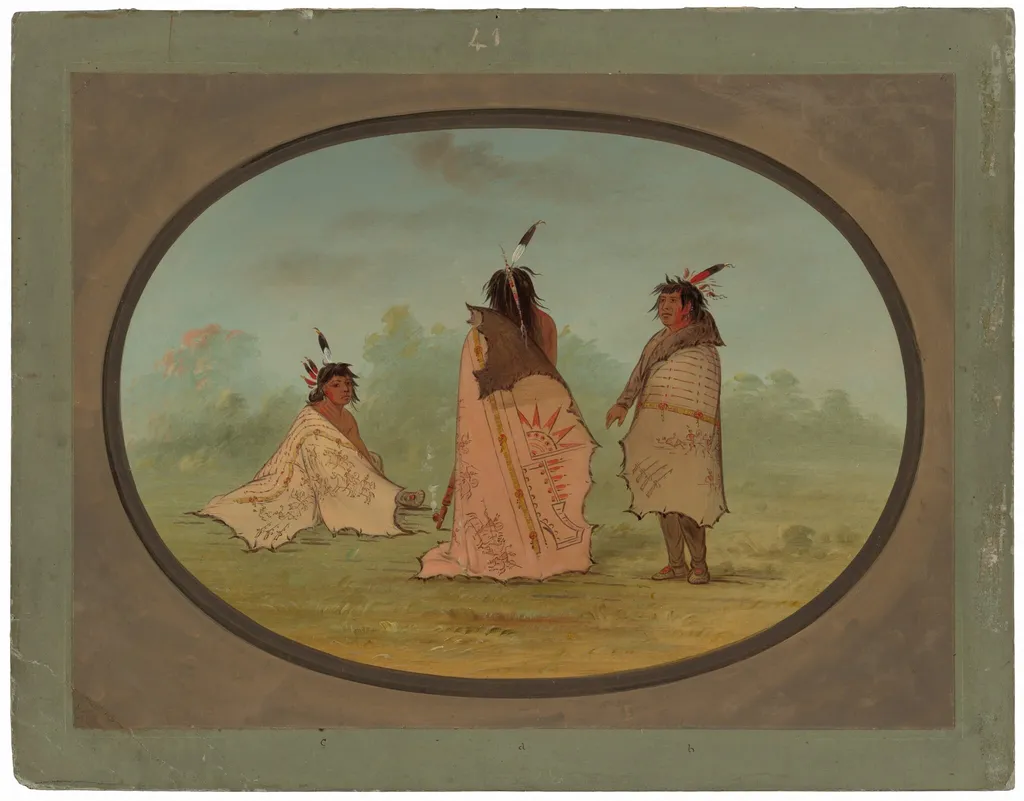
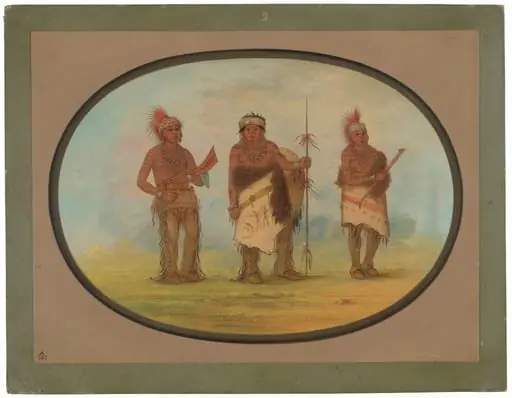
Three Blackfoot Men is an oil painting by the American Folk Art artist George Catlin. It dates from 1862 and is held in the collection of the National Gallery of Art.
About this work
Technique & Style
Three Blackfoot Men is an oil painting executed on a rigid card that is affixed to a paperboard support, a technique reflected in its medium description.
Three Blackfoot Men is an oil painting executed on a rigid card that is affixed to a paperboard support, a technique reflected in its medium description. The work was created in 1862 using oil pigments applied to the card, which provides a stable surface for detailed brushwork. As a portrait, it portrays three members of the Blackfoot tribe, and the composition centers on a stylized tree that frames the figures, giving the piece a clear formal structure.
The painting’s condition has not been publicly documented, and no specific handling protocols are recorded in the available records.
History & Provenance
George Catlin painted Three Blackfoot Men in 1862, using oil on card mounted on paperboard; the work measures 62 cm by 46.1 cm. The painting remained in the artist’s family after its creation, passing to his daughters Clara Gregory Catlin, Louise Catlin Kinney, and Elizabeth Wing Catlin. In 1912 the piece was sold by Elizabeth Wing Catlin to the American Museum of Natural History. It was later sold in 1959 through Kennedy Galleries in New York to Paul Mellon. The National Gallery of Art acquired the work as a gift in 1965.
Three Blackfoot Men, painted by George Catlin in 1862, is part of the National Gallery of Art’s collection in Washington, D.C. The work entered the museum in 1965 as a gift from Paul Mellon, who acquired it in 1959 from Kennedy Galleries in New York after it had been held by the American Museum of Natural History following its descent through the artist’s daughters. No inventory or accession number is published in the sources, and the painting’s exhibition record consists solely of displays within the National Gallery’s permanent collection galleries.
Context
The painting titled Three Blackfoot Men was created by George Catlin in 1862. Executed in oil on card mounted on paperboard, it measures 46.1 cm by 62 cm and belongs to the portrait genre within Catlin’s body of work documenting Native American subjects. The work entered the National Gallery of Art’s collection in 1965 after a gift from Paul Mellon, following a provenance that traces back to the artist’s daughters and a 1959 sale through Kennedy Galleries.
Scholarship interprets the piece as part of Catlin’s ethnographic project that reflected 19th‑century interest in indigenous peoples, positioning it as an early example of American portraiture that blends documentary realism with romanticized vision.
Overview
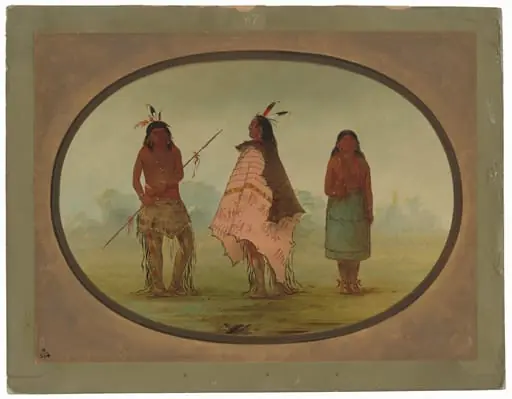
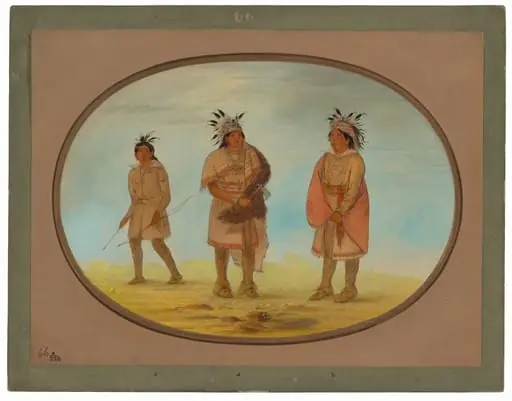
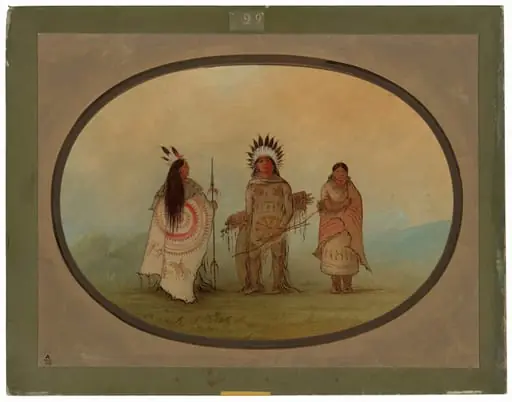
George Catlin's 1862 painting, Three Blackfoot Men, is an oil on card mounted on paperboard. This work features three individuals from the Blackfoot tribe, depicted in traditional dress, standing beneath a tree. Catlin, a painter who dedicated his career to portraying Indigenous life, created this piece as part of his extensive efforts to document Native American communities on the American frontier. The painting serves as a visual record of the people he encountered during his travels.
Subject & Meaning
The painting captures three Blackfoot men, presented in their customary attire, positioned near a tree. Catlin's intention was to record the appearance and cultural practices of the Indigenous peoples he encountered. Through this portrait, the artist aimed to provide a visual account of the Blackfoot community, offering viewers a glimpse into their lives and traditions during a period of significant change on the American frontier.
Own this work as a print
Artist & collection

Artist
George Catlin ( KAT-lin; July 26, 1796 – December 23, 1872) was an American lawyer, painter, author, and traveler, who specialized in portraits of Native Americans in the American frontier.

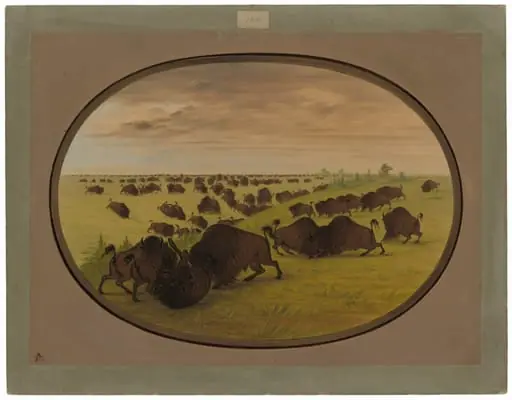 Bulls Fighting
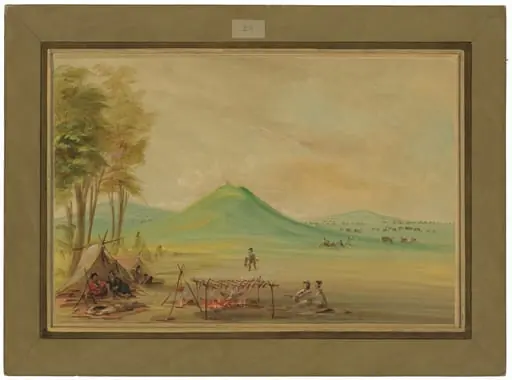 Expedition Encamped on a Texas Prairie. April 1686
 An Alligator's Nest
 Mrs. George Catlin (Clara Bartlet Gregory)
 Chief of the Taensa Indians Receiving La Salle. March 20, 1682
 A Small Village - Payaguas Indians
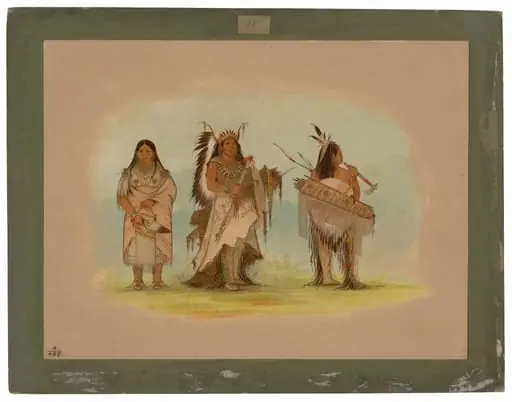 Omaha Chief, His Wife, and a Warrior
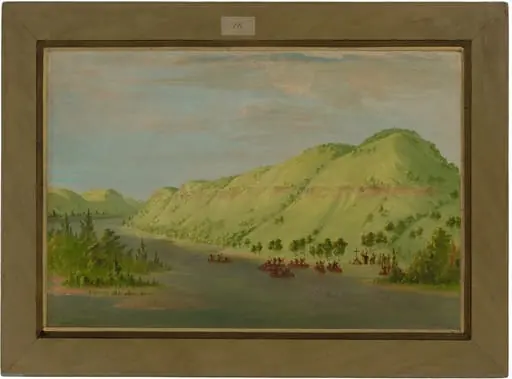 Father Hennepin Leaving the Mississippi to Join La Salle. May 8, 1680