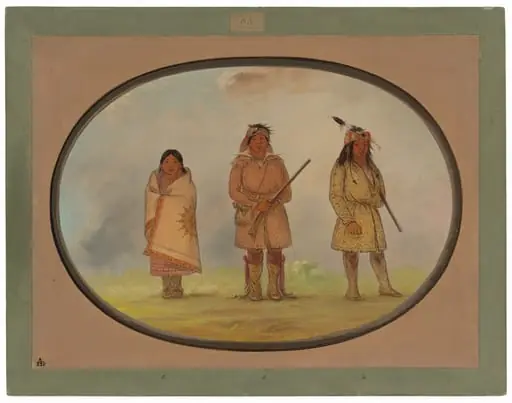
Artwork
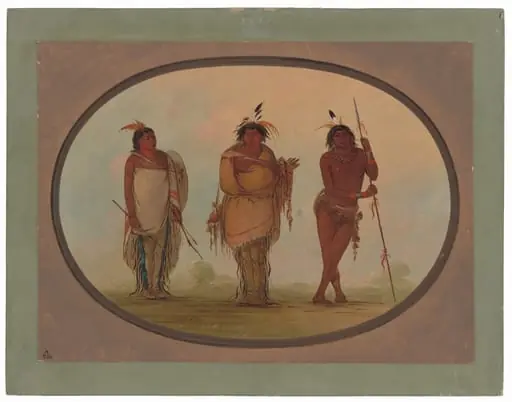
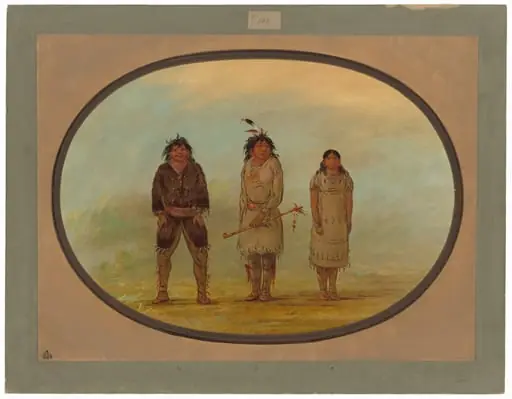
Three Iowa Indians
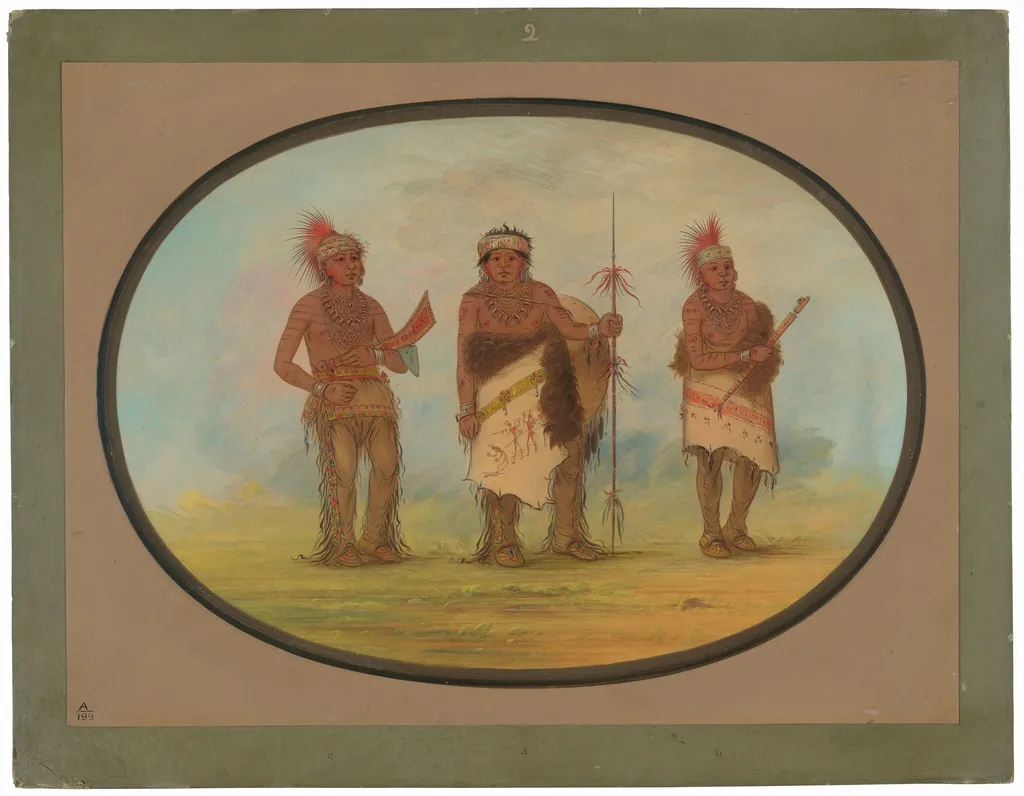
Three Iowa Indians is an oil painting by the American Folk Art artist George Catlin. It dates from 1865 and is held in the collection of the National Gallery of Art.
About this work
Subject & Meaning
The painting Three Iowa Indians by George Catlin depicts a group of Native Americans, specifically identified as members of the Iowa tribe.
The painting Three Iowa Indians by George Catlin depicts a group of Native Americans, specifically identified as members of the Iowa tribe. Created in 1865, the work functions as a portrait genre piece that documents the appearance and presence of these Indigenous individuals. As part of Catlin's broader oeuvre focused on Native American life, the subject matter represents a historical record of the Iowa people during the mid-nineteenth century.
The composition serves to preserve the visual identity of the subjects, aligning with the artist's intent to capture the cultures of the American West before they were irrevocably altered by expansion.
Technique & Style
Three Iowa Indians is a small-format oil painting executed on card that has been mounted on paperboard, a support combination consistent with Catlin's portable field-and-studio practice. The composition measures 46.8 cm in height by 63.2 cm in width, producing a horizontal format suited to a multi-figure group portrait.
Stylistically, the work belongs to Catlin's sustained documentary portraiture of Native American peoples, presenting its subjects frontally as ethnographic types rather than individualized sitters. The handling is direct and descriptive, with the oil medium applied over a rigid card support to allow rapid execution while traveling.
History & Provenance
George Catlin painted Three Iowa Indians in 1865 using oil on card mounted on paperboard. The work descended from the artist to his daughters Clara Gregory Catlin, Louise Catlin Kinney, and Elizabeth Wing Catlin, and was acquired in 1912 by the American Museum of Natural History from Elizabeth Wing Catlin. In 1959 the painting passed through Kennedy Galleries, New York, to collector Paul Mellon, and in 1965 it was gifted to the National Gallery of Art, Washington, D.C., where it is catalogued as accession number 1965.13.1.
Overview
George Catlin's Three Iowa Indians, painted in 1865, is an oil on card mounted on paperboard work. It presents three individuals from the Iowa tribe, rendered with considerable attention to their traditional attire and facial features. This piece reflects Catlin's long-standing dedication to documenting Native American cultures through portraiture, a practice he pursued extensively throughout his career as an American artist.
Context
George Catlin, originally trained in law, became a dedicated artist specializing in Native American portraiture. His commitment led him to undertake five extensive journeys through the American West during the 1830s, where he meticulously documented the lives and appearances of various indigenous groups. This 1865 work continues his lifelong project of creating a visual archive of these cultures.
Own this work as a print
Artist & collection

Artist
George Catlin ( KAT-lin; July 26, 1796 – December 23, 1872) was an American lawyer, painter, author, and traveler, who specialized in portraits of Native Americans in the American frontier.

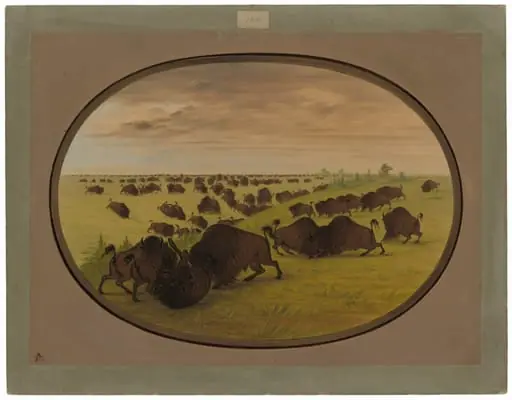 Bulls Fighting
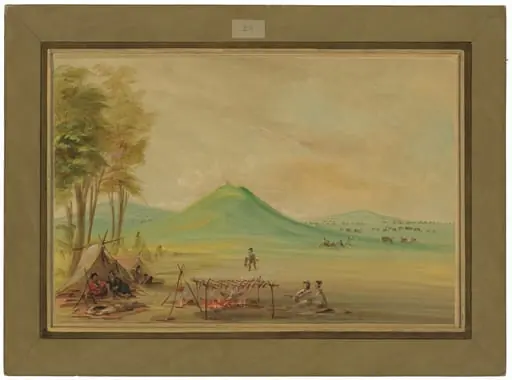 Expedition Encamped on a Texas Prairie. April 1686
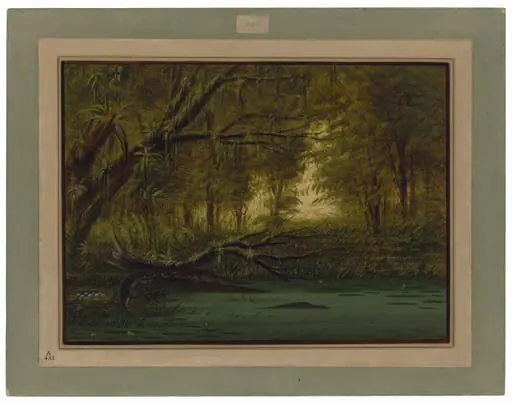 An Alligator's Nest
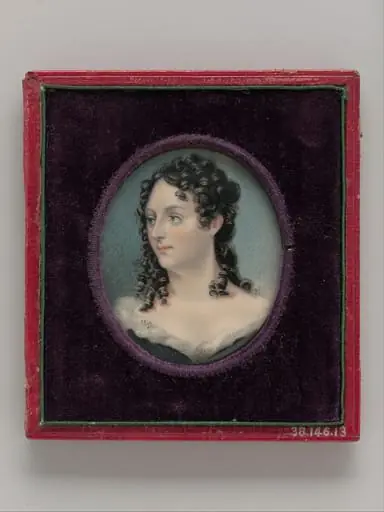 Mrs. George Catlin (Clara Bartlet Gregory)
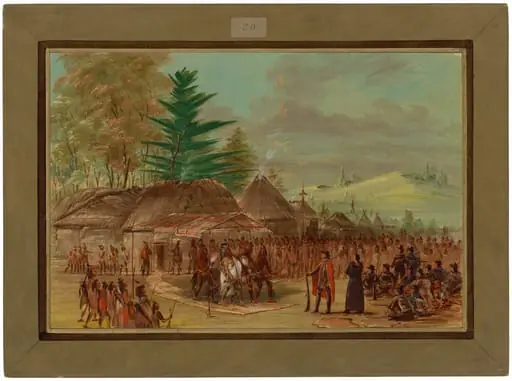 Chief of the Taensa Indians Receiving La Salle. March 20, 1682
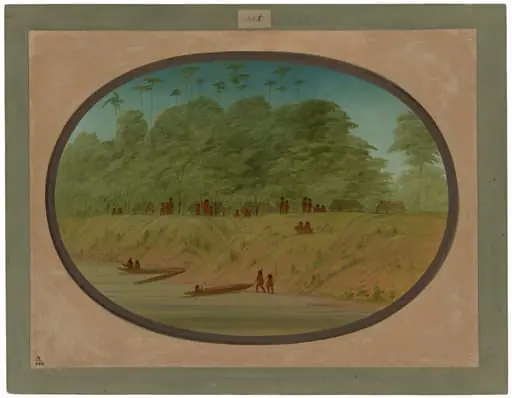 A Small Village - Payaguas Indians
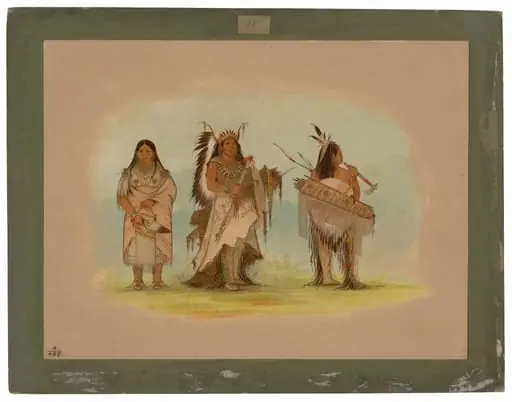 Omaha Chief, His Wife, and a Warrior
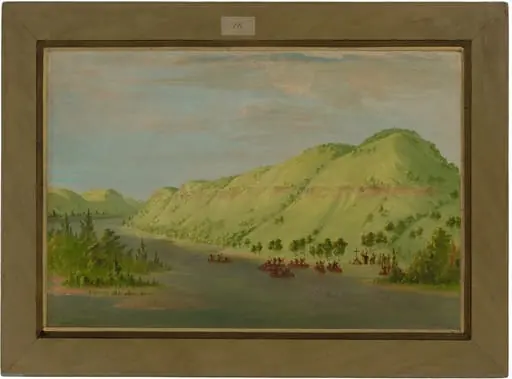 Father Hennepin Leaving the Mississippi to Join La Salle. May 8, 1680