Artwork
A Crow Chief, a Warrior, and His Wife
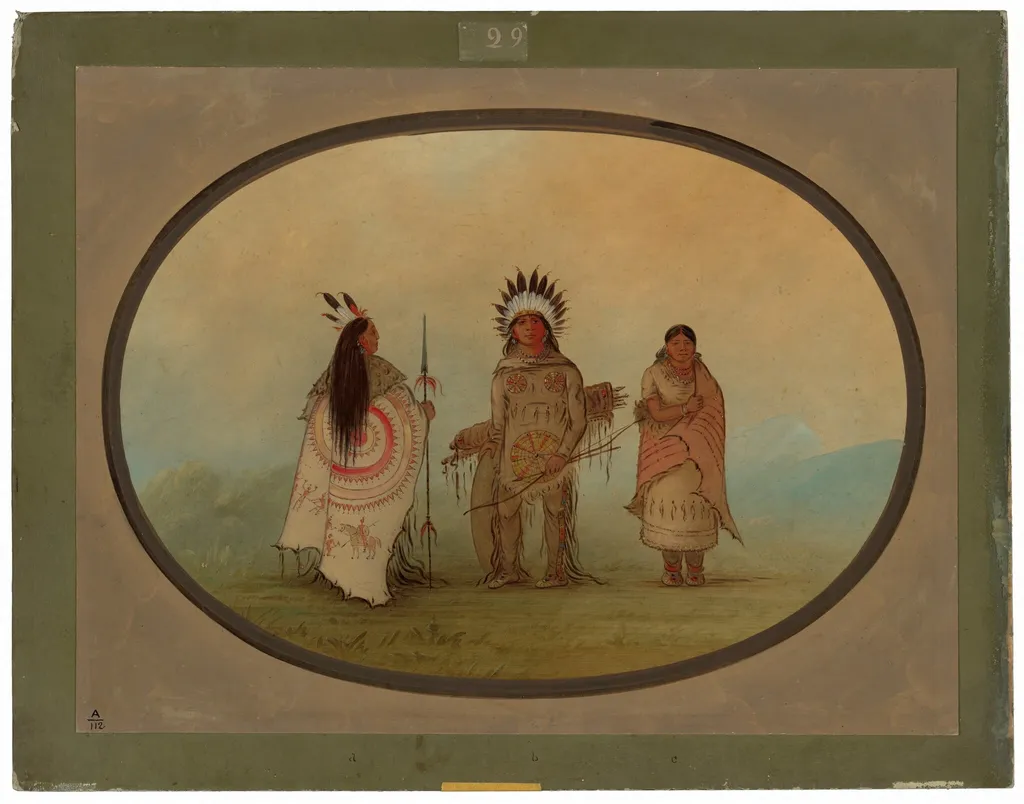
A Crow Chief, a Warrior, and His Wife is an oil painting by the American Folk Art artist George Catlin. It dates from 1862 and is held in the collection of the National Gallery of Art.
About this work
Technique & Style
A Crow Chief, a Warrior, and His Wife is executed in oil on card mounted on paperboard, a modest support characteristic of George Catlin's later working method.
A Crow Chief, a Warrior, and His Wife is executed in oil on card mounted on paperboard, a modest support characteristic of George Catlin's later working method. The composition takes the form of a group portrait, with the figures arranged to present the chief, warrior, and wife as a unified ensemble. The painting measures 47 by 62 centimeters, an intimate scale suited to the card-and-paperboard ground.
Beyond these basic material and formal parameters, the surviving records do not detail handling, condition, or stylistic qualities.
History & Provenance
George Catlin created the oil painting A Crow Chief, a Warrior, and His Wife in 1862. Following the artist's death in 1872, the work passed by descent to his daughters: Clara Gregory Catlin, Louise Catlin Kinney, and Elizabeth Wing Catlin. In 1912, the American Museum of Natural History purchased the painting from Elizabeth Wing Catlin.
The institution later sold the piece in 1959 through Kennedy Galleries in New York to collector Paul Mellon of Upperville, Virginia. Mellon subsequently gifted the work to the National Gallery of Art in Washington, D.C., in 1965, where it remains part of the collection.
The painting is cataloged under inventory number 1965.17.3 at the National Gallery of Art.
Context
George Catlin painted A Crow Chief, a Warrior, and His Wife in 1862, depicting Crow leadership during a period of significant cultural negotiation following U.S. westward expansion. The work entered the National Gallery of Art collection in 1965 after passing through the holdings of George Catlin, his daughters, and collector Paul Mellon, reflecting evolving attitudes toward Native American subjects in mid-20th century American art circles. Its display within the National Gallery of Art in Washington, D.C., positions it within the institution's broader narrative of American artistic heritage, though its specific scholarly analysis remains embedded within the corpus of early American portraiture studies.
Overview
Created in 1862, this oil painting depicts a Crow chief, a warrior, and the chief’s wife positioned in an open landscape beneath rolling hills and a cloud‑filled sky. The three figures are rendered in traditional attire, the central male figure distinguished by a feathered headdress, spear, and shield. The work is executed on card that has been mounted on paperboard, giving it a modest, portable format.
Subject & Meaning
The composition presents a domestic and martial tableau of Crow tribal life, emphasizing the roles of leadership, warfare, and family. By placing the chief, his warrior companion, and his spouse together, the artist highlights the interconnected responsibilities of governance, defense, and lineage within the Plains Indian community, offering a visual record of cultural identity during a period of intense change.
Own this work as a print
Artist & collection

Artist
George Catlin ( KAT-lin; July 26, 1796 – December 23, 1872) was an American lawyer, painter, author, and traveler, who specialized in portraits of Native Americans in the American frontier.

 Bulls Fighting
 Expedition Encamped on a Texas Prairie. April 1686
 An Alligator's Nest
 Mrs. George Catlin (Clara Bartlet Gregory)
 Chief of the Taensa Indians Receiving La Salle. March 20, 1682
 A Small Village - Payaguas Indians
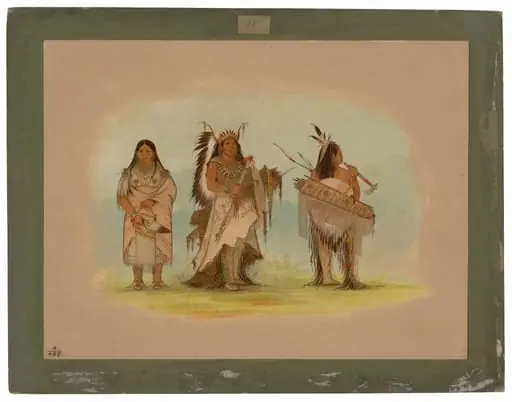 Omaha Chief, His Wife, and a Warrior
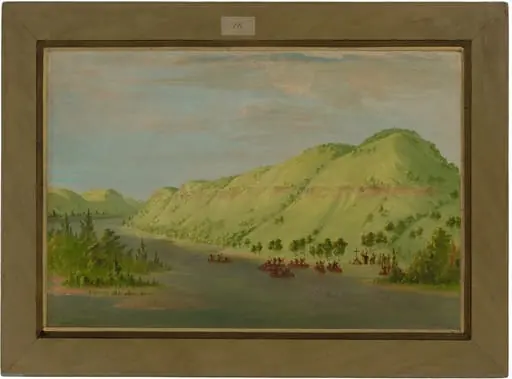 Father Hennepin Leaving the Mississippi to Join La Salle. May 8, 1680
- Crow Chief, His Wife, and a Warrior
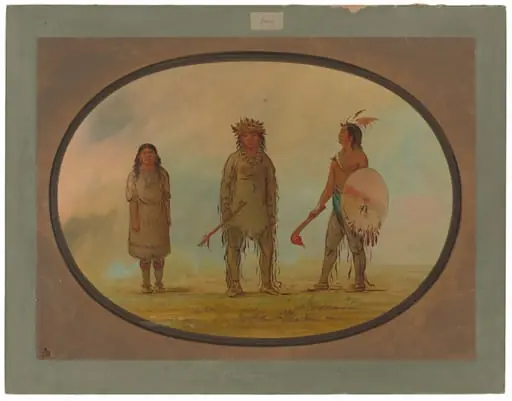 Athapasca Chief, His Wife, and a Warrior
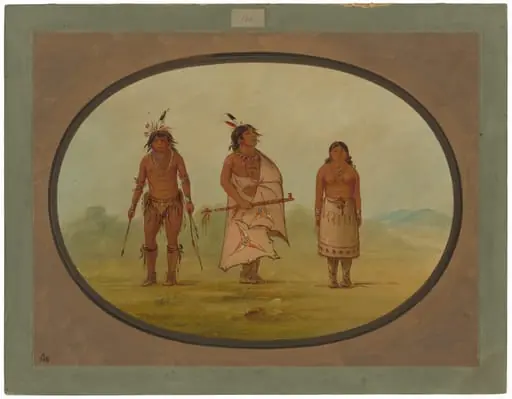 Mohave Chief, a Warrior, and His Wife
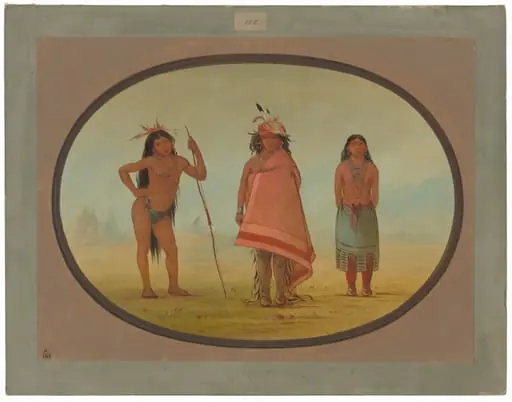 Cochimtee Chief, His Wife, and a Warrior
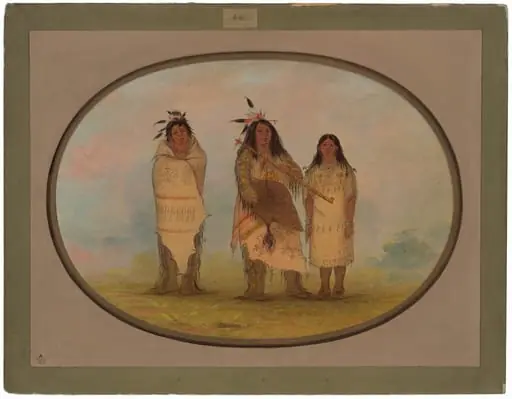 A Cheyenne Chief, His Wife, and a Medicine Man
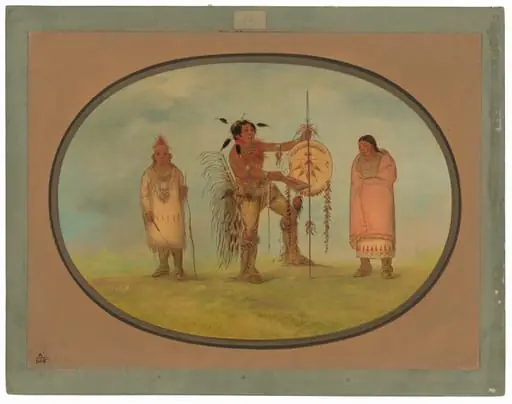 Saukie Warrior, His Wife, and a Boy
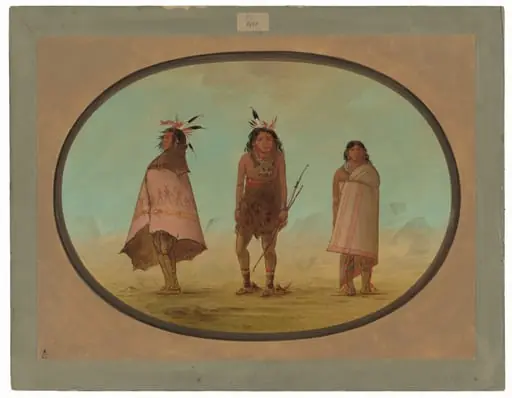 Yntah Medicine Man, a Warrior, and a Woman
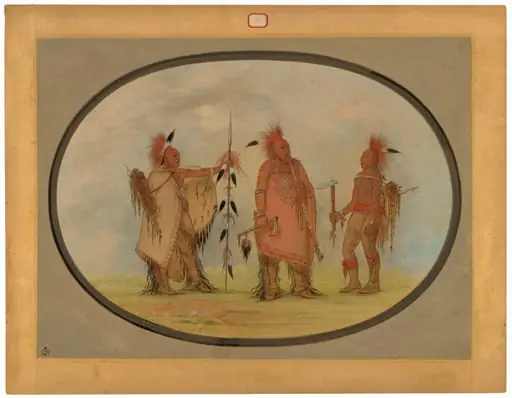 Osage Chief with Two Warriors
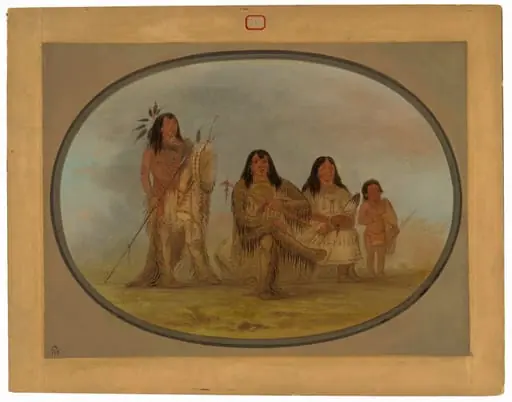 A Blackfoot Chief, His Wife, and a Medicine Man
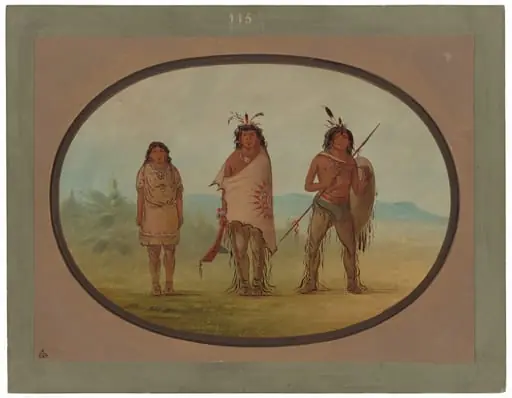 A Yuma Chief, His Daughter, and a Warrior
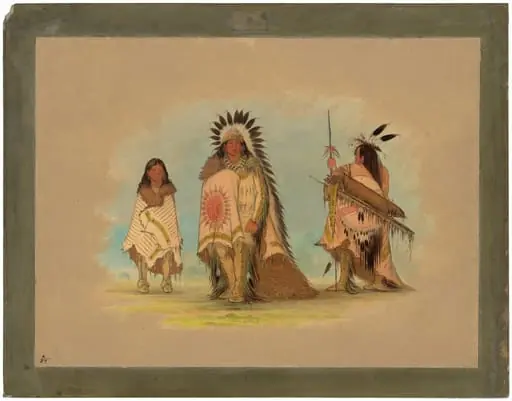 A Sioux Chief, His Daughter, and a Warrior