Artwork
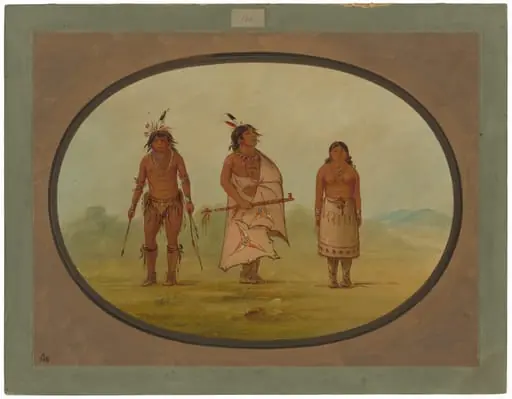
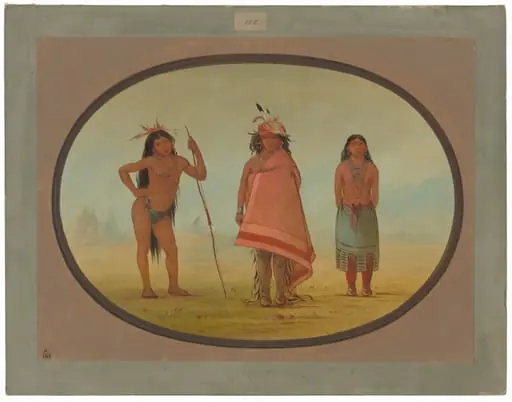
Two Ojibbeway Warriors and a Woman
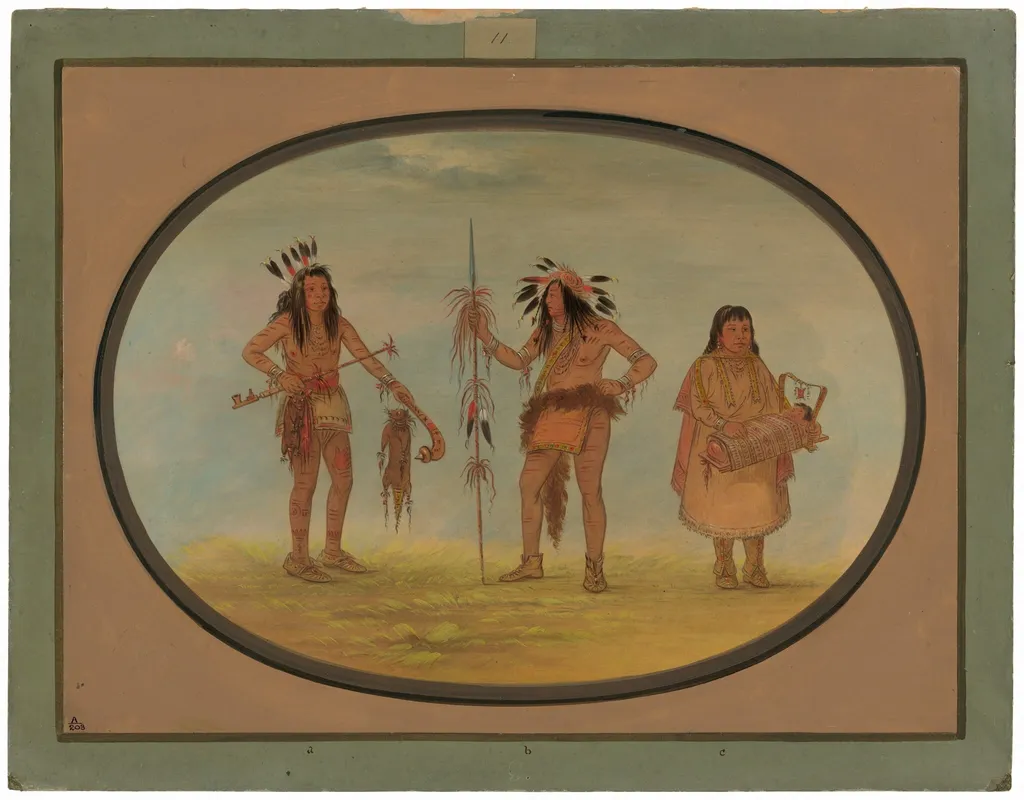
Two Ojibbeway Warriors and a Woman is an oil painting by the American Folk Art artist George Catlin. It dates from 1865 and is held in the collection of the National Gallery of Art.
About this work
Subject & Meaning
The work represents Catlin's broader ethnographic mission to preserve the visual memory of Native peoples, freezing a moment of cultural identity on canvas.
The painting depicts two Ojibbeway warriors accompanied by a woman, presenting a genre scene focused on Indigenous life. Created by George Catlin in 1861, the work captures specific figures from the Ojibbeway people, reflecting the artist's long-standing practice of documenting Native American cultures through portraiture and daily activities. While the title identifies the subjects by their tribal affiliation and gender roles, the composition serves as a historical record of their appearance and social presence during the mid-nineteenth century.
The work represents Catlin's broader ethnographic mission to preserve the visual memory of Native peoples, freezing a moment of cultural identity on canvas.
Technique & Style
Created in 1861, this work is executed in oil on card that has been mounted onto a paperboard support. The painting measures 46.8 cm in height and 62.8 cm in width. Classified as a genre scene, the composition depicts two Ojibbeway warriors alongside a woman, reflecting George Catlin's focus on Indigenous subjects.
The application of oil paint on card suggests a portable approach consistent with the artist's field practices, though specific details regarding surface condition or handling techniques are not explicitly documented in the available records.
History & Provenance
Painted in 1861, the work belongs to a series of depictions of Ojibwe life executed by Catlin in the late 1850s and early 1860s.
By descent it passed from the artist to his daughters Clara Gregory Catlin, Louise Catlin Kinney, and Elizabeth Wing Catlin. In 1912 Elizabeth Wing Catlin sold it to the American Museum of Natural History. It was then acquired in 1959 through Kennedy Galleries, New York, by Paul Mellon, and subsequently given to the National Gallery of Art, Washington, in 1965.
Two Ojibbeway Warriors and a Woman is part of the National Gallery of Art's collection in Washington, D.C., having entered the museum through a 1965 gift. The work was previously held by George Catlin's daughters, acquired by the American Museum of Natural History in 1912, and sold in 1959 via Kennedy Galleries to Paul Mellon before its donation to the NGA.
Overview
Created in 1865, the oil painting Two Ojibbeway Warriors and a Woman presents a small outdoor grouping rendered on card that has been mounted on paperboard. The work captures three figures, two male warriors and a female companion, set against a plain sky and a grassy expanse, emphasizing their attire and objects rather than a detailed landscape.
Context
The work belongs to a series of portraits in which Catlin aimed to record the customs, dress, and material culture of Native American tribes before they were altered by expanding Euro‑American settlement. By focusing on individual figures rather than grand landscapes, he sought to convey a narrative of cultural identity through everyday objects and attire.
Own this work as a print
Artist & collection

Artist
George Catlin ( KAT-lin; July 26, 1796 – December 23, 1872) was an American lawyer, painter, author, and traveler, who specialized in portraits of Native Americans in the American frontier.

 Bulls Fighting
 Expedition Encamped on a Texas Prairie. April 1686
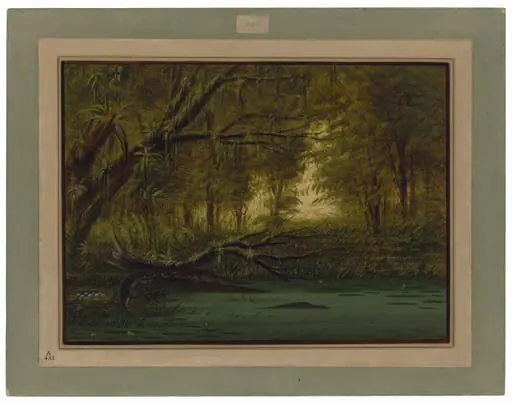 An Alligator's Nest
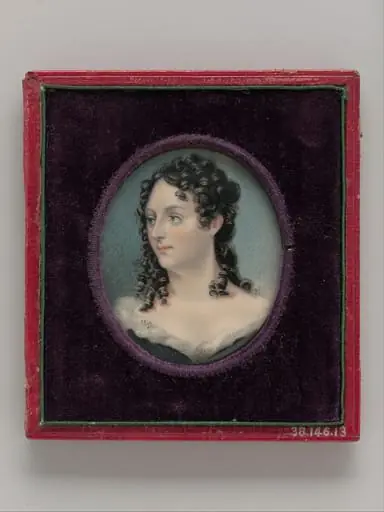 Mrs. George Catlin (Clara Bartlet Gregory)
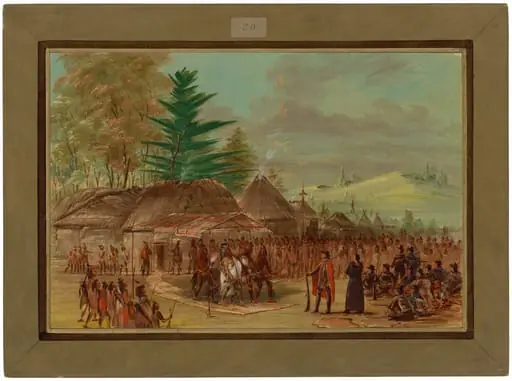 Chief of the Taensa Indians Receiving La Salle. March 20, 1682
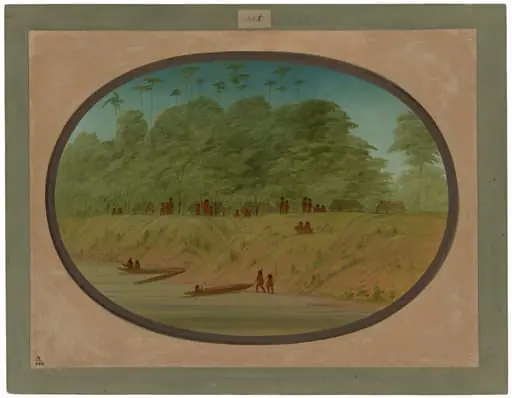 A Small Village - Payaguas Indians
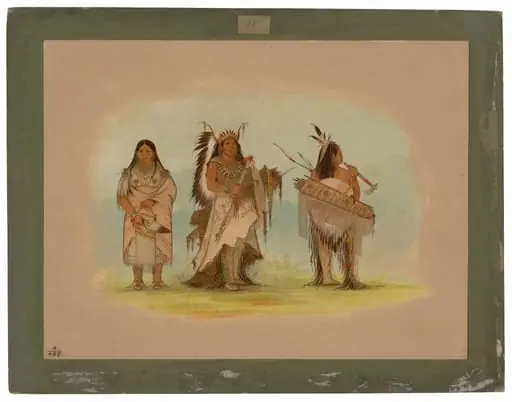 Omaha Chief, His Wife, and a Warrior
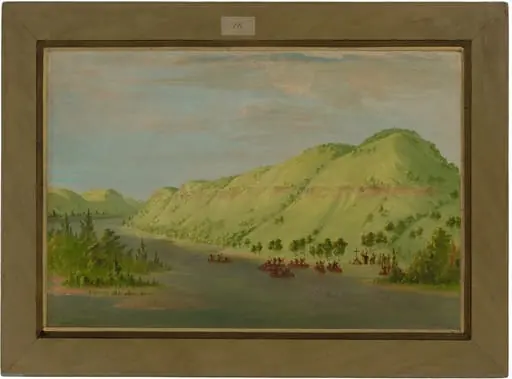 Father Hennepin Leaving the Mississippi to Join La Salle. May 8, 1680
- Two Chippewyan Warriors and a Woman
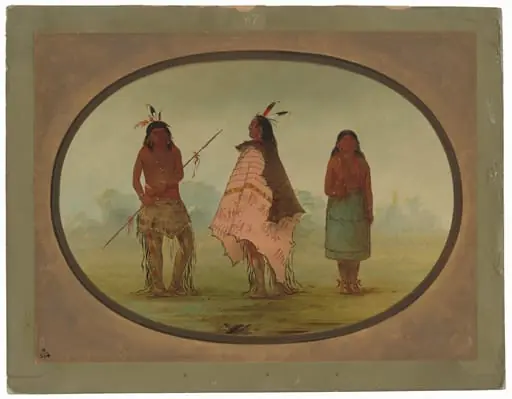 Two Apachee Warriors and a Woman
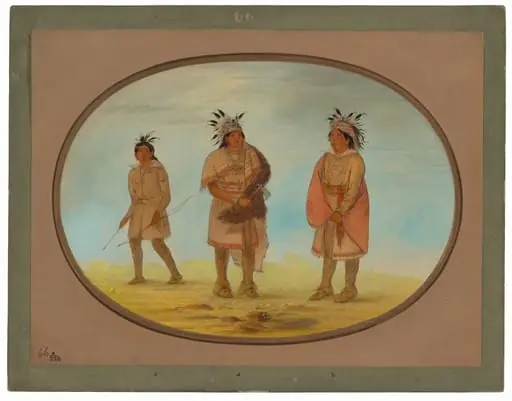 Two Weeah Warriors and a Woman
 Mohave Chief, a Warrior, and His Wife
 An Aged Ojibbeway Chief and Three Warriors
 Saukie Warrior, His Wife, and a Boy
 Two Saukie Chiefs and a Woman
 Cochimtee Chief, His Wife, and a Warrior
 Crow Chief, His Wife, and a Warrior