Artwork
Two Young Hyda Men
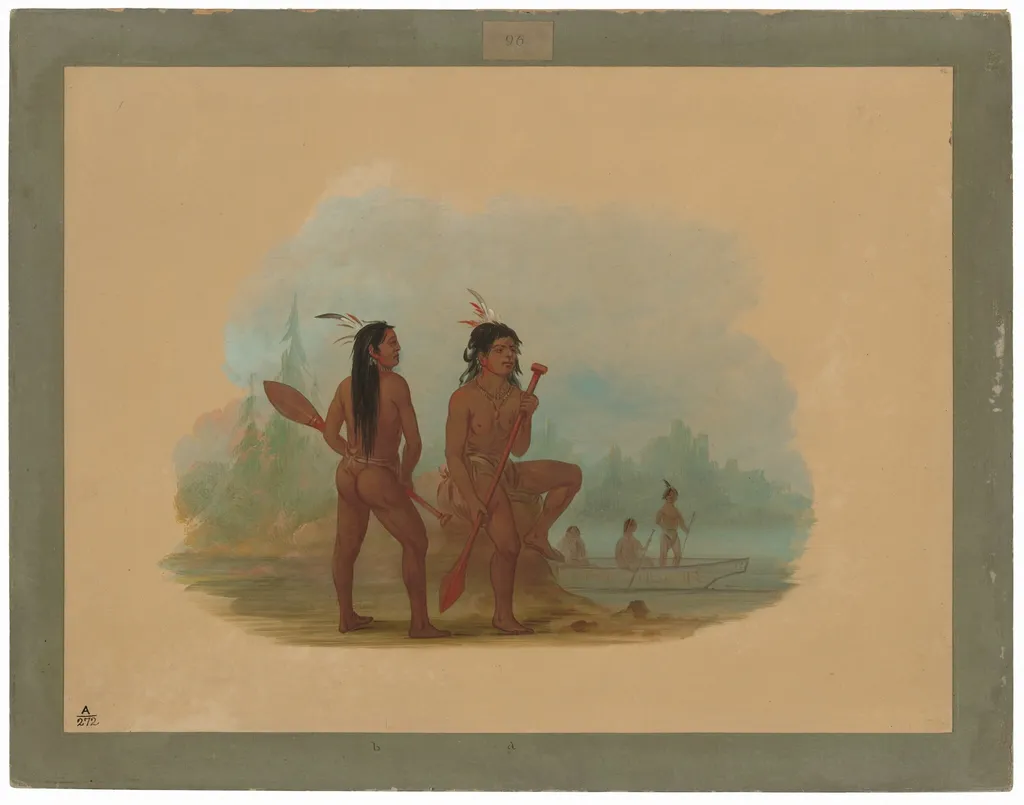
Two Young Hyda Men is an oil painting by the American Folk Art artist George Catlin. It dates from 1862 and is held in the collection of the National Gallery of Art.
About this work
Technique & Style
Created in 1862, Two Young Hyda Men is executed in oil paint on a card support that has been mounted onto paperboard.
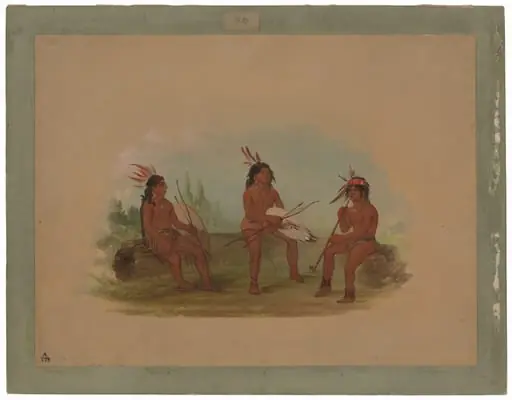
Created in 1862, Two Young Hyda Men is executed in oil paint on a card support that has been mounted onto paperboard. The work measures 46.9 cm in height and 62.5 cm in width. Classified as a portrait, the painting depicts two Indigenous men alongside a tree.
The surface handling and stylistic approach are consistent with George Catlin's portraiture of the era, utilizing the oil medium to render the figures and natural elements on the rigid, prepared substrate.
History & Provenance
The painting was created by George Catlin in 1862 as an oil on card mounted on paperboard. It remained in the artist's possession until his death, after which it passed by descent to his daughters Clara Gregory Catlin, Louise Catlin Kinney, and Elizabeth Wing Catlin. In 1912 Elizabeth Wing Catlin sold the work to the American Museum of Natural History.
Kennedy Galleries facilitated its sale in 1959 to collector Paul Mellon of Upperville, Virginia, who donated it to the National Gallery of Art in 1965, where it resides today.
Legacy
The work, painted by George Catlin in 1862, entered the National Gallery of Art in Washington, D.C., through a gift from the artist's descendant in 1965 after a series of ownership changes that began with its acquisition from the family in 1912.
Its presence in a major national museum has positioned the painting as a reference point in studies of 19th-century American portraiture, underscoring its lasting reputation within the institution's collection.
Overview
George Catlin's 1862 painting, "Two Young Hidatsa Men," is an oil on card mounted on paperboard. This portrait captures two figures from the Hidatsa tribe, positioned against a simplified natural setting. The work exemplifies Catlin's extensive efforts to document the lives and appearances of Native American communities during his travels across the American frontier, a central theme throughout his artistic career.
Subject & Meaning
The artwork portrays two young Hidatsa men seated beneath a tree, depicted in a relaxed manner. While the background is understated, the artist carefully rendered their attire and the leaves of the tree. This piece provides a glimpse into the daily existence of a Native American tribe, aligning with Catlin's broader objective of preserving visual records of indigenous cultures he encountered.
Context
Before becoming a painter, George Catlin practiced law. He later dedicated his career to chronicling Native American life, undertaking five journeys across the American West during the 1830s. These expeditions resulted in numerous paintings and written accounts that recorded the customs and appearances of various Plains tribes.
His earlier artistic endeavors included creating detailed engravings of New York landscapes for some of the earliest lithographed books.
Own this work as a print
Artist & collection

Artist
George Catlin ( KAT-lin; July 26, 1796 – December 23, 1872) was an American lawyer, painter, author, and traveler, who specialized in portraits of Native Americans in the American frontier.

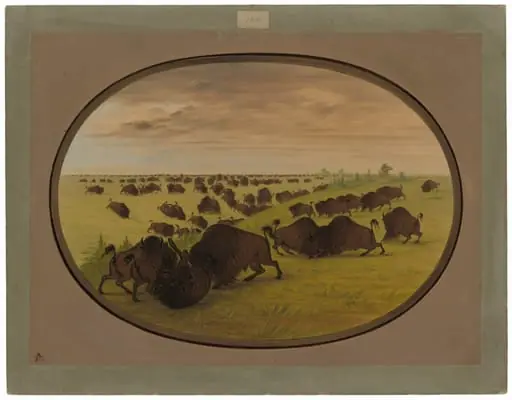 Bulls Fighting
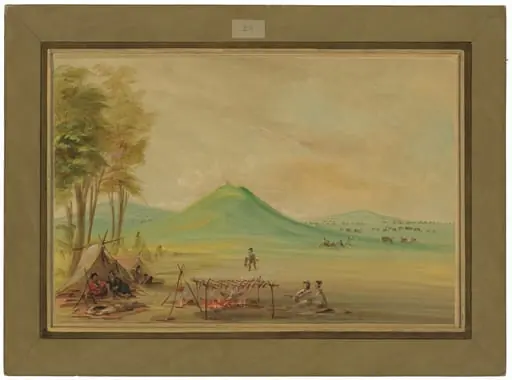 Expedition Encamped on a Texas Prairie. April 1686
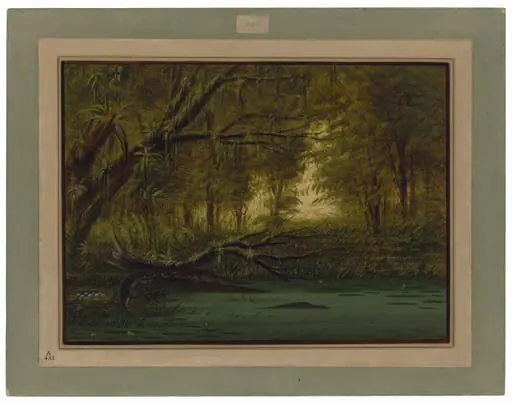 An Alligator's Nest
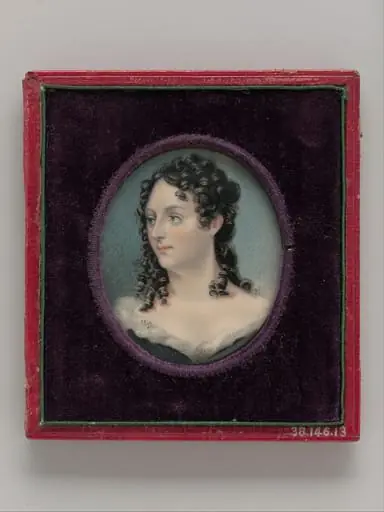 Mrs. George Catlin (Clara Bartlet Gregory)
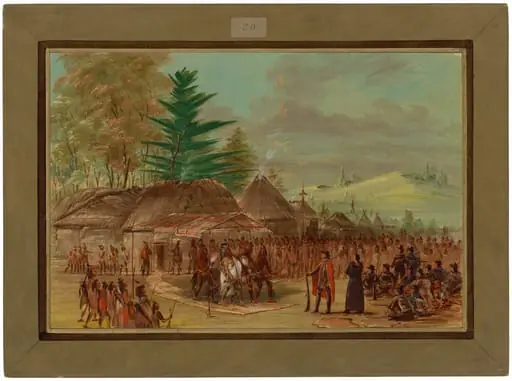 Chief of the Taensa Indians Receiving La Salle. March 20, 1682
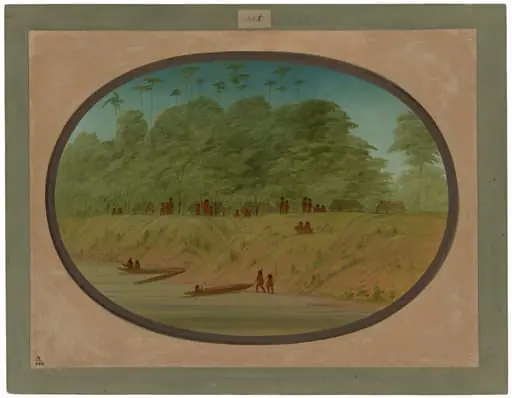 A Small Village - Payaguas Indians
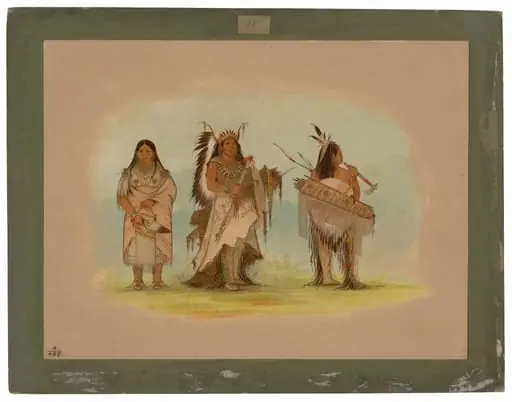 Omaha Chief, His Wife, and a Warrior
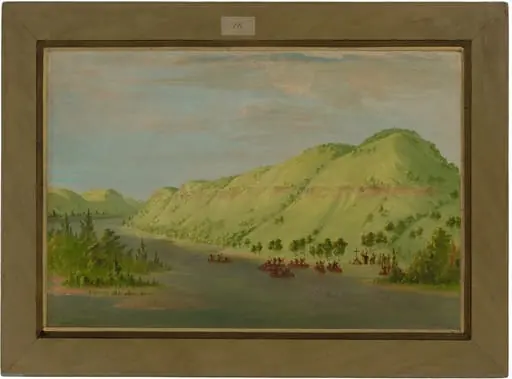 Father Hennepin Leaving the Mississippi to Join La Salle. May 8, 1680