Artwork
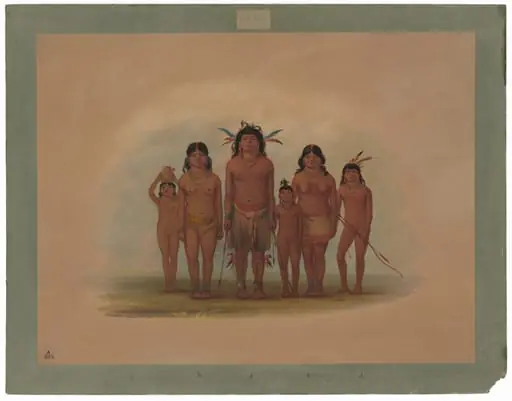
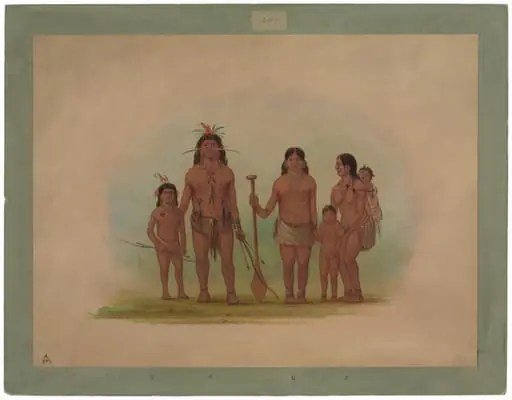
Lengua Chief, His Two Wives, and Four Children
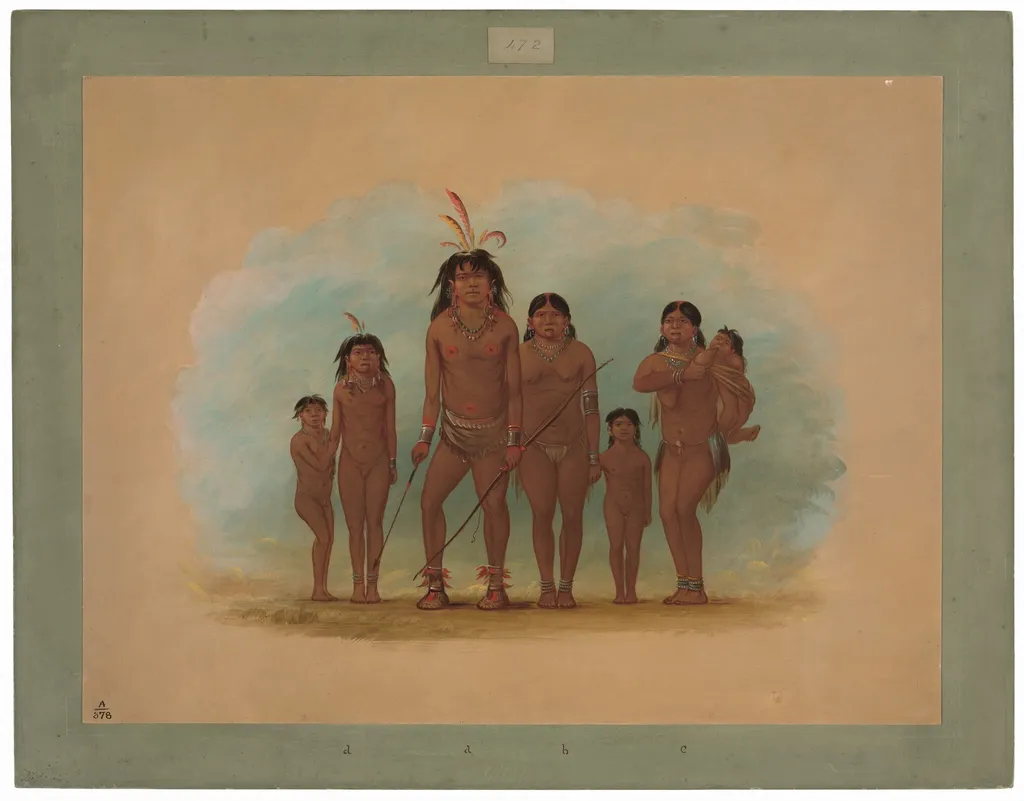
Lengua Chief, His Two Wives, and Four Children is an oil painting by the American Folk Art artist George Catlin. It dates from 1862 and is held in the collection of the National Gallery of Art. Created in 1862, this oil painting on card, later mounted on paperboard, portrays a Native American family from the Lengua tribe.
About this work
Technique & Style
Classified as a portrait, the piece was created in 1870 by George Catlin.
The work is executed in oil paint. There is a discrepancy in the reported support material between sources: one identifies the medium as oil on card mounted on paperboard, while another lists the material as oil paint on canvas. The painting measures 45.7 cm in height and 60.5 cm in width.
Classified as a portrait, the piece was created in 1870 by George Catlin. No specific details regarding the artist's handling, the current physical condition, or distinct formal and stylistic characteristics are provided in the available records.
History & Provenance
Painted in 1870 by George Catlin, the work was first owned by the artist and then passed to his daughters Clara Gregory Catlin, Louise Catlin Kinney, and Elizabeth Wing Catlin by descent. It entered the American Museum of Natural History in 1912 after being purchased from Elizabeth Wing Catlin. In 1959 the painting was sold through Kennedy Galleries in New York to Paul Mellon of Upperville, Virginia, and in 1965 it was gifted to the National Gallery of Art, where it remains on view.
The painting entered the collection of the American Museum of Natural History in 1912 following its purchase from Elizabeth Wing Catlin, one of the artist's daughters. The museum deaccessioned the work in 1959, selling it through Kennedy Galleries in New York to Paul Mellon of Upperville, Virginia. Mellon subsequently gifted the piece to the National Gallery of Art in Washington, D.C., in 1965, where it remains held.
While specific inventory numbers are not detailed in the available records, the work's provenance traces a clear path from the artist's family to a natural history museum before joining a major art institution. The piece has been associated with the National Gallery of Art since the mid-1960s.
Overview
Created in 1862, this oil painting on card, later mounted on paperboard, portrays a Native American family from the Lengua tribe. The central figure, a chief, is flanked by two wives and four children, all rendered with modest clothing and decorative elements such as feathers, jewelry, and facial paint. The composition captures a moment of familial unity within a single, standing group.
Subject & Meaning
The work records a specific Lengua household, emphasizing the chief’s role as both leader and family head. The presence of two wives and multiple children reflects customary marital practices and the importance of lineage among the tribe. Decorative accessories, feathers on the chief’s head, ornamental jewelry on the women, and painted faces on the children, signal cultural identity and status.
Own this work as a print
Artist & collection

Artist
George Catlin ( KAT-lin; July 26, 1796 – December 23, 1872) was an American lawyer, painter, author, and traveler, who specialized in portraits of Native Americans in the American frontier.

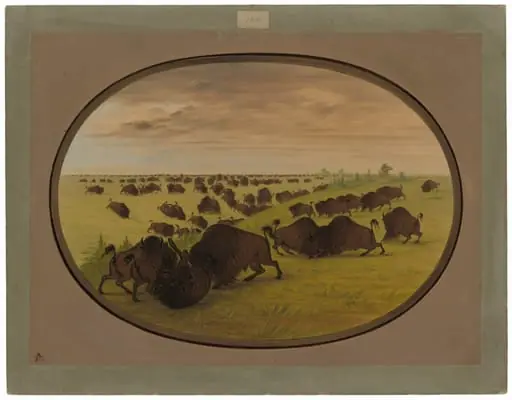 Bulls Fighting
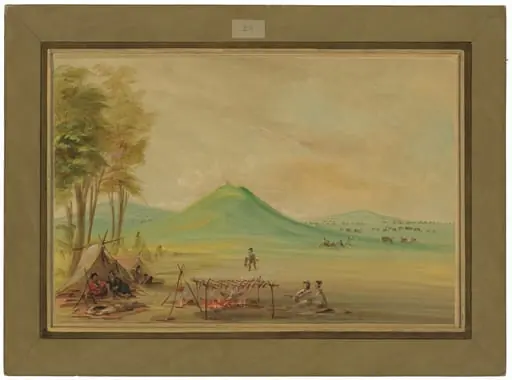 Expedition Encamped on a Texas Prairie. April 1686
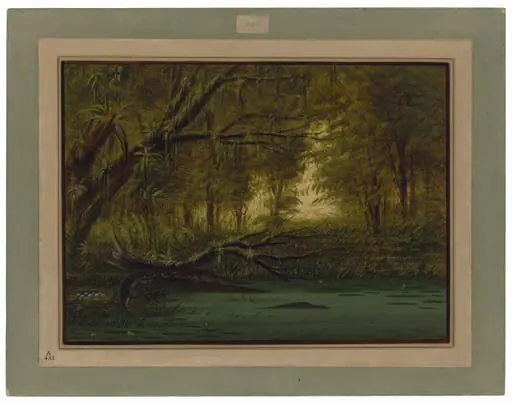 An Alligator's Nest
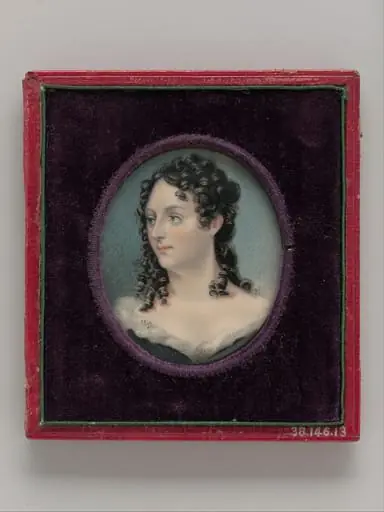 Mrs. George Catlin (Clara Bartlet Gregory)
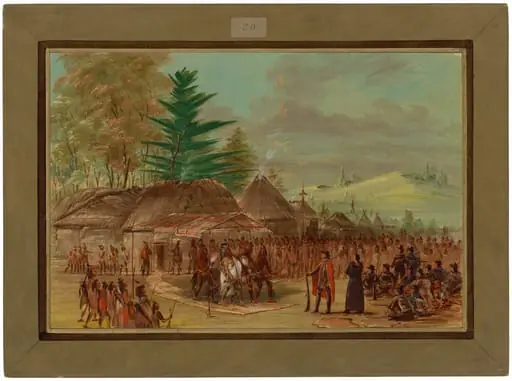 Chief of the Taensa Indians Receiving La Salle. March 20, 1682
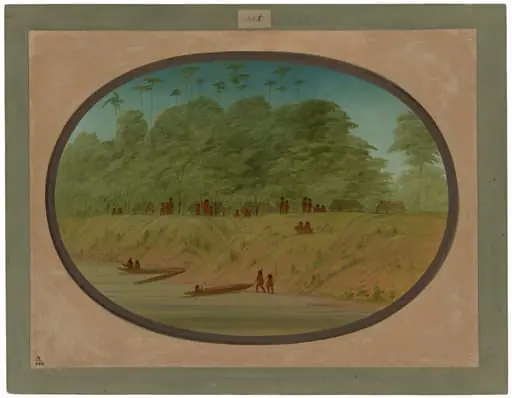 A Small Village - Payaguas Indians
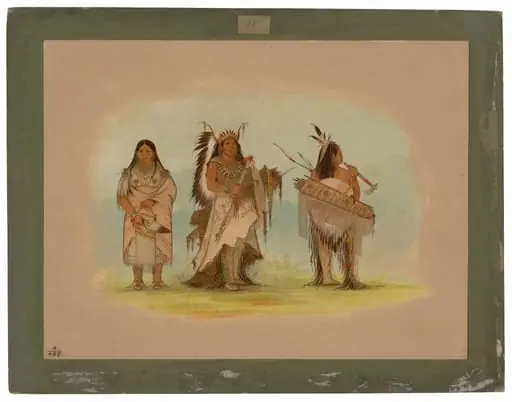 Omaha Chief, His Wife, and a Warrior
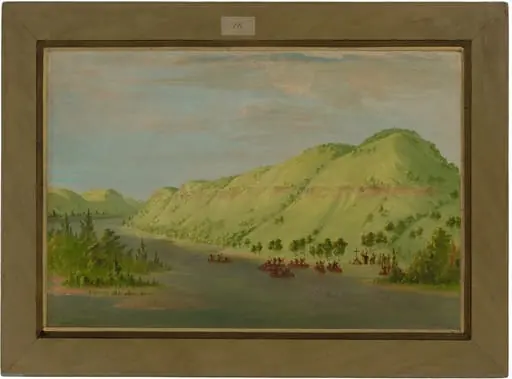 Father Hennepin Leaving the Mississippi to Join La Salle. May 8, 1680