Artwork
Madonna and Child
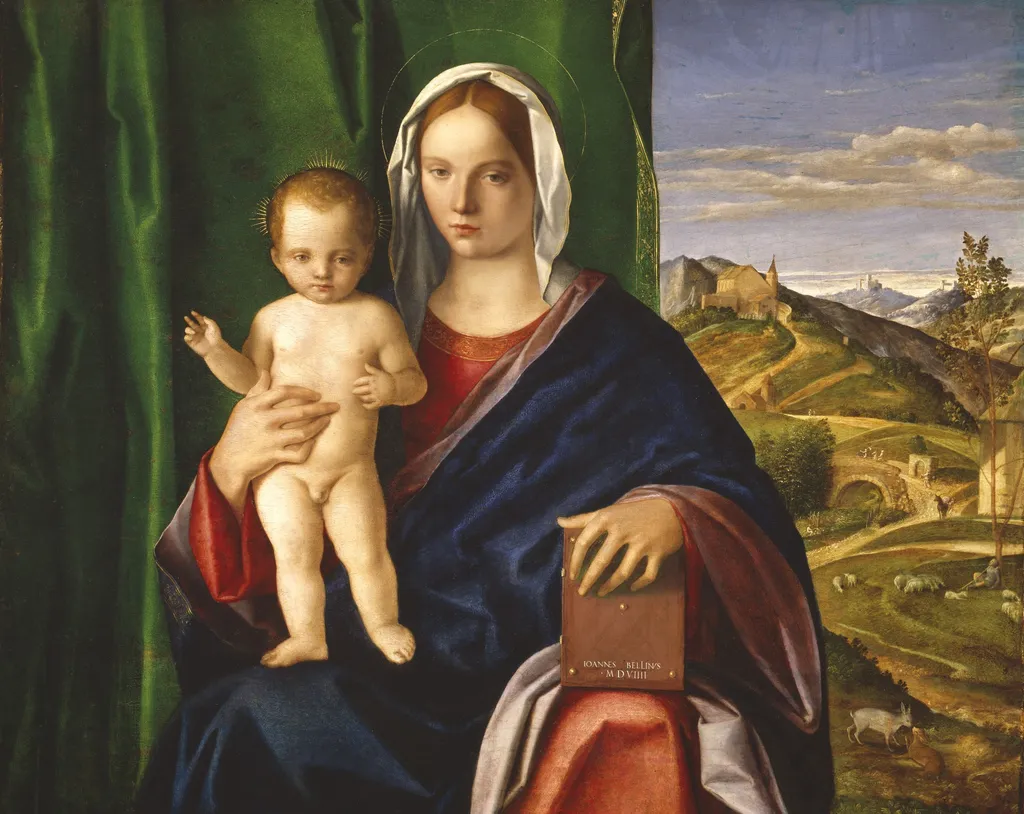
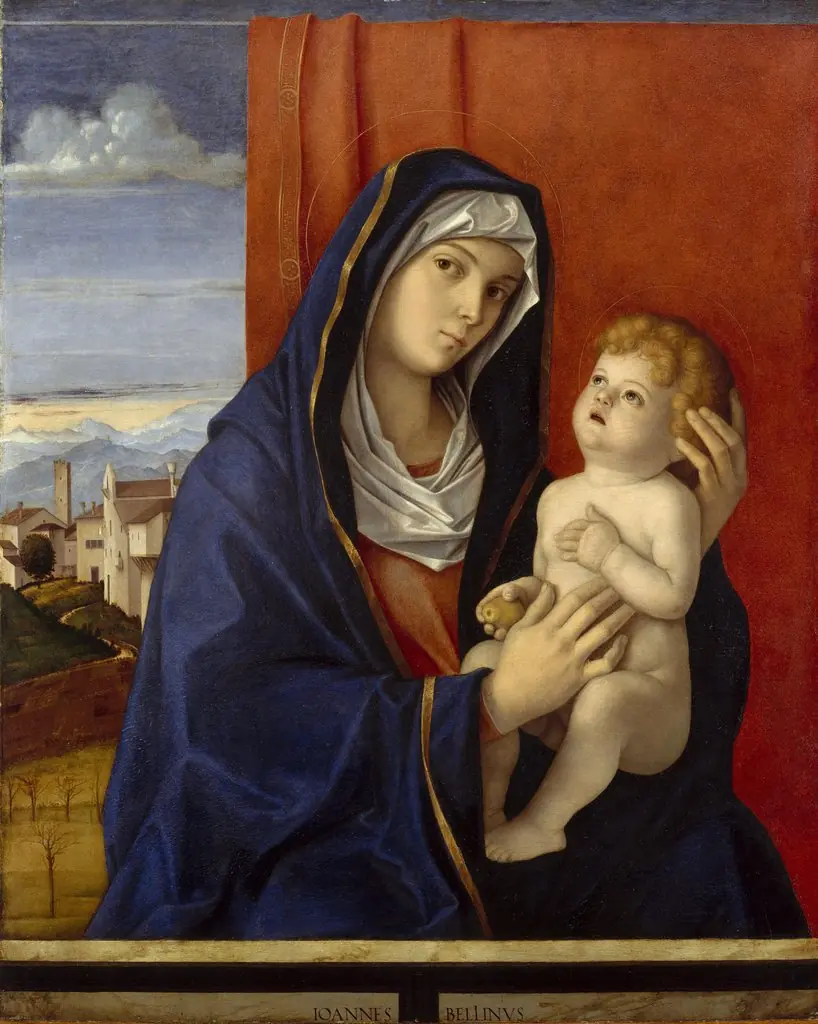
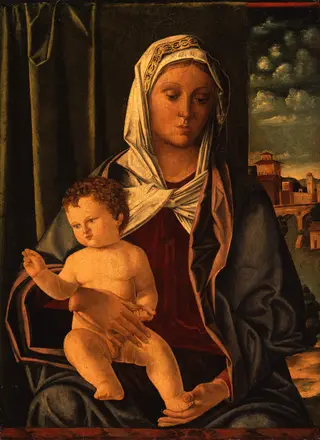
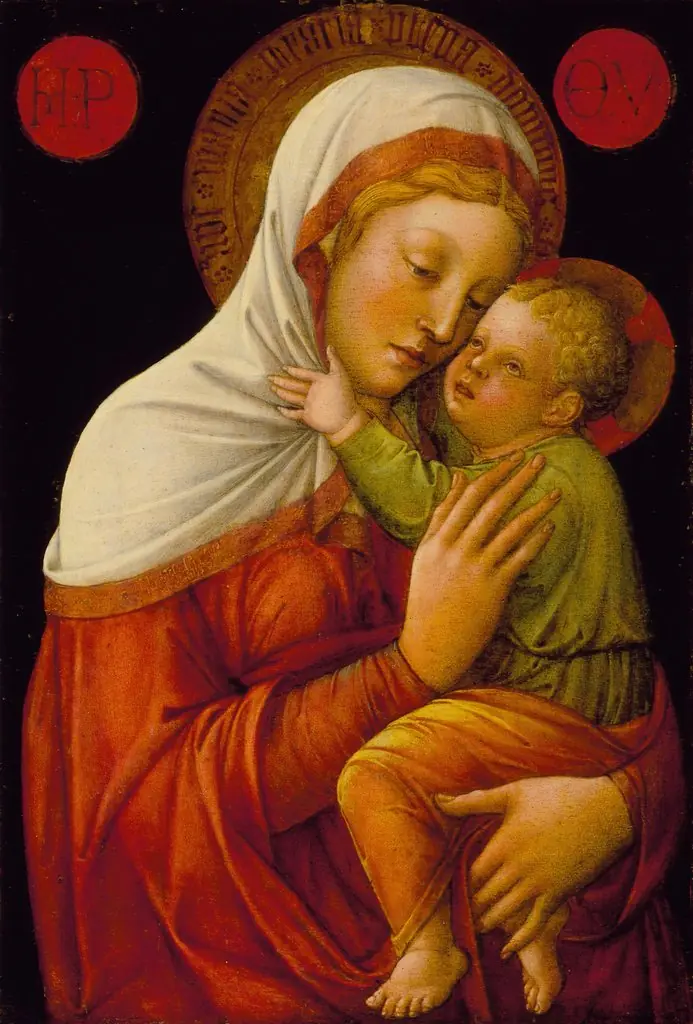
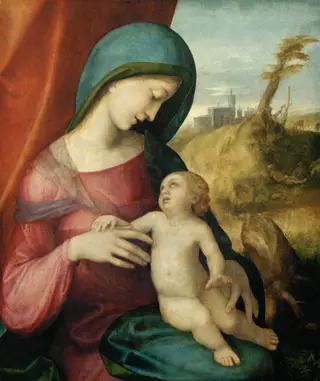
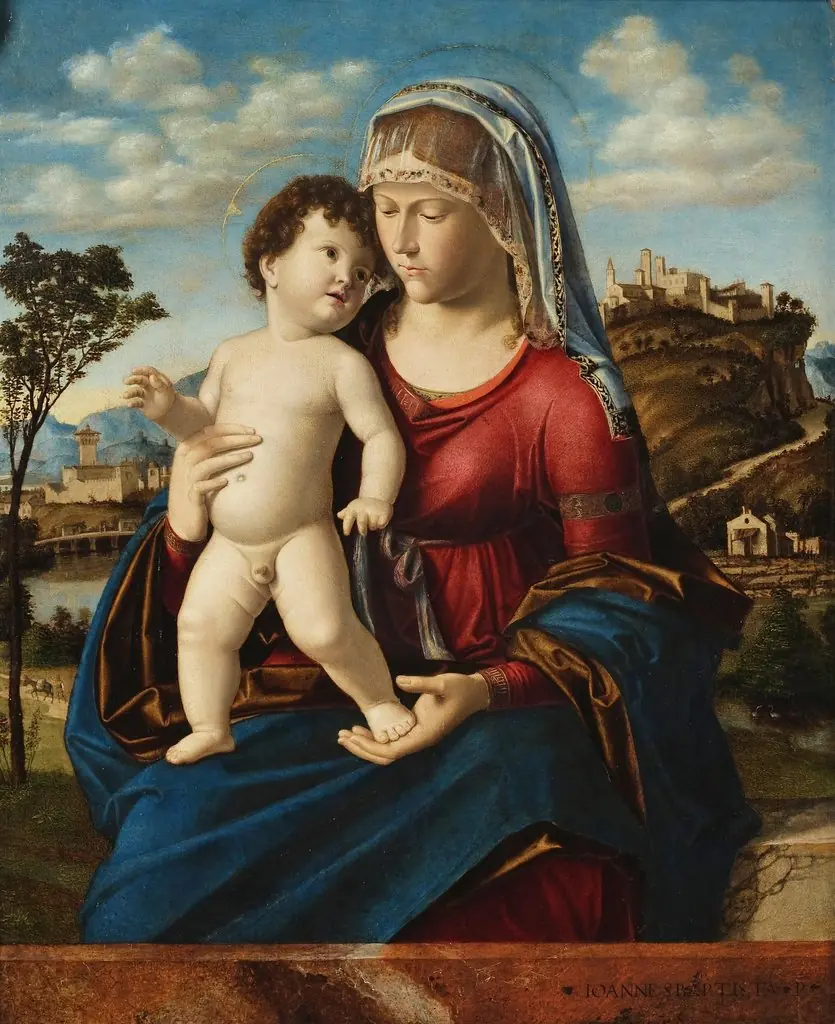
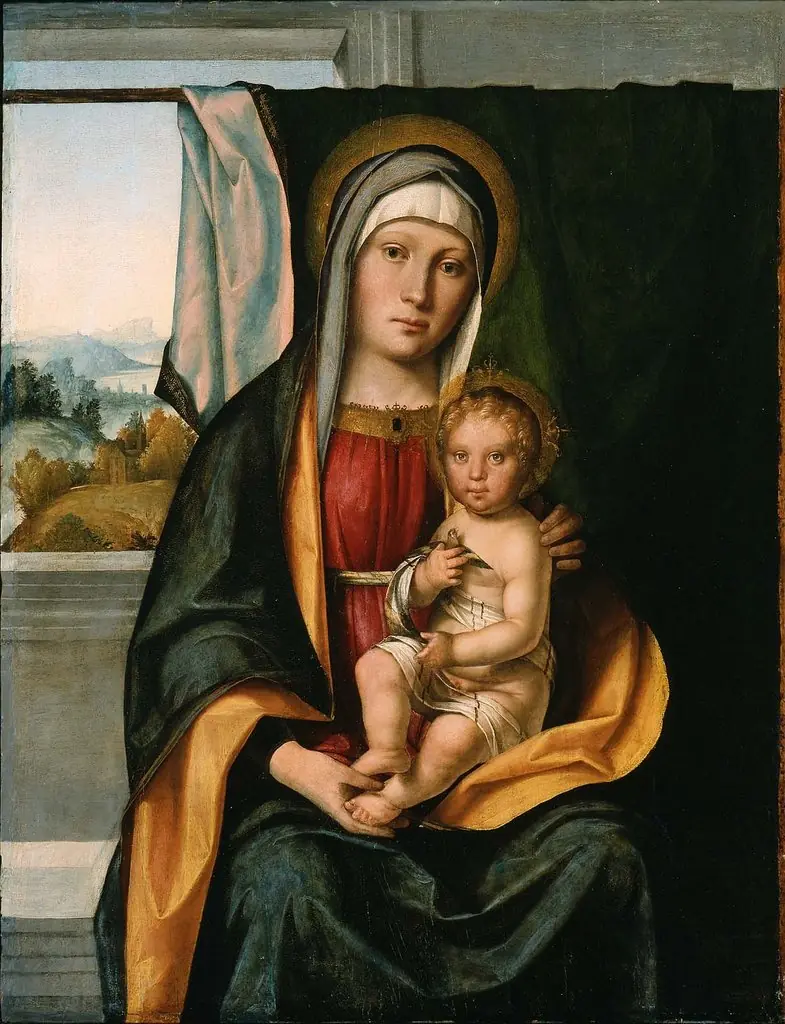
Madonna and Child is an oil painting by the High Renaissance artist Giovanni Bellini. It dates from 1509 and is held in the collection of the Detroit Institute of Arts.
About this work
This painting shows a calm scene of Mary holding the Christ Child. Bellini used oil paint to build soft layers of color.
It was made in 1509 for a Venetian family called the Mocenigo. They kept it for over two hundred years before it moved to Detroit.
The artist often painted gentle religious scenes like this. Look up Giovanni Bellini next.
Subject & Meaning
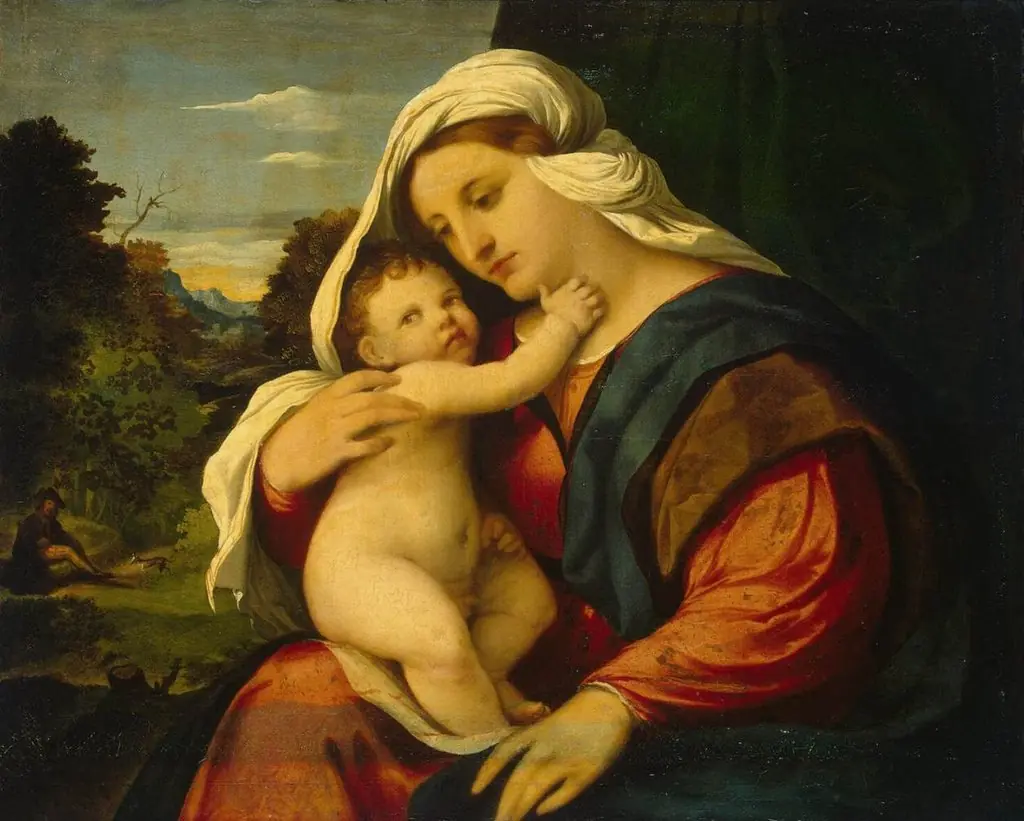
A green curtain separates the sacred figures from a background landscape featuring hazy blue mountains, a shepherd, and a meadow.
This 1509 oil painting by Giovanni Bellini depicts the Virgin Mary seated with the Christ Child standing on her right thigh. A green curtain separates the sacred figures from a background landscape featuring hazy blue mountains, a shepherd, and a meadow. This pastoral setting symbolizes the hortus conclusus, a medieval emblem of Mary's virginity.
Mary holds a book in her left hand, representing the fulfillment of Old Testament prophecies through the incarnation. The front cover of this book bears both the artist's signature and the date of creation. The work shares iconographic and stylistic elements with Bellini's other Madonnas, utilizing atmospheric perspective to blend the divine subjects with a tonal landscape influenced by Giorgione.
Technique & Style
Executed in 1509, this work is an oil painting on a wooden panel measuring 84.8 by 106 cm. The composition features the Virgin Mary seated with the Christ Child standing on her right knee, while she holds a book on her left knee bearing the artist's signature and the date. A green curtain acts as a visual divider, separating the sacred figures from a landscape background that includes a shepherd, a village, and distant mountains rendered in hazy blue tones according to the principles of aerial perspective.
Stylistically, the painting demonstrates the influence of Giorgione through its atmospheric tonal values and the depiction of the meadow, which symbolizes the hortus conclusus or Mary's virginity. Although the curtain creates a separation between the figures and the setting, the work shares significant formal affinities with Bellini's earlier Madonna del Prato and his 1510 Milanese Madonna.
History & Provenance
Giovanni Bellini painted this oil-on-panel work in 1509, as indicated by the date and signature on the book held by Mary. The Mocenigo family commissioned the artwork and retained ownership of it until 1815. By 1844, the painting was recorded in the Venetian Palazzo Vendramin Calergi as the property of Marie-Caroline de Bourbon-Sicile, duchesse de Berry, who kept it until an attempted auction in Paris on April 19, 1865, failed to find a buyer.
The duchesse moved the work to Austria in 1868. Upon her death in 1870, it passed to her son, Henri, Count of Chambord, then to his widow Maria Theresa in 1883, and subsequently to the Count's niece upon Maria Theresa's death. When the niece died in 1893, the painting passed to Jaime, Duke of Madrid.
Its final private owner was the Vicomte de Canson, who sold it to the Detroit Institute of Arts in 1928.
Giovanni Bellini's 1509 painting Madonna and Child is held by the Detroit Institute of Arts in Detroit, Michigan, where it was acquired in 1928. The work remained with the Mocenigo family until 1815 before passing through various European private collections, including those of the Duchesse de Berry and the Vicomte de Canson, prior to its museum acquisition. While the sources detail this extensive chain of ownership, they do not record specific inventory or accession numbers for the piece.
Furthermore, the provided texts contain no information regarding a formal exhibition history for the painting, noting only its permanent location within the Detroit institution.
Context
Created in 1509, Giovanni Bellini's Madonna and Child stands as a significant late work by the Italian Renaissance master, commissioned by the Mocenigo family. The painting is frequently analyzed for its synthesis of traditional religious iconography with the atmospheric innovations of Giorgione. Scholars note the work's close stylistic affinity to Bellini's Madonna del Prato (1505) and his 1510 Milanese Madonna and Child, particularly in the use of a green curtain to separate the sacred figures from a hazy, blue-toned landscape.
This background employs aerial perspective to depict rolling hills and distant mountains, while the meadow itself serves as a visual metaphor for the hortus conclusus, symbolizing the Virgin's purity. The inclusion of a book held by Mary, inscribed with the artist's signature and the date, further anchors the work in its specific historical moment while referencing the fulfillment of Old Testament prophecies.
Legacy
The Madonna and Child painting has shaped Renaissance religious art through its compositional innovations and symbolic depth. Its use of a green curtain to separate figures from a Giorgione-influenced landscape set a precedent for atmospheric perspective in sacred imagery. The depiction of Mary holding a book symbolising fulfilled prophecies became a recurring motif in later depictions of the Virgin.
The work's provenance through European aristocracy, including ownership by the Bourbon family and sale in 1865 Paris, highlighted its cultural significance beyond mere artistic value. Its 1928 acquisition by the Detroit Institute of Arts ensured public access to a key example of Bellini's synthesis of Northern and Southern Renaissance techniques. The painting remains a reference point for studies on Marian symbolism, with its hortus conclusus background and detailed iconography continuing to inform scholarship on Renaissance devotional art.
Scholars note its influence on Bellini's subsequent works, particularly the 1510 Milan version, which refined the landscape treatment and symbolic elements. The painting's journey from private collections to public museum reflects broader narratives of art preservation and the commercial art market in the 19th and early 20th centuries. Its technical execution in oil on panel, measuring 84.8 cm by 106 cm, demonstrates Bellini's mastery of scale and detail in religious subjects.
Overview
Giovanni Bellini’s Madonna and Child is an oil painting on panel executed in 1509. The work depicts the Virgin Mary gently cradling the infant Christ, presenting a serene devotional image typical of the early sixteenth‑century Venetian tradition.
Own this work as a print
Artist & collection

Artist
Giovanni Bellini (Italian: ; Venetian: Zuane Belin; c. 1430 – 29 December 1516) was an Italian Renaissance painter, probably the best known of the Bellini family of Venetian painters. He was raised in the household of…