Artwork
Virgin and Child
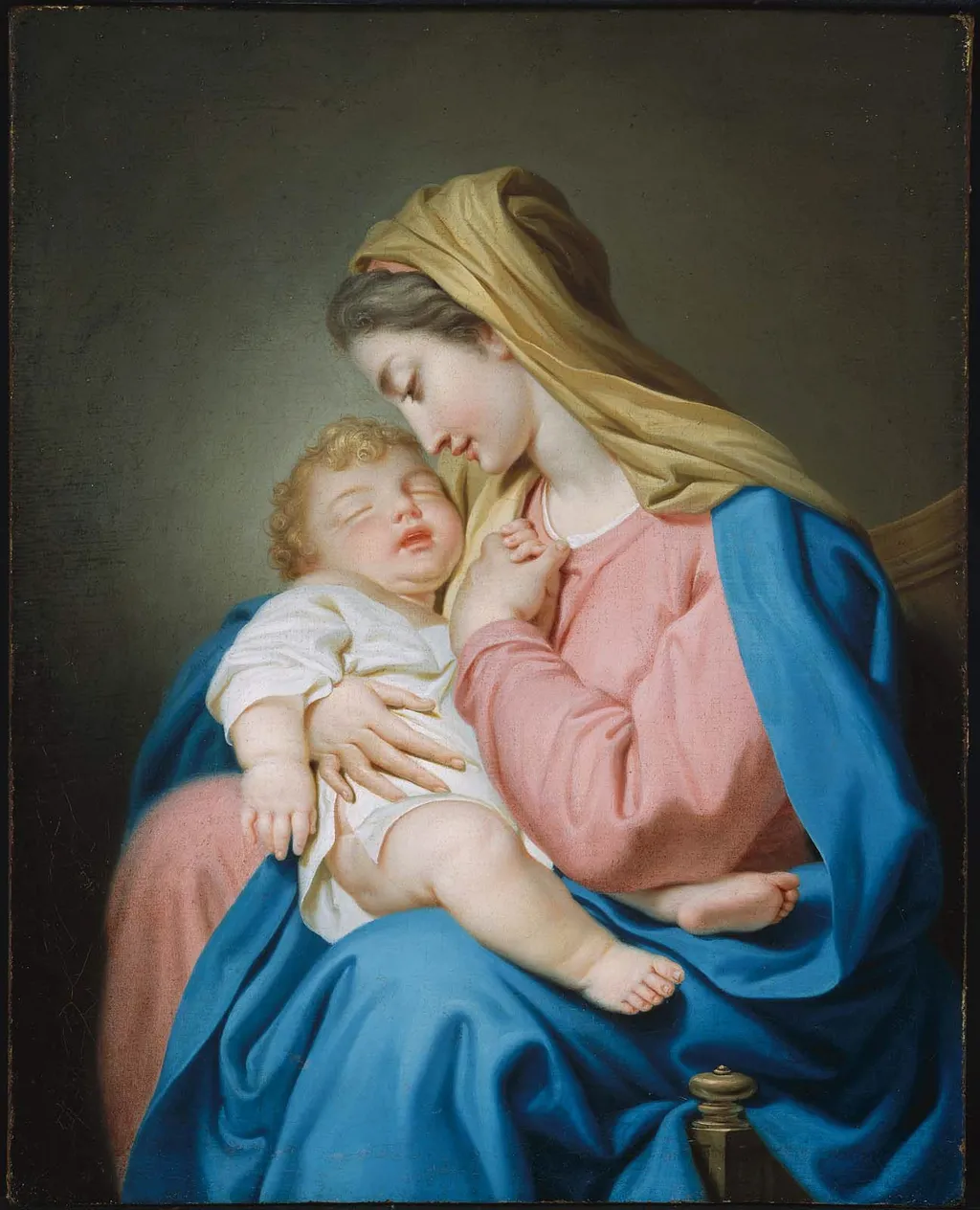
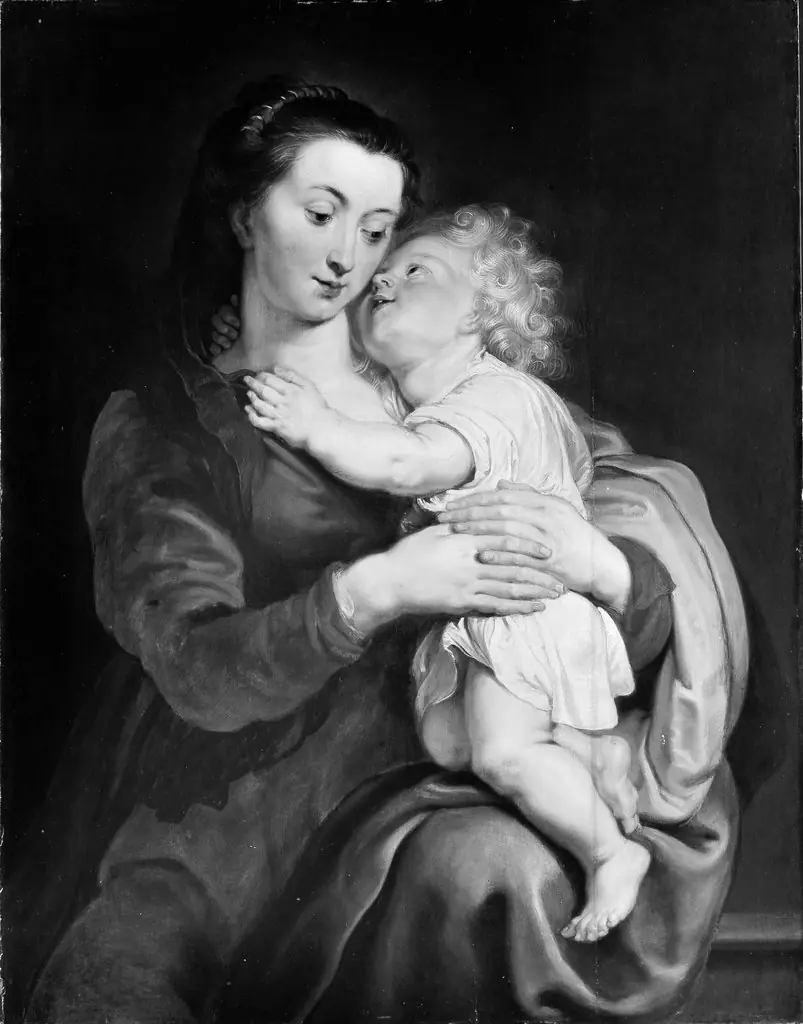
Virgin and Child is an oil painting by Domenico Corvi. It dates from 1771 and is held in the collection of the Museum of Fine Arts Boston.
About this work
Subject & Meaning
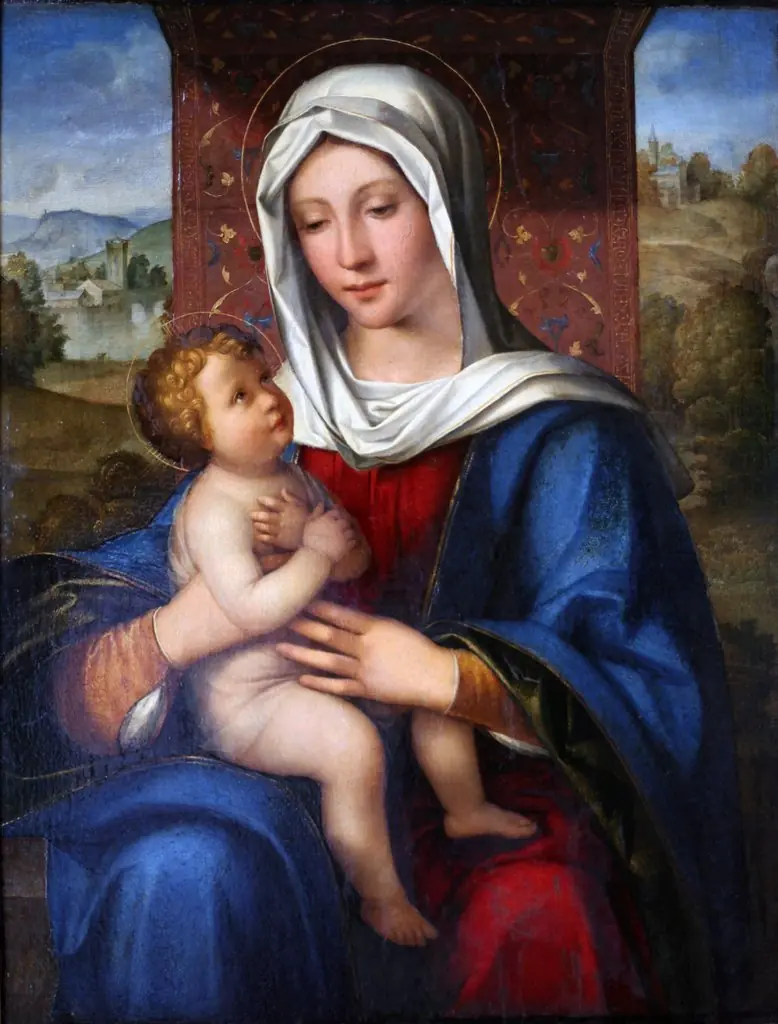
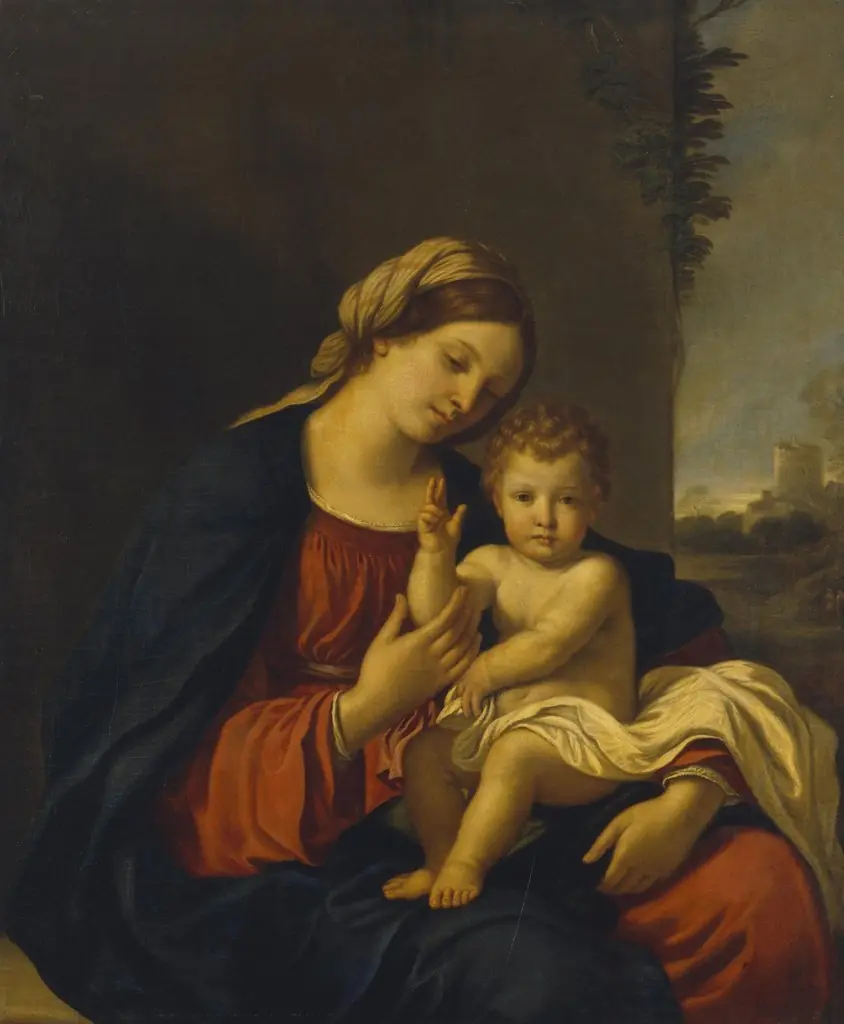
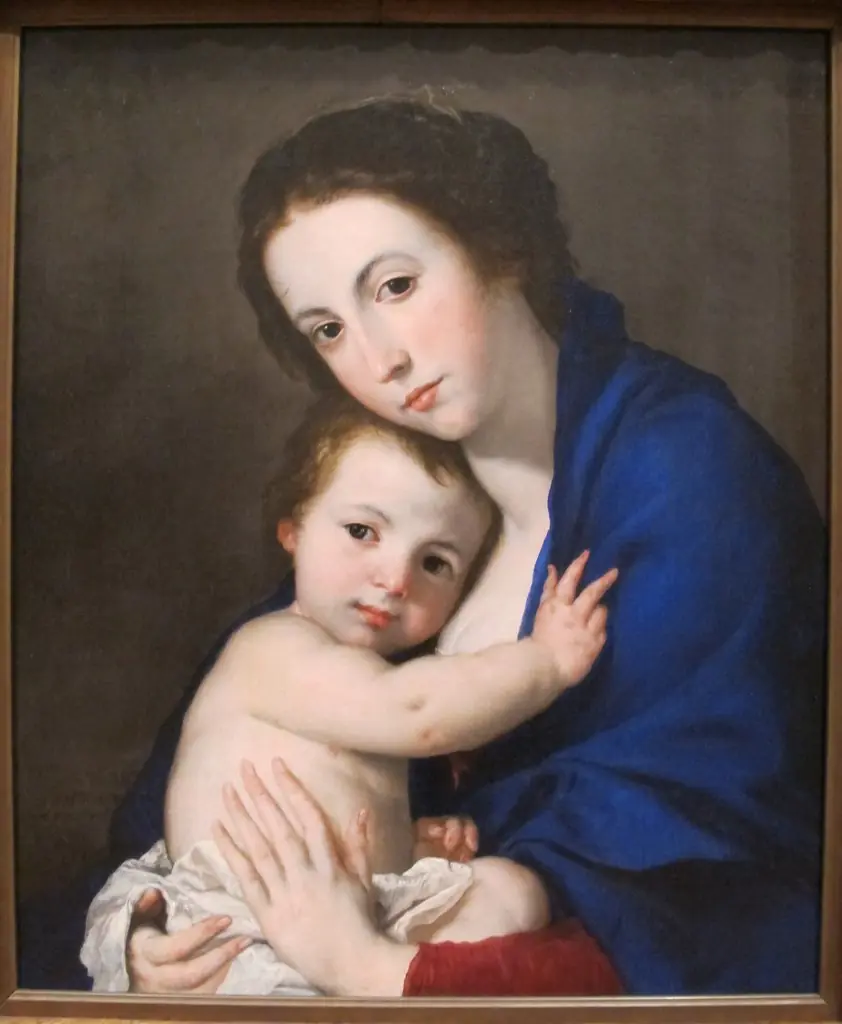
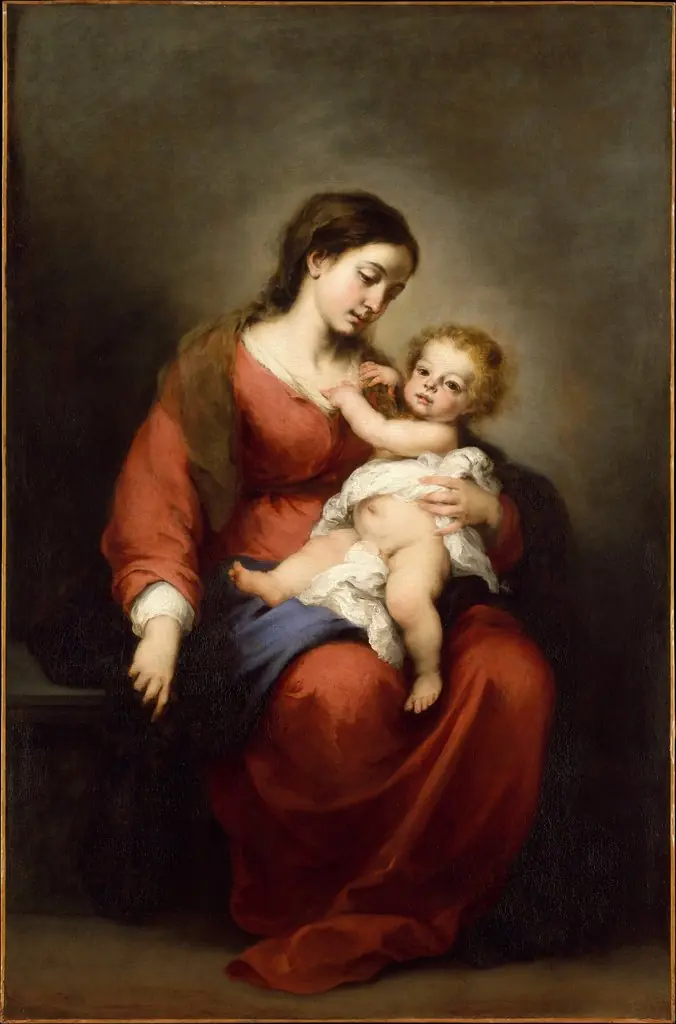
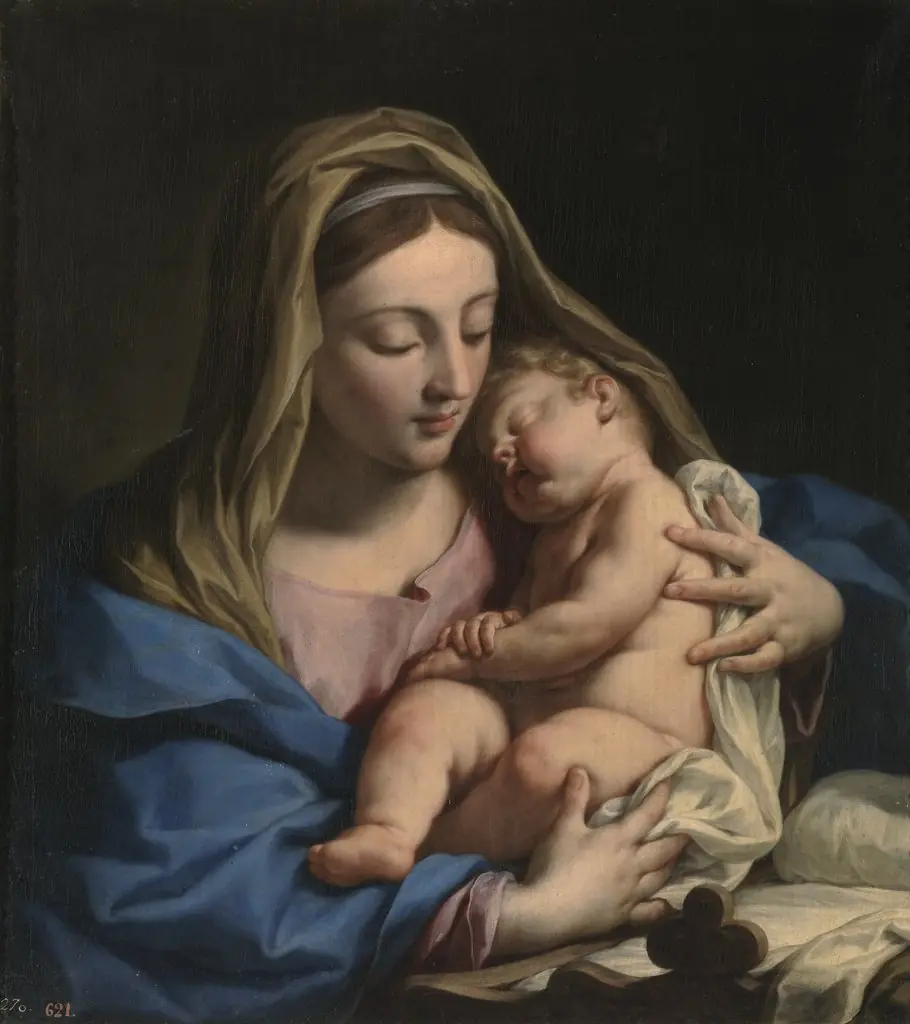
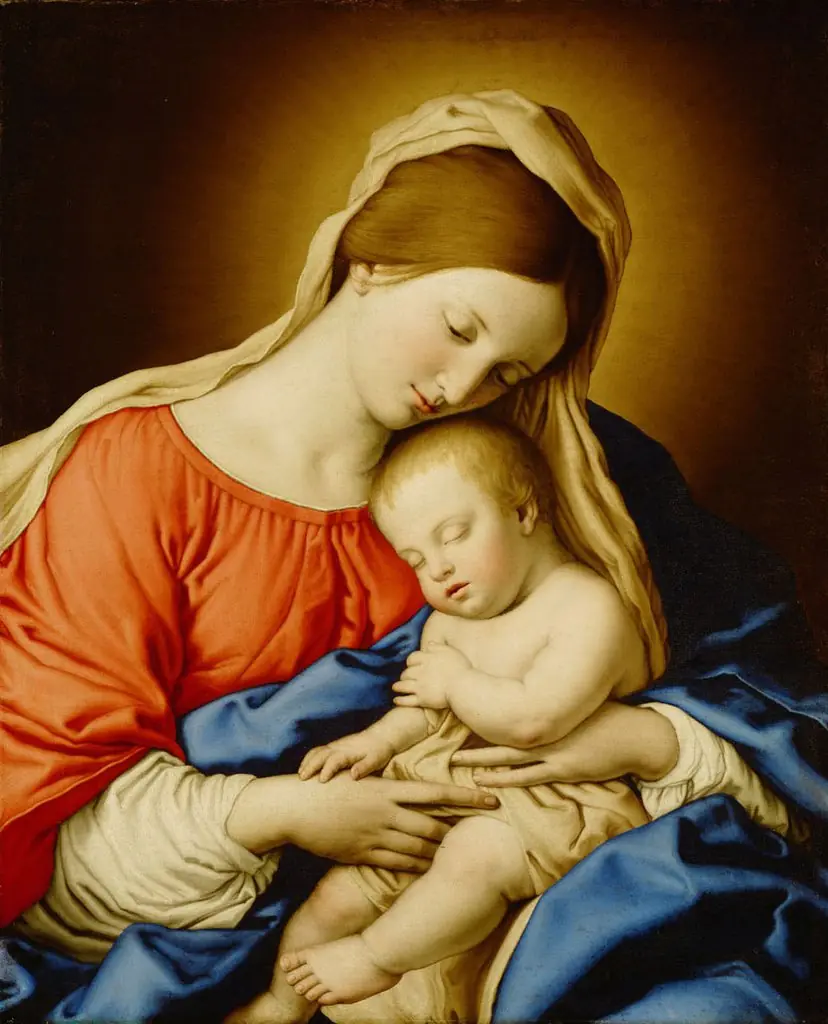
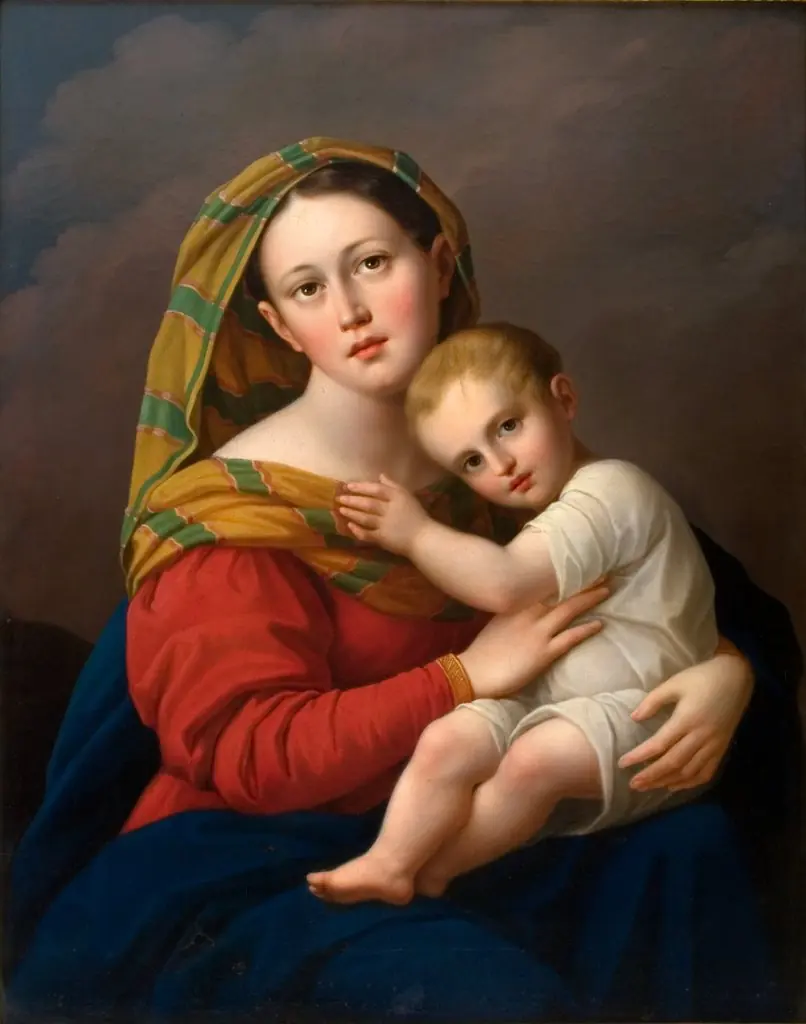
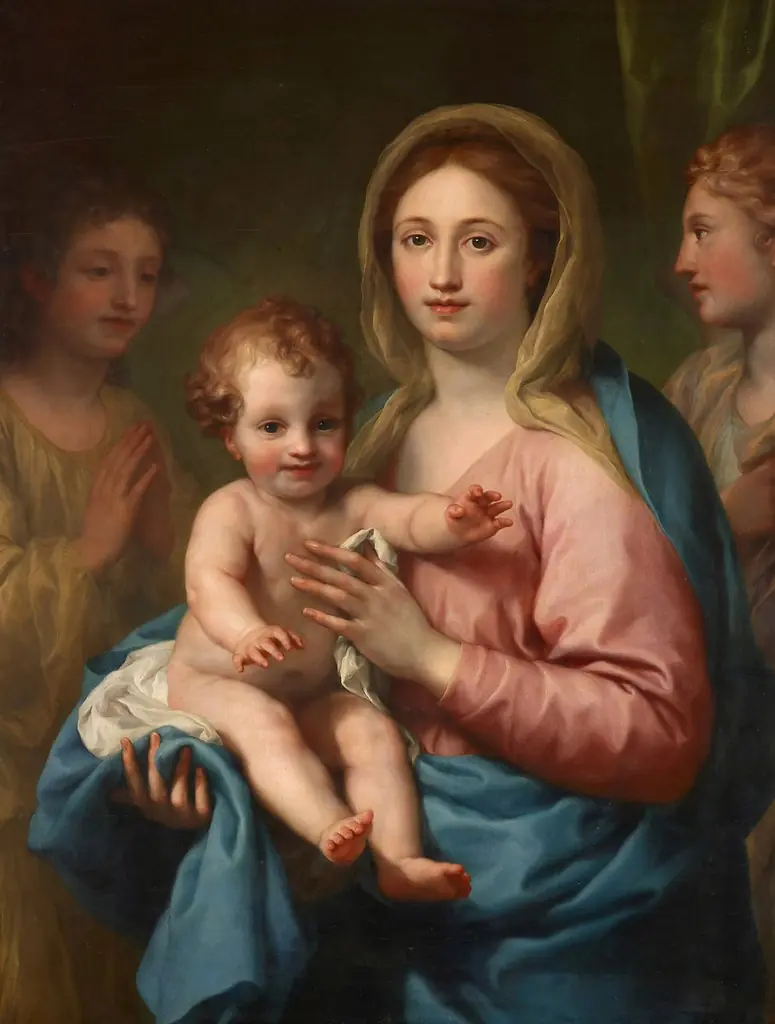
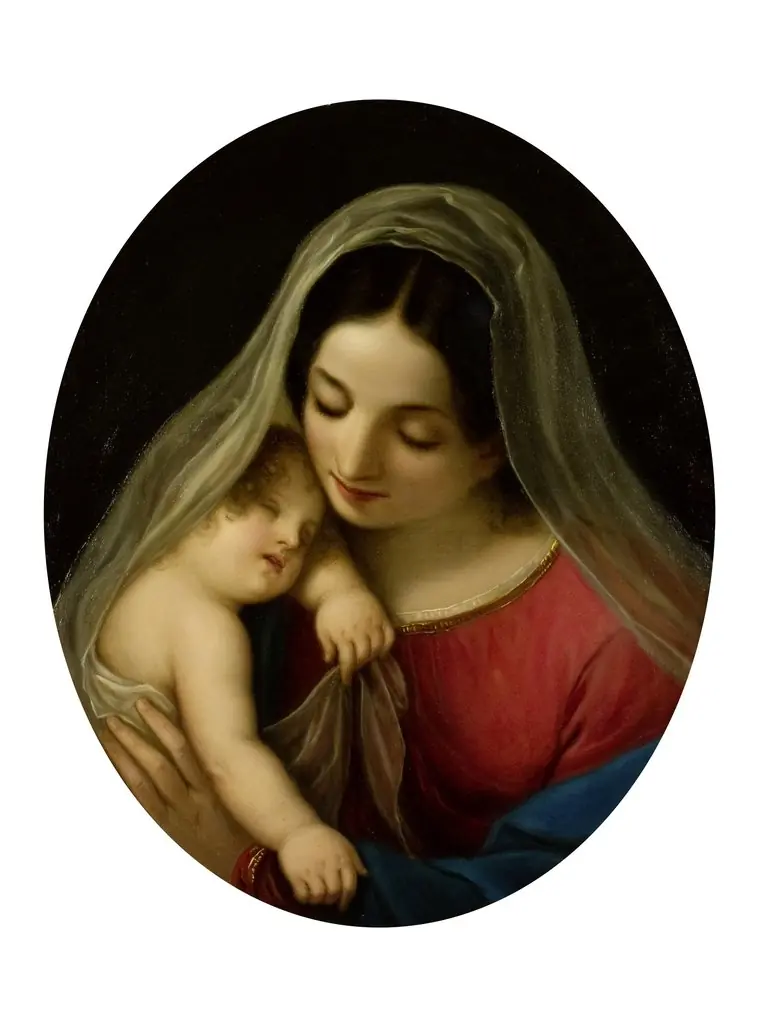
The painting portrays the Virgin Mary seated with the infant Christ, a standard iconographic motif in Christian religious art that emphasizes maternal tenderness and the divine nature of the Child. Mary is shown in a blue robe, a color traditionally associated with holiness and the heavens, while the Child rests on a chair and is clothed in a simple robe, underscoring his humanity and vulnerability. The composition’s focus on the intimate relationship between mother and son conveys themes of protection, love, and the Incarnation, central to devotional practices in the Catholic tradition.
Technique & Style
The composition features the Virgin seated with the Christ Child on her lap, both rendered in traditional robes with Mary gazing protectively at her son.
The painting is executed in oil on canvas, a common support for 18th-century religious works. The composition features the Virgin seated with the Christ Child on her lap, both rendered in traditional robes with Mary gazing protectively at her son. Christ is depicted seated on a chair, holding a book, while Mary wears a deep blue mantle over a red gown.
The figures are positioned centrally within a shallow spatial setting, emphasizing their sacred relationship through close physical proximity and direct eye contact. The work demonstrates the formal restraint and devotional clarity characteristic of Corvi's religious paintings.
History & Provenance
Domenico Corvi's oil painting Virgin and Child is held in the collection of the Museum of Fine Arts, Boston. The work depicts the Madonna and Child seated on a chair and is executed on canvas with dimensions of 60 cm in height and 48.5 cm in width. While the source confirms its presence in the Boston museum's holdings, no specific inventory or accession number is provided in the available documentation. Additionally, the provided records do not list any specific exhibition history for this religious artwork.
Context
Scholarship on Domenico Corvi's Virgin and Child emphasizes its role within Roman Baroque devotional painting, reflecting Counter-Reformation ideals of intimate sacred encounters. The work's composition, featuring the Virgin seated with the Christ Child on a simple chair amidst rich drapery, demonstrates Corvi's stylistic synthesis of earlier Roman masters while asserting his independent narrative focus on maternal tenderness. Critical reception has consistently highlighted the painting's emotional resonance and technical refinement, particularly its nuanced rendering of fabric textures and delicate facial expressions, which distinguish it within 18th-century Roman religious art.
As part of Corvi's broader oeuvre of Marian subjects, this piece contextualizes his contribution to the evolution of sacred imagery prior to Neoclassical shifts, situating him within the competitive artistic milieu of papal patronage in 18th-century Rome.
Legacy
The composition established by Corvi's Virgin and Child informed subsequent religious paintings that emphasized intimate domestic settings for the Madonna and Child. 20th-century scholarship highlighted its role in shaping devotional imagery within the Bolognese school, while the work's formal balance influenced later interpretations of sacred subjects in European art.
The painting's presence in the Museum of Fine Arts Boston collection has ensured continued visibility, supporting exhibitions that trace its impact on later depictions of maternal tenderness in Christian art. Contemporary analyses note its contribution to the evolution of iconography surrounding the Christ Child's portrayal.
Overview
Domenico Corvi, an Italian painter active in the late eighteenth century, produced the oil painting Virgin and Child circa 1771. Executed in Rome during a period of stylistic transition, the work now belongs to the Museum of Fine Arts in Boston. It presents a religious scene in which the Virgin Mary cradles the infant Jesus, rendered with a restrained palette and subdued lighting.
Own this work as a print
Artist & collection
Artist
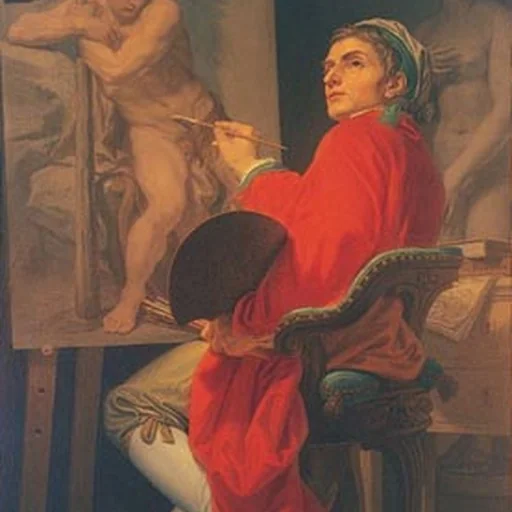
Domenico Corvi (16 September 1721 – 22 July 1803) was an Italian painter at the close of the 18th century, active in an early Neoclassic style in Rome and surrounding sites.