Artwork
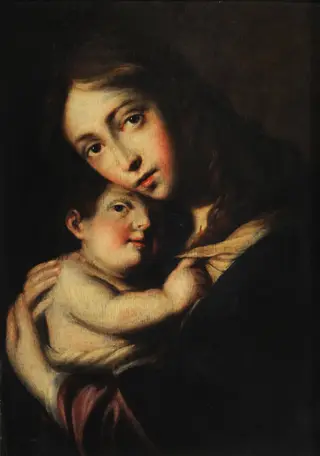
Virgin and Child
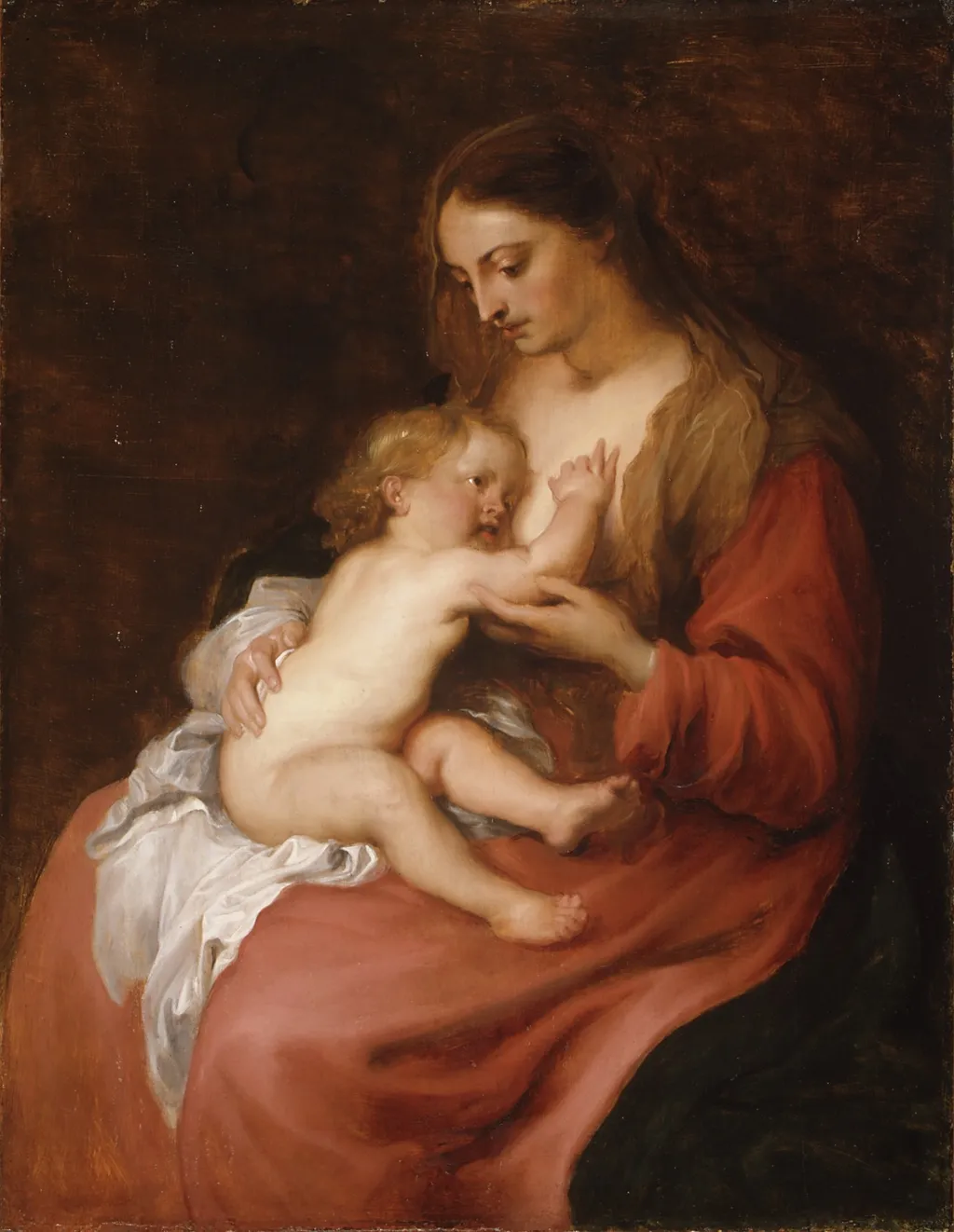
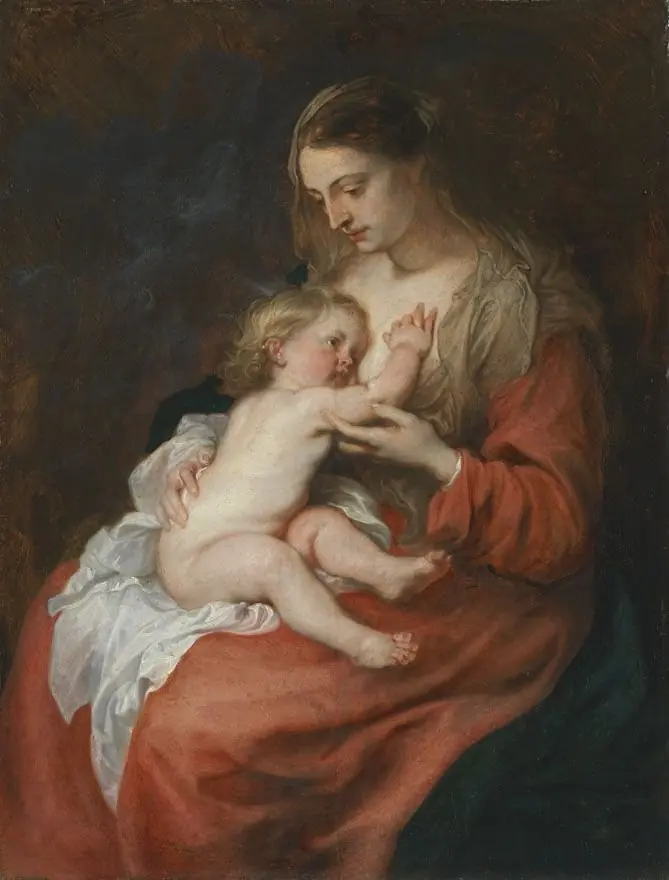
Virgin and Child is an oil painting by the Flemish Baroque painting artist Anthony van Dyck. It dates from 1620 and is held in the collection of the Metropolitan Museum of Art.
About this work
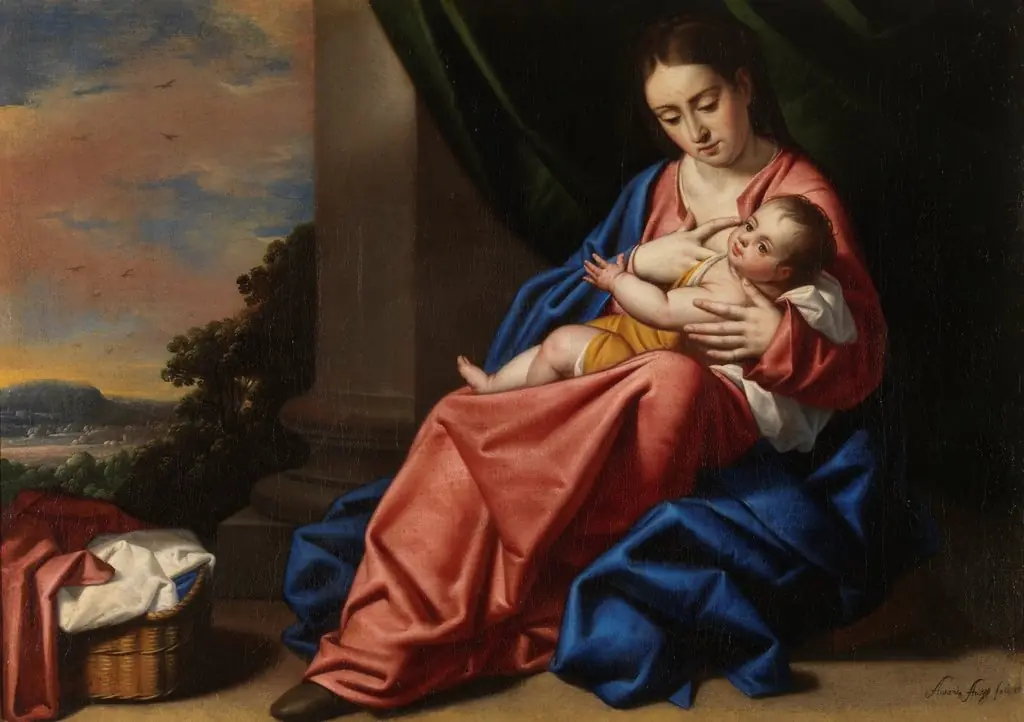
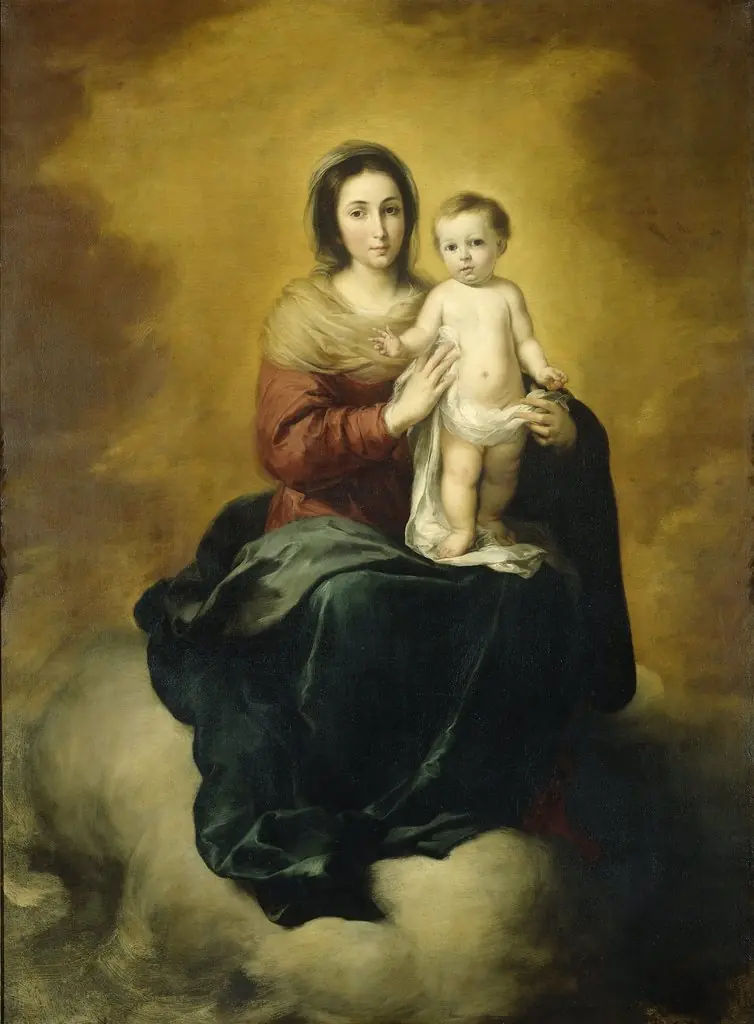
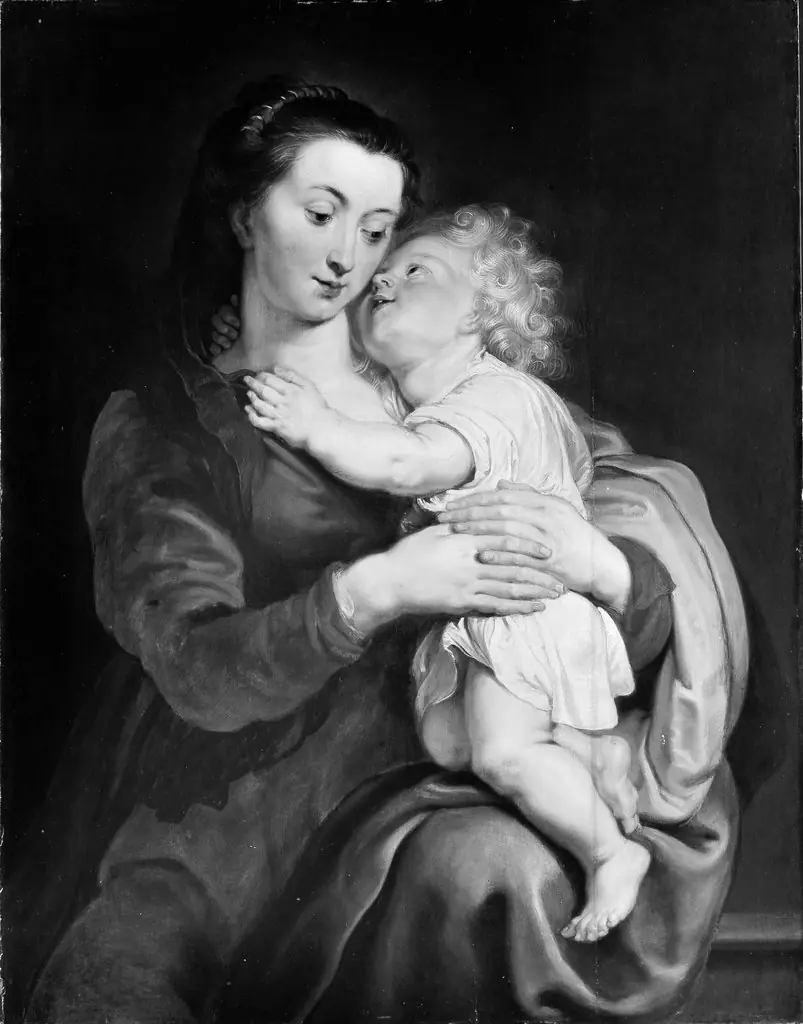
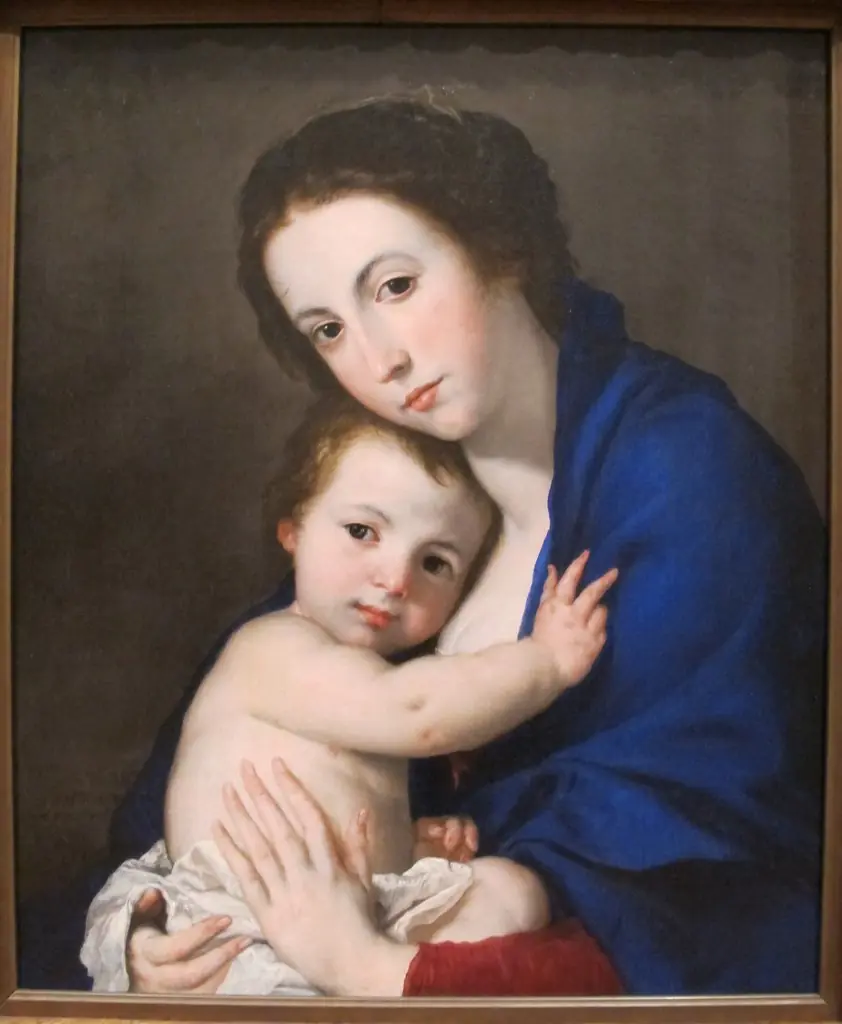
A woman holds a small child close, his skin soft and warm, her red robe draped with a white cloth over one arm. The child reaches up to touch her face. Van Dyck worked light and shadow to round the figures into three dimensions, giving the red cloth its depth and the skin its glow. Painted around 1620.
Subject & Meaning
The composition functions as a visual meditation on the Incarnation, highlighting themes of nurture, protection, and the sacred bond between mother and son.
The Virgin and Child depicts the Virgin Mary cradling the infant Christ, a conventional subject in early-modern religious painting. In this work, created by Anthony van Dyck in 1620 and executed in oil on panel, Mary is shown breastfeeding the Christ Child, emphasizing both maternal intimacy and the humanity of the divine. The composition functions as a visual meditation on the Incarnation, highlighting themes of nurture, protection, and the sacred bond between mother and son.
The painting's religious genre and its presence in the Metropolitan Museum of Art underscore its devotional purpose within the tradition of Counter-Reformation art.
Technique & Style
Executed in 1620, this religious painting by Anthony van Dyck utilizes oil paint applied to a wooden panel support. The work measures 64.1 cm in height and 49.5 cm in width. Stylistically, the composition focuses on the intimate subject of the Madonna and Child, specifically depicting the Virgin Mary breastfeeding the Christ Child.
The medium and support combination reflects standard practices for portable devotional images of the period, while the specific iconography emphasizes a tender, humanizing interaction between the sacred figures.
History & Provenance
Created in 1620, this oil painting on panel is attributed to Anthony van Dyck and depicts the Madonna breastfeeding the Christ Child. It measures 64.1 cm in height and 49.5 cm in width and is dated to the artist's early period. The work entered the collection of the Metropolitan Museum of Art, where it remains.
The specific details of its original commission and the full chain of ownership prior to its museum acquisition are not documented, and no accession number, prior provenance, or exhibition history is provided in the available sources.
Overview
Anthony van Dyck, a Flemish Baroque painter, created Virgin and Child in 1620 using oil paint. This early work depicts a tender moment between the Madonna and the Christ Child, a frequent theme in religious art of the period. The painting is part of the collection at The Metropolitan Museum of Art, representing a significant piece from the artist's formative years.
Context
Painted during van Dyck's early career in Antwerp, this work reflects the artistic environment of the Flemish Baroque. He trained under Peter Paul Rubens, whose dynamic style significantly influenced van Dyck's developing approach to composition and figure rendering. This period predates his later renown as a court painter in England, showcasing his foundational skills and thematic interests.
Own this work as a print
Artist & collection
Artist
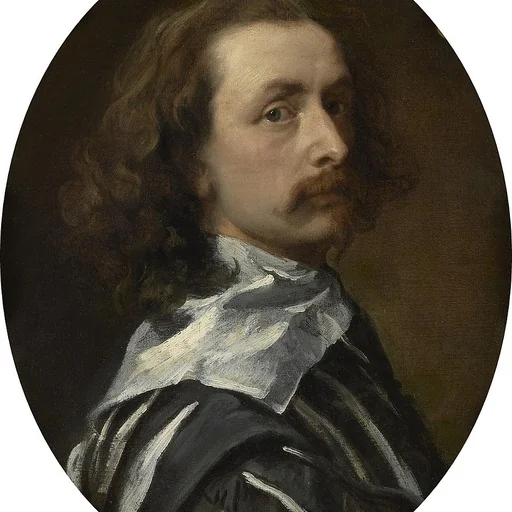
Sir Anthony van Dyck (; Dutch: Antoon van Dijck; 22 March 1599 – 9 December 1641) was a Flemish Baroque artist, who became the leading court painter in England after success in the Spanish Netherlands and Italy.