Artwork
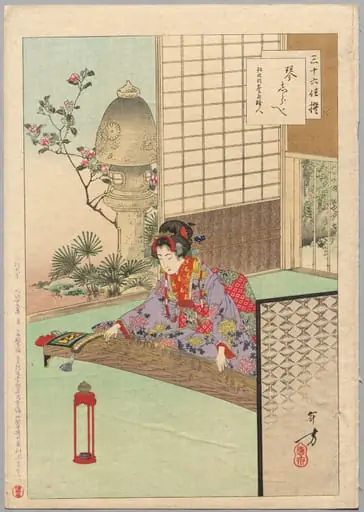
Koto from the series The Six Arts in Fashionable Guise
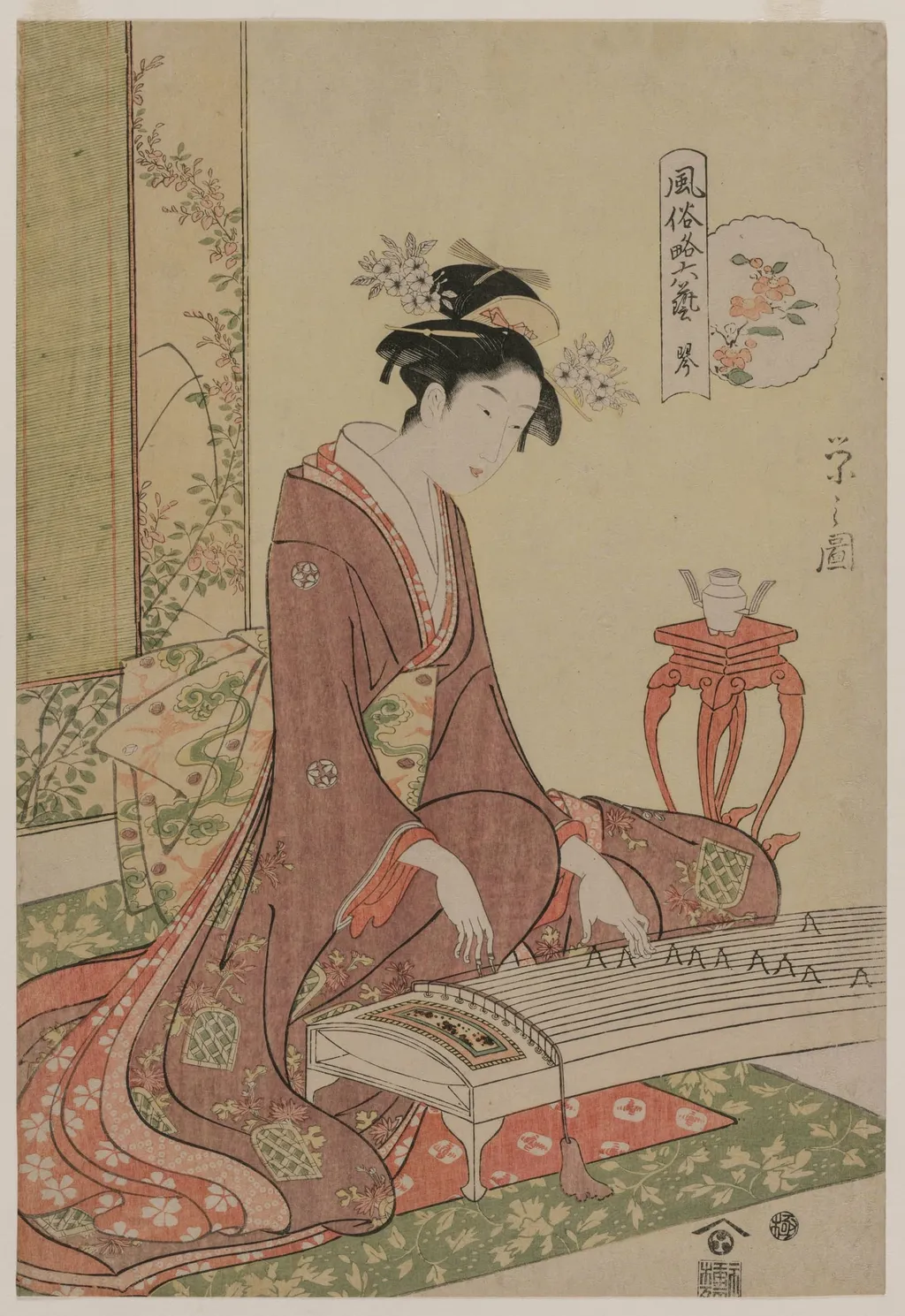
Koto from the series The Six Arts in Fashionable Guise is a print by the Romanticist artist Chôbunsai Eishi. It dates from 1794 and is held in the collection of the Cleveland Museum of Art.
- Accession no.
- 1985.301
- Credit line
- The Kelvin Smith Collection, given by Mrs. Kelvin Smith
About this work
You see a woman in a bright kimono playing a long, wooden koto across her lap.
This print swaps a Chinese scholar’s zither for a Japanese koto, blending old Chinese ideals with Edo-period style. The woman’s loose hair and patterned robe feel modern for the 1790s, not stuffy like a Confucian painting.
To see more prints like this, look up the subject: japan, edo period (1615–1868).
Overview
This print, titled Koto from the series The Six Arts in Fashionable Guise, depicts a woman playing a koto, a traditional Japanese stringed instrument.
Subject & Meaning
The image reinterprets the ancient Chinese Six Arts, substituting a Japanese entertainer for a Chinese scholar and the koto for the Chinese qin zither, symbolizing music.
Technique & Style
The print showcases a fashionable woman in a bright kimono, with loose hair and a patterned robe, embodying the style of the Edo period.
Context
The work blends traditional Chinese cultural ideals with the aesthetics of 1790s Japan, reflecting the cultural exchange and adaptation of the time.
Own this work as a print
Artist & collection

Artist
Chōbunsai Eishi (鳥文斎 栄之; 1756–1829) was a Japanese ukiyo-e artist. His last name was Hosoda (細田). His first name was Tokitomi (時富). His common name was Taminosuke (民之丞) and later Yasaburo (弥三郎). Pupil of Kano Eisen'in…

 Three Gods of Good Fortune Visit the Yoshiwara; or “Scenes of Pleasure at the Height of Spring”
 蜀山人(大田 南畝)賛 雪・月・花図 |Snow, Moon, and Cherry Blossoms (Yoshiwara in Three Seasons)
 Untitled
 Untitled
 Untitled
 Shellfish and Apparitions of the Yoshiwara Pleasure Quarter
 A Courtesan Reading a Letter
 Beauty Replacing Her Hairpin
 Woman Reading a Letter (from the series Seven Episodes in the Life of Komachi in the Floating World)
 鳥文斎栄之画 「青楼美人六花仙 丁子屋雛鶴鸖」|The Courtesan Hinazuru of the Chōjiya Brothel (Chōjiya Hinazuru), from the series Beauties of the Pleasure Quarters as Six Floral Immortals (Seirō bijin rokkasen)
 鳥文斎栄之画 「風流略六哥仙 其の二」小野小町|Ono no Komachi: Number Two (Sono ni), from the series Stylish Parodies of the Six Poetic Immortals (Fūryū yatsushi rokkasen)
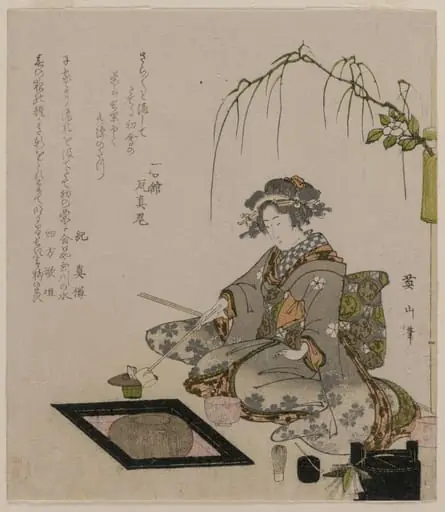 Woman Performing the Tea Ceremony
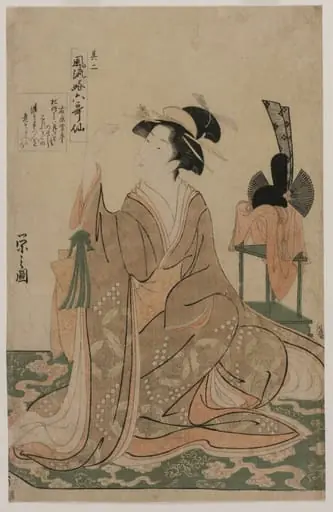 Young Woman Kneeling by a Stand with a Ceremonial Cap (from the series The Six Immortal Poets in Elegant Modern Dress)
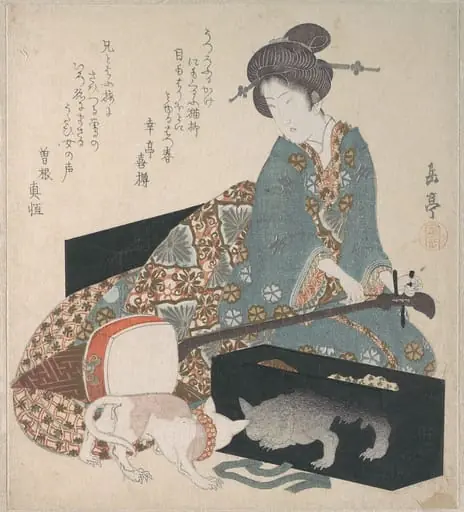 三味線の調弦|Woman Tuning a Shamisen and a Cat Looking at its Own Reflection
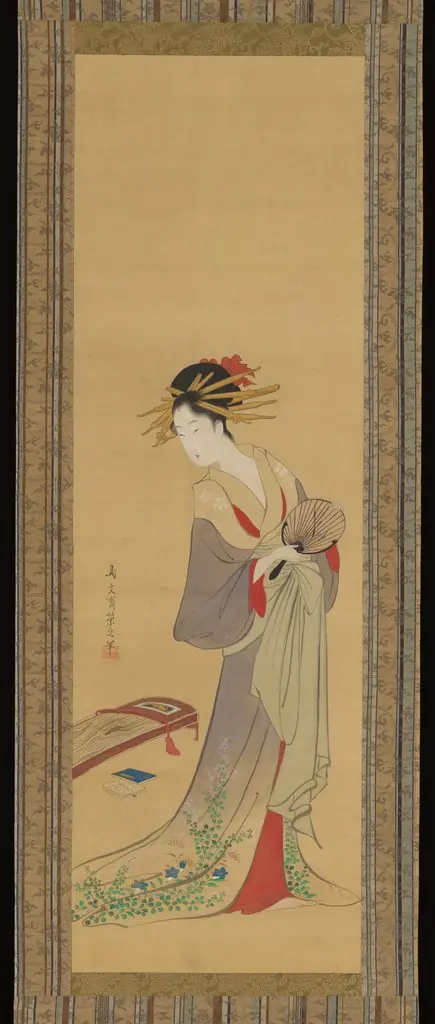 Courtesan with Fan and Koto
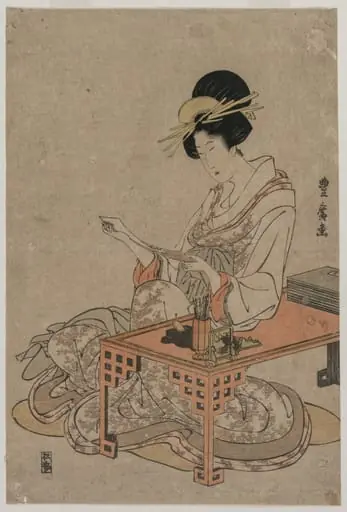 Courtesan Seated at a Writing Table
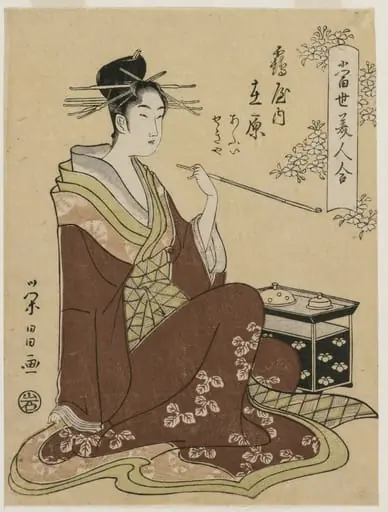 The Courtesan Ariwara of the Tsuruya Seated by a Smoking Chest (From the series A Collection of Modern Beauties)
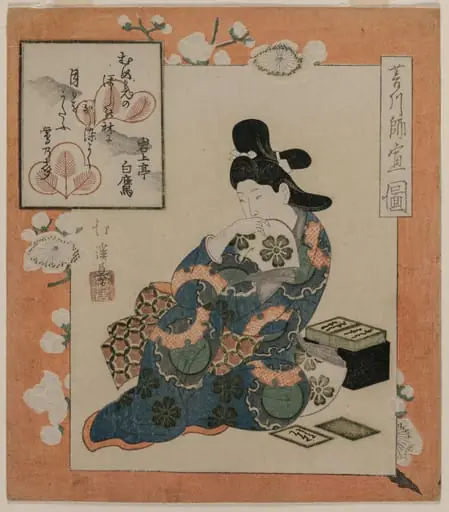 A Picture by Hishikawa Moronobu: Woman with a Set of Poem Cards
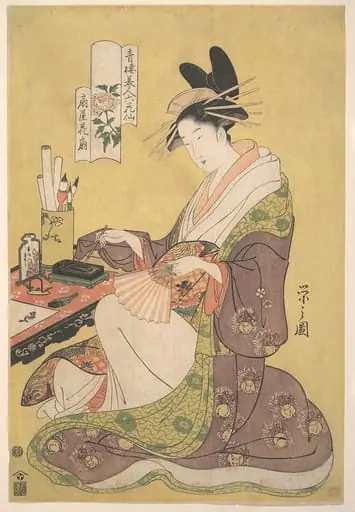 「青楼美人六花仙 扇屋花扇」|The Courtesan Hanaōgi of the Ōgiya Brothel (Ōgiya Hanaōgi), from the series Beauties of the Pleasure Quarters as Six Floral Immortals (Seirō bijin rokkasen)
 Playing the Koyo, A Lady from Nagoya of the Kōka Era (1844-48), from the series Thirty-six Elegant Selections