Artwork
鳥山石燕筆 「翁」図|The Auspicious Noh Dance "Okina"
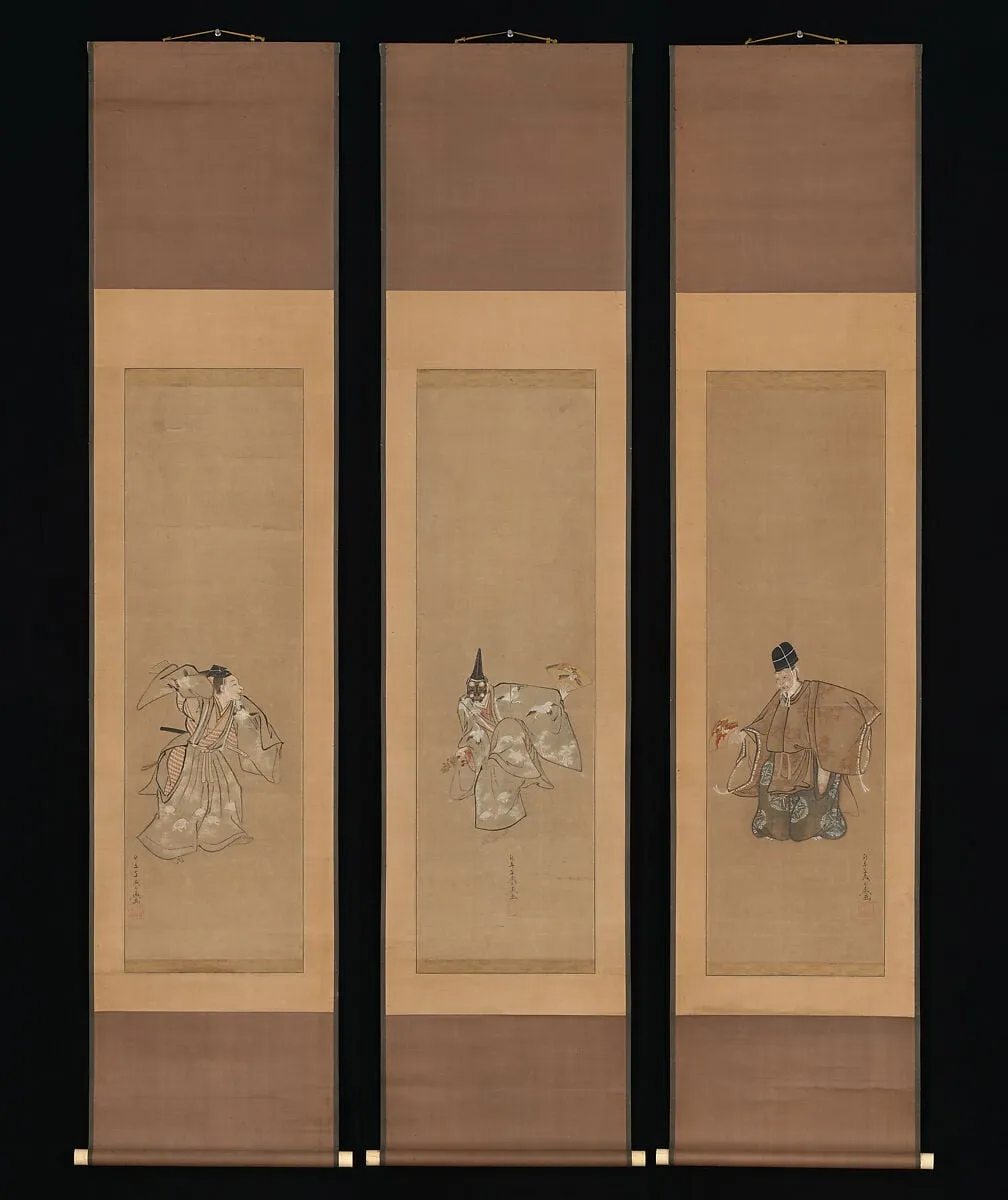
鳥山石燕筆 「翁」図|The Auspicious Noh Dance "Okina" is an ink painting by the Romanticist artist Toriyama Sekien. It is held in the collection of the Metropolitan Museum of Art.
About this work
Subject & Meaning
" The artwork's iconography centers on a male dancer performing this traditional ritual dance.
Toriyama Sekien's 1792 triptych portrays the auspicious Noh dance known as "Okina." The artwork's iconography centers on a male dancer performing this traditional ritual dance. As a religious genre painting, the piece embodies the symbolic and ceremonial significance of the Okina dance, which is traditionally associated with auspiciousness, longevity, and divine blessing.
By depicting the central male figure in the act of dancing, the work represents a visual invocation of prosperity and spiritual favor inherent in the Okina performance.
Technique & Style
Created in 1792, Toriyama Sekien's The Auspicious Noh Dance 'Okina' is executed as a triptych of hanging scrolls. The artist employed ink and color applied to a paper support, incorporating gold to enhance the visual richness of the composition. Classified within the religious genre, the work depicts a male dancer performing the traditional Okina dance.
The formal qualities reflect the devotional nature of the subject, while the inclusion of gold suggests a ceremonial or auspicious intent consistent with the Noh performance tradition. This multi-panel format allows for a segmented yet unified presentation of the scene, characteristic of Edo-period religious painting practices.
History & Provenance
The triptych depicting the Auspicious Noh Dance "Okina" was created by Toriyama Sekien in 1792, executed in ink, color, and gold on paper as a set of three hanging scrolls. It is held in the collection of the Metropolitan Museum of Art, where it is classified as a painting within its Japanese art holdings. No details regarding an earlier ownership chain, commissioning patron, or intermediate provenance prior to its accession are recorded in the available sources, and the work has not been recorded in any documented exhibitions in the provided sources.
Overview
Toriyama Sekien created The Auspicious Noh Dance "Okina" around 1792. This triptych, rendered in ink, color, and gold on paper, captures a pivotal moment from the sacred Noh performance. The work functions as a religious painting, presenting a single dancer embodying the revered figure of Okina, whose ritualistic movements are believed to bestow good fortune.
Context
Noh theater is characterized by its deliberate pace, understated aesthetics, and narratives often involving supernatural beings or spirits. This painting isolates a single, significant instant from the Okina ritual, allowing viewers to contemplate the profound stillness and spiritual intensity inherent in Noh performances. It encapsulates the essence of a tradition where movement and silence combine to evoke a world populated by gods and ancestral figures.
Artist & collection


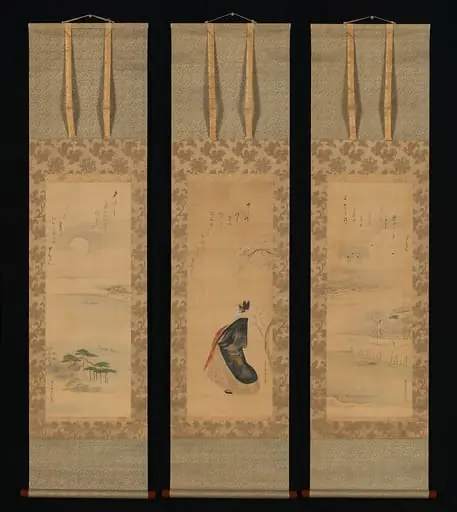
- 蜀山人(大田 南畝)賛 雪・月・花図 |Snow, Moon, and Cherry Blossoms (Yoshiwara in Three Seasons)
 Untitled
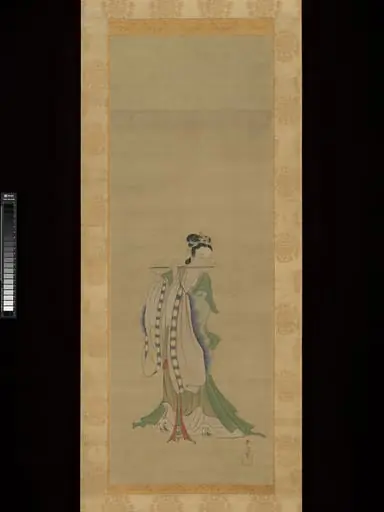 狩野常信筆 楊貴妃吹笛図|Yang Guifei Playing a Flute
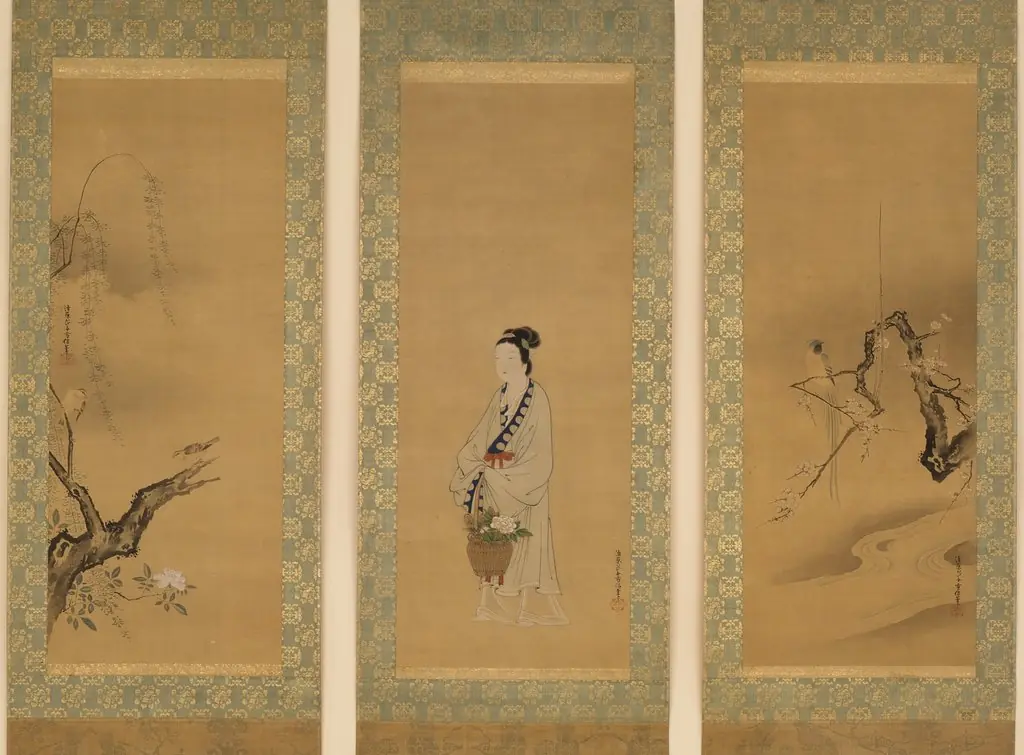 Reishō: Paragon of Filiel Piety; Chinese Blue Magpie with Flowering Plum; Sparrows, Willow, and Rose
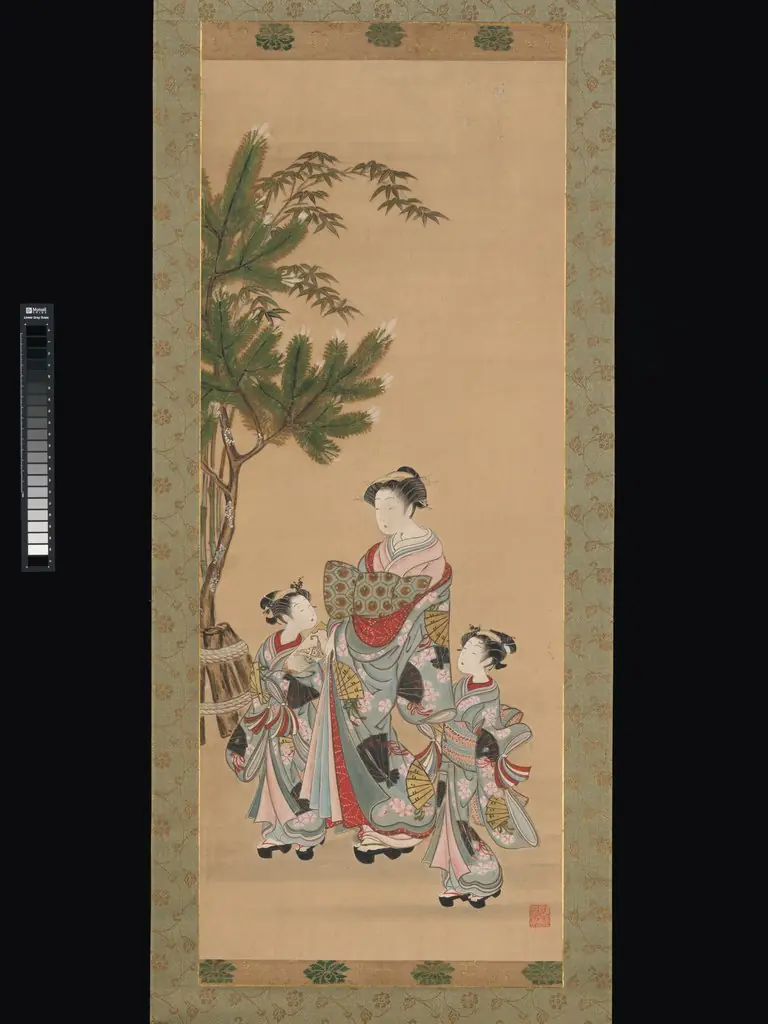 Courtesan and Two Attendants on New Year's Day
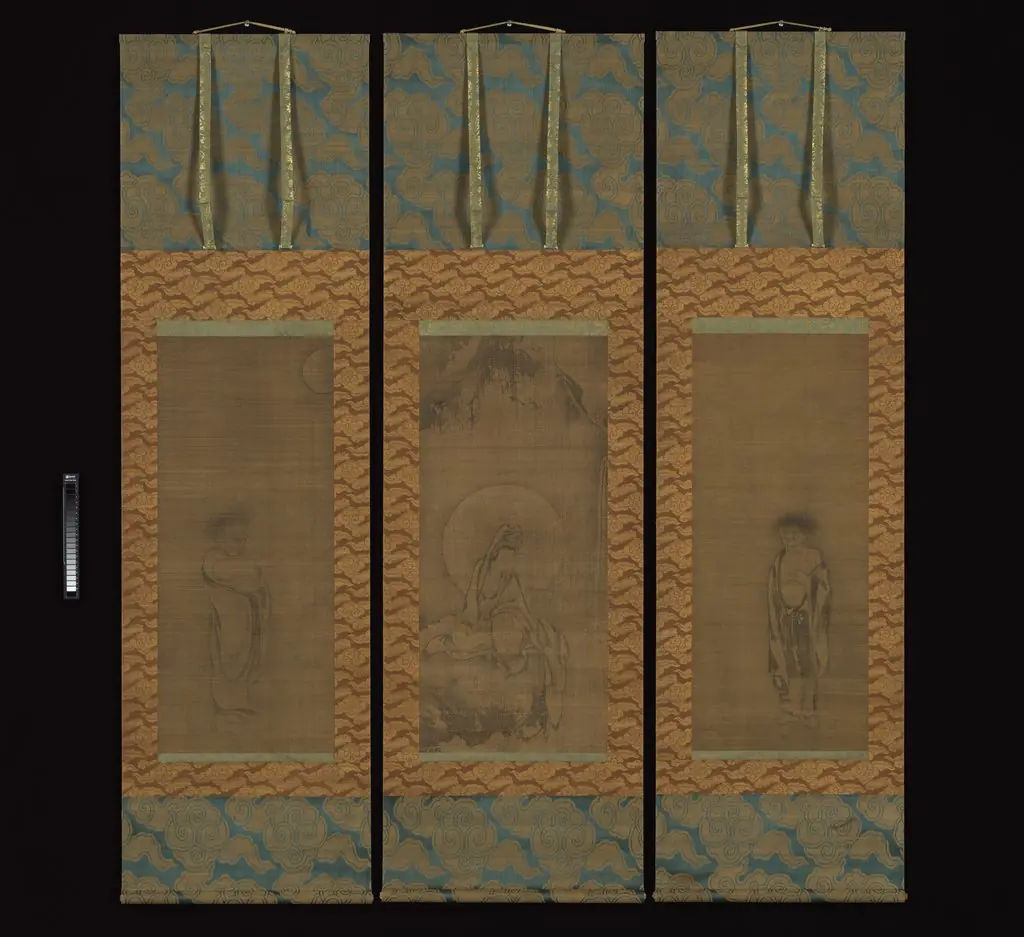 White-Robed Guanyin with Hanshan and Shide
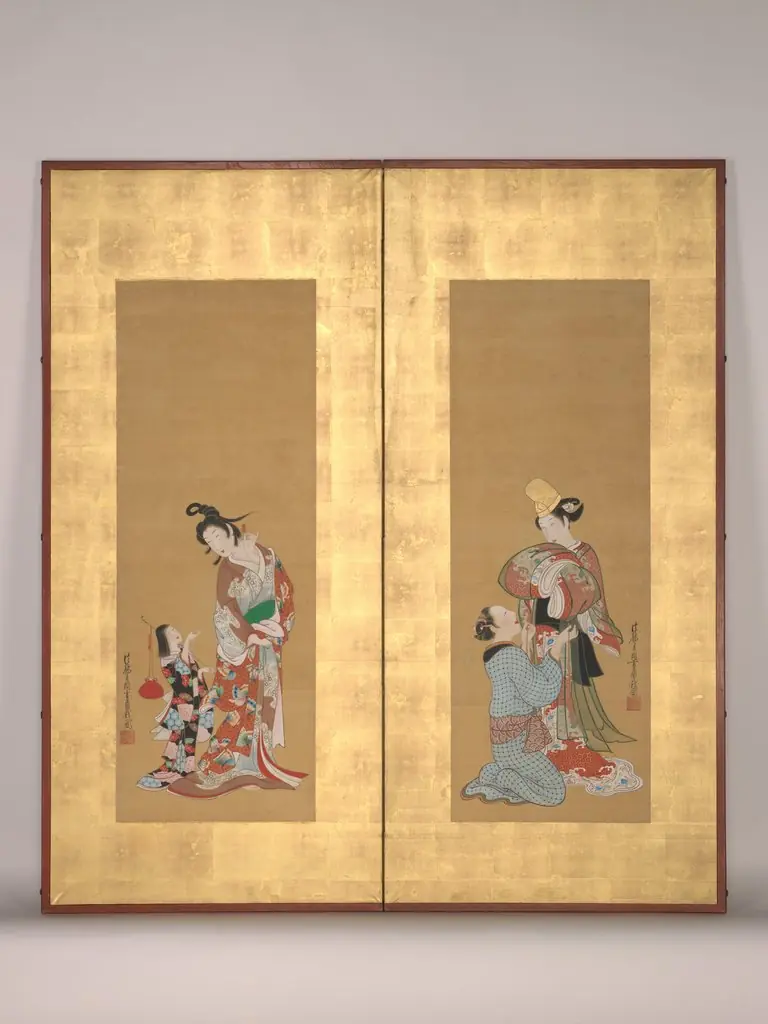 Shirabyōshi Dancer and Female Servant; Courtesan and Girl Attendant
 The Four Deities of Mount Kōya
 源琦筆 燕姞・楊貴妃図|Yanji with Orchids and Yang Guifei with Peonies
 Portraits of Three Famous Poets: Hitomaro (M) ・Ise (R) ・Komachi (L)