Artwork
Bacon Lord Verulam
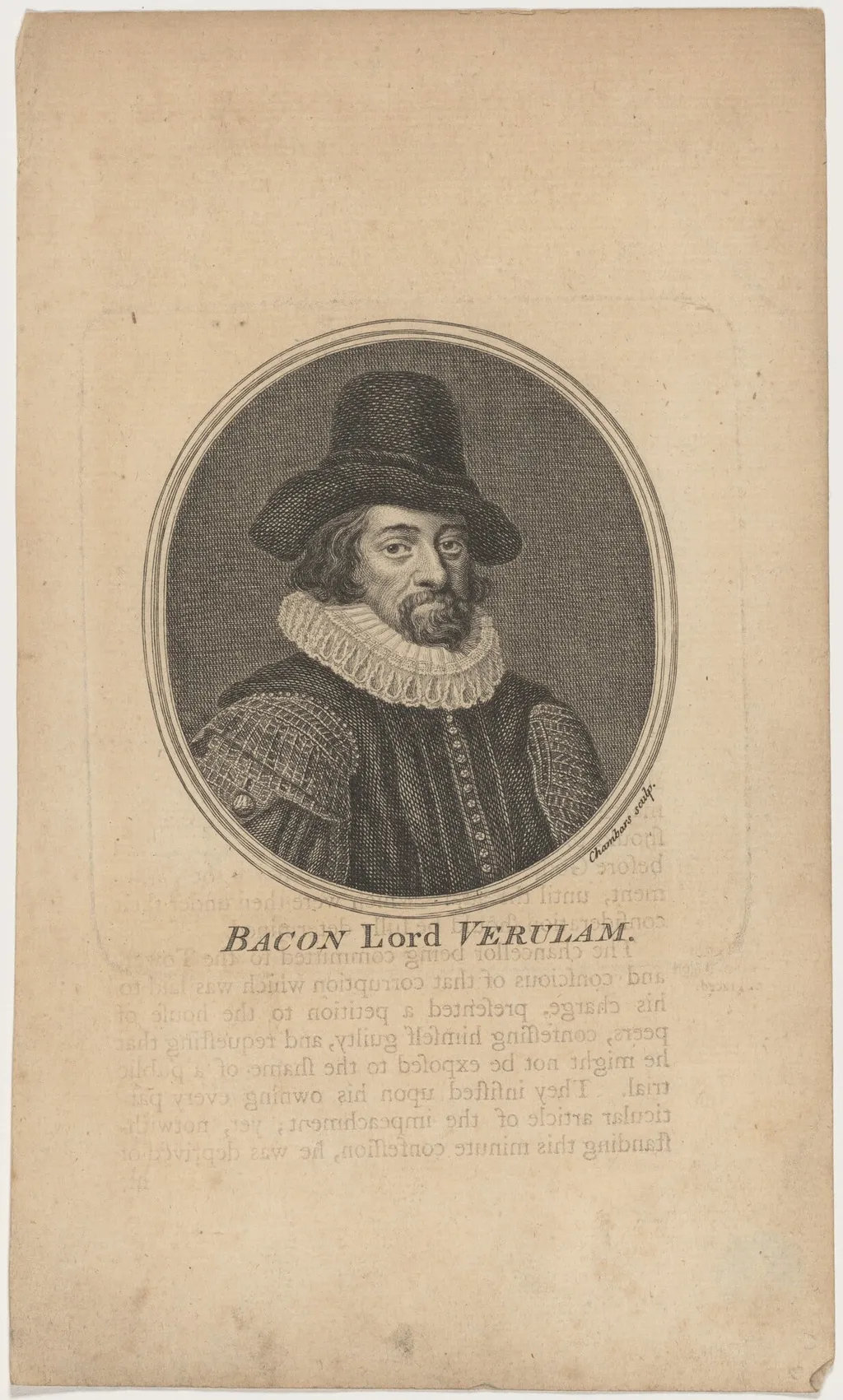
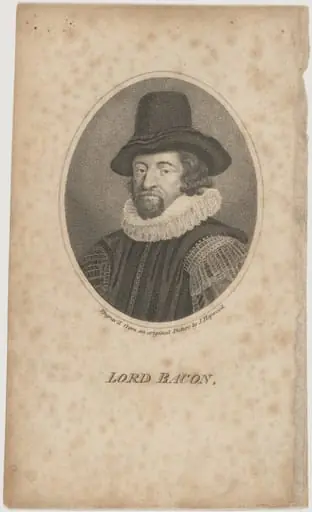
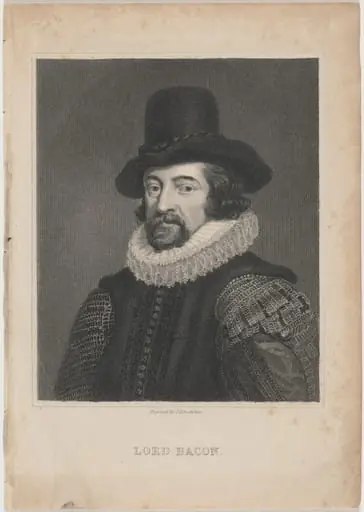
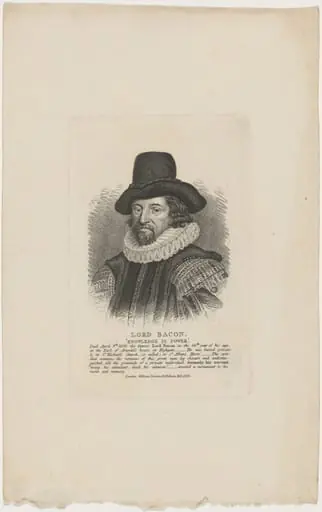
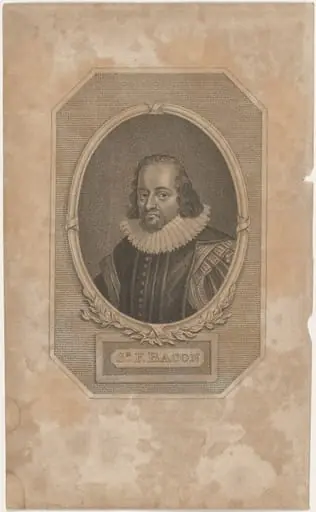
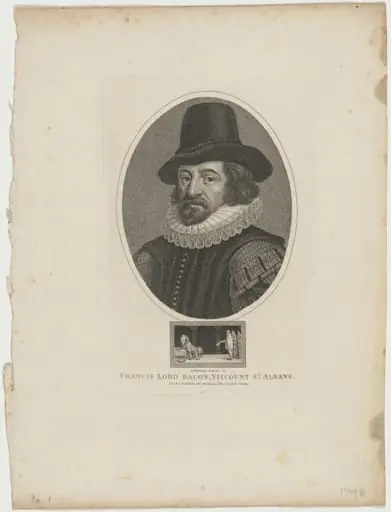
Bacon Lord Verulam is an ink print by the Romanticist artist Thomas Chambers. It dates from 1757 and is held in the collection of the National Gallery of Art.
About this work
Overview
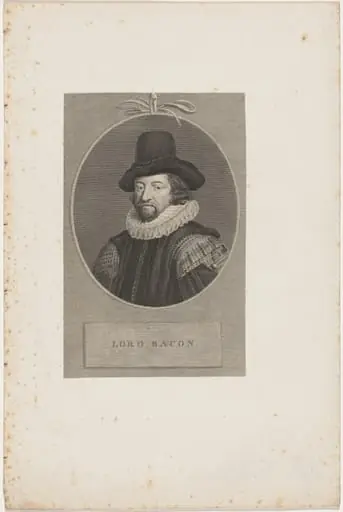
Rendered in fine linear detail, the portrait is contained within a circular frame against a plain background.
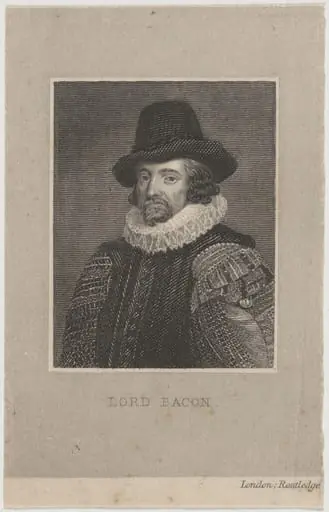
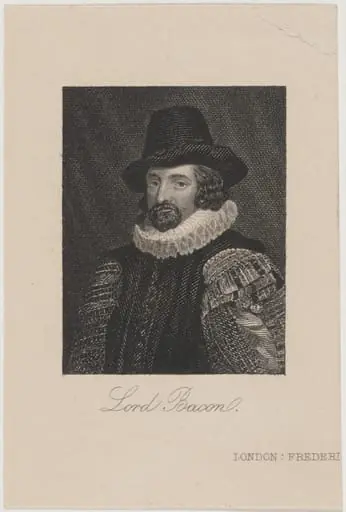
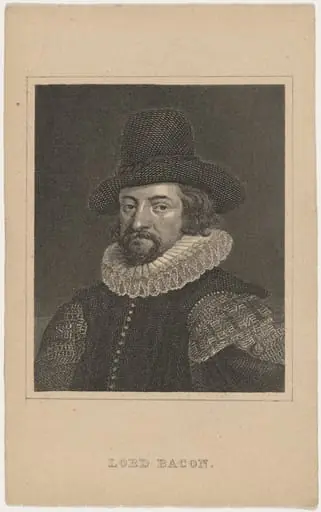
This black-and-white engraving, produced in 1757 by Thomas Chambers, depicts Francis Bacon, Baron Verulam. Rendered in fine linear detail, the portrait is contained within a circular frame against a plain background. The composition emphasizes the subject’s facial features and attire through controlled hatching, typical of 18th-century printmaking techniques used for scholarly and aristocratic portraiture.
Subject & Meaning
The portrait represents Francis Bacon, 1st Baron Verulam, a 17th-century philosopher and statesman known for advancing empirical science. Though created nearly a century after his death, the image reflects his enduring symbolic status in intellectual circles. The formal attire and dignified bearing align with traditional representations of learned men, reinforcing his legacy as a foundational figure in the development of modern scientific method.
Technique & Style
Chambers employed engraving, a method involving incised lines on a metal plate inked and pressed onto paper. Fine, parallel strokes build tone and texture, particularly in the ruffled collar and hat’s shadowed folds. The absence of background detail focuses attention on the face and costume, a convention in portrait engravings meant to convey authority and clarity rather than environmental context.
History & Provenance
Created in 1757, the engraving likely served as a reproductive print for educational or decorative use, common in Enlightenment-era Britain. No specific early ownership records are documented, but such works were often circulated in collections of notable figures. Its survival suggests continued interest in Bacon’s intellectual legacy during the mid-18th century.
Context
In the mid-1700s, engraved portraits of historical thinkers were widely produced to honor intellectual heritage. Bacon, as a champion of observation and experimentation, was frequently invoked in debates about reason and progress. This print fits within a broader trend of visualizing philosophical lineage, linking contemporary audiences to the foundations of scientific thought.
Legacy
Though not widely reproduced today, the engraving remains a tangible example of how Enlightenment Britain visually commemorated its intellectual forebears. It reflects the period’s reverence for Bacon’s ideas and the role of print culture in disseminating historical memory. Its formal style and subject matter continue to inform how early modern thinkers are represented in visual archives.
Own this work as a print
Artist & collection