Artwork
The Essays or Counsels of Sir Francis Bacon
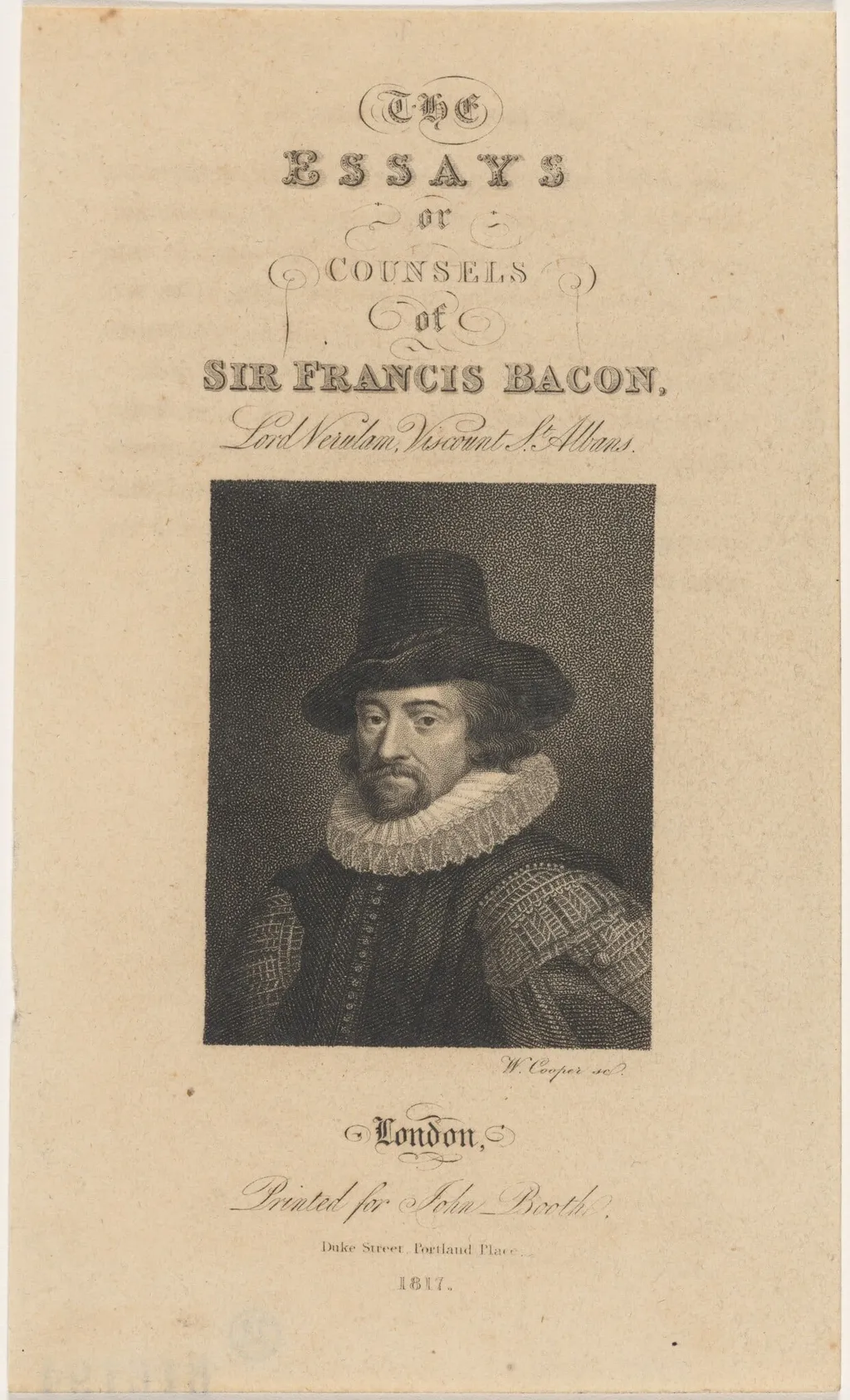
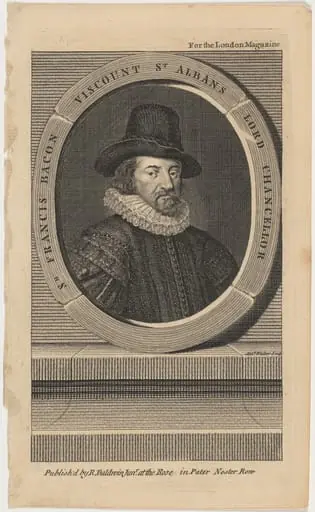
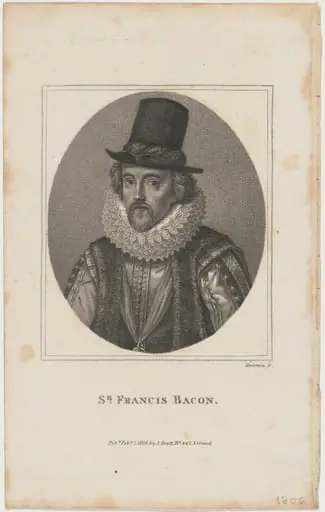
The Essays or Counsels of Sir Francis Bacon is an ink print by the Romanticist artist Thomas Chambers. It dates from 1817 and is held in the collection of the National Gallery of Art.
About this work
The tiny lines crisscrossing the image create the shading, this is called cross-hatching.
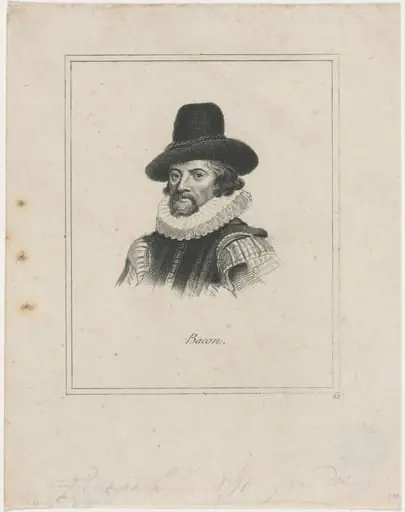
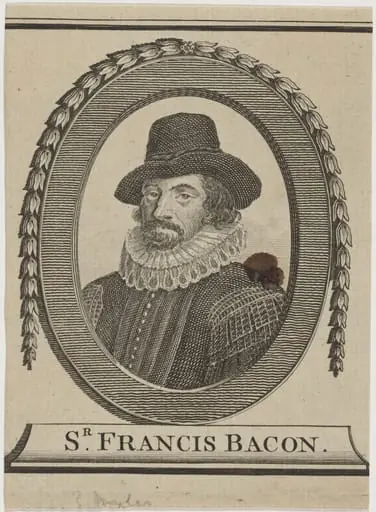
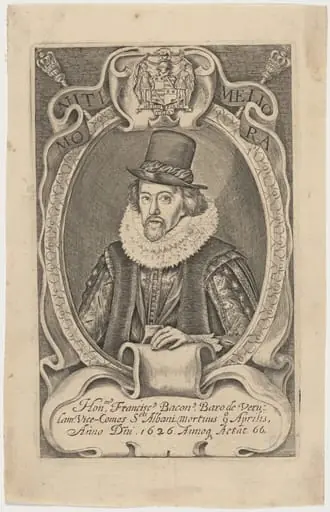
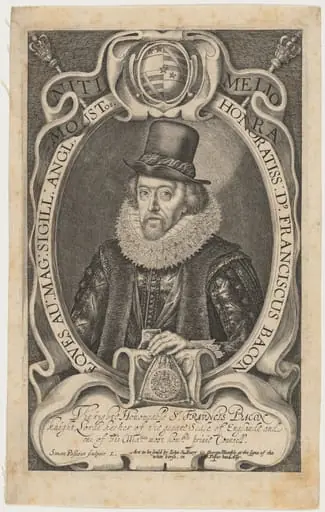
This is a black-and-white portrait of a serious-looking man in old-fashioned clothes. He’s wearing a wide-brimmed hat, a ruffled collar, and a patterned jacket. Above the picture, the title reads The Essays or Counsels of Sir Francis Bacon. Below, it says it was printed in London for John Booth in 1817.
The tiny lines crisscrossing the image create the shading, this is called cross-hatching. It’s a way to add depth without color.
Next, look up engraving to see how artists use sharp tools to make prints like this.
Overview
This 1817 print is an engraving by Thomas Chambers, produced in London for publisher John Booth. It depicts Sir Francis Bacon as a formal portrait, rendered entirely in monochrome using fine, intersecting lines. The image serves as a frontispiece for a publication of Bacon’s essays, linking his intellectual legacy with the visual culture of early 19th-century book publishing.
Subject & Meaning
The portrait presents Sir Francis Bacon, the philosopher and statesman, in period attire, wide-brimmed hat, ruffled collar, and patterned jacket, emphasizing his historical stature. The serious expression and formal dress convey authority and contemplation, aligning his image with the intellectual weight of his written works. The inclusion of his title on the print reinforces the connection between his physical likeness and his enduring literary contributions.
Technique & Style
Chambers employed traditional engraving methods, using a burin to incise fine lines into a metal plate. Shading and texture are achieved through cross-hatching, layers of intersecting strokes that simulate tone without color. The precision of the lines reflects the craftsmanship of printmaking at the time, prioritizing clarity and detail over expressive brushwork, suitable for mass reproduction in books.
History & Provenance
Created in 1817 for John Booth, a London bookseller, the engraving was likely intended as a frontispiece for a new edition of Bacon’s Essays. Its production coincided with a revival of interest in early modern philosophy during the early 19th century. The print’s survival in library collections suggests its use in educational and scholarly contexts rather than as a standalone artwork.
Context
In the early 1800s, illustrated books often featured engraved portraits of notable figures to lend credibility and gravitas to their contents. Bacon, as a foundational thinker in empirical science and rhetoric, was a fitting subject. This print reflects a broader trend of visually anchoring philosophical texts with authoritative imagery, bridging print culture and intellectual history.
Legacy
Though not widely recognized as a work of fine art, the engraving endures as a historical artifact of how Bacon’s ideas were visually represented in the 19th century. It exemplifies the role of printmaking in disseminating intellectual heritage, preserving his image for readers who encountered his essays through the medium of the printed page.
Own this work as a print
Artist & collection