Artwork
An Orchard
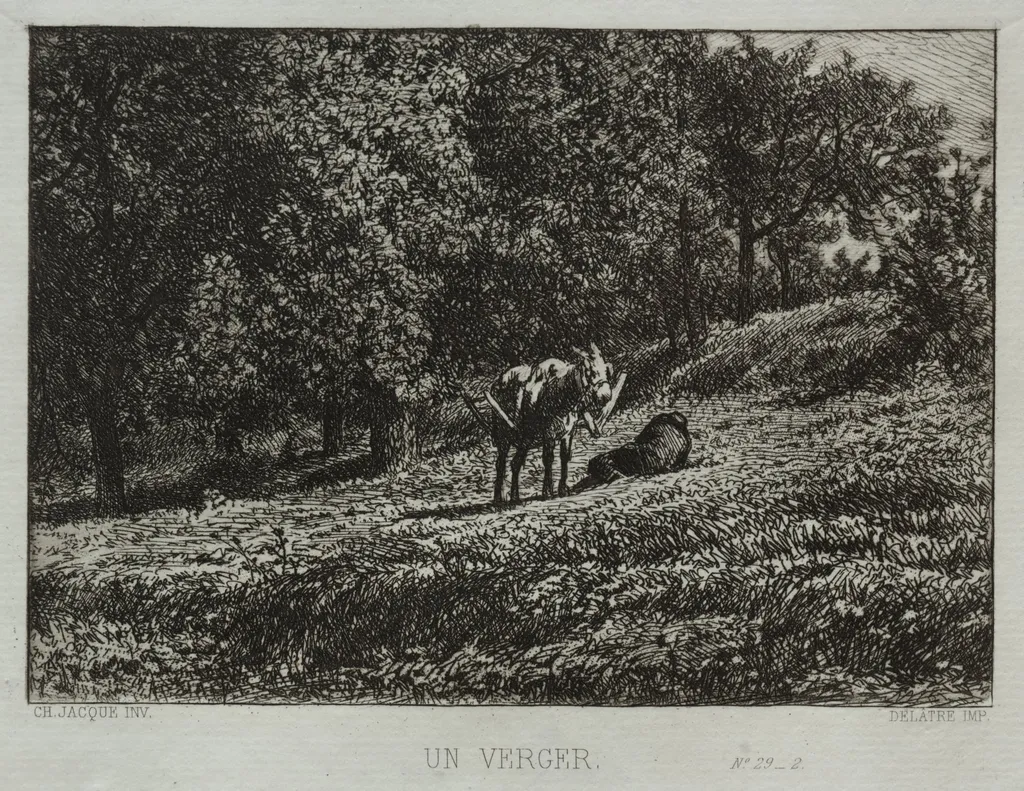
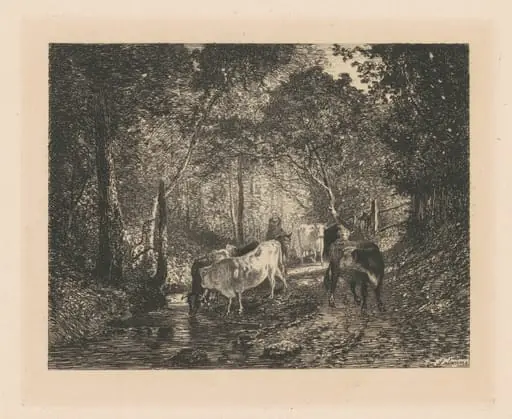
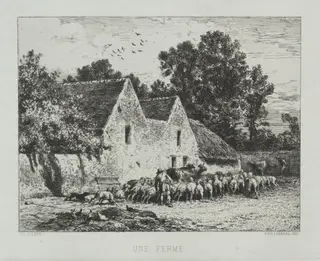
An Orchard is a print by the Impressionist artist Charles-Émile Jacque. It dates from 1865 and is held in the collection of the Cleveland Museum of Art.
- Accession no.
- 1921.1446
- Credit line
- Gift of Leonard C. Hanna Jr.
About this work
Overview
Jacque, associated with the Barbizon School, turned to printmaking after military service and became known for his depictions of agricultural life.
Created in 1865 by Charles-Émile Jacque, An Orchard is a print that captures a tranquil rural scene in France. Jacque, associated with the Barbizon School, turned to printmaking after military service and became known for his depictions of agricultural life. This work exemplifies the group’s commitment to observing nature and peasant labor without idealization, grounding its aesthetic in quiet realism rather than romanticism.
Subject & Meaning
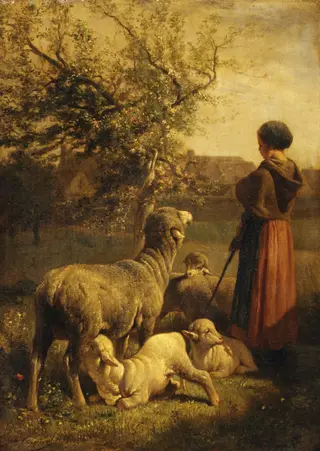
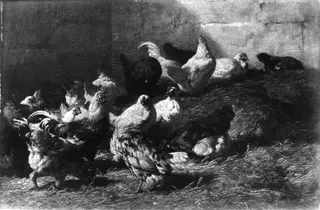
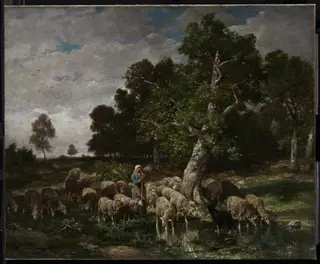
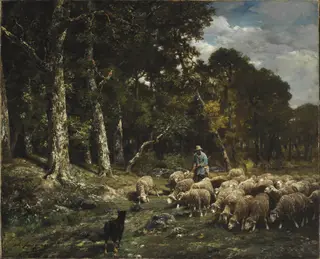
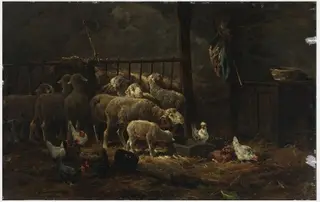
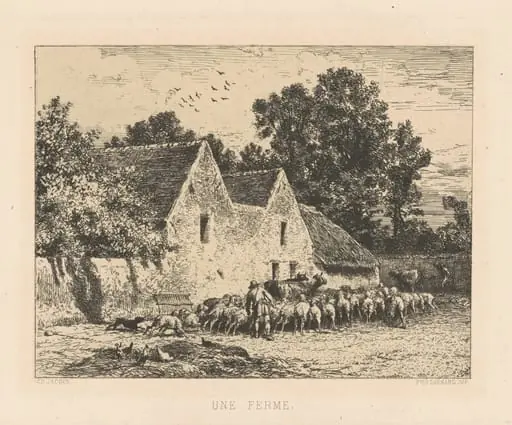
The scene portrays a springtime farmyard with sheep grazing beneath blooming apple trees, chickens foraging near a wooden fence, and no human figures present. The absence of laborers shifts focus to the rhythms of animal life and the quiet dignity of the land. Jacque’s choice of subject reflects a broader 19th-century interest in the natural cycles of the countryside, valuing stillness over narrative drama.
Technique & Style
Jacque employed a loose, responsive technique, using fluid lines and subtle tonal gradations to suggest soft morning light and the texture of wool, bark, and earth. His printmaking approach, influenced by direct observation, conveys immediacy rather than polished finish. The composition avoids dramatic contrast, instead relying on gentle transitions to evoke atmosphere and seasonal change.
History & Provenance
The print entered the collection of the Cleveland Museum of Art in the 20th century, where it remains part of its holdings of 19th-century European prints. Jacque’s works were widely circulated in his lifetime, particularly among collectors interested in rural realism. While not among his most famous prints, An Orchard exemplifies his consistent thematic focus and technical refinement in etching and drypoint.
Context
Produced during the height of the Barbizon School’s influence, An Orchard aligns with a broader cultural turn toward the countryside as a site of authenticity amid industrialization. Jacque’s work, alongside that of Millet and Daubigny, helped redefine landscape art by prioritizing everyday rural settings over historical or mythological themes, contributing to the rise of naturalism in French art.
Legacy
Jacque’s prints, including An Orchard, influenced later generations of artists interested in direct observation and the poetic potential of ordinary scenes. Though less celebrated than his contemporaries, his dedication to depicting rural life with sensitivity helped sustain the Barbizon ethos into the late 19th century, bridging traditional landscape traditions and emerging realist practices.
Own this work as a print
Artist & collection

Artist
Charles-Émile Jacque (23 May 1813 – 7 May 1894) was a French painter of Pastoralism and engraver who was, with Jean-François Millet, part of the Barbizon School. He first learned to engrave maps when he spent seven years in the French Army.