Artwork
Isabel II y su Estado Mayor a caballo
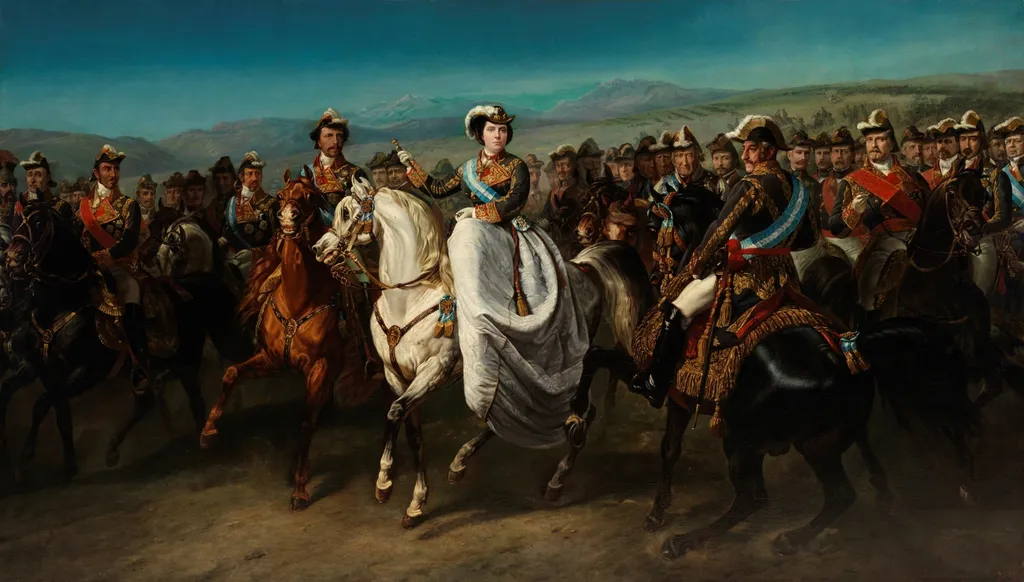
Isabel II y su Estado Mayor a caballo is an oil painting by the Realist artist Charles Porion. It is held in the collection of the Museo del Prado.
About this work
Overview
Painted in 1862 by Charles Porion, this oil on canvas depicts Queen Isabel II of Spain mounted on a white horse, surrounded by her military staff.
Painted in 1862 by Charles Porion, this oil on canvas depicts Queen Isabel II of Spain mounted on a white horse, surrounded by her military staff. The work is part of the permanent collection at the Museo del Prado in Madrid. It captures a formal equestrian procession, emphasizing the queen’s ceremonial role through composition and attire.
The scene is set against a distant mountain range beneath a clear sky, reinforcing the dignity of the occasion.
Subject & Meaning
The painting portrays Queen Isabel II as the central figure in a military procession, symbolizing her authority as head of state. Dressed in white with a blue sash, she is visually distinguished from her uniformed attendants, who ride brown horses and wear varied military regalia. The arrangement underscores her leadership while acknowledging the presence of her advisory and guard personnel, reflecting the institutional structure of her reign.
Technique & Style
Porion employs chiaroscuro to model forms and create spatial depth, directing attention toward the queen’s figure. The brushwork is precise, particularly in rendering fabric textures and horse anatomy. The background is rendered with softer edges, allowing the foreground figures to dominate.
The palette is restrained, dominated by whites, browns, and muted blues, enhancing the solemnity of the scene without overt theatricality.
History & Provenance
Commissioned during Isabel II’s reign, the painting was completed in 1862 and entered the Museo del Prado’s collection shortly thereafter. It was likely intended to reinforce royal legitimacy during a period of political instability. The work remained in state custody and was never sold or privately held, ensuring its preservation within Spain’s national art heritage.
Context
Created during a turbulent phase of Isabel II’s rule, the painting reflects efforts to project stability and continuity through visual propaganda. Equestrian portraiture had long been used to convey power in European monarchies, and Porion’s work follows this tradition while adapting it to mid-19th-century Spanish court aesthetics. The setting, though idealized, evokes the Spanish landscape, grounding the queen’s authority in national identity.
Legacy
The painting remains a key example of official portraiture from Isabel II’s era, illustrating how monarchy used visual culture to assert presence amid declining political power. While not widely exhibited outside Spain, it is studied for its representation of gender, authority, and military hierarchy in 19th-century Spain. Its preservation in the Prado ensures its continued role in understanding the visual rhetoric of the Spanish crown.
Artist & collection

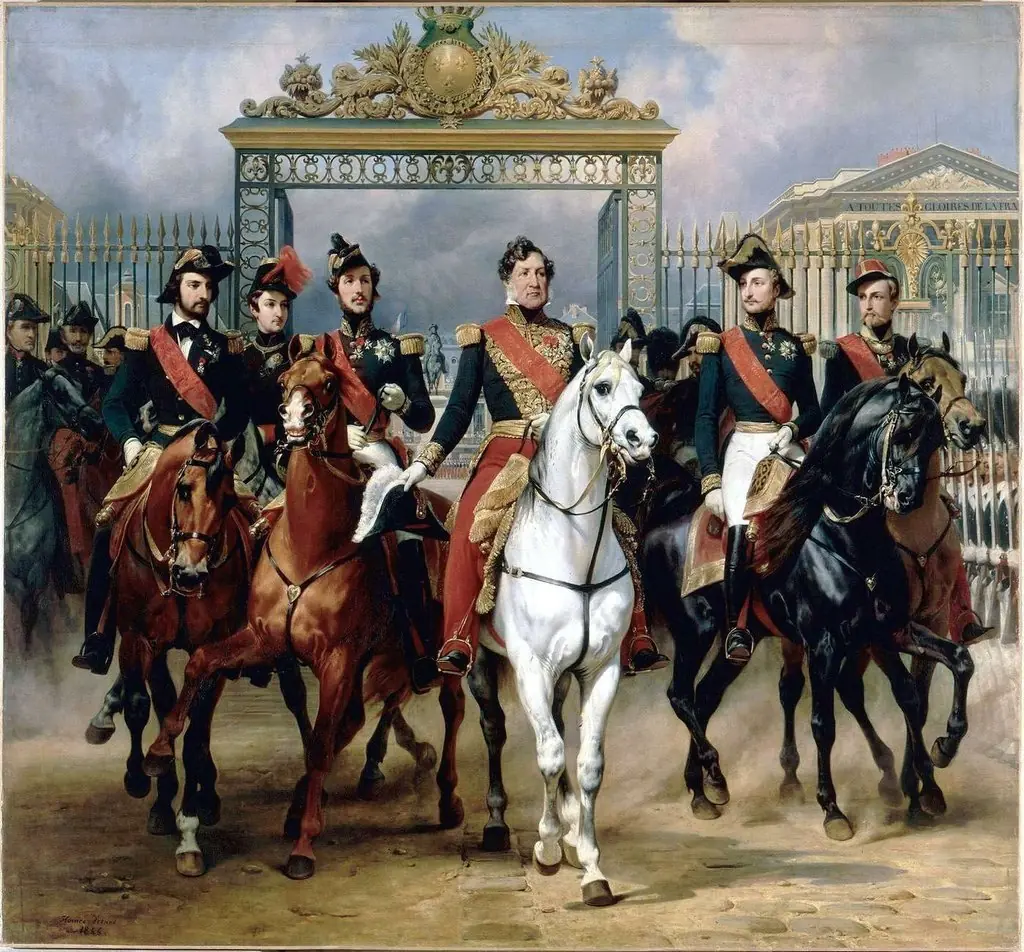
- King Louis-Philippe escorted by his sons leaving Versailles on June 10, 1837
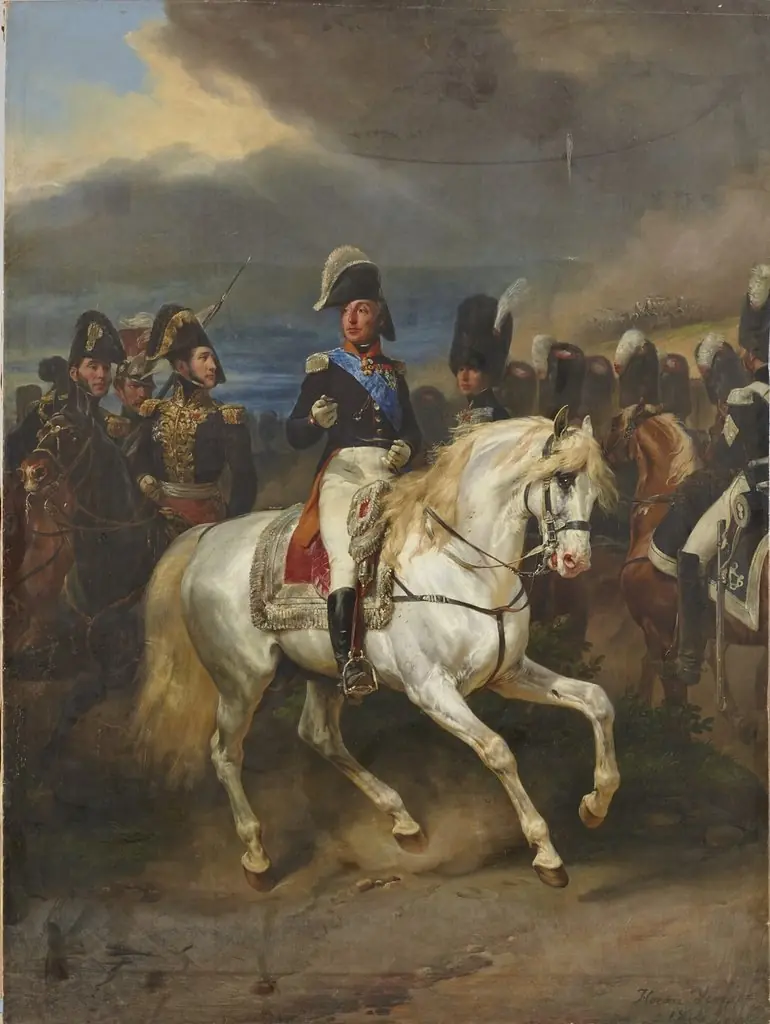 Portrait of the Duke of Angoulême
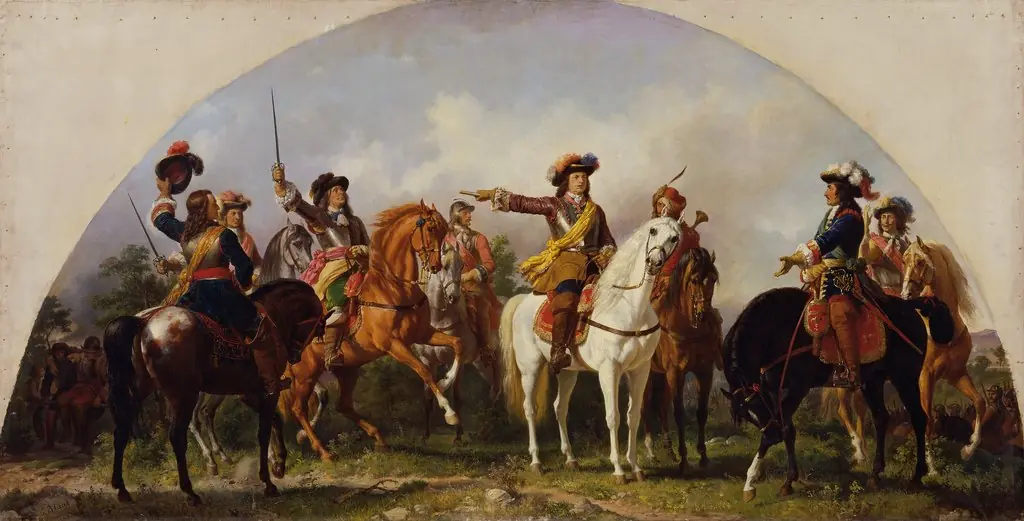 The Battle of St. Gotthard 1664
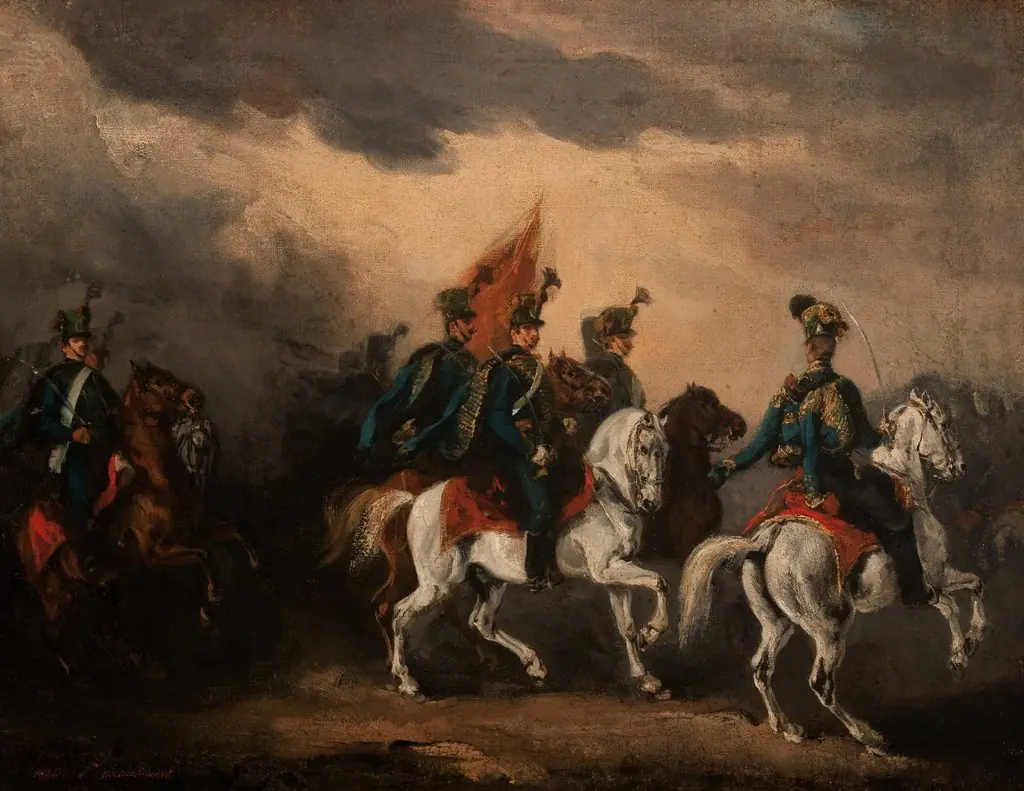 Blue Hussars
 1807, Friedland
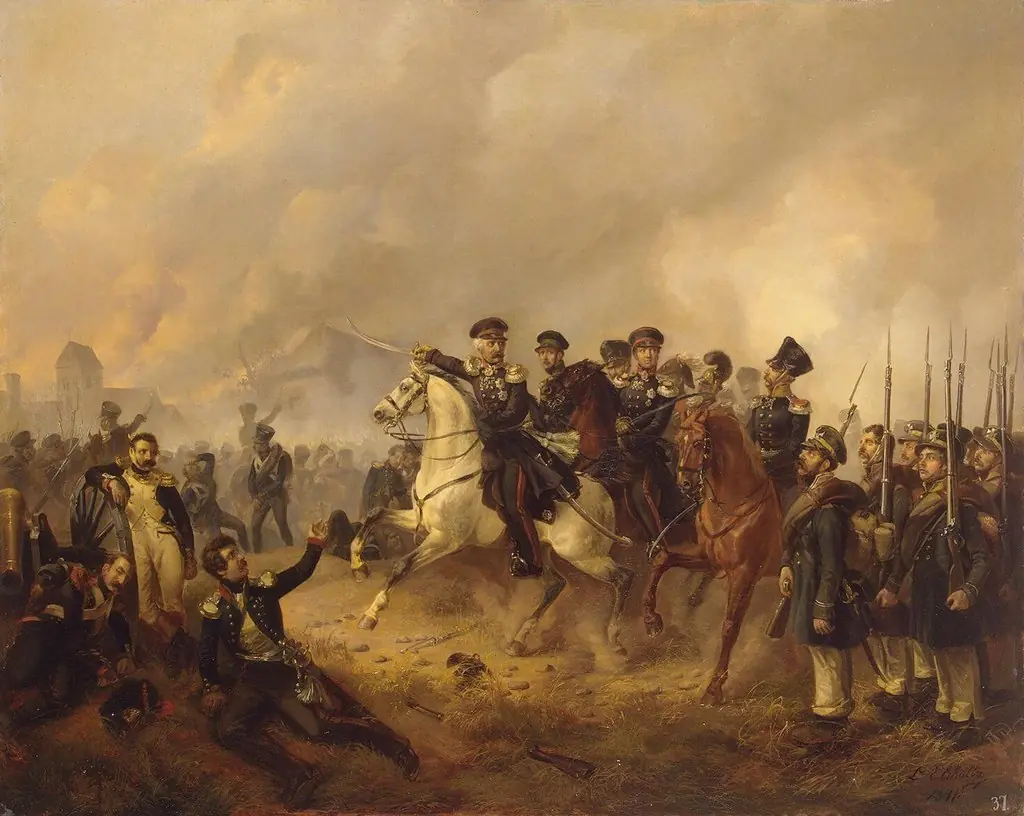 Marshal Blucher on the Battlefield
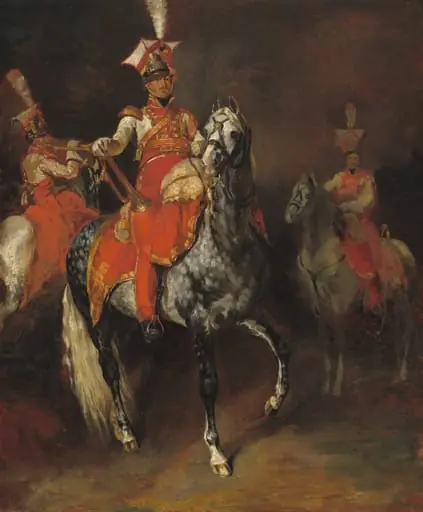 Mounted Trumpeters of Napoleon's Imperial Guard
 Untitled
 Mihai Viteazul la Călugăreni
 Queen María Luisa on horseback
 Prince Józef Poniatowski before the front of grenadiers
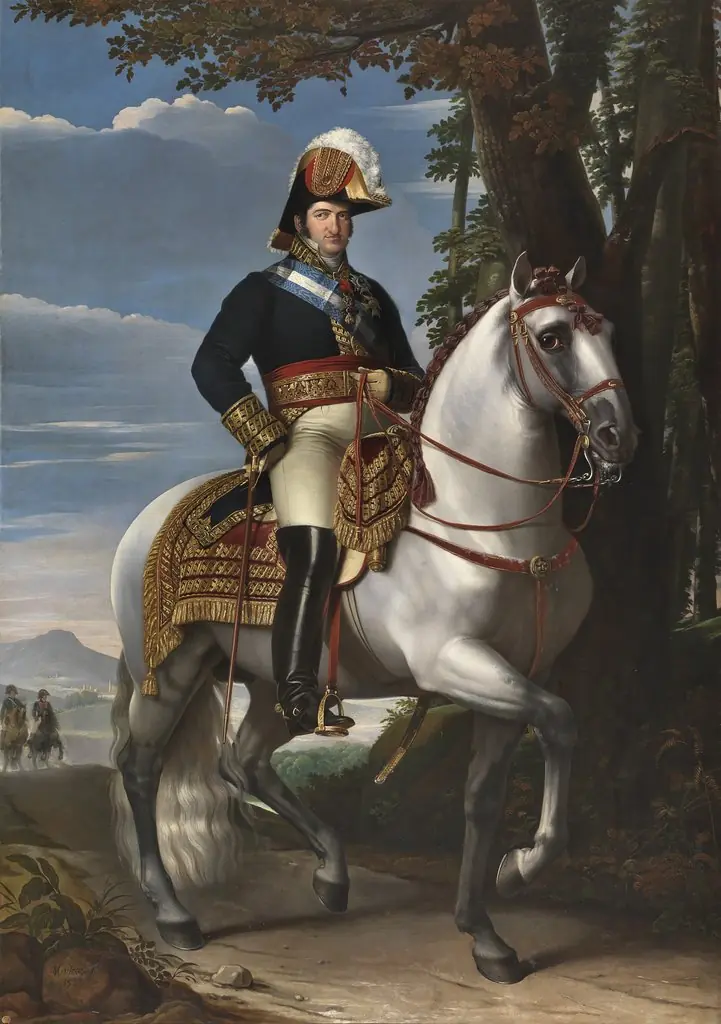 Ferdinand VII of Spain on Horseback