Artwork
The mother of the messiah
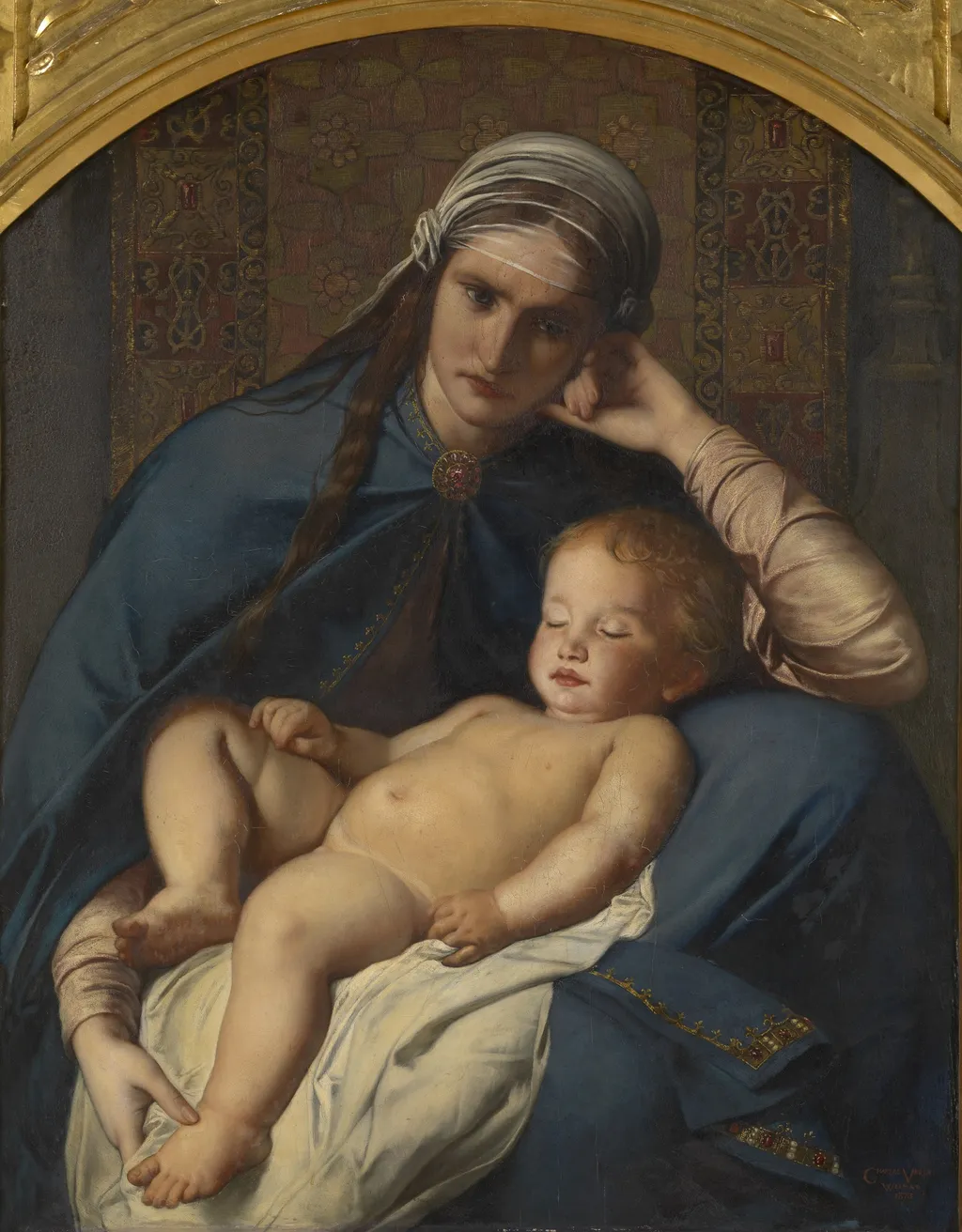
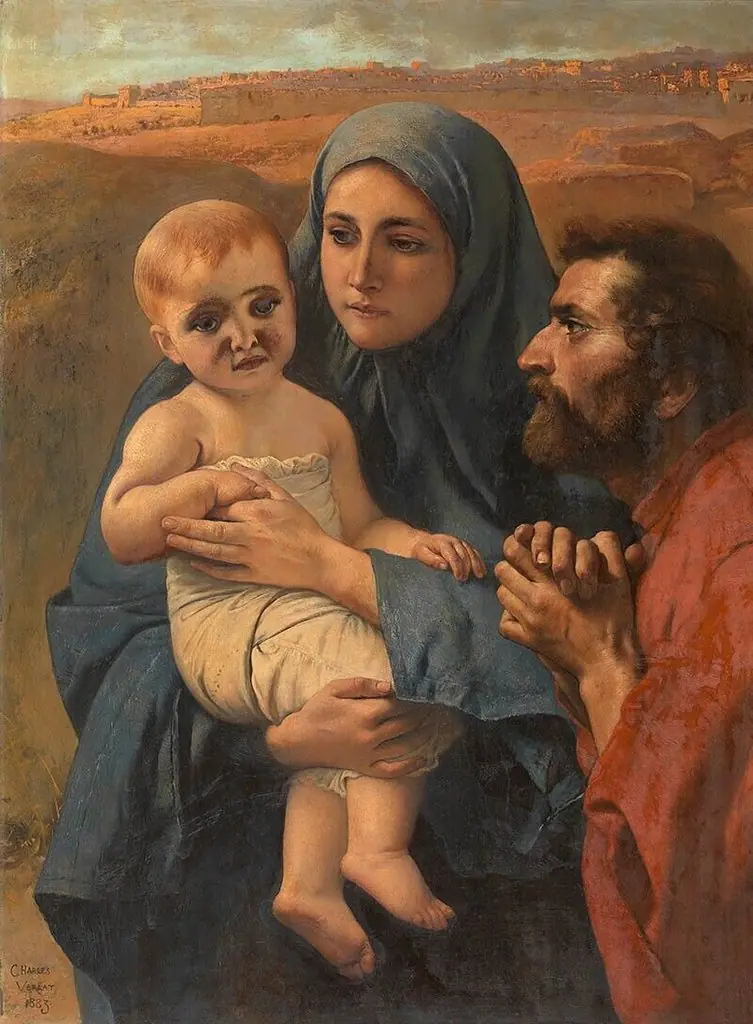
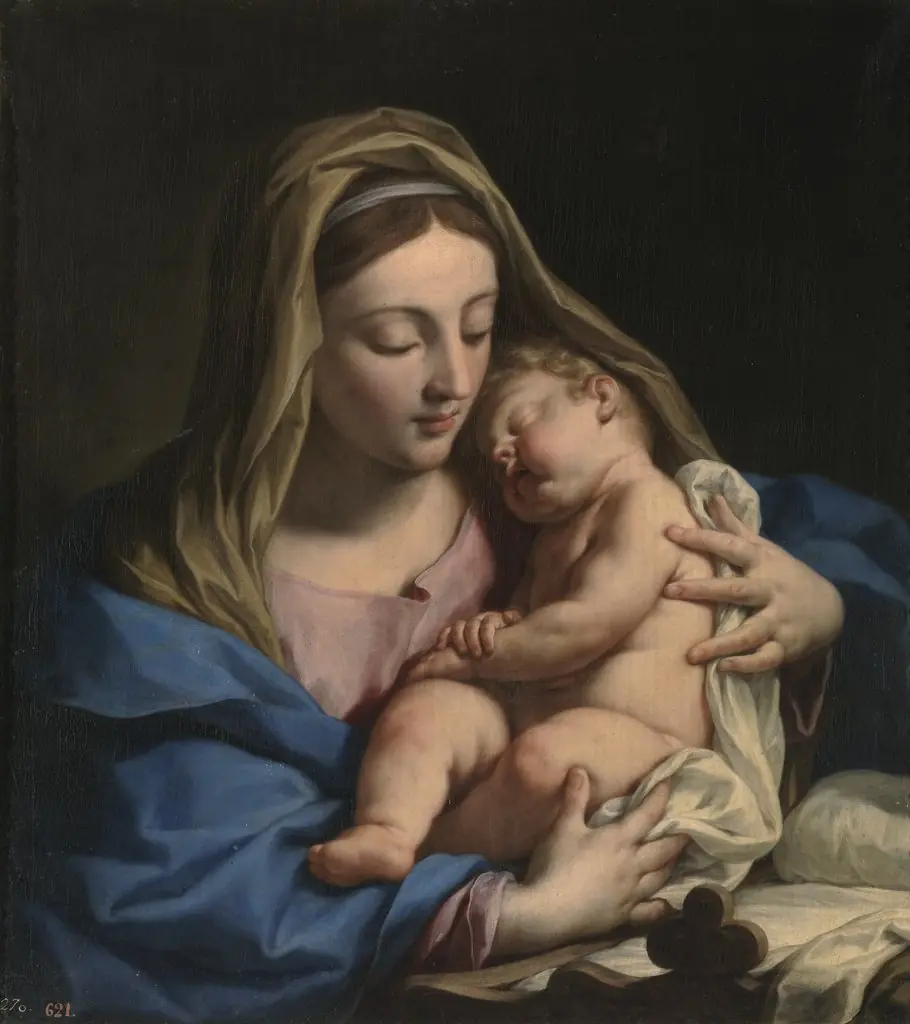
The mother of the messiah is an unspecified painting by the Realist artist Charles Verlat. It dates from 1873 and is held in the collection of the Royal Museum of Fine Arts Antwerp.
About this work
Subject & Meaning
Symbolically, the work merges the sacred narrative with contemporary social values, presenting the messianic lineage as both spiritual and familial.
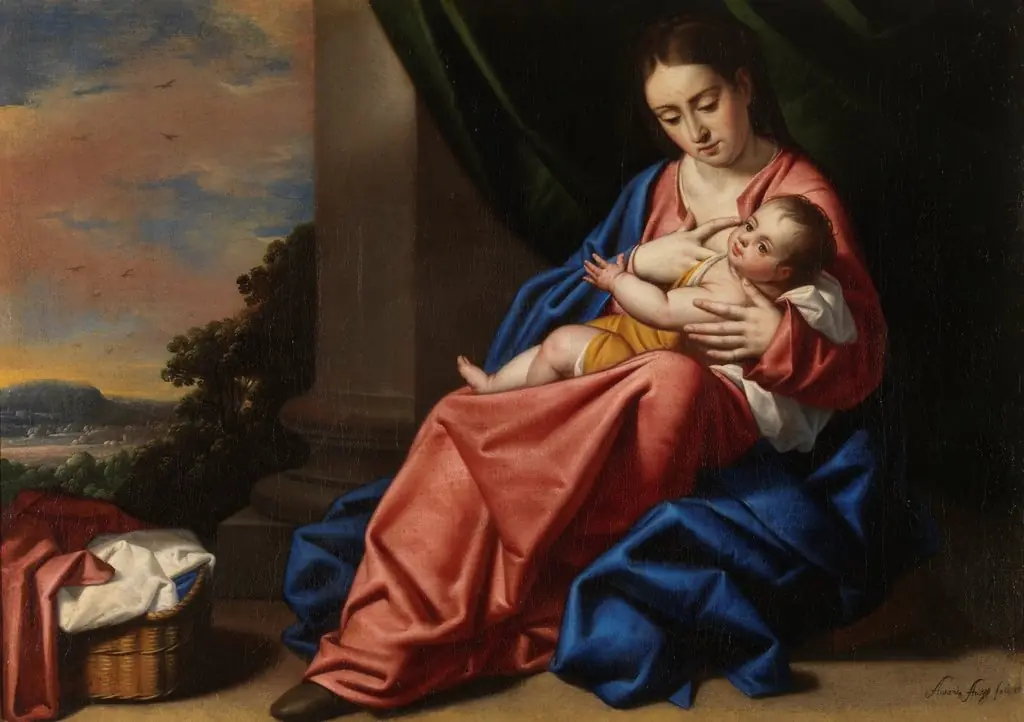
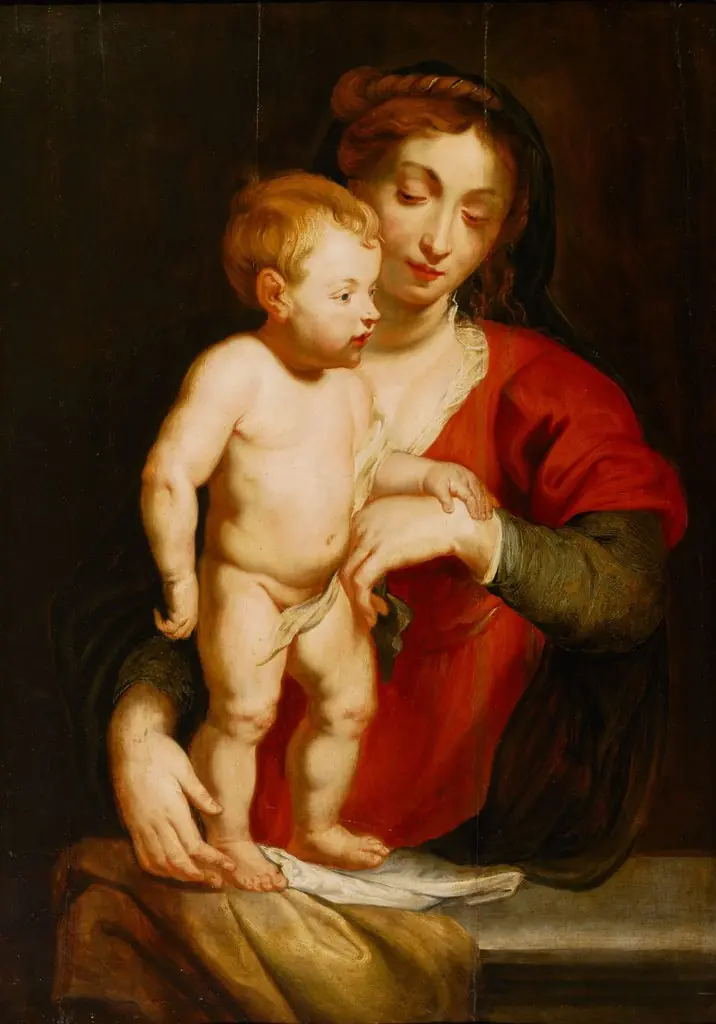
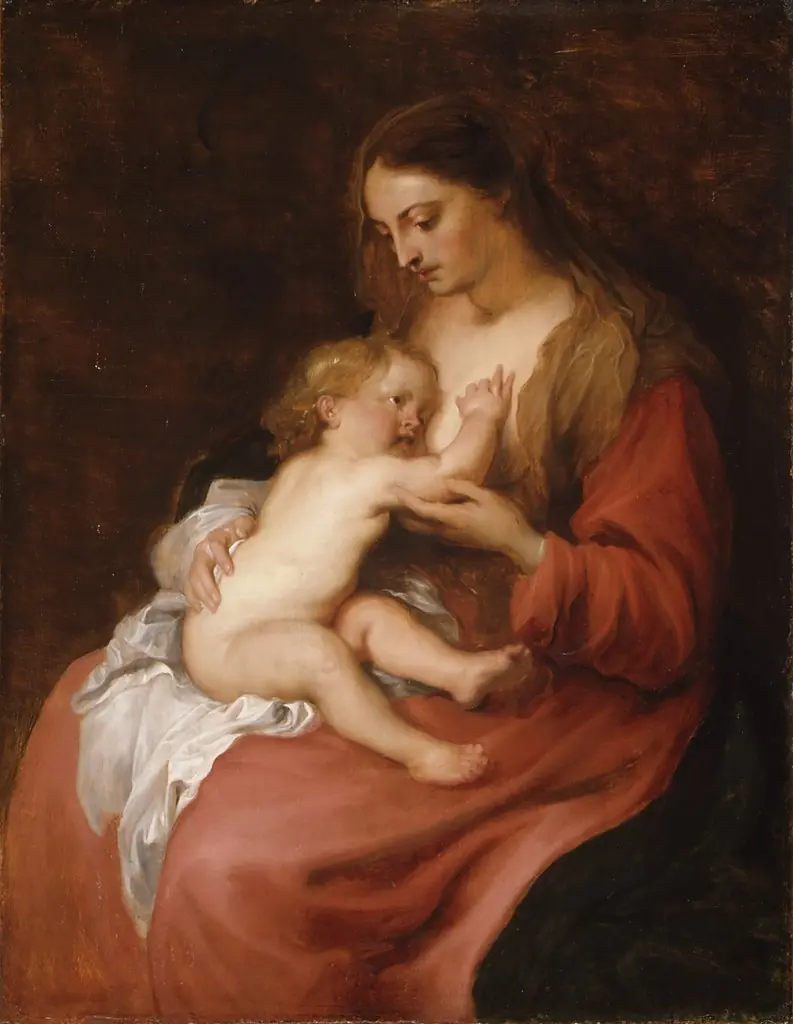
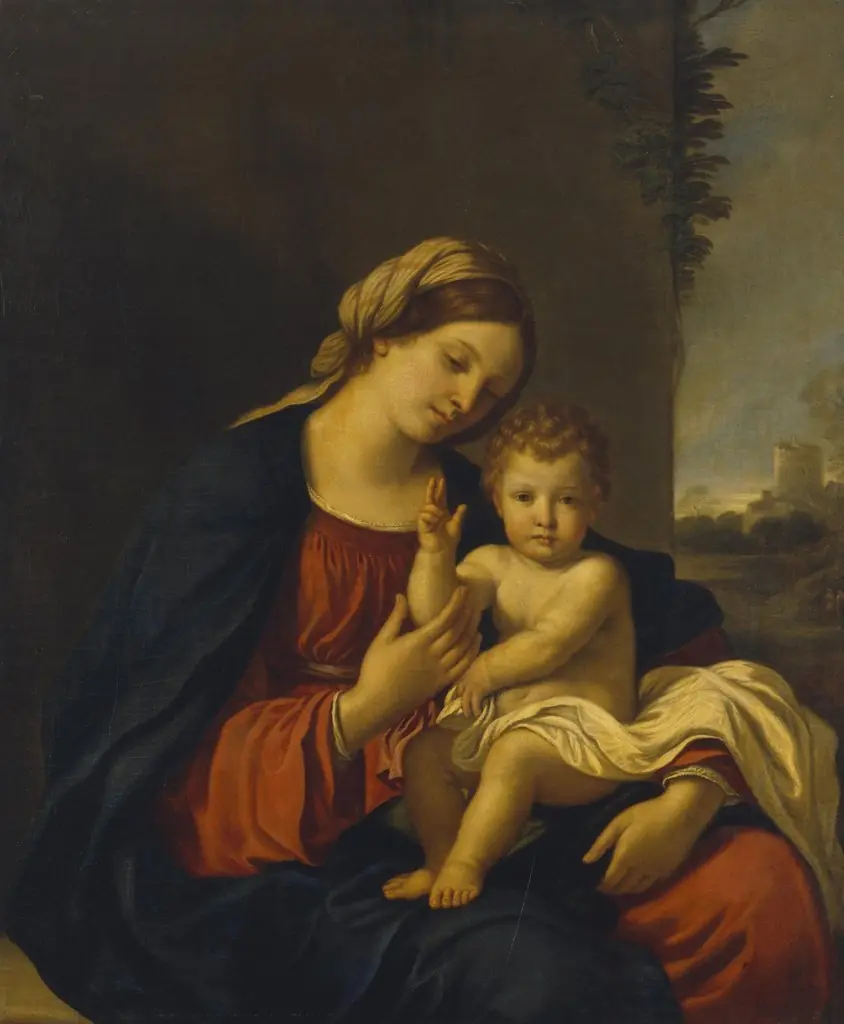
The painting portrays Mary cradling the infant Christ, a direct visual representation of the divine maternity central to Christian theology. Rendered in the realist style characteristic of 19th-century religious art, the composition emphasizes maternal tenderness while situating the holy family within a domestic interior that underscores human vulnerability. Symbolically, the work merges the sacred narrative with contemporary social values, presenting the messianic lineage as both spiritual and familial.
The triptych’s central panel thus functions as an iconographic synthesis of virginity, sacrifice, and redemption, reflecting the era’s renewed interest in devotional realism.
The subject reinforces theological concepts of incarnation and maternal intercession, linking traditional iconography to modern artistic practice.
Technique & Style
Executed in 1873 by Charles Verlat, the work is an oil painting on canvas measuring 83 cm in height and 38 cm in width. The composition centers on a haloed female figure, identified as Mary, presented in a frontal pose with uplifted hands in a gesture of prayer or benediction. The palette is subdued, dominated by earthy tones punctuated by soft highlights on drapery and nimbus, while the handling combines smooth modeling of the face with broader, descriptive brushwork in the surrounding areas.
The figure’s elongated proportions and serene expression align with the religious genre conventions of late nineteenth-century academic painting.
History & Provenance
The painting The Mother of the Messiah was created by Charles Verlat in 1873. It serves as the central panel of a larger triptych titled The Mother of the Messiah and the Four Evangelists. The work is currently held in the collection of the Royal Museum of Fine Arts Antwerp, where it is cataloged under the inventory number KMSKA 1171/1.
As a religious artwork, it depicts the Virgin Mary and the Messiah. The piece measures 83 cm in height and 38 cm in width.
Overview
Created in 1873, The Mother of the Messiah is a religious canvas by Belgian painter Charles Verlat. Executed in a realist manner, the work presents a quiet, intimate scene of a woman cradling an infant. The painting belongs to the collection of the Royal Museum of Fine Arts in Antwerp and exemplifies Verlat’s capacity to treat sacred subjects alongside his more varied output.
Context
In the late nineteenth century, Belgian art was marked by a tension between academic realism and emerging modernist tendencies. Verlat’s oeuvre, which also includes animal studies, portraits, and Orientalist scenes, demonstrates his versatility within this climate. The Mother of the Messiah illustrates how traditional biblical subjects continued to be explored through realistic techniques, offering a counterpoint to the more experimental directions pursued by younger contemporaries.
Own this work as a print
Artist & collection
Artist
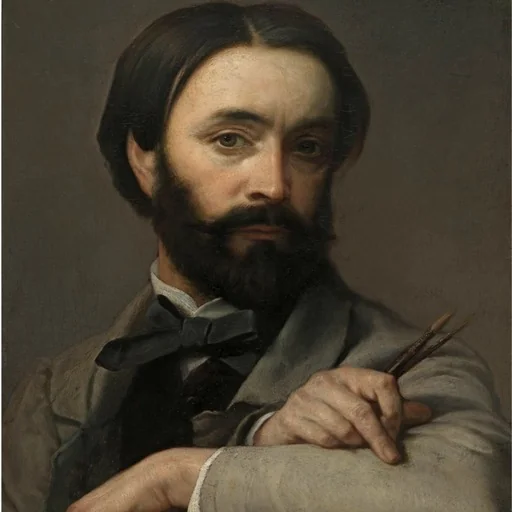
Charles Verlat or Karel Verlat (25 November 1824 – 23 October 1890) was a Belgian painter, watercolorist, engraver (printmaker), art educator and director of the Antwerp Academy.