Artwork
清 程正揆 江山臥遊圖 卷|Dream Landscape
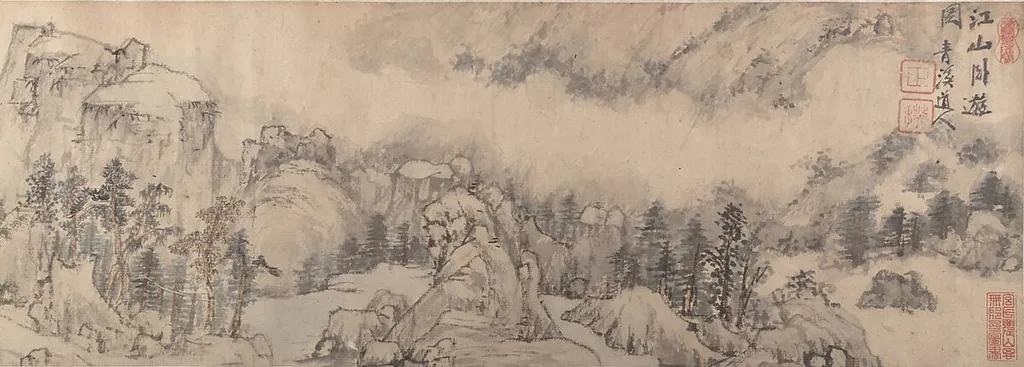
清 程正揆 江山臥遊圖 卷|Dream Landscape is an ink painting by the Baroque artist Cheng Zhengkui. It is held in the collection of the Metropolitan Museum of Art.
About this work
Misty mountains, tiny trees, and a river wind through empty space on a long handscroll. Cheng Zhengkui painted it in 1674, after the fall of the Ming. The blank passages read as quiet after loss; scholars used such scrolls to travel in their minds when real journeys felt unsafe.
Subject & Meaning
The painting depicts a mountainous landscape, classified as a traditional landscape painting in which layered terrain and peaks form the central subject.
Cheng Zhengkui's Dream Landscape is a handscroll executed in ink and color on silk that presents a sweeping vision of the Chinese natural world. The painting depicts a mountainous landscape, classified as a traditional landscape painting in which layered terrain and peaks form the central subject. The title "臥遊" (wo you), meaning "to travel while reclining," reflects a long-standing literati convention in which a viewer mentally journeys through painted scenery without leaving home, allowing the work to function as a vehicle for imaginative wandering through mountains and rivers.
By rendering an idealized, dreamlike topography, Cheng Zhengkui transforms the scroll into a meditation on the relationship between the scholar-painter, the natural world, and the contemplative act of viewing, embodying the literati ideal of finding spiritual renewal within painted landscape.
Technique & Style
The Dream Landscape handscroll is executed in ink and color on silk, employing the refined brushwork and layered washes typical of late-Ming and early-Qing literati practice. Cheng Zhengkui’s handling combines fine, sinuous line for rocky outcrops with modulated ink washes to articulate volume and recession, while delicate mineral pigments, likely azurite and malachite, render foliage and distant peaks in muted hues. The scroll’s composition favors layered recession, with mist-wrapped summits dissolving into atmospheric voids, a device that underscores the meditative, ‘dream-like’ quality of the scene.
Faint craquelure and localized pigment fading suggest minor age-related flaking, yet the silk ground remains structurally sound, with original mounting largely intact.
History & Provenance
The handscroll titled Dream Landscape was created by the Chinese artist Cheng Zhengkui in 1675. Executed in ink and color on silk, the work measures 23.2 centimeters in height and 177.2 centimeters in width. It is classified as a landscape painting depicting mountains.
The piece is currently held in the collection of the Metropolitan Museum of Art. While the specific commission details or the full chain of ownership prior to its arrival at the museum are not detailed in the provided records, the work's inception is firmly dated to the year 1675.
The handscroll is held by the Metropolitan Museum of Art, New York, where it is recorded as Cheng Zhengkui’s Dream Landscape, dated 1675. The work entered the museum’s collection as part of its permanent holdings, and its dimensions are recorded at 23.2 cm in height and 177.2 cm in width. No exhibition history is provided in the cited sources.
Overview
Cheng Zhengkui, a painter and poet from Hubei province, created Dream Landscape in 1674. This handscroll, executed with ink and color on silk, exemplifies the contemplative landscape tradition of the early Qing dynasty. It presents a panoramic view of mountainous terrain, inviting viewers into a serene, imagined journey through nature. The work reflects the scholarly aesthetic prevalent during its creation.
Context
Created in 1674, Dream Landscape emerged during a period of significant political transition in China, following the collapse of the Ming dynasty. For many scholars, this era brought profound loss and uncertainty. The act of viewing such a handscroll provided an intimate, immersive experience, allowing for an escape into an idealized natural world and serving as a form of intellectual solace and internal exploration amidst external instability.
Legacy
Cheng Zhengkui, a figure within the early Qing art world, was influenced by masters like Dong Qichang and associated with contemporaries such as Kun Can. His Dream Landscape stands as a significant example within the rich tradition of Chinese landscape painting, particularly the handscroll format. These long, horizontal compositions were valued for their narrative potential and the intimate viewing experience they offered to individual scholars.
Artist & collection
Artist
Chéng Zhèngkuí (Ch'eng Cheng-k'ui, traditional: 程正揆, simplified: 程正揆); ca. 1604-1670 was a Chinese landscape painter and poet during the Qing Dynasty (1644–1912). Cheng was born in Xiaogan in the Hubei province. His…

 明 沈周 溪山秋色圖 卷|明 沈周 溪山秋色圖 卷明 楷書溪山秋色圖 引首|Autumn Colors among Streams and Mountains
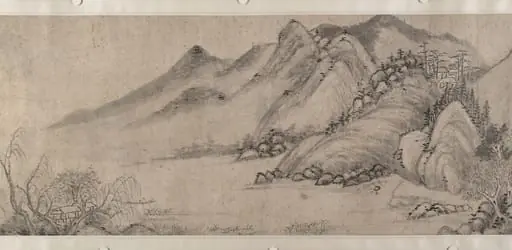 明 卞文瑜 谿山秋靄圖 卷|Streams and Mountains in Autumn Mist
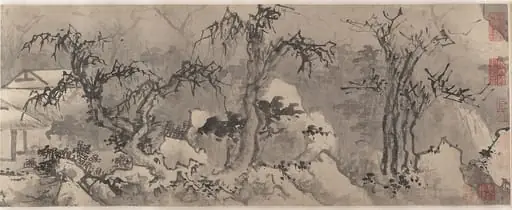 明 傳蔣嵩 冬景山水圖 卷|Winter landscape
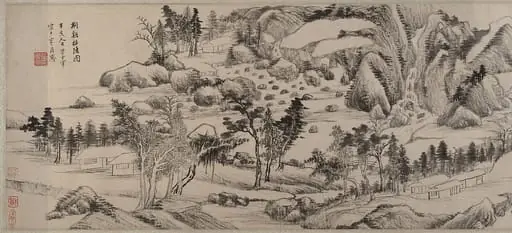 明 董其昌 荊谿招隱圖 卷|Invitation to Reclusion at Jingxi
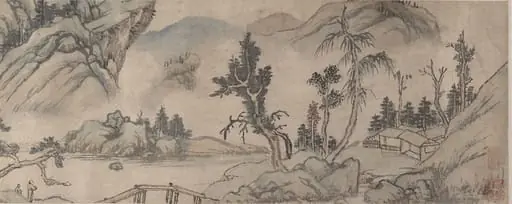 明 莫是龍 書畫 卷|Landscape
 Untitled
 Landscape after Jing Hao and Guan Tong
 清 張風 山水圖 冊 紙本|Landscapes
 明 傳項元汴 秋江圖 卷|River Landscape