Artwork
Adoration of young Krishna
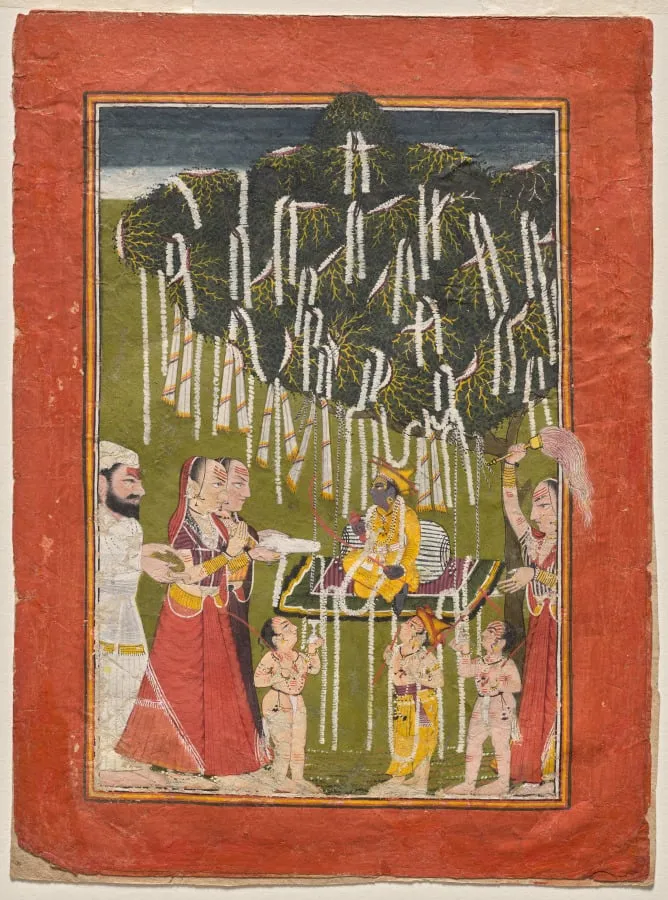
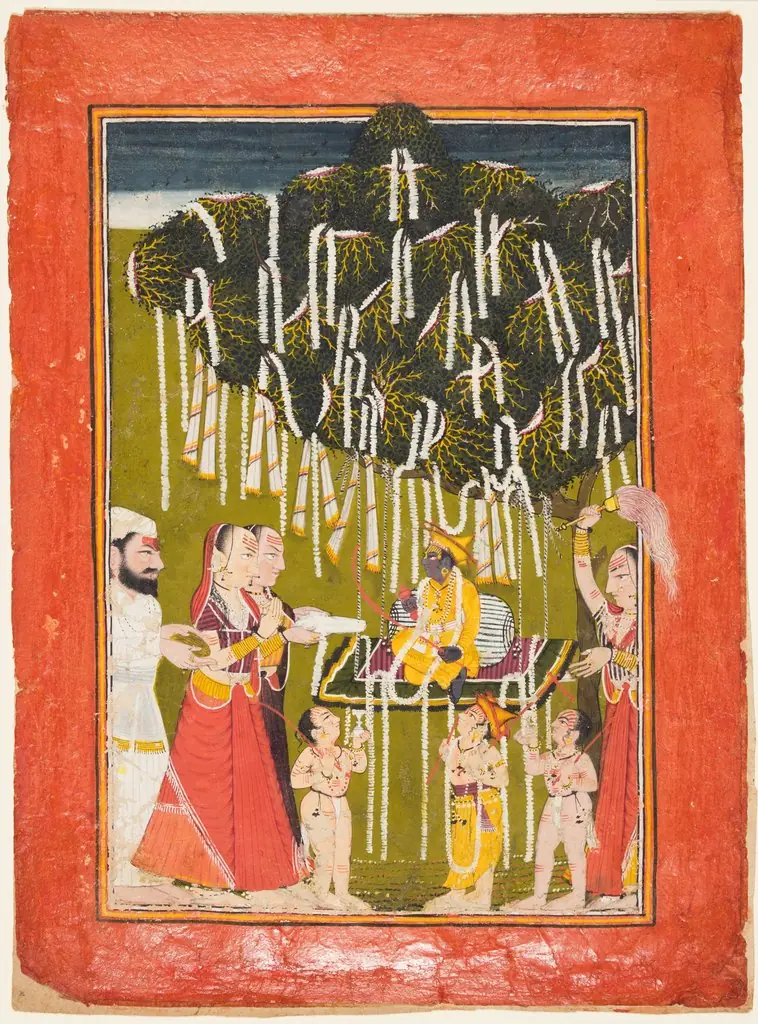
Adoration of young Krishna is an unspecified painting by the Baroque artist Unknown. It dates from 1722 and is held in the collection of the Cleveland Museum of Art. This small-scale painting depicts the infant Krishna being venerated beneath a pipal tree by a group of devotees.
- Accession no.
- 2018.97
- Credit line
- Purchase and partial gift from the Catherine and Ralph Benkaim Collection; Severance and Greta Millikin Purchase Fund
About this work
Overview
This small-scale painting depicts the infant Krishna being venerated beneath a pipal tree by a group of devotees. The scene, rendered in delicate brushwork and muted pigments, reflects the syncretic aesthetic of the Pahari courts, where Hindu devotional themes were expressed through visual languages influenced by Mughal and Central Asian traditions.
Subject & Meaning
The painting captures a moment of intimate worship, with Krishna as a divine child surrounded by Shaivite followers identifiable by their horizontal forehead marks. The adorned tree, draped in scarves and garlands, functions as a sacred locus, transforming the natural setting into a shrine. This portrayal emphasizes Krishna’s accessibility and the devotional intimacy central to Bhakti traditions.
Technique & Style
Executed in watercolor on paper, the work employs fine linework and layered washes to create subtle tonal transitions. The figures are rendered with quiet precision, their postures calm and reverent. Krishna’s attire, a Mughal-style jama, contrasts with traditional iconography, illustrating the courtly blending of regional and imperial visual codes common in Pahari art.
History & Provenance
Created in a northern Indian hill kingdom during the 17th or early 18th century, the painting likely originated in a royal atelier where artists served Hindu patrons while absorbing Mughal stylistic conventions. Such works were often commissioned for private devotion or courtly display, reflecting the cultural fluidity of the region’s ruling elites.
Context
In the Pahari courts, religious imagery was not bound by rigid orthodoxy. Artists freely merged Hindu narratives with Persianate dress, composition, and ornamentation. This synthesis was not merely aesthetic but reflected the political and social interdependence between Hindu rulers and Muslim-influenced artistic traditions in the subcontinent’s hill states.
Legacy
The painting exemplifies a broader trend in early modern Indian art where devotional subjects were reimagined through cross-cultural visual vocabularies. Its quiet fusion of styles influenced later regional schools and remains a testament to the pluralistic nature of artistic production in pre-colonial northern India.
Artist & collection









- Fertility Worship of Krishna
 Krishna
 The Sentiment of Peace: Sama Rasa, from a Rasikapriya
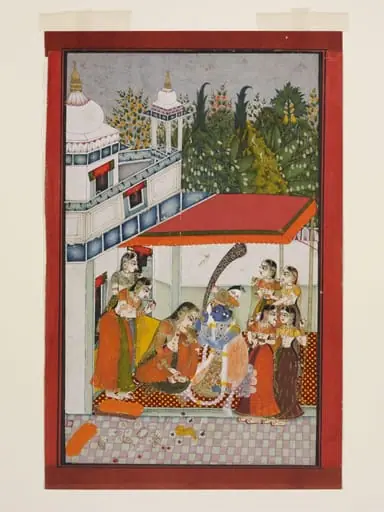 Radha and Krishna
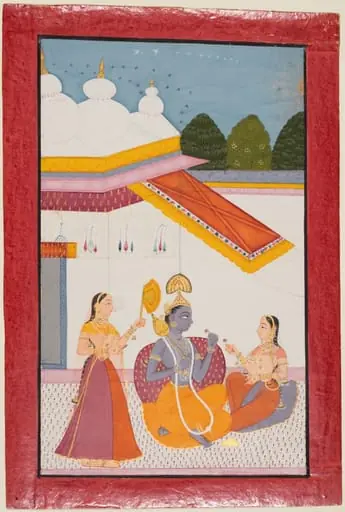 Krishna Under a Canopy
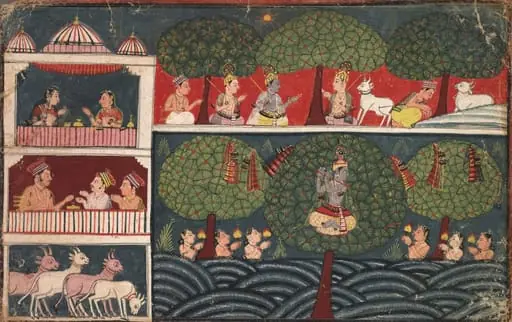 Krishna Steals the Clothes of the Milkmaids and Expounds on the Virtue of Trees, from a Braj Bhagavata Purana
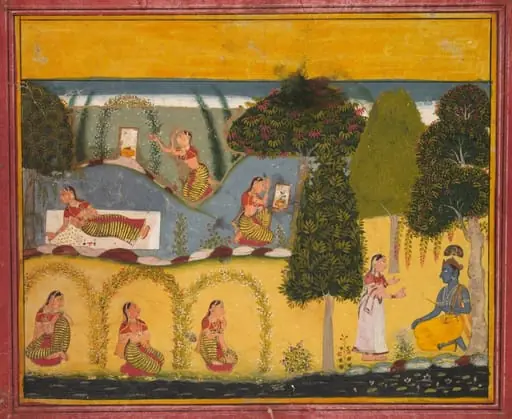 Radha Awaiting Reconciliation with Krishna, from a Gita Govinda of Jayadeva