Artwork
Descent of the Ganges
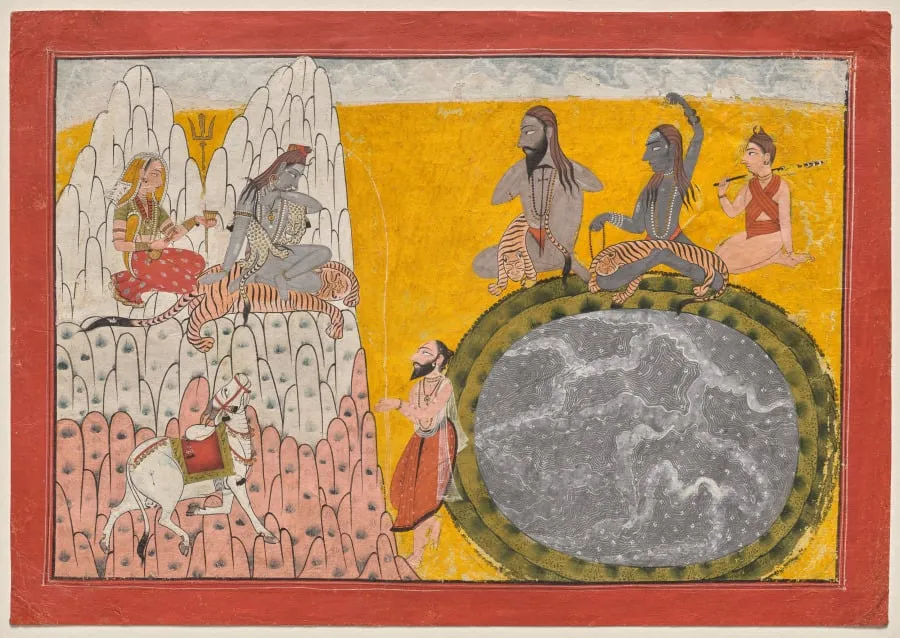
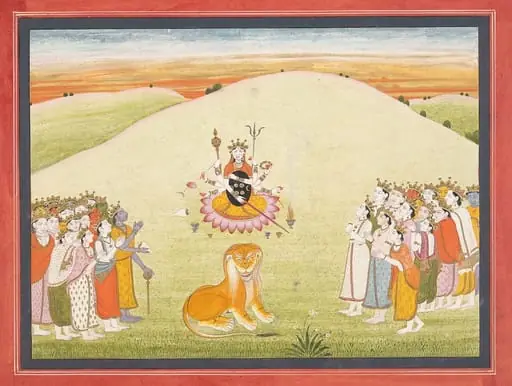
Descent of the Ganges is an unspecified painting by the Baroque artist Unknown. It dates from 1705 and is held in the collection of the Cleveland Museum of Art.
- Accession no.
- 2018.111
- Credit line
- Purchase and partial gift from the Catherine and Ralph Benkaim Collection; Severance and Greta Millikin Purchase Fund
About this work
Overview
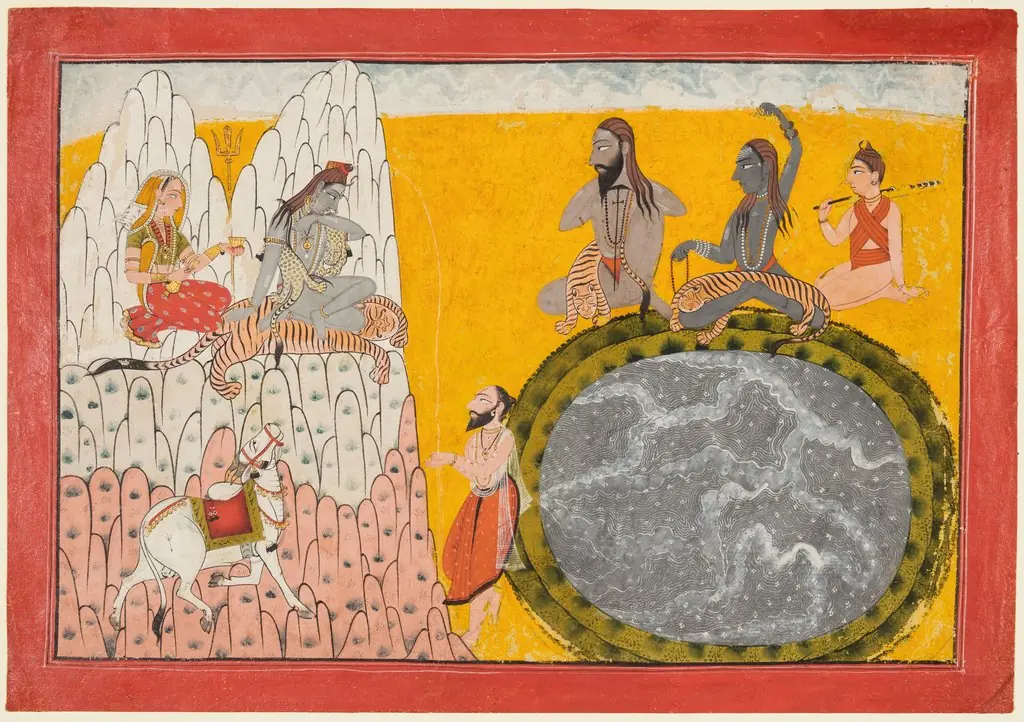
This painting depicts a pivotal moment from Hindu mythology: the descent of the Ganges River from heaven to earth. Centered on Mount Kailash, the divine abode of Shiva, the scene captures the god’s response to the penance of the mortal sage Bhagiratha. The river, emerging from Shiva’s hair, cascades downward, bridging the celestial and terrestrial realms in a single, flowing composition.
Subject & Meaning
Bhagiratha, a king and ascetic, undertook extreme austerities, standing on one leg for over a millennium, to persuade Shiva to release the Ganges from the heavens. His unwavering devotion overrides even Shiva’s communion with his consort, Parvati, who offers him wine. The narrative underscores the power of disciplined faith, suggesting that divine attention can be won through steadfast endurance.
Technique & Style
Rendered in the Pahari miniature tradition, the work employs fine brushwork, delicate color gradients, and intricate detailing to distinguish figures and landscape. The mountainous terrain is rendered with stylized rock forms, while the river’s flow is suggested through rhythmic lines. Figures are scaled hierarchically, with Shiva dominating the upper register, emphasizing his cosmic authority.
History & Provenance
Created in the northern Indian Pahari kingdoms during the 18th century, the painting likely originated in a royal atelier patronized by Hindu rulers devoted to Shaivism. These courts commissioned religious imagery for private devotion and ceremonial use. The work reflects regional stylistic traits, including lyrical composition and intimate scale, common in Himalayan hill-state painting.
Context
The story of Bhagiratha and the Ganges is central to Hindu cosmology, symbolizing the purification of the earth through divine grace. Pilgrimage sites like Lake Manasarowar, depicted nearby, remain active centers of worship. The painting aligns with broader devotional practices emphasizing austerity, ritual purity, and the belief that physical discipline can alter cosmic order.
Legacy
This image became a recurring motif in Himalayan and North Indian art, reinforcing the cultural resonance of Bhagiratha’s tale. Its visual language influenced later depictions of divine intervention in response to human devotion. Though rooted in specific regional styles, the theme transcended geography, becoming a universal emblem of perseverance in religious art.
Artist & collection









 Untitled
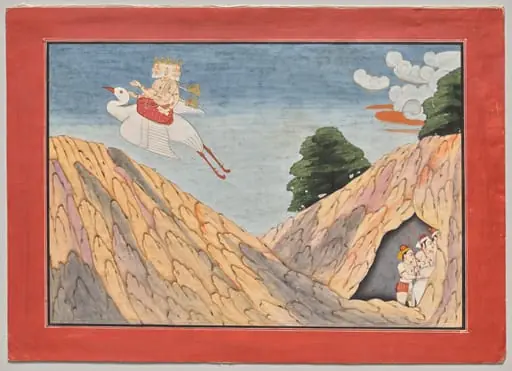 Brahma Hides the Cowherds and the Calves in the Cave, page from a Bhagavata Purana
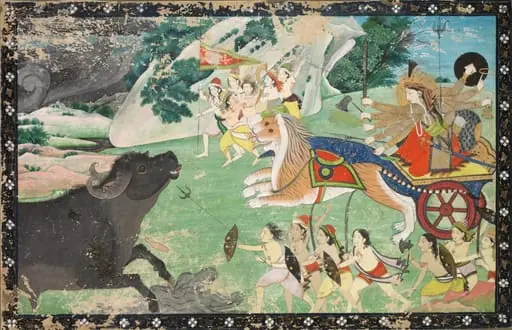 Durga Slaying Mahisha
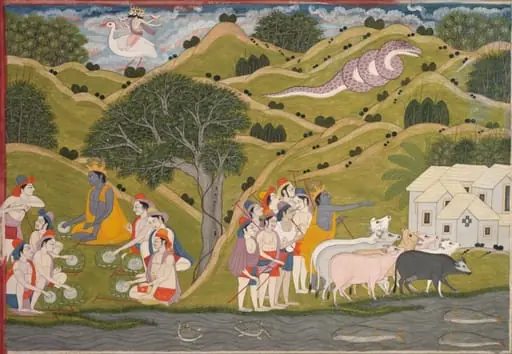 Krishna returns with the cowherds to Braj, from a Bhagavata Purana
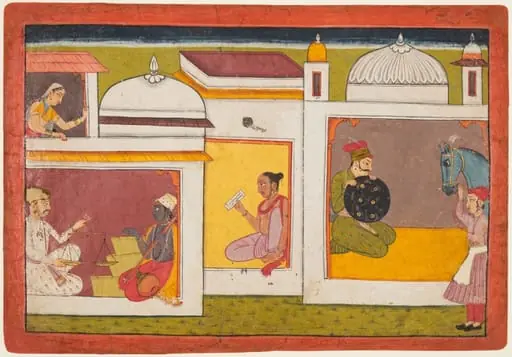 Madhava faces a man holding a scale, folio 1 from a Madhavanala-Kamakandala
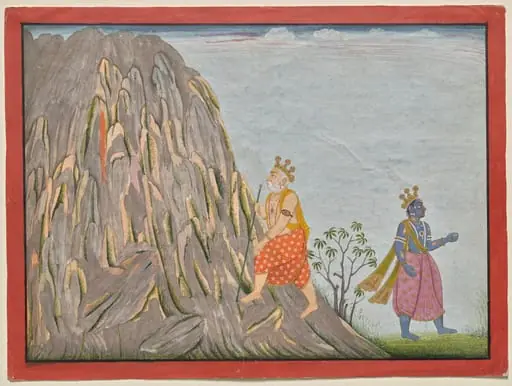 King Muchukunda Enters the Realm of Mount Gandhamadana to Attain Salvation, from the “Fifth Basohli Bhagavata Purana”
 Untitled
 Untitled
 Krishna vanquishing King Bana, from an Usha-Aniruddha
 Untitled
 Untitled
- Descent of the Ganges