Artwork
Untitled
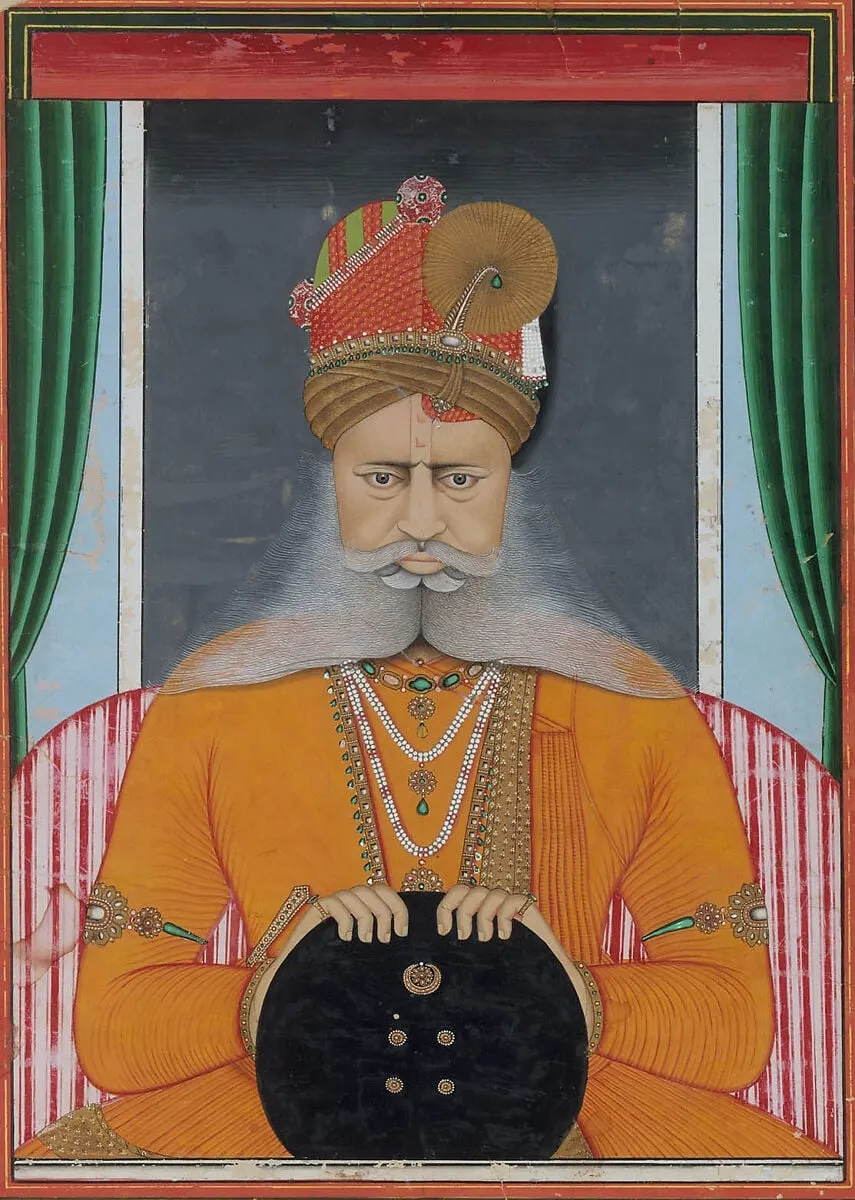
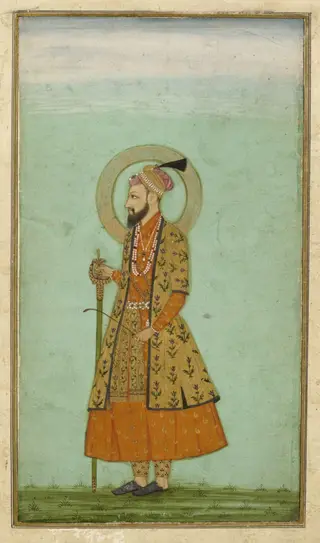
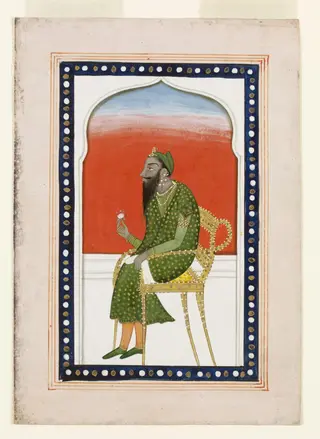
Untitled is a watercolor painting by the Patna School of Painting artist Chotu. It dates from 1865 and is held in the collection of the Metropolitan Museum of Art.
- Accession no.
- 1996.100.7
- Credit line
- Fletcher Fund, 1996
About this work
Subject & Meaning
The work serves as a formal likeness, capturing the physical presence of its sitter within the artistic traditions of India, where it was produced.
Created in 1865 by the artist Chotu, this opaque watercolor and ink work functions as a portrait depicting a single male figure. The composition utilizes gold alongside traditional pigments on paper to render the subject. As a genre piece classified specifically as a portrait, the image's primary iconography is the representation of the individual man himself, rather than illustrating a broader narrative scene or complex allegorical symbolism.
The work serves as a formal likeness, capturing the physical presence of its sitter within the artistic traditions of India, where it was produced. No additional symbolic elements or specific contextual meanings regarding the subject's identity or status are detailed in the available records beyond its fundamental nature as a depiction of a man.
Technique & Style
This portrait is executed in opaque watercolor combined with ink and gold on paper, a layered technique characteristic of mid-nineteenth-century Indian miniature practice. The combination of pigment, drawn line, and metallic gold reflects the hybrid handling typical of artists working in that tradition, where watercolor provides opaque color fields while ink defines contour and detail, and gold is reserved for accents. The work is classified as a painting on paper rather than canvas or board, and its modest dimensions, approximately 40.6 cm in height by 30.5 cm in width, are consistent with an intimate, hand-held portrait format.
The medium is held in the collection of the Metropolitan Museum of Art, where its condition and stylistic qualities are preserved. No further details regarding surface condition, conservation history, or specific stylistic attribution beyond the artist's name are documented in the available sources.
History & Provenance
The 1865 opaque watercolor and ink portrait titled Untitled by the artist Chotu is held in the collection of the Metropolitan Museum of Art in New York. While the available records confirm the work's location within this major institution, specific inventory or accession numbers are not provided in the current documentation. Furthermore, there is no information available regarding the exhibition history of this piece; the sources do not list any past or present displays where the artwork has been featured publicly.
Legacy
The painting's inclusion in the Metropolitan Museum of Art has established it as a key example of 19th‑century Indian portraiture, shaping scholarly discussions of colonial visual culture. Its status as an opaque watercolor, ink, and gold work on paper, documented in contemporary records, underscores the technical innovation attributed to Chotu and informs ongoing assessments of the artist’s role in early modern portraiture. The work’s provenance and display context have contributed to its reputation as a representative piece of the period, influencing subsequent exhibitions and academic citations.
Overview
This untitled work, created around 1865 by the artist Chotu, is a portrait rendered in opaque watercolor, ink, and gold on paper. It features a male figure, presented with a direct gaze, characteristic of courtly portraiture from the period. The use of gold highlights the subject's attire, suggesting his status.
Context
This portrait originated in Bikaner, a princely state located in Rajasthan, India. The artist, Chotu, was employed by the royal court, where he specialized in creating detailed likenesses of the region's rulers and nobility. Such commissions were integral to documenting and asserting the prestige of the ruling elite during this period.
Artist & collection
Artist
Chotu was a painter from Bikaner who worked in small, glowing opaque watercolors on paper in the 1860s and 70s. His delicate scenes of palaces and gardens shimmer with gold and jewel-toned pigment. See the Untitled work, ca. 1860-70.

- Emperor Akbar
 Emperor Shah Jahan
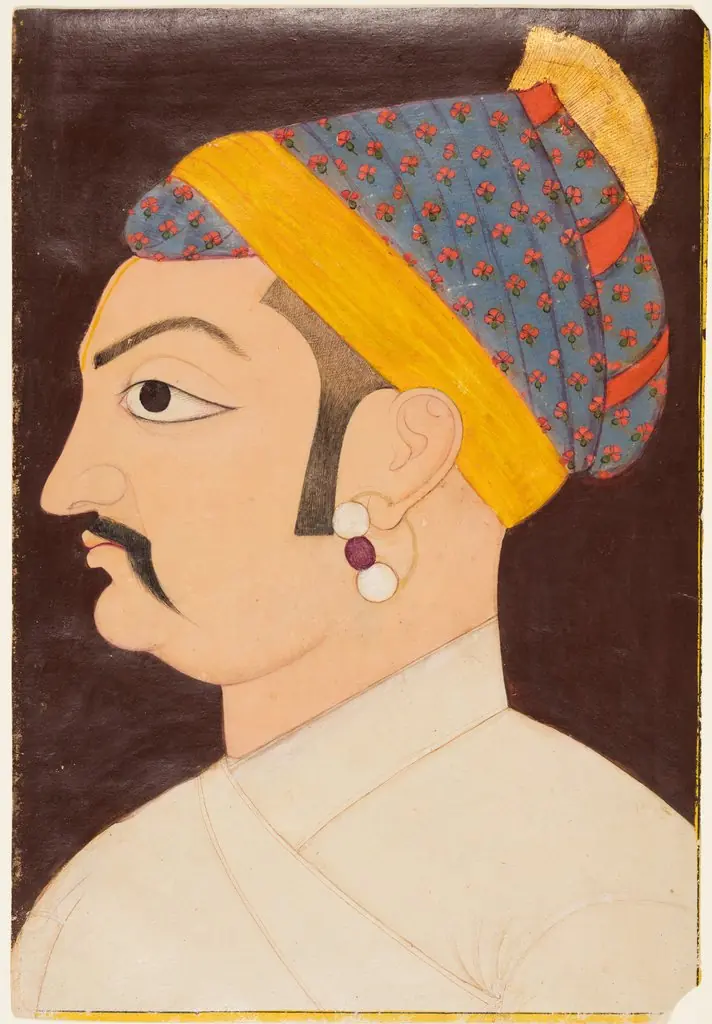 Portrait of Rao Shiv Singh Chandrawat
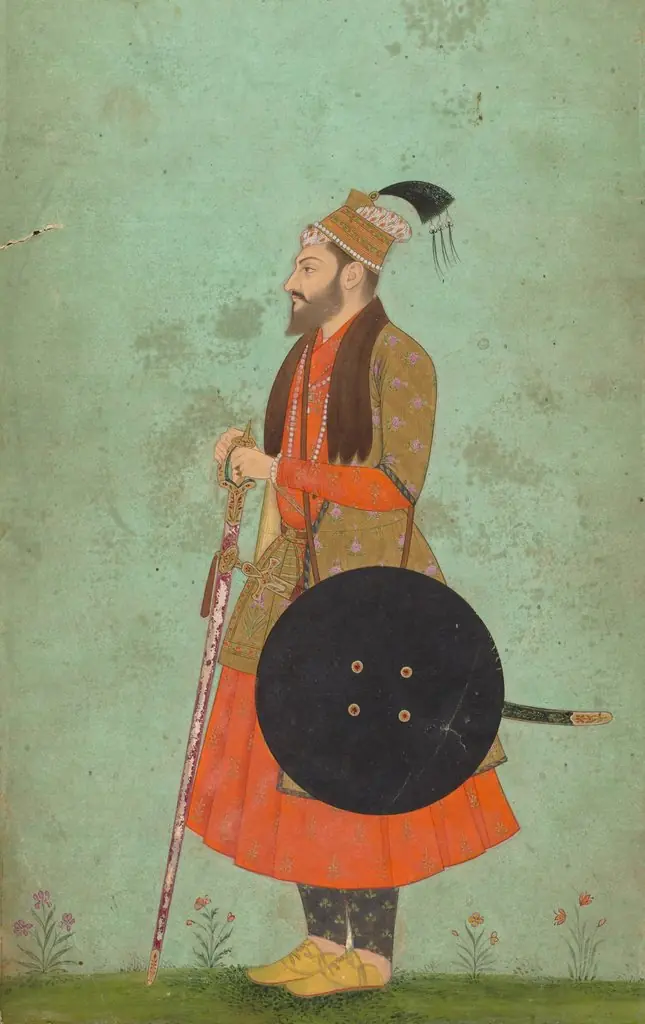 Portrait of Prince Murad Baksh (1624–1661)
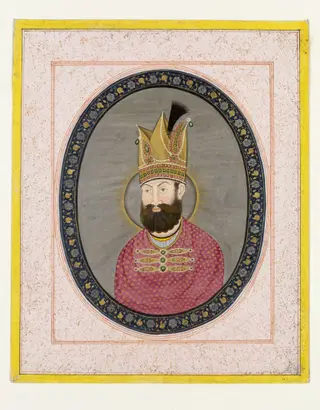 Nadir Shah
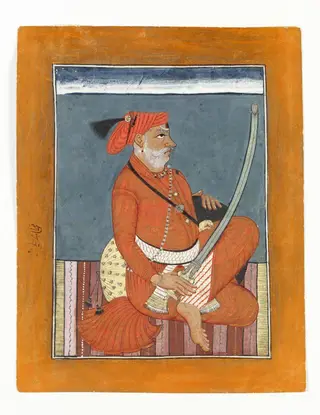 Raja Sidh Sen
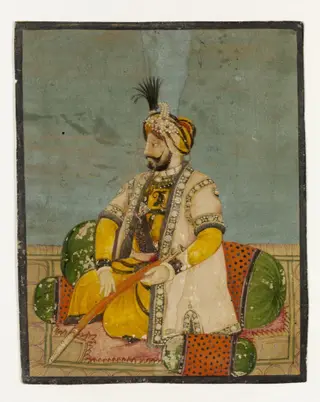 Raja Ranbir Singh
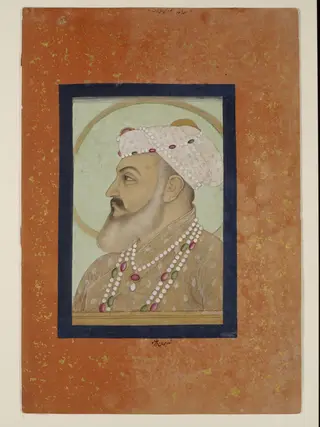 Shah Jahan
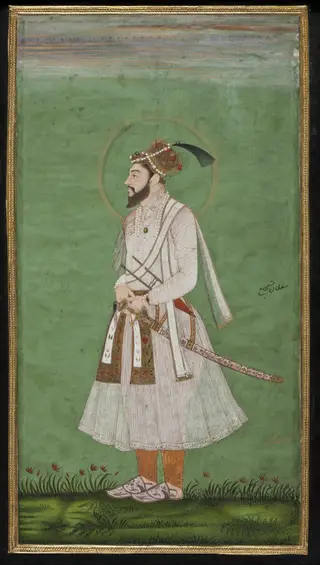 Portrait of a Mughal Prince, possibly a copy of a portrait of Sultan Shuja (1616-1659)
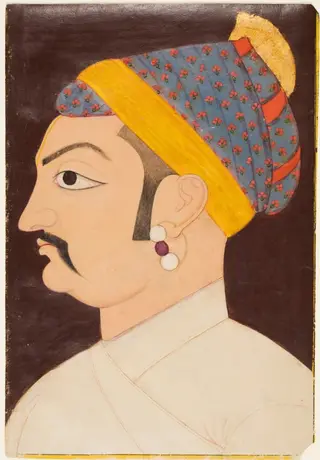 Portrait of Rao Shiv Singh Chandrawat
 The emperor 'Alamgir (Aurangzeb)
 Kharak Singh