Artwork
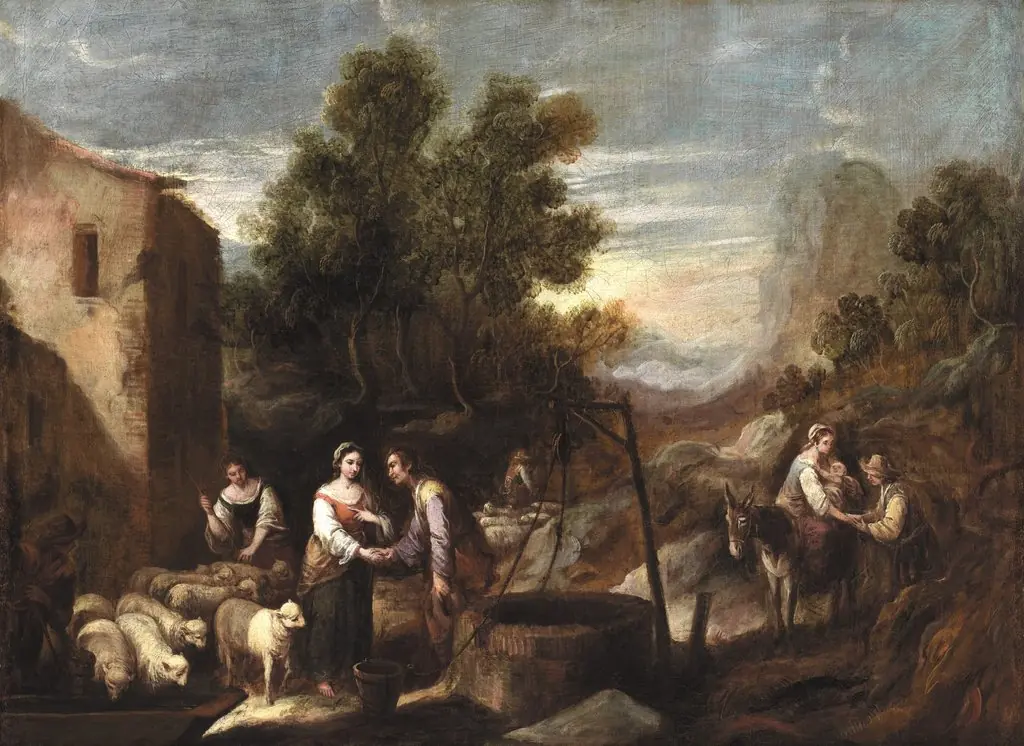
The meeting of Jacob and Rachel
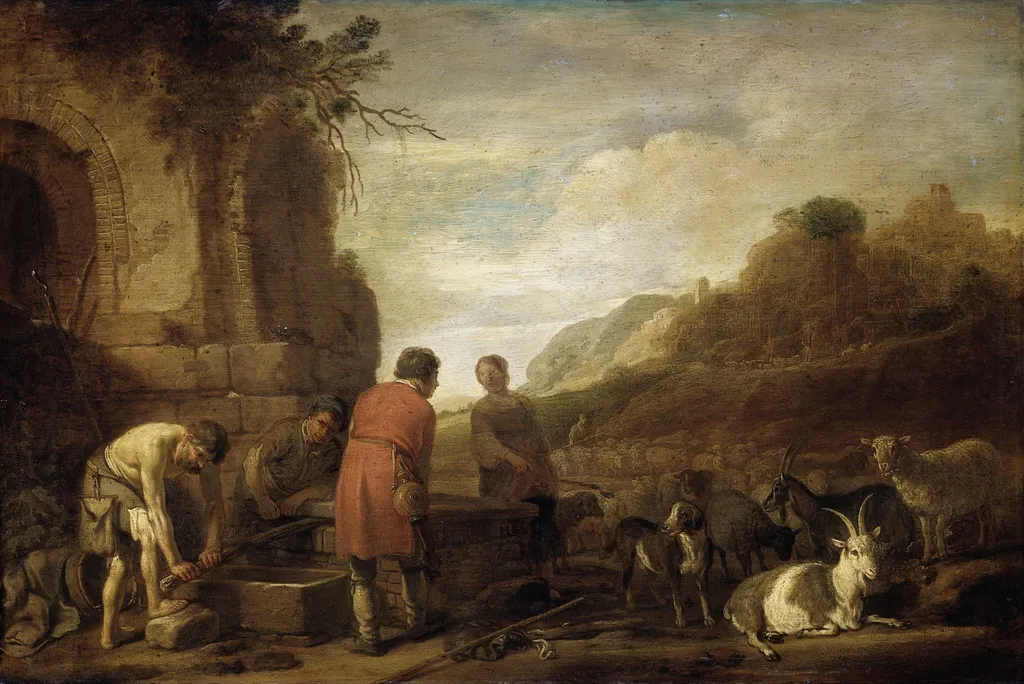
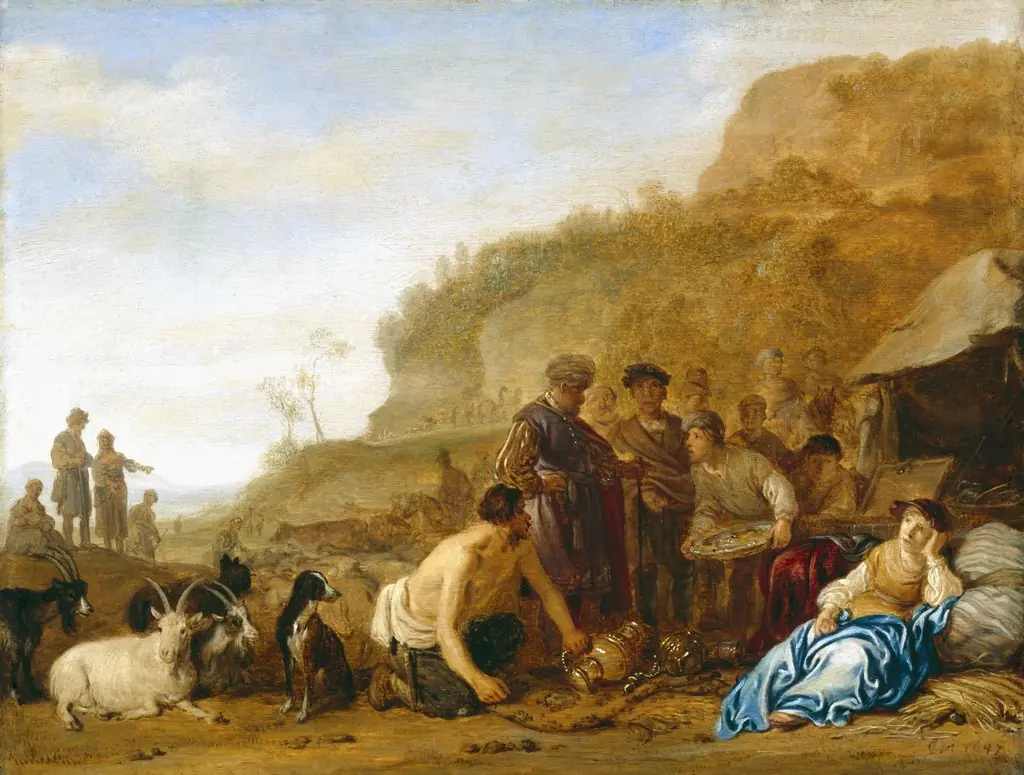
The meeting of Jacob and Rachel is an oil painting by the Dutch Golden Age artist Claes Corneliszoon Moeyaert. It dates from 1638 and is held in the collection of the Rijksmuseum.
About this work
Subject & Meaning
The tender encounter is set beneath a tree that frames the couple, suggesting divine providence and the fertility of their union.
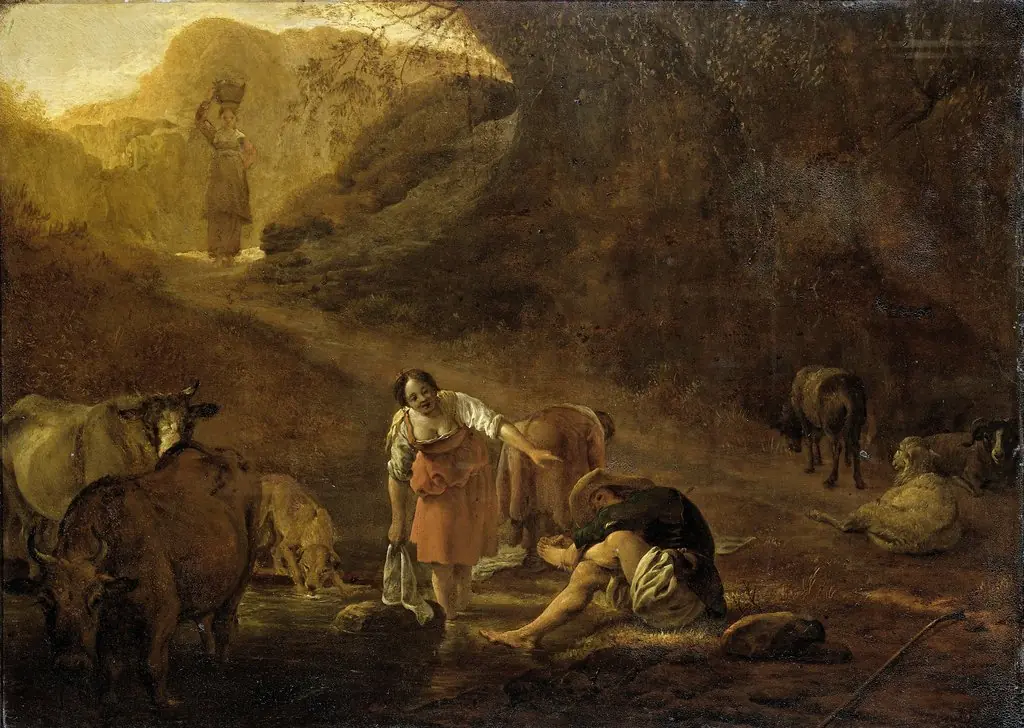
The painting portrays the biblical moment when Jacob embraces Rachel, a scene rich in symbolic weight. The tender encounter is set beneath a tree that frames the couple, suggesting divine providence and the fertility of their union. Moeyaert’s composition emphasizes intimacy through close proximity and gentle gesture, reflecting themes of love, destiny, and covenantal promise central to the narrative.
Technique & Style
The work is executed in oil paint, classified as a painting within the genre tradition. According to the Wikidata record, the medium consists of oil paint applied to a panel, with measured dimensions of 40.6 cm in height and 60.5 cm in width, giving the composition a horizontal, landscape-oriented format. The support is a wooden panel rather than canvas, a typical choice for Dutch cabinet pictures of this scale.
The painting is held in the Rijksmuseum collection. No further details regarding handling, surface condition, or specific stylistic qualities are documented in the available sources.
History & Provenance
The painting was created by Claes Corneliszoon Moeyaert in 1638, as indicated by the artist’s date and internal documentation.
It entered the collection of the Rijksmuseum, where it is held as of the latest record. The work measures 40.6 cm in height and 60.5 cm in width, executed in oil on panel.
The painting is held by the Rijksmuseum, Amsterdam, inventoried as SK-C-1959.
It was shown in the exhibition “Dutch Masters from the Rijksmuseum” at the Tokyo Metropolitan Art Museum, 1992–1993, and in “Rembrandt and His Pupils: Drawings and Etchings” at the National Museum of Western Art, Tokyo, 1992.
Legacy
The Meeting of Jacob and Rachel has been recognized for its role in shaping Dutch narrative painting, particularly in the depiction of biblical stories within domestic interiors. Its compositional balance and naturalistic rendering influenced later genre painters in the 17th century, contributing to the development of story-driven scenes in Dutch art. The work remains part of the Rijksmuseum collection, where it is studied for its technical execution and narrative depth.
Overview
Claes Corneliszoon Moeyaert’s 1638 oil painting, The Meeting of Jacob and Rachel, presents a tranquil encounter drawn from the biblical narrative. Executed in Amsterdam during the Dutch Golden Age, the work is housed in the Rijksmuseum. The composition centers on a modest well surrounded by figures and livestock, rendered with a subdued palette that emphasizes the everyday nature of the scene.
Context
The painting belongs to a broader tradition of 17th‑century Dutch artists who rendered biblical stories as genre scenes, integrating sacred narratives into familiar, everyday environments. By situating the biblical protagonists among common rural elements, Moeyaert aligns with contemporary tastes that favored moral instruction delivered through relatable, domestic imagery.
Own this work as a print
Artist & collection
Artist
Claes Corneliszoon Moeyaert or Nicolaes Moyaert or Mooyaert (1592–1655) was an authoritative Catholic Dutch painter.