Artwork
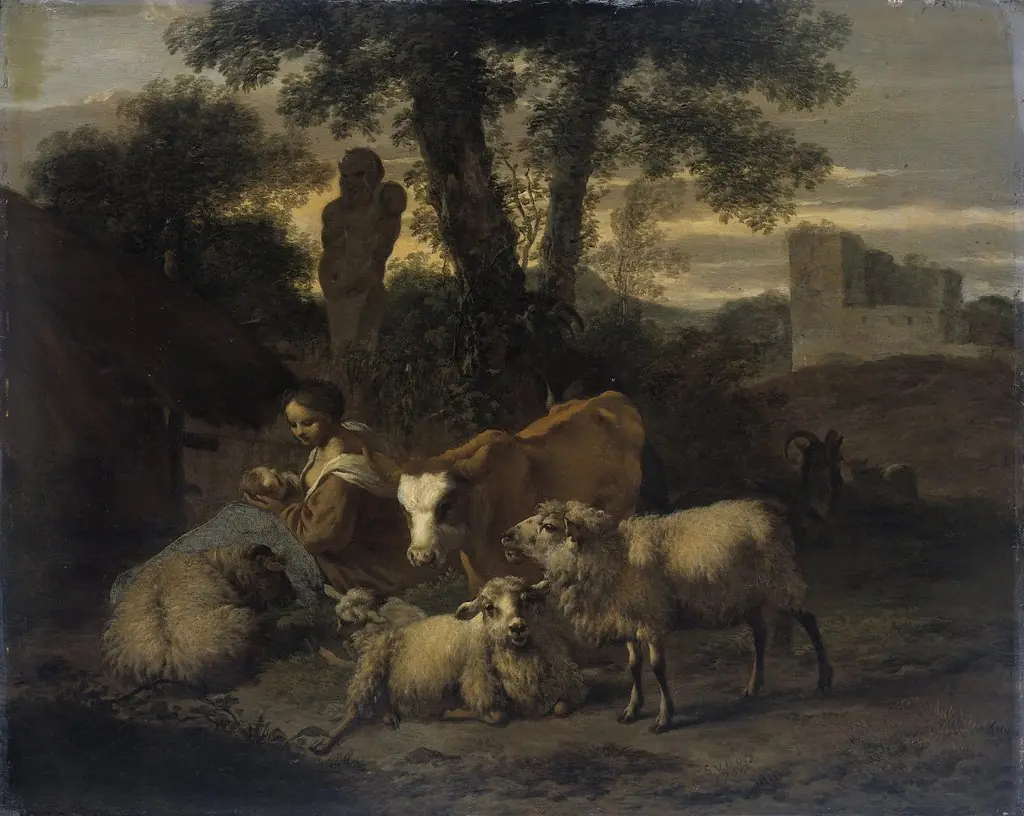
A shepherd and washerwomen at a spring
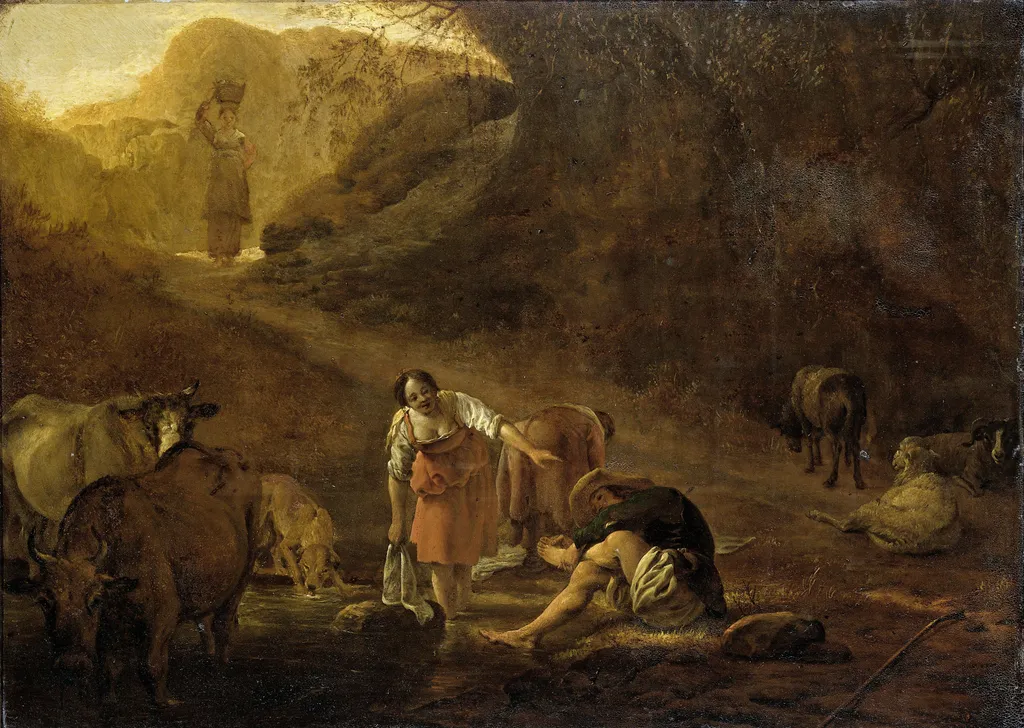
A shepherd and washerwomen at a spring is an oil painting by the Dutch Golden Age artist Pieter van Laer. It dates from 1630 and is held in the collection of the Rijksmuseum.
About this work
Subject & Meaning
The interaction between figures and the abundant water motif may carry connotations of purity and renewal, themes recurrent in van Laer's genre paintings.
The work depicts a rustic genre scene featuring a shepherd tending sheep beside two women engaged in washing linens at a natural spring. This subject reflects 17th-century Dutch fascination with everyday labor and pastoral tranquility, often symbolizing moral simplicity and the harmony of rural life. The interaction between figures and the abundant water motif may carry connotations of purity and renewal, themes recurrent in van Laer's genre paintings. The composition emphasizes narrative detail, capturing a fleeting moment of quiet activity within a lush, idealized landscape.
Technique & Style
The work is executed in oil paint on a copper support, a combination well suited to the smooth, enamel-like finish that the medium typically produces. Measuring 29 by 43 cm, the small-scale panel allowed the artist to work with fine, precise handling, lending the figures of the shepherd and washerwomen at the spring a tightly controlled, miniature-like definition. The genre scene is rendered in a polished, smoothly blended technique characteristic of Dutch and Flemish painters working in oil on copper during the early seventeenth century, with crisp contours and carefully modulated tonal transitions suited to the reflective ground.
The copper support provides a rigid, durable surface that has helped preserve the painting's detail and color, though no specific condition report is documented in the available sources.
History & Provenance
The painting was created in 1630, as indicated by the date recorded in both the internal documentation and the work’s Wikidata entry. It is painted on copper, a support associated with early 17th-century Dutch cabinet paintings. The work entered the collection of Gijsbert de Clercq, a noted Amsterdam art dealer and collector, whose holdings later passed to the Rijksmuseum, where the painting is currently held.
Overview
A shepherd and washerwomen at a spring is a copper painting created by Pieter van Laer, known as Il Bamboccio, around 1630. It is a representative work of the Dutch Golden Age and is now held in the Rijksmuseum collection.
Own this work as a print
Artist & collection

Artist
Pieter Bodding van Laer (christened 14 December 1599, in Haarlem – 1641 or later) was a Dutch painter and printmaker.

- Bagpiper
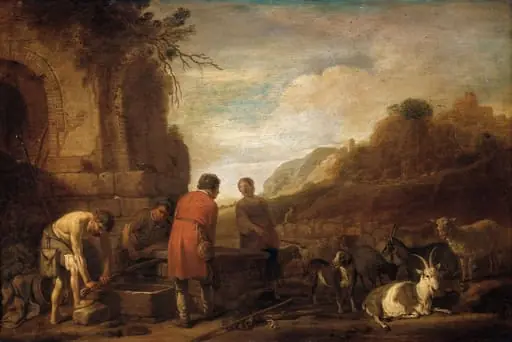 The Meeting of Jacob and Rachel
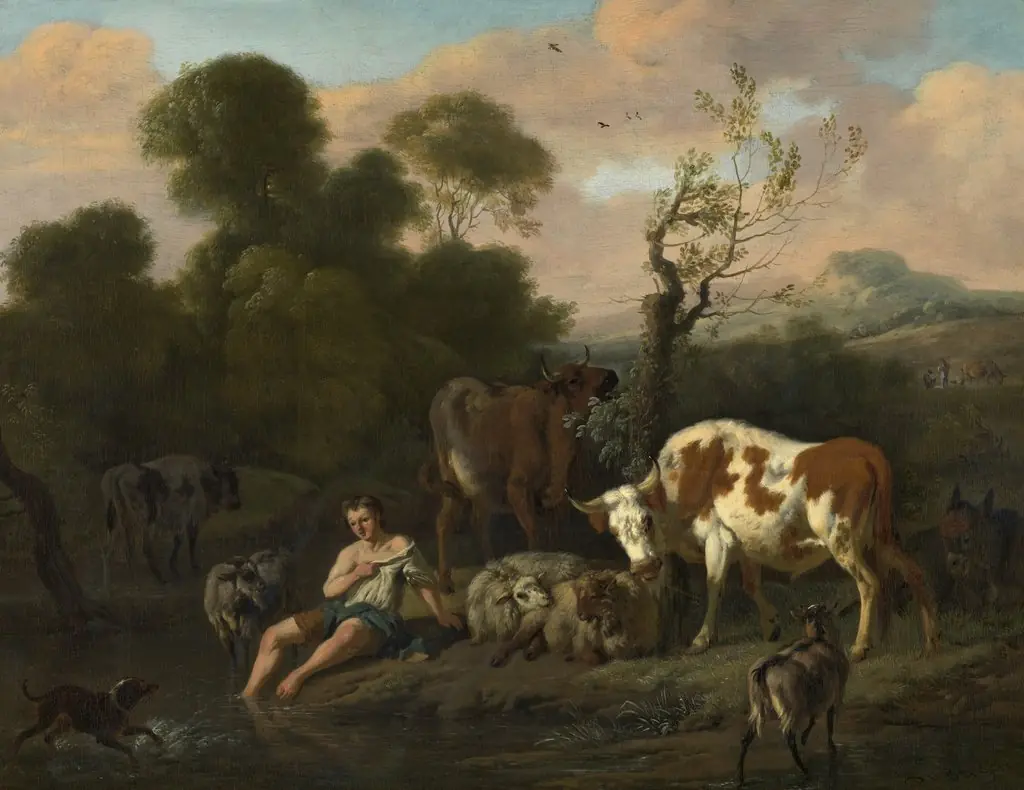 Landscape with a Shepherd
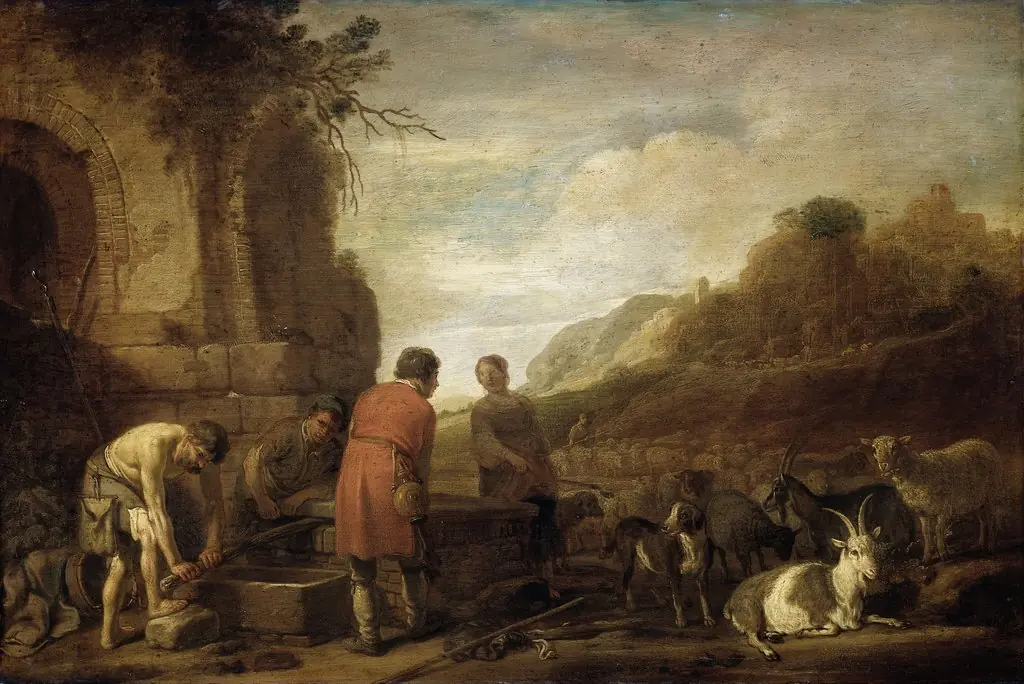 The meeting of Jacob and Rachel
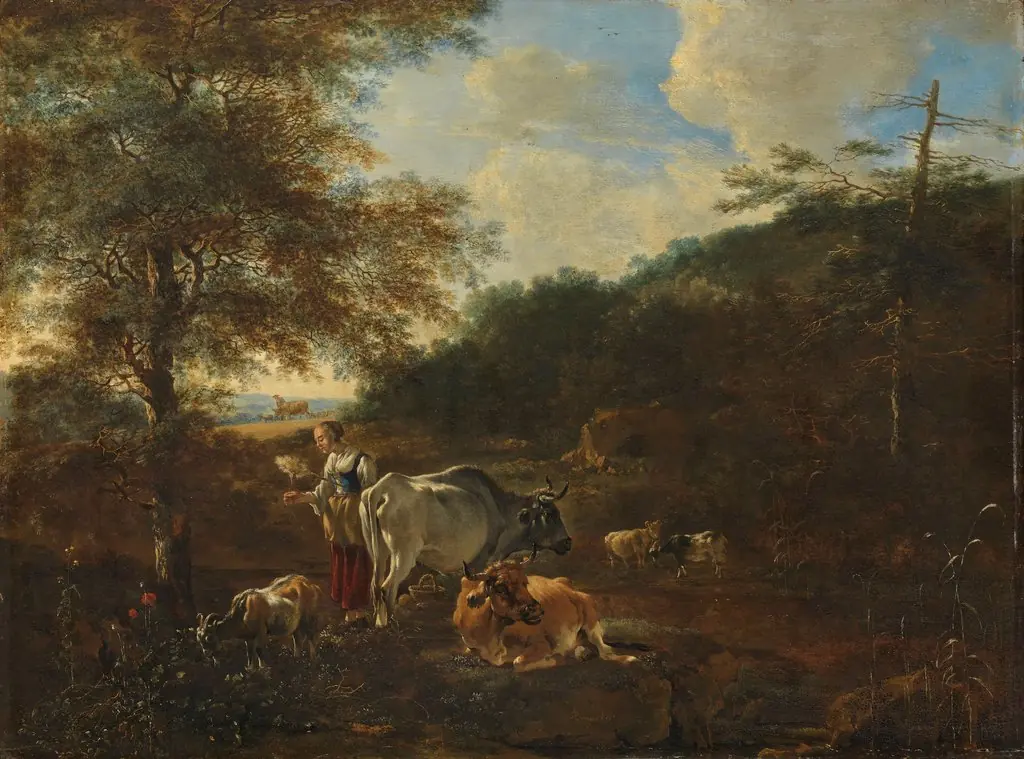 Landscape with cattle
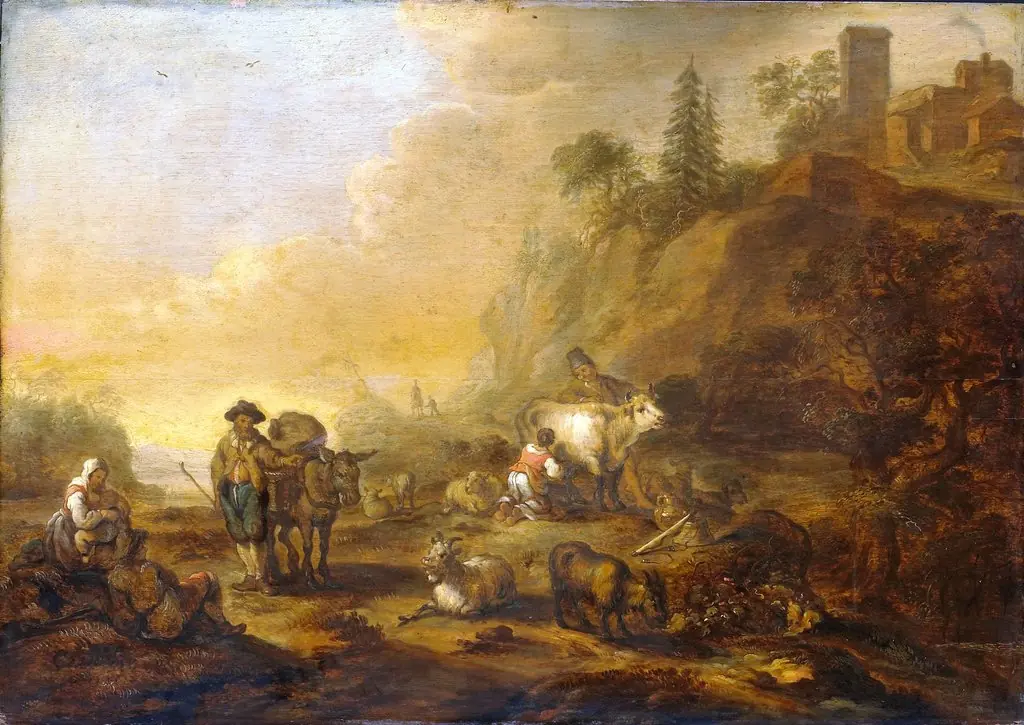 Landscape with herdsman and their droves
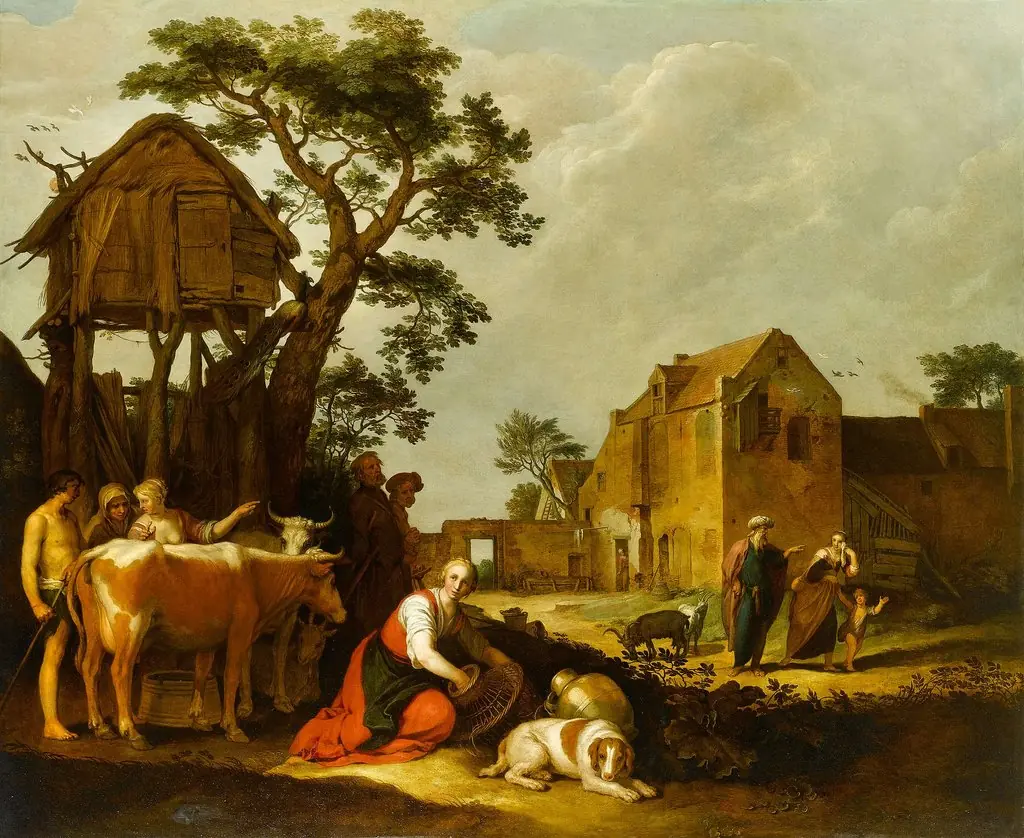 Rural landscape with the expulsion of Hagar and Ishmael (Genesis 21:14-21)
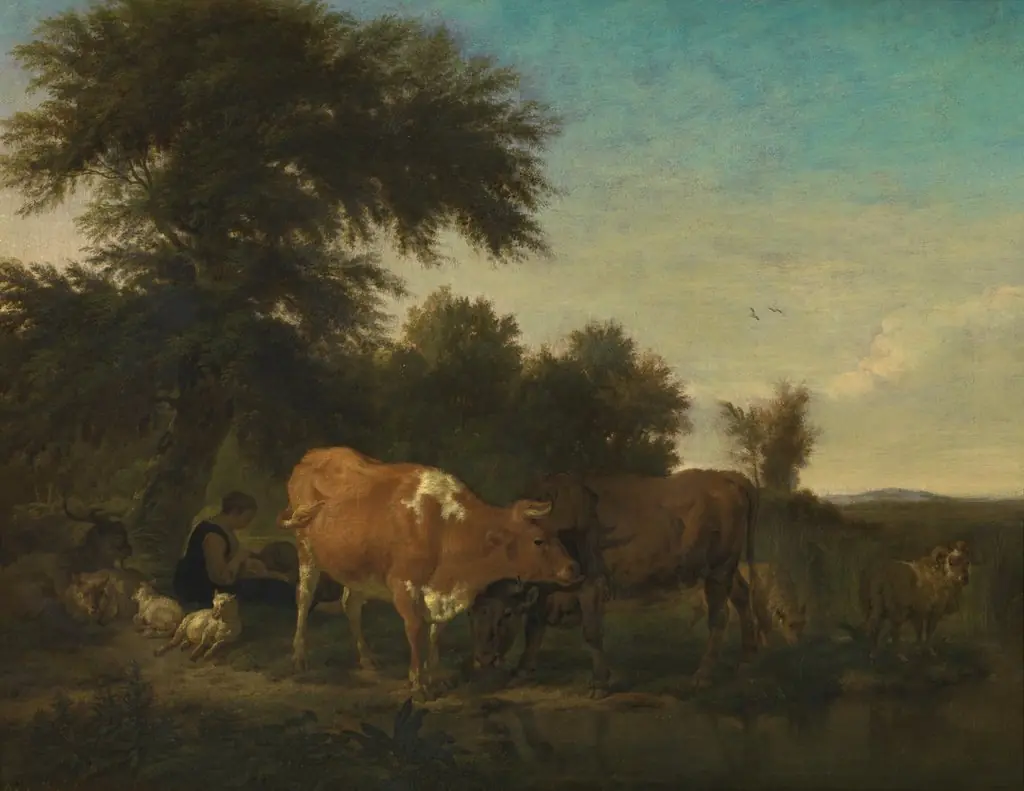 Landscape
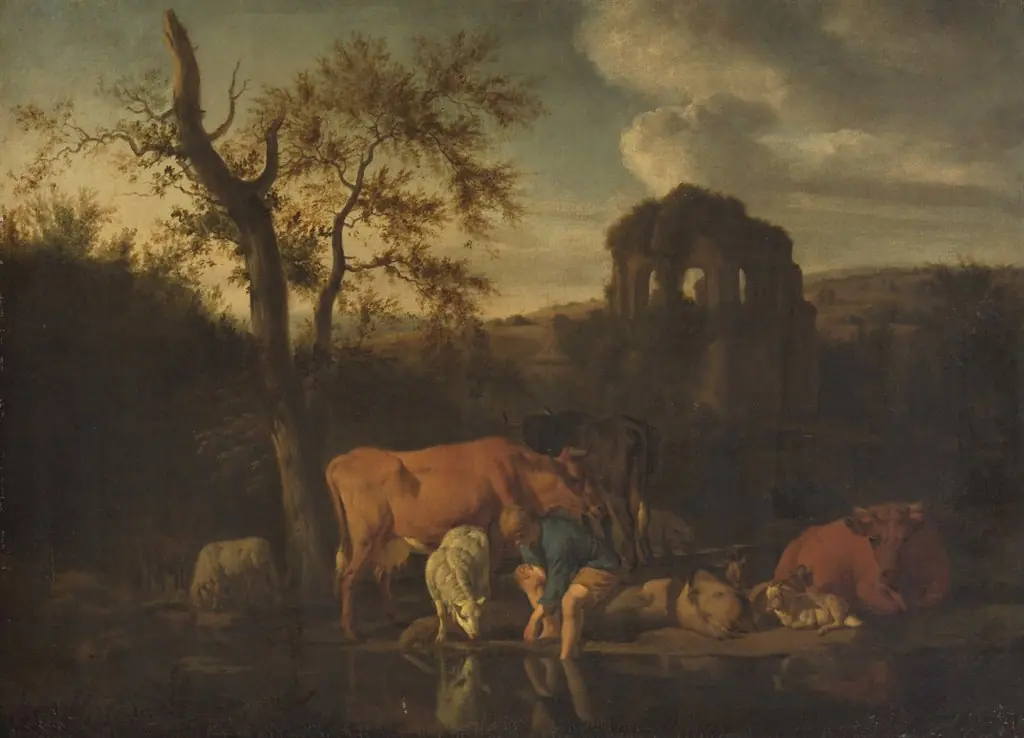 Landschaft mit Herde und Hirten
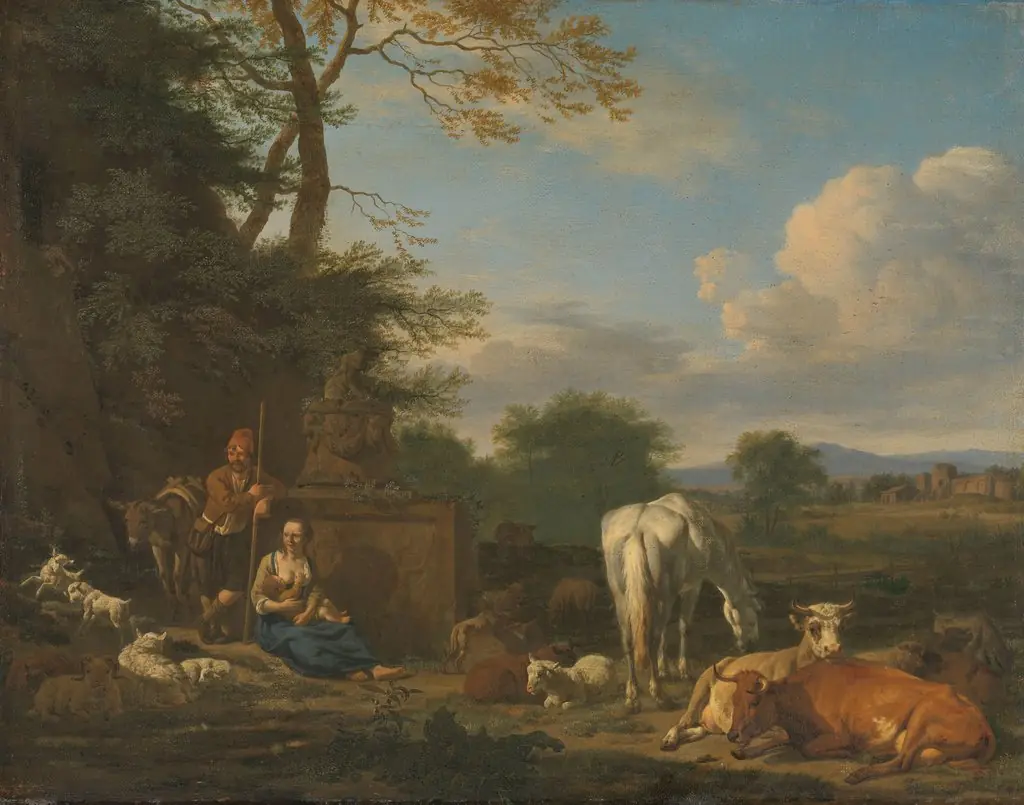 Arcadian landscape with resting herdsmen and cattle
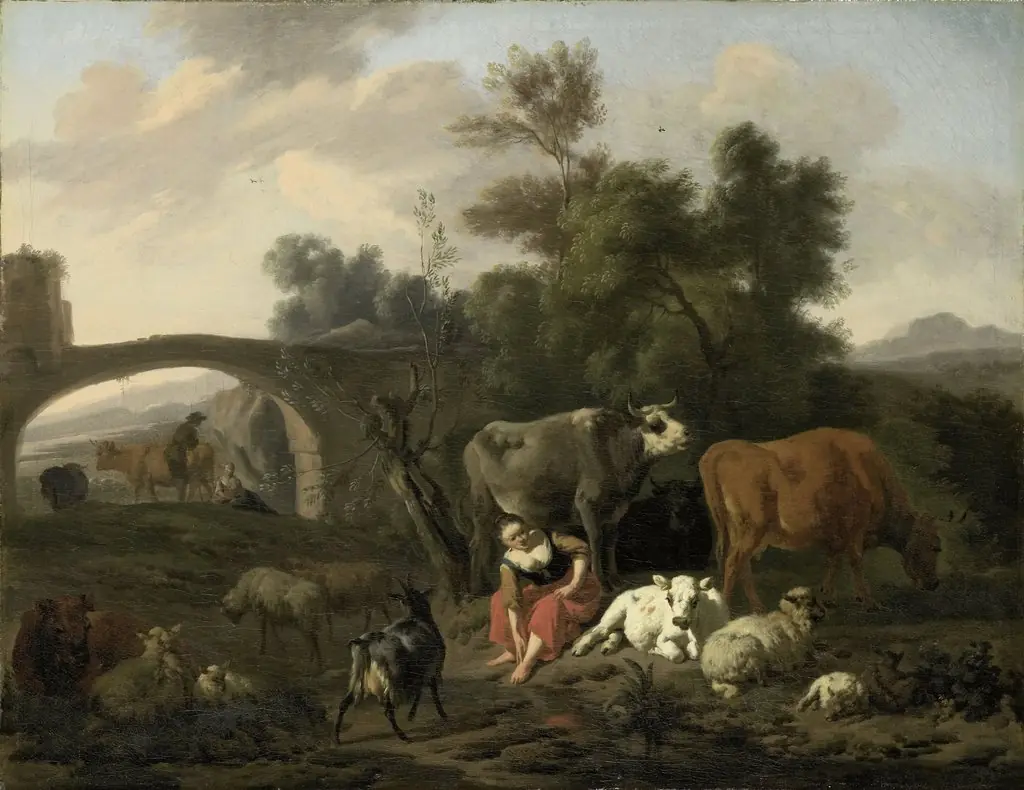 Landscape with herdsmen and cattle
 Italian landscape with sheperdess and flocks