Artwork
Landscape with Tobias and the Angel (Evening)
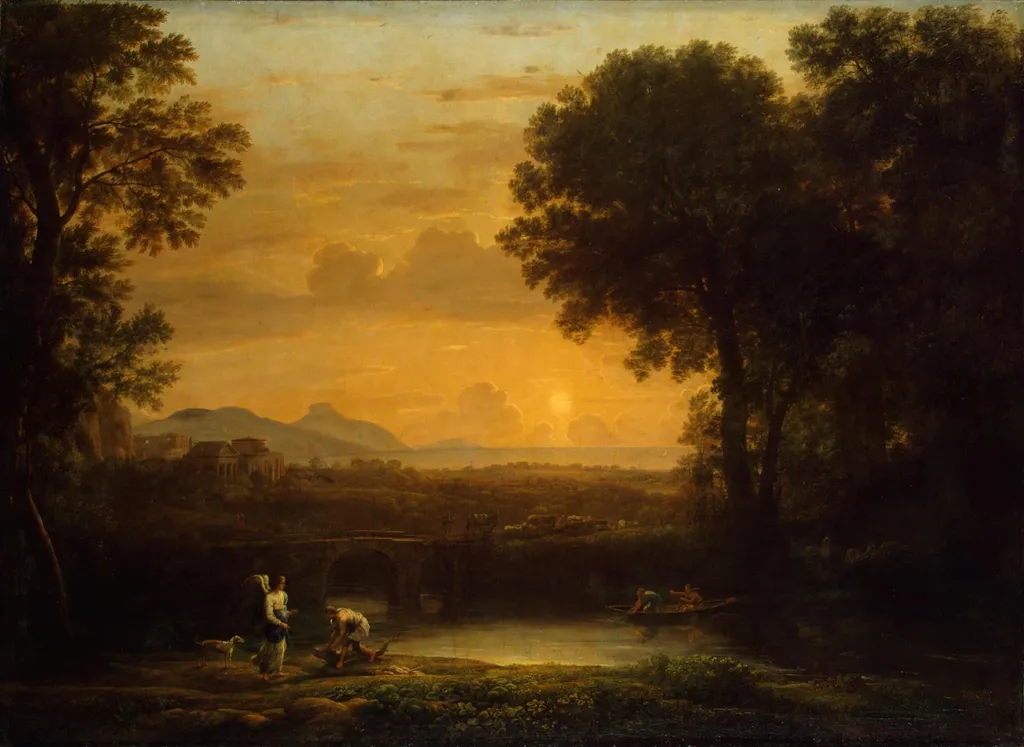
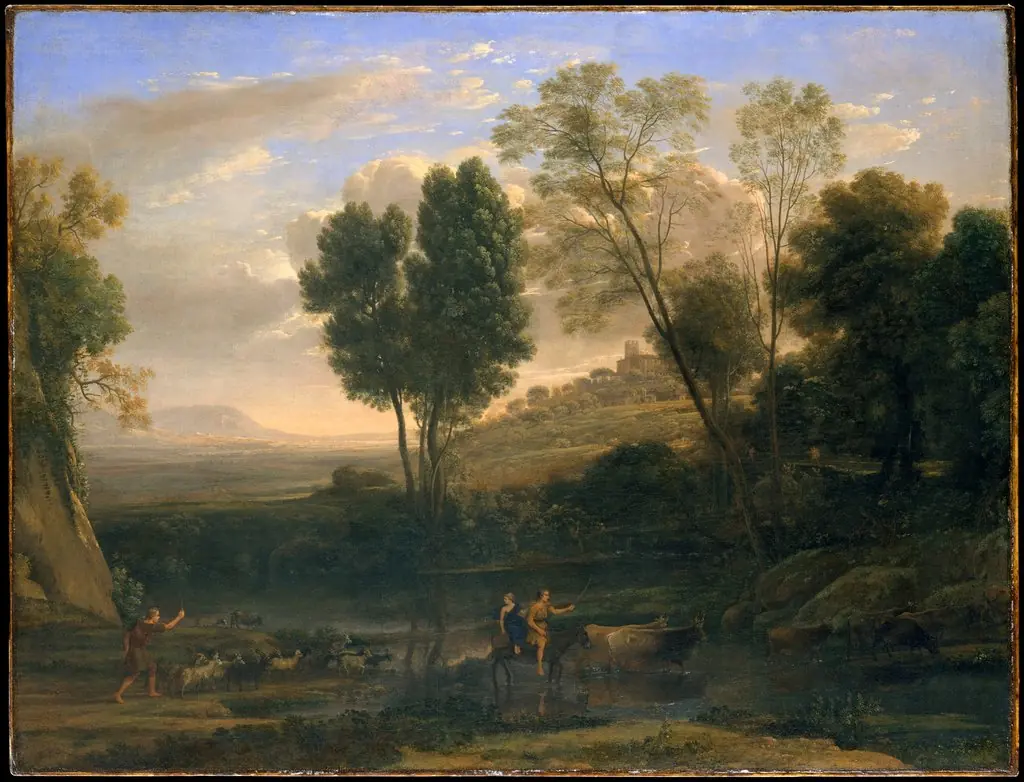
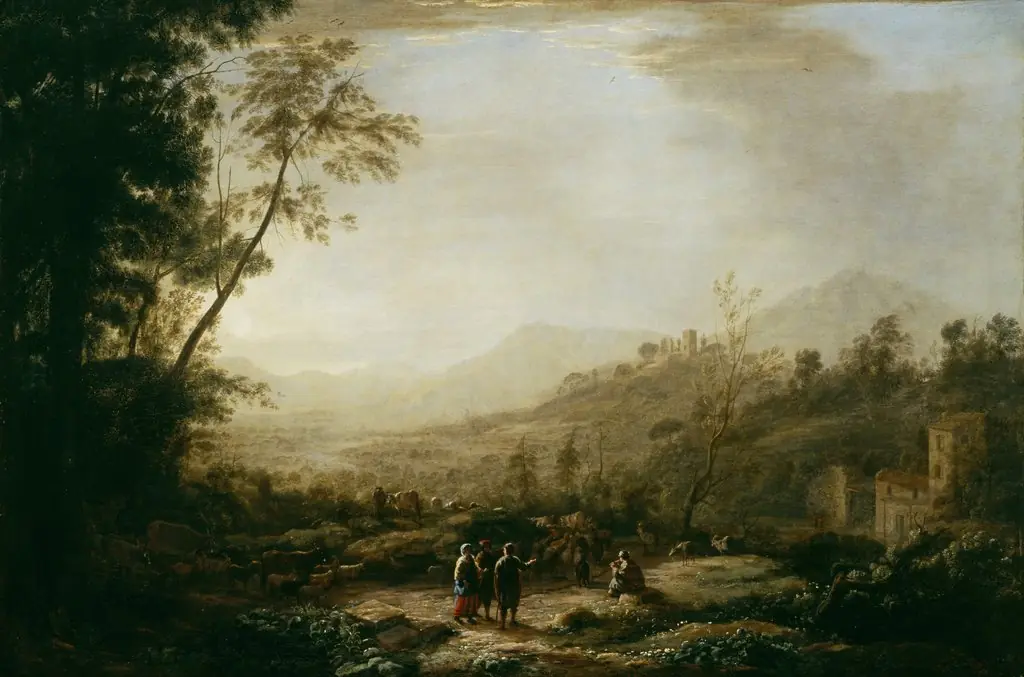
Landscape with Tobias and the Angel (Evening) is an oil painting by the French Classical Baroque artist Claude Lorrain. It dates from 1663 and is held in the collection of the Hermitage Museum. Created in 1663, this oil painting presents a serene riverside at dusk.
About this work
Subject & Meaning
The evening lighting and the tranquil river landscape amplify the narrative’s sense of providential care, linking the spiritual journey with the natural world.
The work portrays the biblical episode of Tobias guided by the Archangel Raphael, a theme rooted in the deuterocanonical Book of Tobit. In the composition the youthful Tobias holds a fish whose heart and gall are later used for medicinal purposes, a detail that underscores themes of divine protection and healing. The evening lighting and the tranquil river landscape amplify the narrative’s sense of providential care, linking the spiritual journey with the natural world.
The painting thus functions as both a devotional image and a meditation on moral virtue within a serene, idyllic setting.
Technique & Style
The work is an oil painting executed on canvas, reflecting Claude Lorrain's mature handling of light and atmospheric perspective. The composition demonstrates his characteristic synthesis of classical landscape with a biblical narrative, featuring Tobias and the Angel rendered through subtle tonal gradations and precise brushwork. The canvas dimensions of 116 cm by 153.5 cm underscore the grand scale appropriate for a decorative panel in a private collection, while the execution aligns with the artist's established practice of layering translucent glazes to achieve luminous depth.
History & Provenance
Landscape with Tobias and the Angel (Evening) was painted by Claude Lorrain in 1663 using oil on canvas. Originally owned by Joséphine de Beauharnais, it later entered the collection of Alexander I of Russia before being acquired by the Hermitage Museum, where it remains on display. The work was created in France and depicts the biblical scene of Tobias and the Angel, reflecting the religious and landscape painting traditions of the period.
Landscape with Tobias and the Angel (Evening), painted by Claude Lorrain in 1663, is held by the Hermitage Museum. According to the work's provenance, it was at one time owned by Joséphine de Beauharnais and later by Alexander I of Russia, through whom it entered the imperial collection now housed at the Hermitage. No specific accession number is recorded in the available sources, and no exhibition history beyond its current museum placement is documented.
Context
Created in 1663, Landscape with Tobias and the Angel (Evening) stands as a significant example of Claude Lorrain's mature landscape painting, blending religious narrative with idealized natural scenery. The work depicts the biblical figures Tobias and the Angel Raphael, illustrating the artist's characteristic method of integrating scriptural subjects within expansive, atmospheric settings. As a canvas oil painting produced in France, it reflects the French Baroque tradition of elevating landscape to a prestigious genre.
The painting's provenance connects to major historical figures, having been owned by Joséphine de Beauharnais before entering the collection of Alexander I of Russia. Today, it is held by the Hermitage Museum, where it continues to represent the pinnacle of 17th-century French landscape art and the artist's enduring influence on the genre.
Legacy
Claude Lorrain's 1663 Landscape with Tobias and the Angel (Evening) shaped later interpretations of the biblical narrative through its poetic treatment of light and composition. The work's prominence in the Hermitage Museum collection amplified its visibility among European artists, influencing compositional strategies in religious and landscape painting throughout the 18th and 19th centuries. Its technical mastery of atmospheric perspective and narrative integration remained a reference point for academic instruction and artistic emulation, particularly in works depicting angelic interventions within terrestrial scenes.
Overview
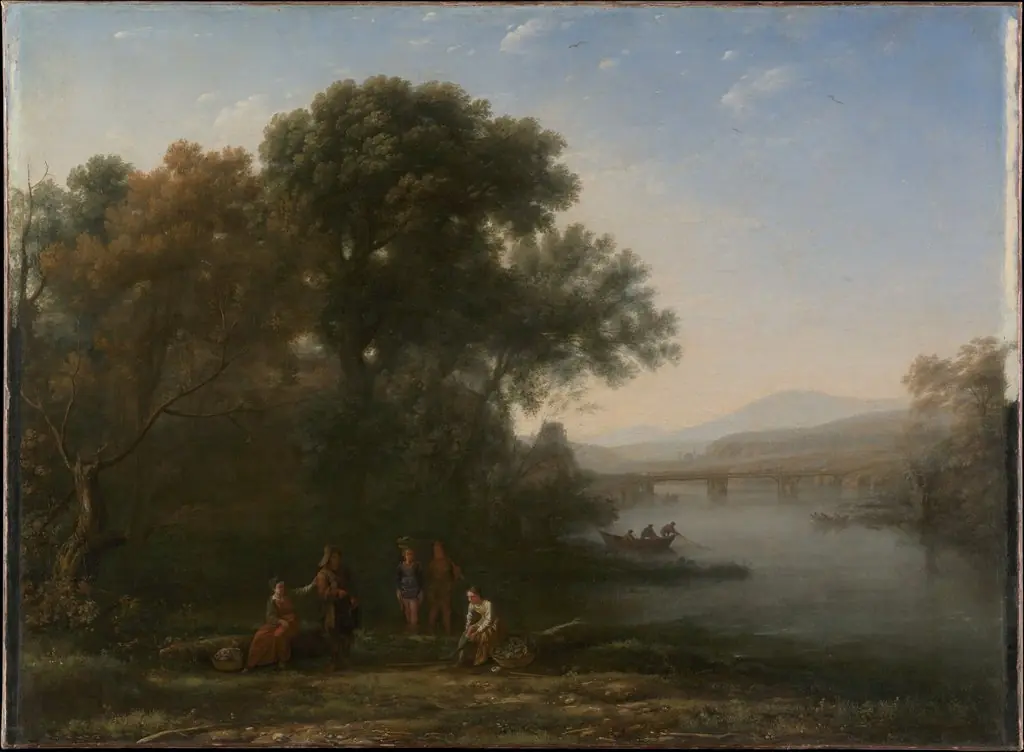
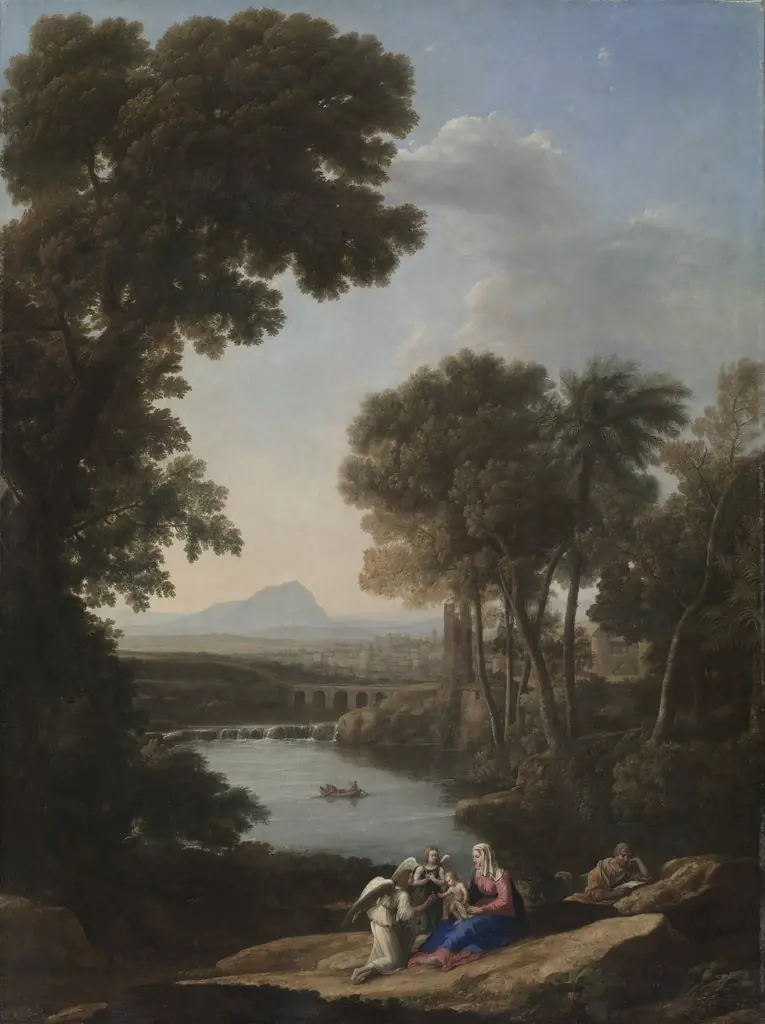
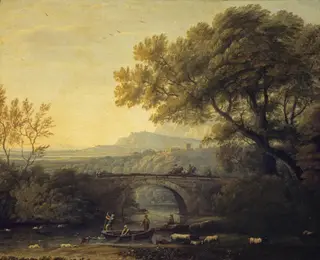
Created in 1663, this oil painting presents a serene riverside at dusk. A kneeling figure stands beside a cloaked companion, who holds a staff and a small dog. An arched bridge spans the water, while a modest boat carries two passengers downstream. The surrounding trees and the warm, amber sky frame the tranquil composition, emphasizing a calm evening atmosphere.
Own this work as a print
Artist & collection
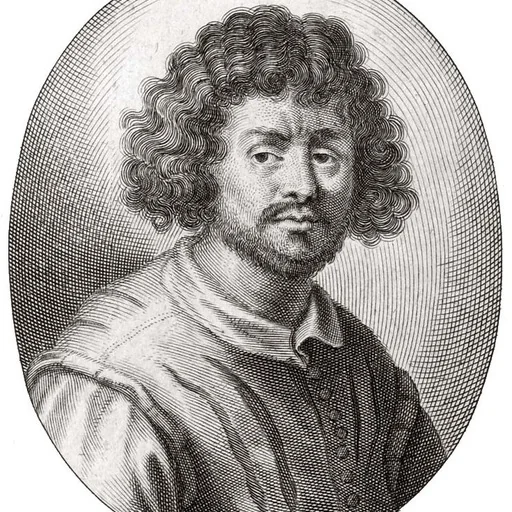
Artist
Claude Lorrain (French:; born Claude Gellée, called le Lorrain in French; traditionally just Claude in English; c.