Artwork
Baptism of the Eunuch of Queen Candace
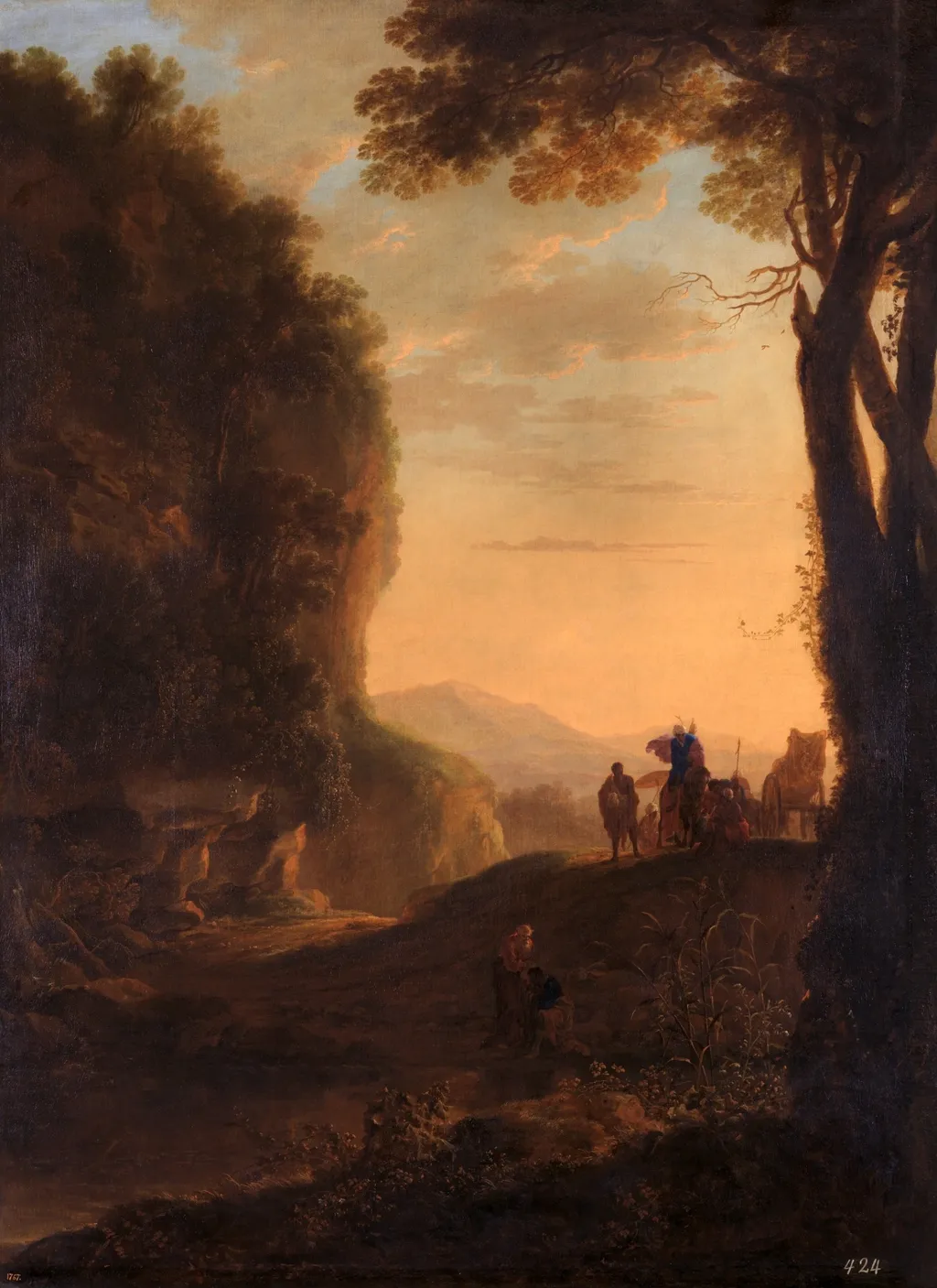
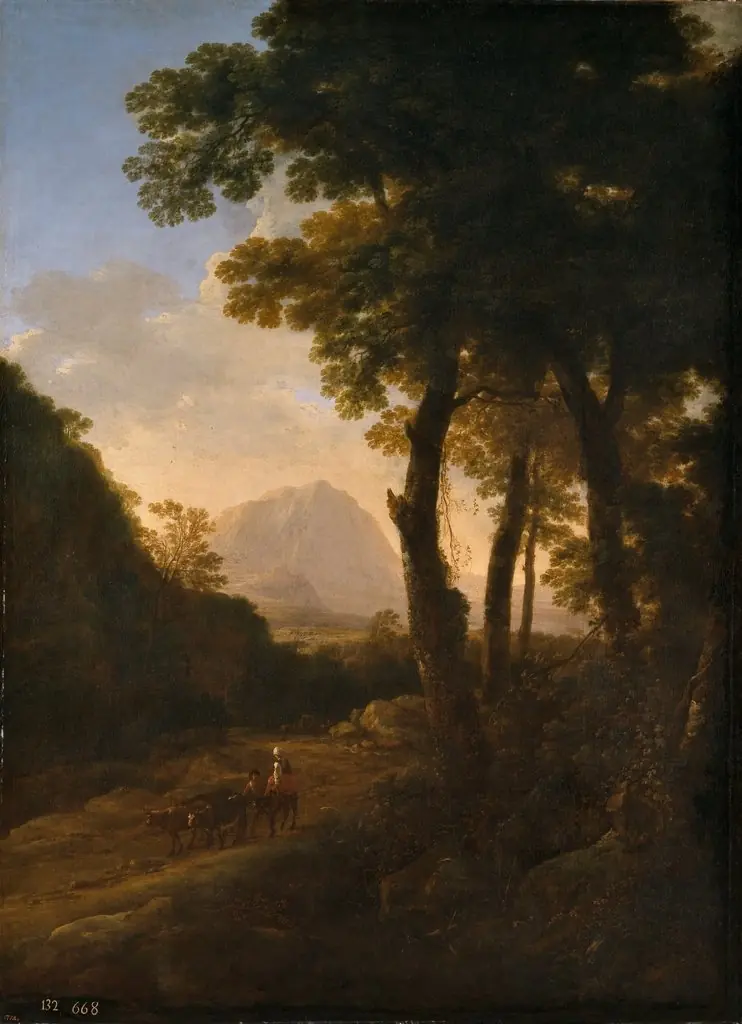
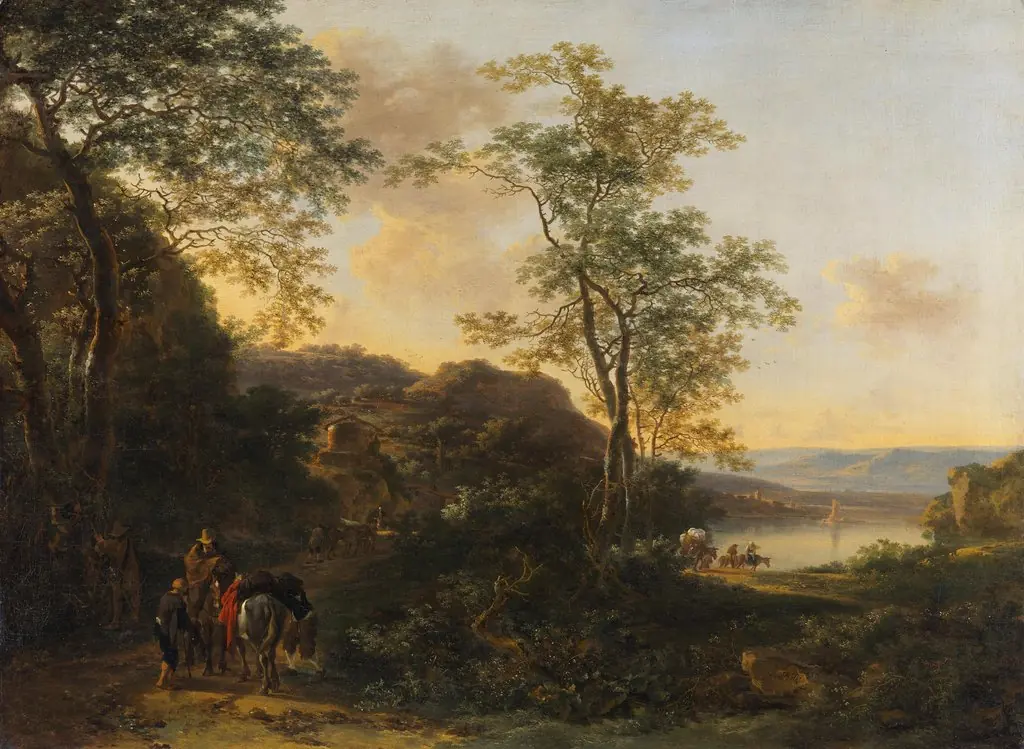
Baptism of the Eunuch of Queen Candace is an oil painting by the Dutch Golden Age artist Jan Both. It dates from 1639 and is held in the collection of the Museo del Prado.
About this work
Technique & Style
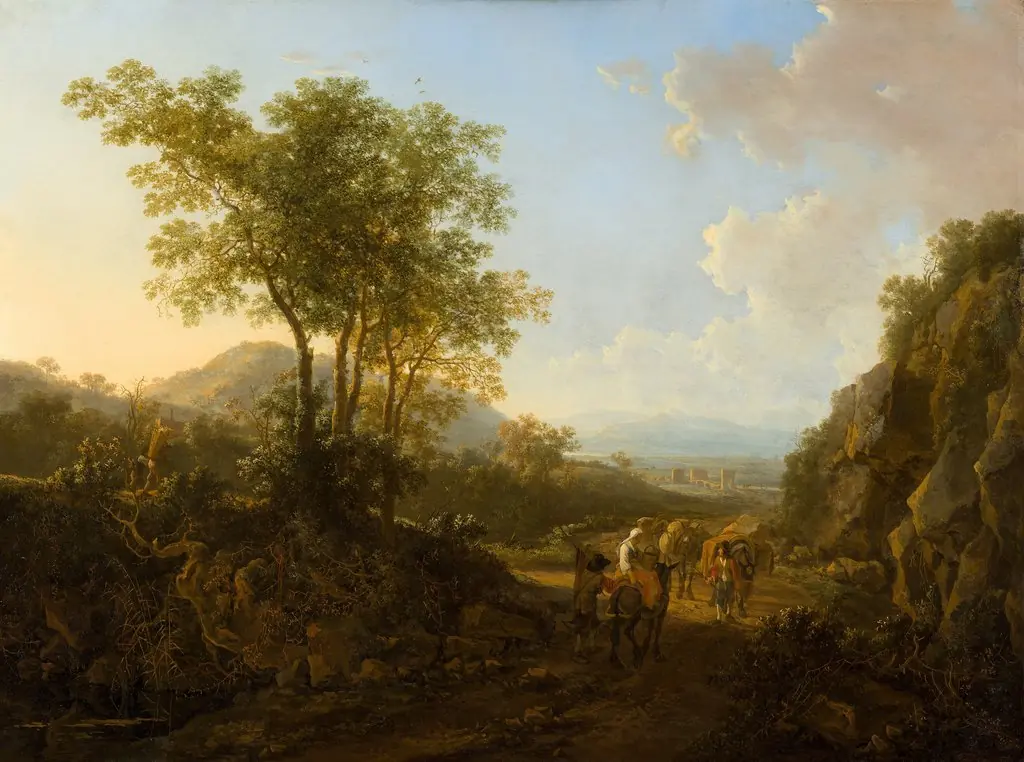
The painting is executed in oil on canvas, with the artist employing a fluid handling of paint to render atmospheric effects and luminous sky transitions typical of Dutch Italianate landscape practice. Compositionally, the work integrates a biblical narrative scene set within a broad Italianate landscape, structured through a diagonal recession from the carriage in the foreground toward the baptismal group at left and the distant cityscape on the right. Figures are modeled with restrained chiaroscuro, while distant elements dissolve into a soft, golden light that suggests Both’s adaptation of Roman campagna motifs under the influence of his brother Andries and other Utrecht painters.
History & Provenance
The work is located within the Royal Palace of Madrid complex and is attributed to the artist Jan Both, with an inception date of 1641.
Jan Both's painting, Baptism of the Eunuch of Queen Candace, is held in the collection of the Museo del Prado in Madrid. The work is located within the Royal Palace of Madrid complex and is attributed to the artist Jan Both, with an inception date of 1641. Historical records indicate the piece was owned by Ferdinand VII of Spain.
The provided sources do not contain specific inventory or accession numbers for the work, nor do they list any exhibition history.
Overview
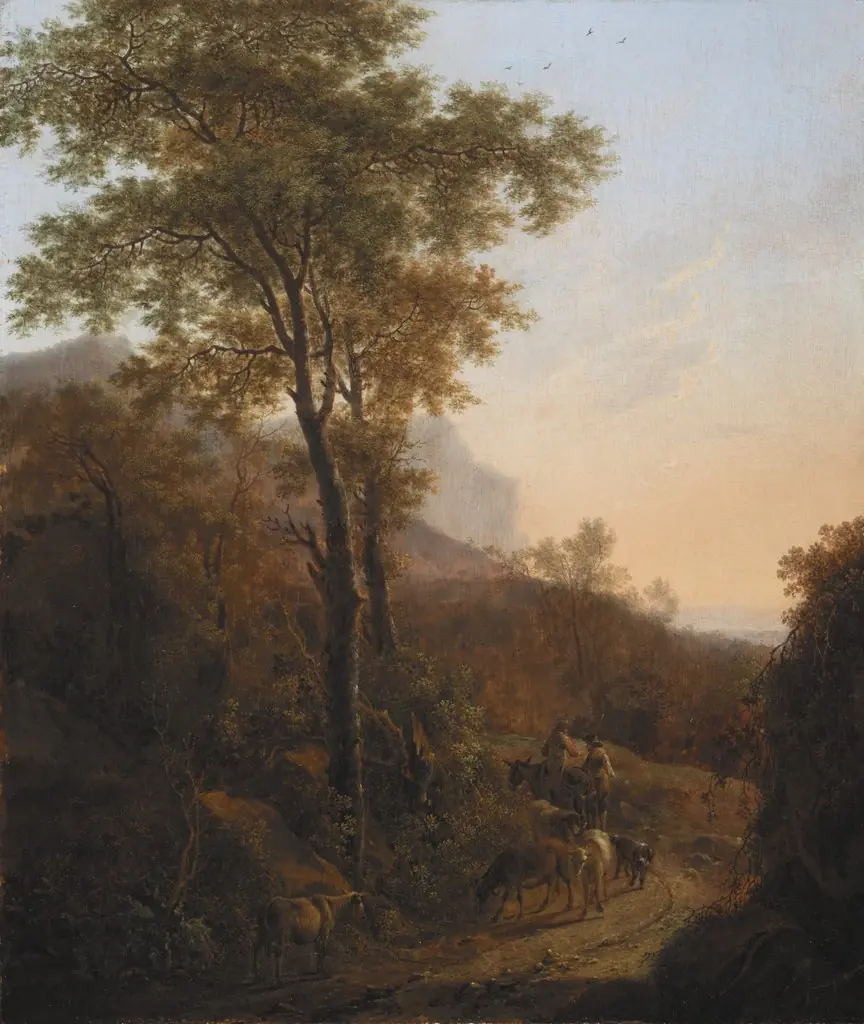
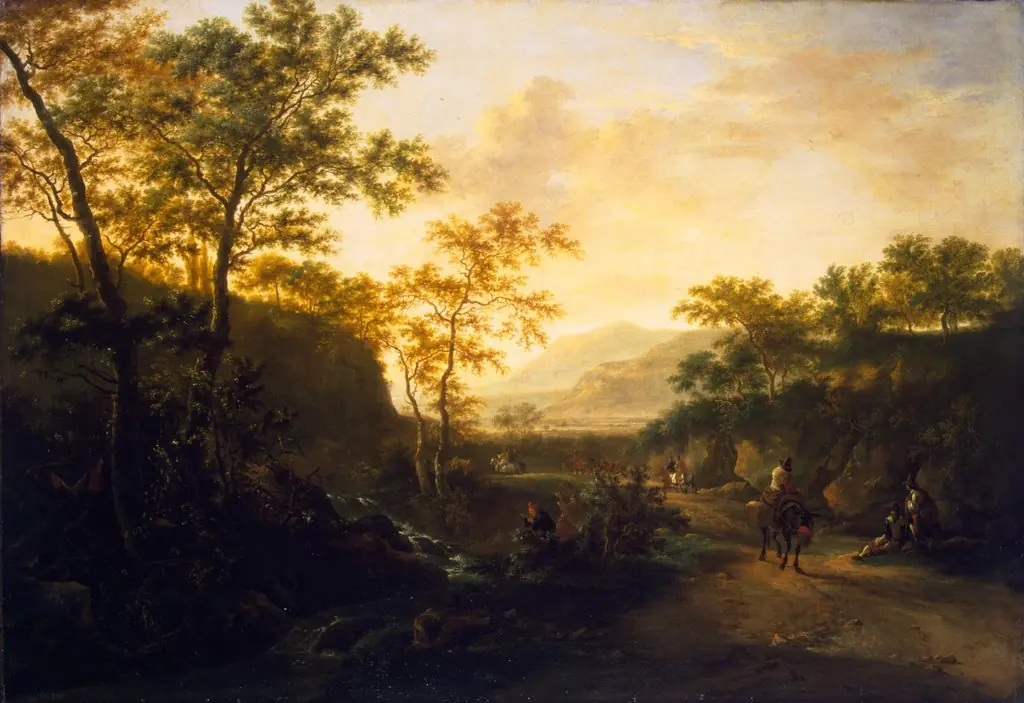
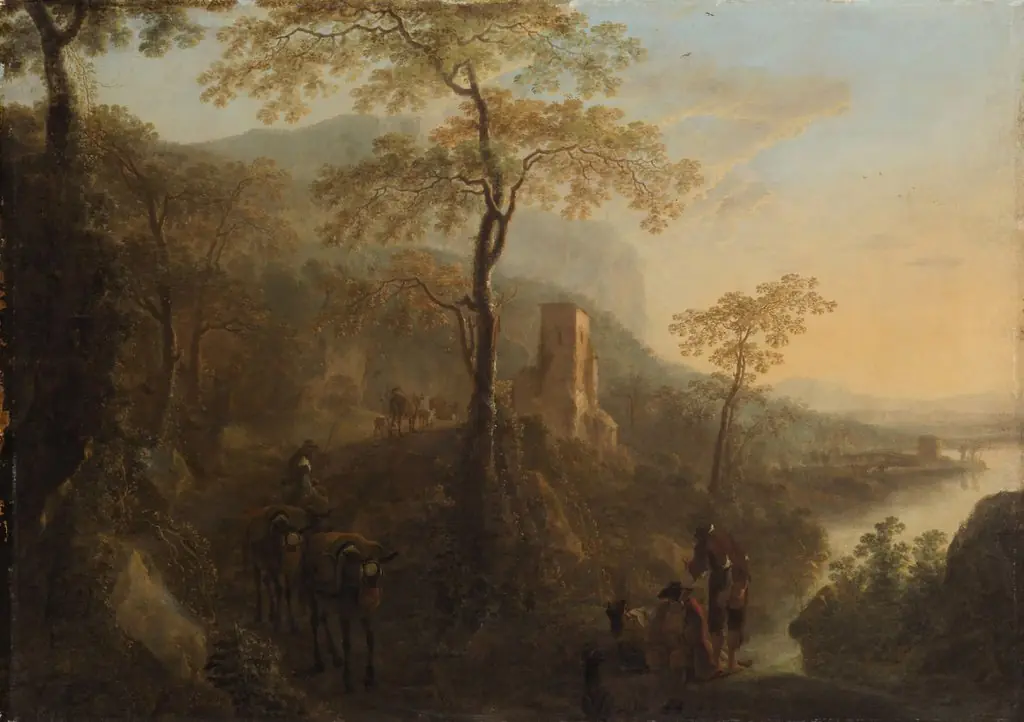
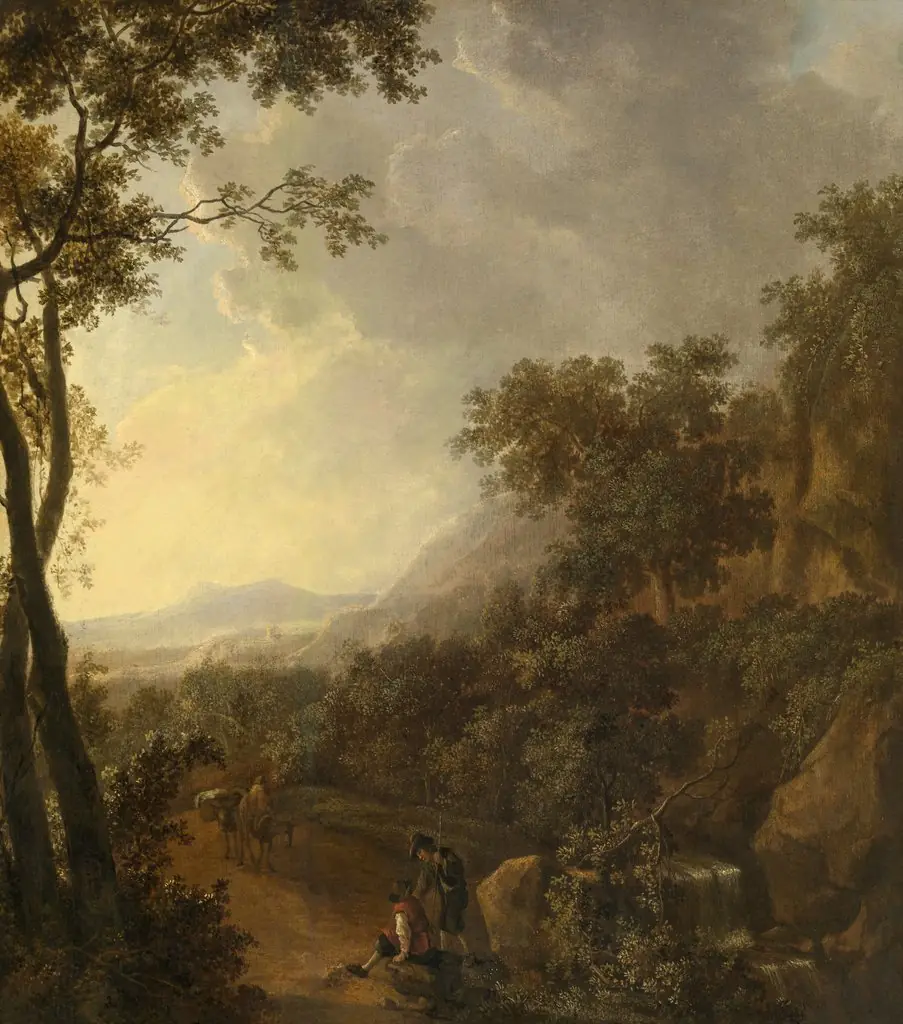
Jan Both's 'Baptism of the Eunuch of Queen Candace,' painted in 1639, depicts the biblical narrative from Acts 8:26–40, where Philip baptizes the Ethiopian eunuch. The composition is set within a dense, atmospheric forest landscape at dusk, a hallmark of Both's Italianate style developed during his residence in Rome. The scene is organized along a diagonal path that recedes into the background, guiding the viewer's eye from the foreground figures toward a luminous sky.
Both employs a dramatic chiaroscuro effect, contrasting the deep, cool shadows of the woodland with the warm, golden glow of the setting sun that illuminates the central figures. The eunuch, mounted on a horse, and Philip, standing with a staff, are rendered with soft, hazy contours that blend them into the surrounding nature. This work exemplifies Both's mastery in merging Italianate classical landscapes with Dutch attention to light and atmosphere, marking a significant contribution to the Utrecht school's adaptation of Roman landscape painting upon his return to the Netherlands.
Subject & Meaning
The scene references the biblical episode of the eunuch of Queen Candace, whose conversion and baptism are central to the composition. The figures, half‑lit by the fading light, suggest a moment of spiritual transition, with the carriage symbolising the journey toward faith and the surrounding darkness evoking the unknown beyond baptism.
Context
Jan Both, a Dutch painter active in Italy, merged Northern realism with Italianate landscape conventions. In this work, he adapts his typical pastoral settings to a biblical narrative, integrating the dramatic lighting favored by Caravaggisti while retaining his characteristic atmospheric skies.
Own this work as a print
Artist & collection

Artist
Jan Dirksz Both was a Dutch painter, draughtsman, and etcher, who made an important contribution to the development of Dutch Italianate landscape painting.