Artwork
The Herdsman
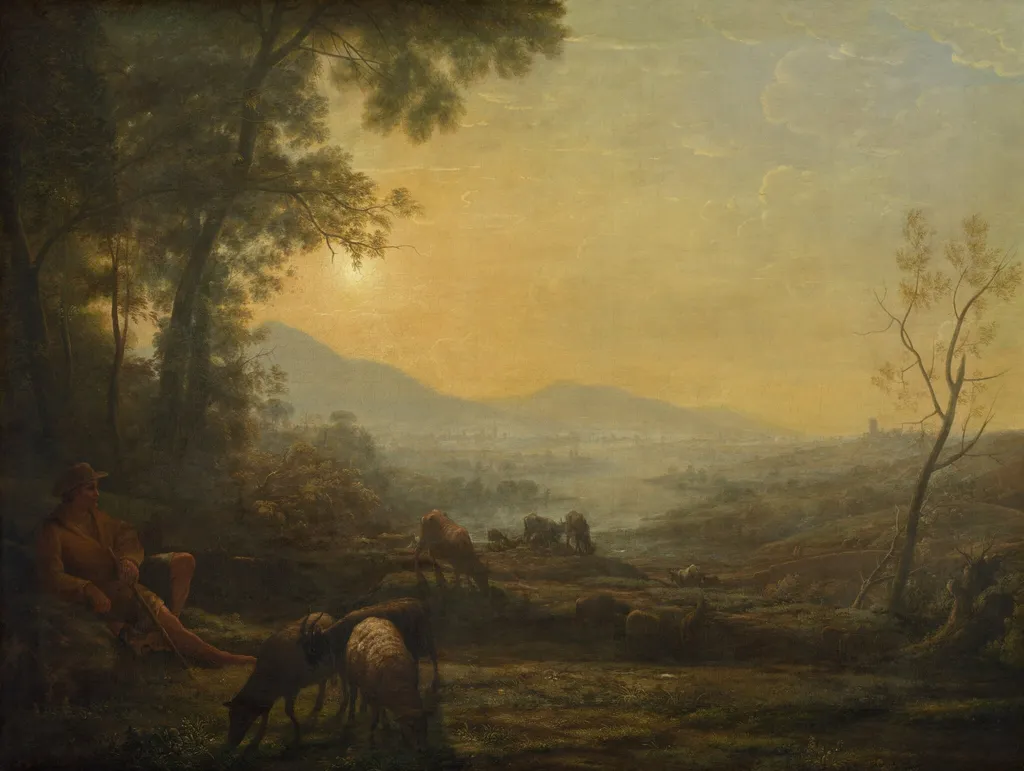
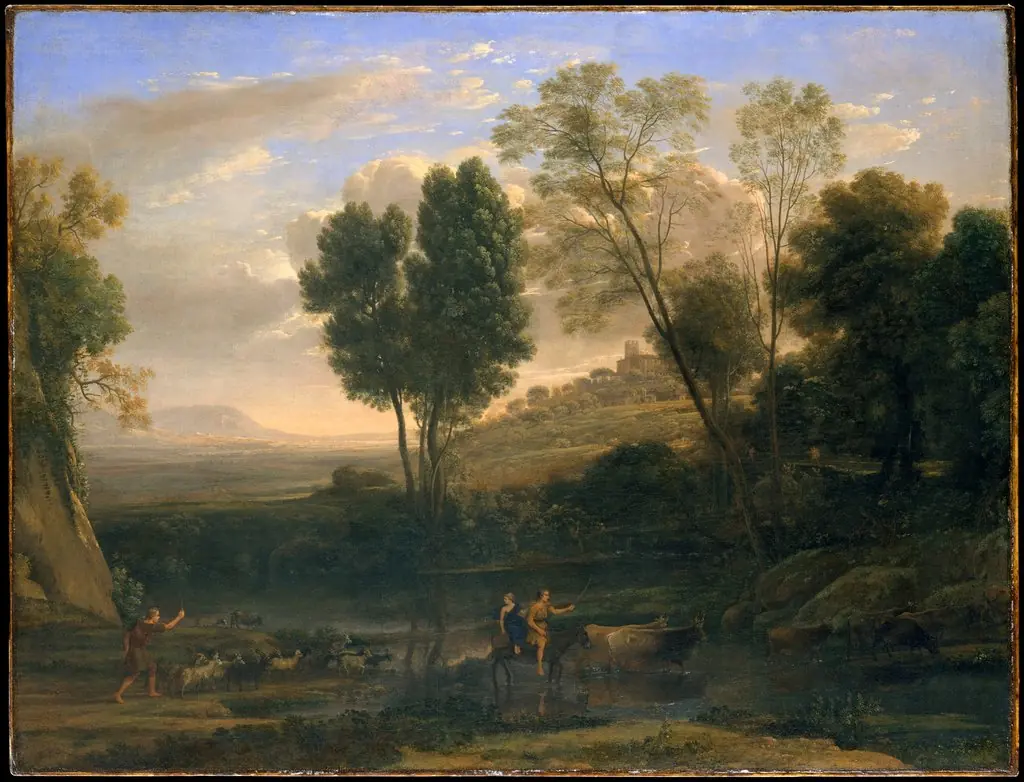
The Herdsman is an oil painting by the Barbizon school artist Follower of Claude Lorrain. It dates from 1650 and is held in the collection of the National Gallery of Art. The canvas presents a tranquil rural landscape at twilight, dominated by a solitary figure seated on a stone beside a tree.
About this work
Technique & Style
The composition's dimensions and material construction have been preserved through its tenure in major collections, including the Samuel H.
Executed in 1650, The Herdsman is an oil painting on canvas. The work measures 120.7 cm in height and 160 cm in width. Classified as a landscape, the piece displays the formal qualities associated with seventeenth-century scenic depiction, though the specific artist remains unknown.
The physical support consists of woven canvas prepared for oil pigments, a standard medium for European paintings of this era. The composition's dimensions and material construction have been preserved through its tenure in major collections, including the Samuel H. Kress Collection and the National Gallery of Art.
History & Provenance
The painting was first recorded in the 1825 sale of Jean‑Joseph‑Pierre‑Augustin Lapeyrière, who was listed as the owner in Paris [1]. After Lapeyrière's death, the work entered the collection of Chevalier Sébastien Érard, whose estate sale in August 1832 transferred it to Doulas William Williams Hope, who held it at Rushton Hall and in Paris [1]. The painting subsequently passed through the ownership of several members of the Rothschild family, including Baron James de Rothschild, his son Gustave Salomon de Rothschild, and his daughter Aline de Rothschild Sassoon, before being sold in 1939 to Wildenstein & Co.
[2]. It was then acquired by the Samuel H. Kress Foundation in 1945 and gifted to the National Gallery of Art in 1946 [3][4].
The Herdsman is held by the National Gallery of Art in Washington, D.C., where it entered the collection through a 1946 gift from the Samuel H. Kress Foundation following its 1945 acquisition. The work has a documented exhibition history tied to its provenance, including a 1939 sale recorded by Wildenstein & Co. and subsequent transfer to the Kress Foundation. Its physical dimensions are 120.7 cm in height and 160 cm in width, documented in the National Gallery of Art’s catalogue.
Legacy
The Herdsman's legacy is defined by its inclusion in major private collections and its role in shaping European art markets. After originating in the estate of Augustin de Lapeyrière, the work passed through the collections of the Rothschild family before entering the Samuel H. Kress Collection in 1945. Its subsequent donation to the National Gallery of Art cemented its presence in a public institution, where it remains accessible to contemporary audiences.
The painting's provenance reflects broader patterns of 19th-century art commerce, particularly the transnational movement of works among aristocratic patrons and dealers like Wildenstein & Co. This trajectory underscores its significance as a representative example of 17th-century French landscape painting within institutional narratives.
Overview
The canvas presents a tranquil rural landscape at twilight, dominated by a solitary figure seated on a stone beside a tree. He observes a herd of cattle grazing in a low-lying field, while a small settlement clings to a hill in the background, beyond which distant mountains dissolve into a warm, golden sky.
Subject & Meaning
The composition centers on the lone herdsman, whose still posture suggests contemplation or guardianship over the grazing animals. The juxtaposition of human presence, domesticated livestock, and a distant village evokes themes of solitude, the rhythm of agrarian life, and the quiet relationship between people and the land at day’s end.
Context
Executed in oil on canvas, the work reflects a 19th‑century interest in pastoral subjects and the romanticization of countryside life. Its serene atmosphere aligns with contemporary trends that favored idealized rural vistas, offering viewers a contemplative escape from urban modernity.
Artist & collection
Artist

 Sunrise
 Landscape with the Flight into Egypt
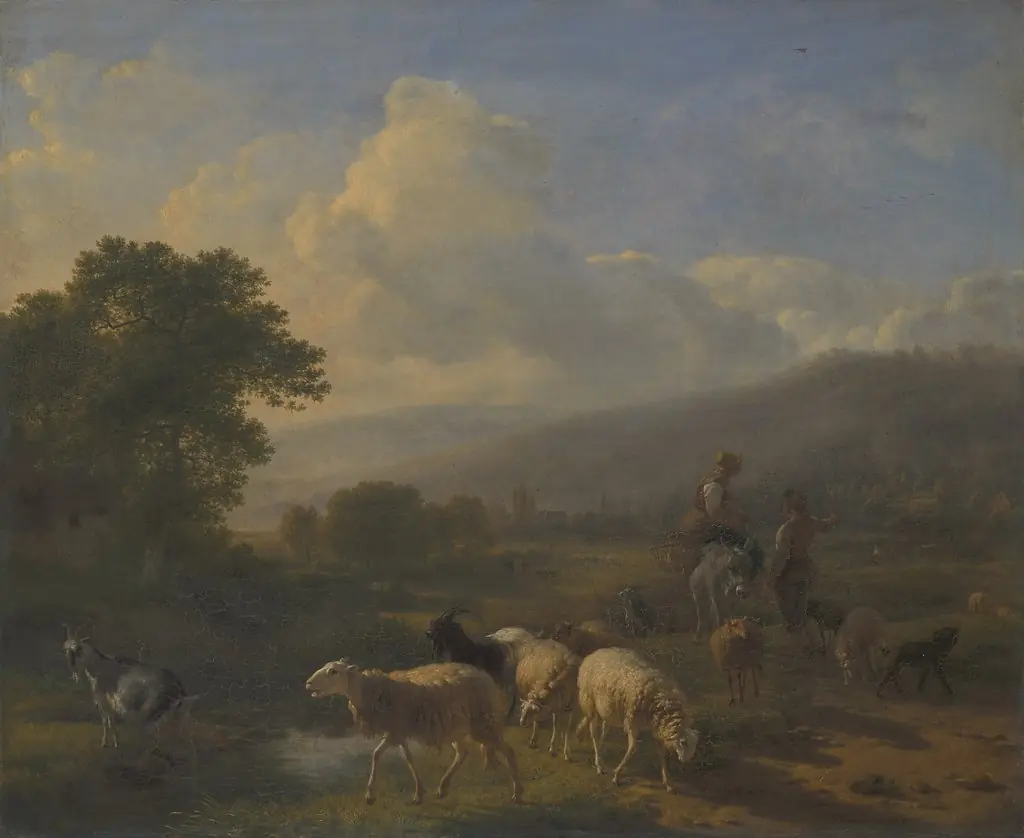 Shepherds with Sheep in a Mountainous Landscape
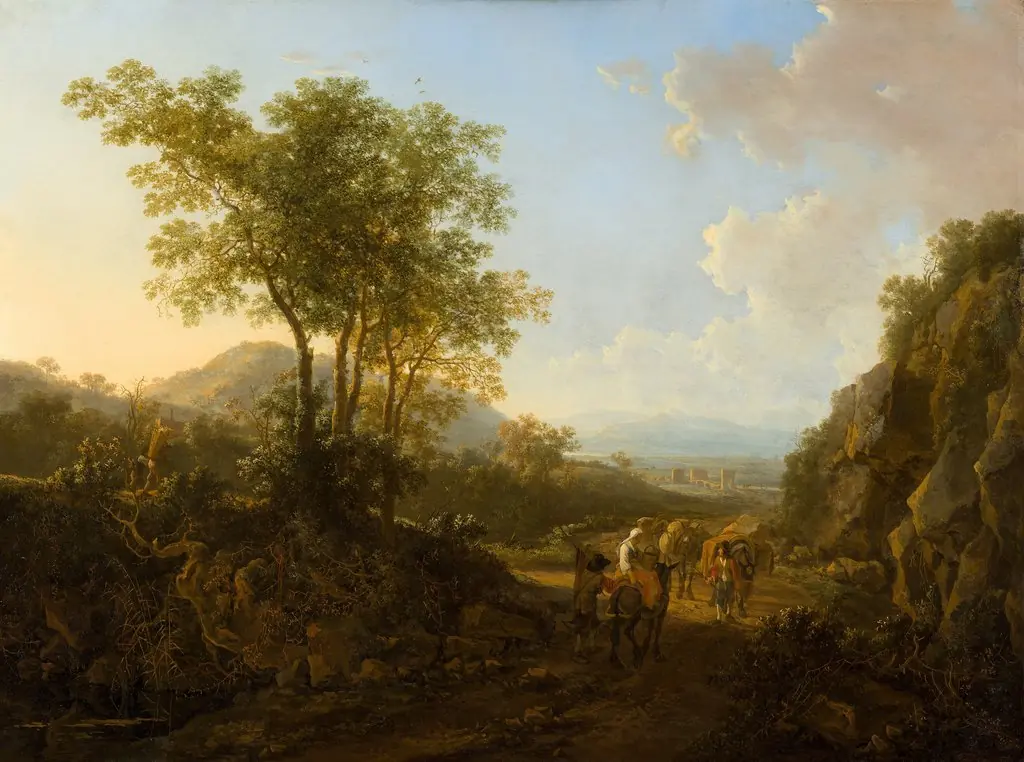 Italian landscape
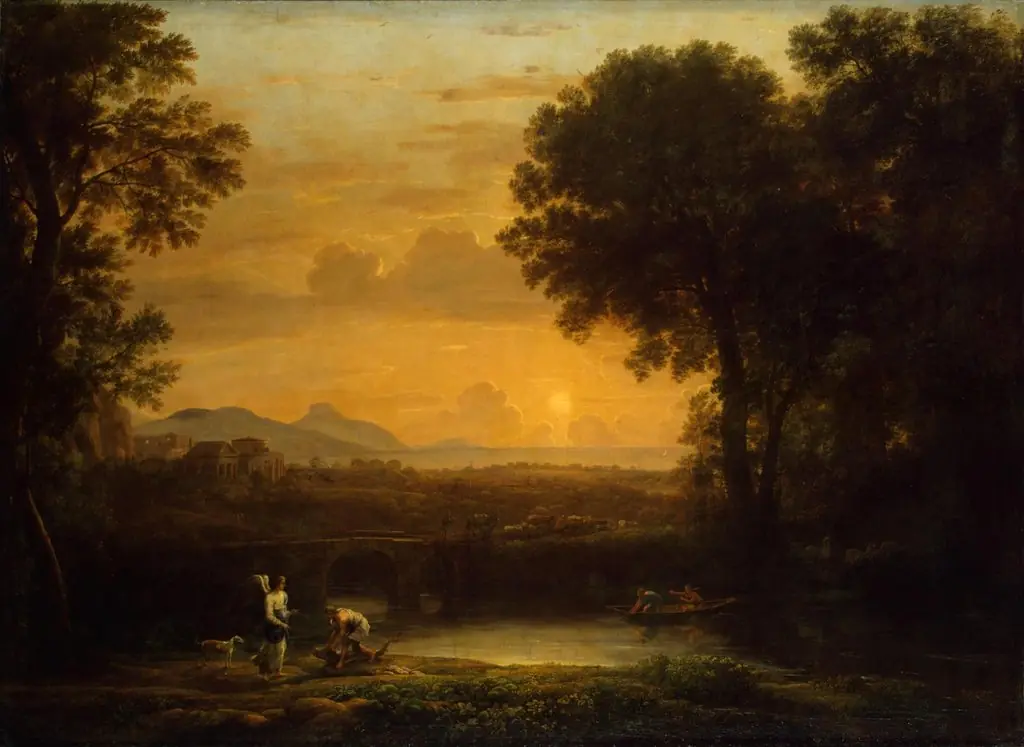 Landscape with Tobias and the Angel (Evening)
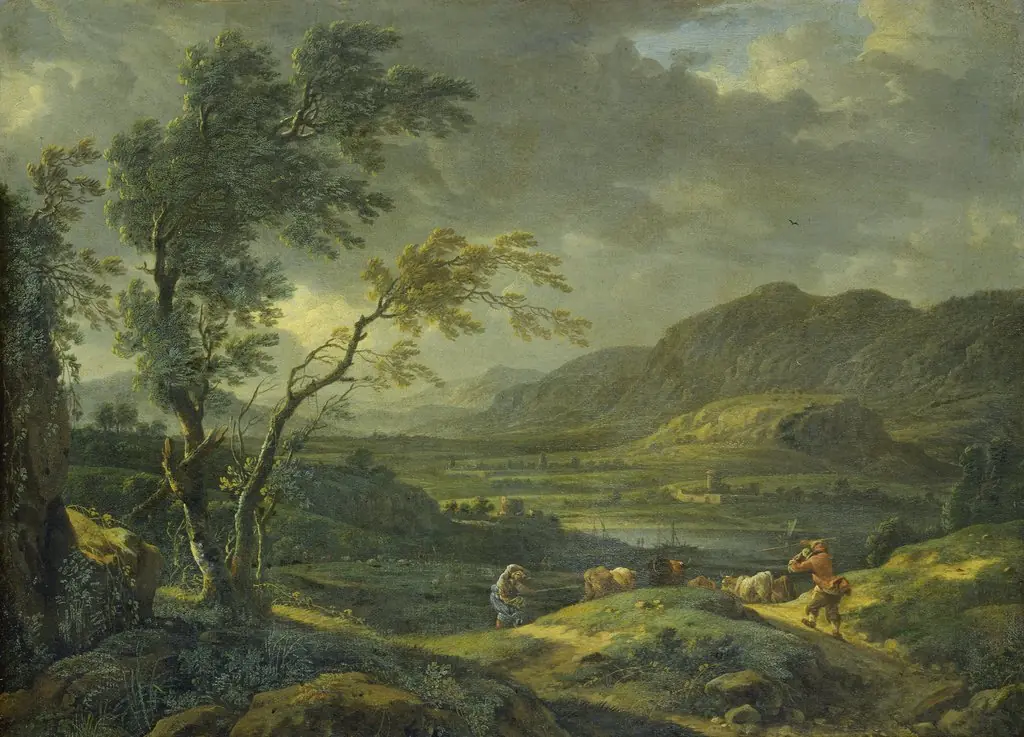 Landscape after a Thunderstorm
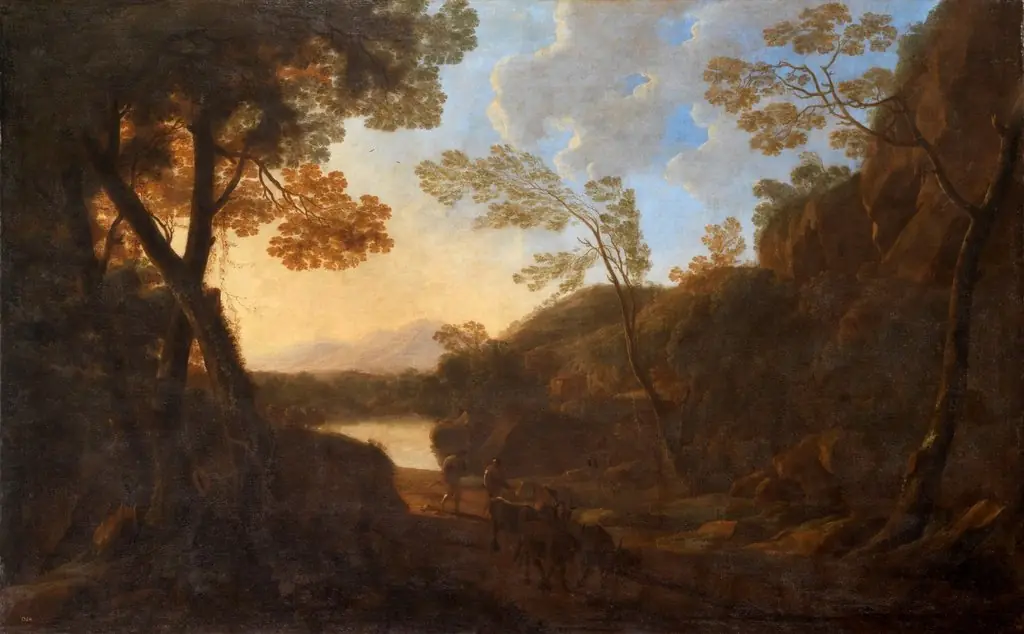 Mountain Pass
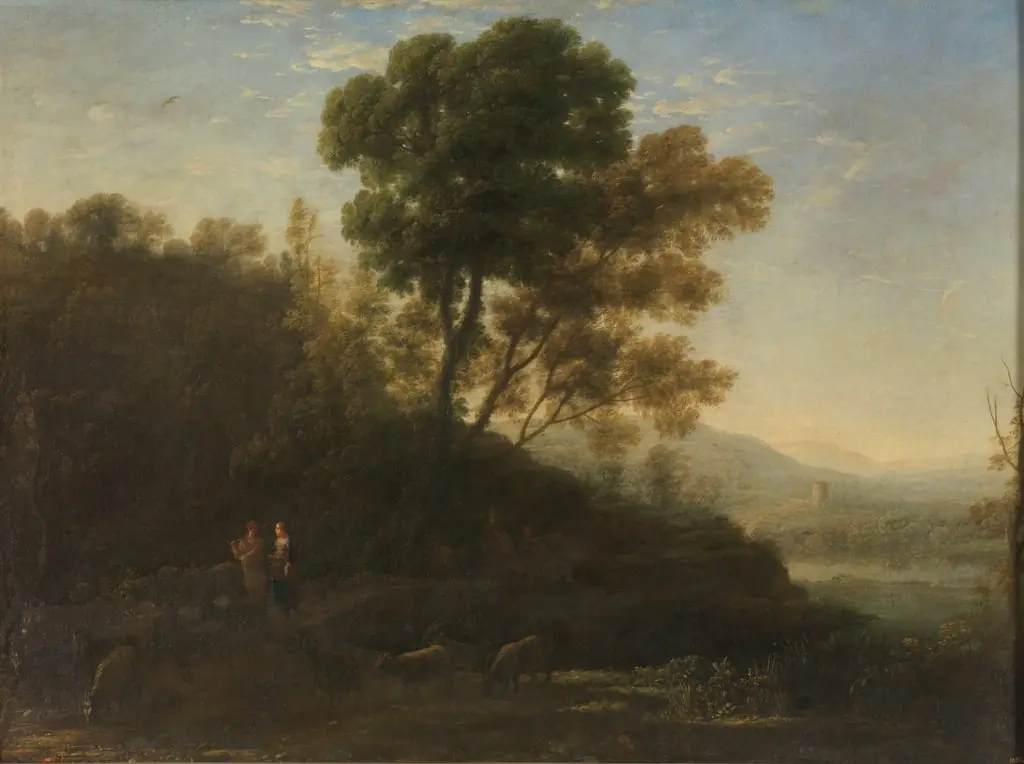 Setting out with the Herd
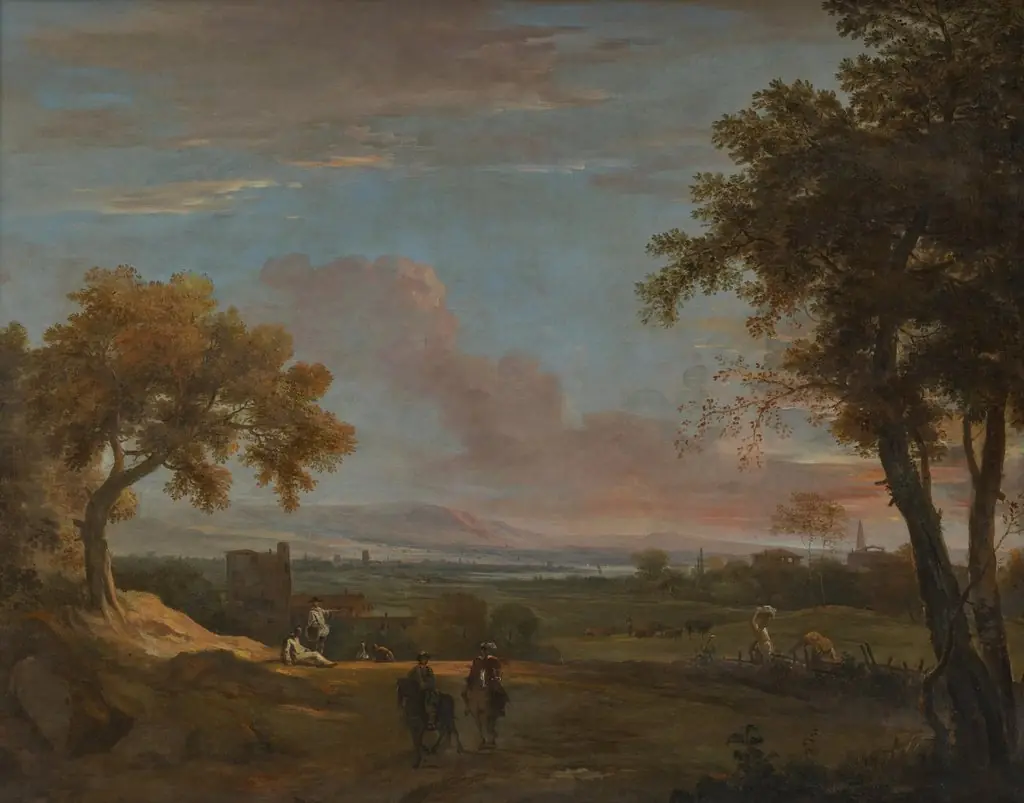 Südliche Landschaft im Abendlicht
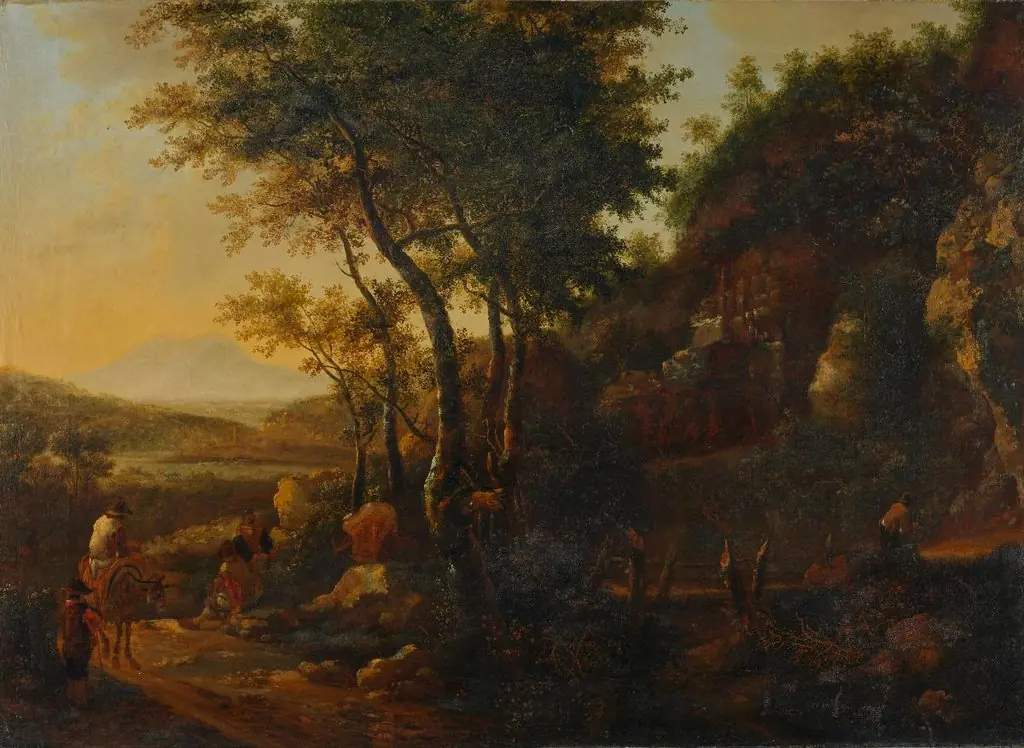 Komponierte Landschaft mit Bauern und Esel
 Sunrise
- Landscape with herdsman and cattle