Artwork
Bridge over a Pond of Water Lilies
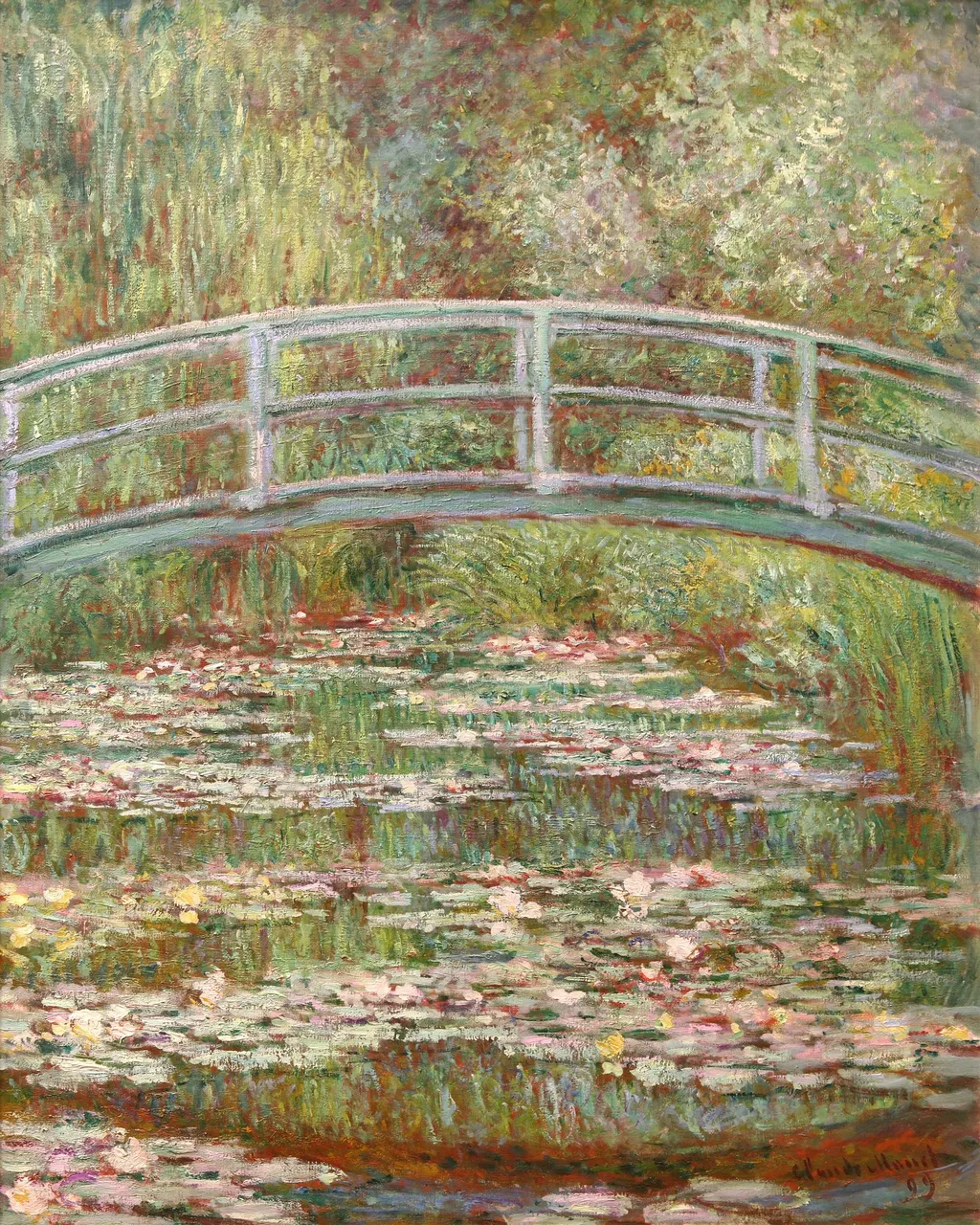
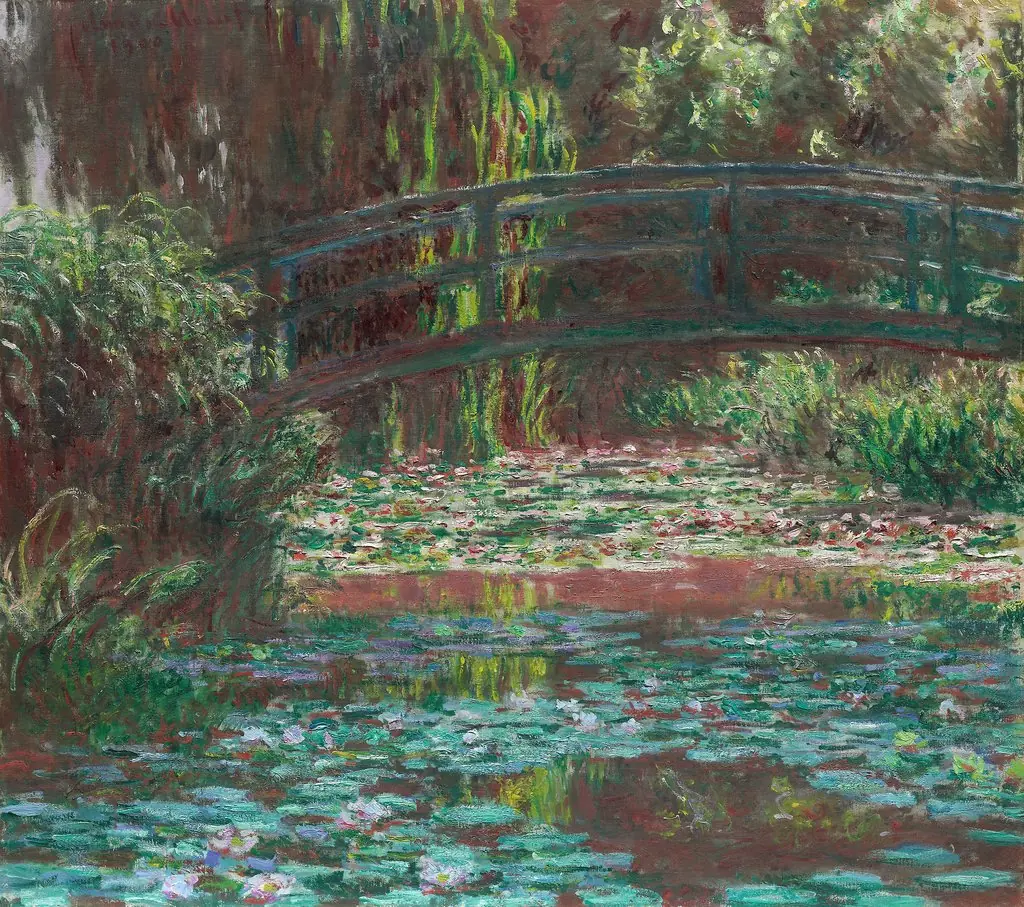
Bridge over a Pond of Water Lilies is an oil painting by the Impressionist artist Claude Monet. It dates from 1900 and is held in the collection of the Metropolitan Museum of Art.
About this work
Subject & Meaning
The scene lacks narrative drama; instead it conveys an impression of tranquil observation, emphasizing the fleeting effects of light and atmosphere.
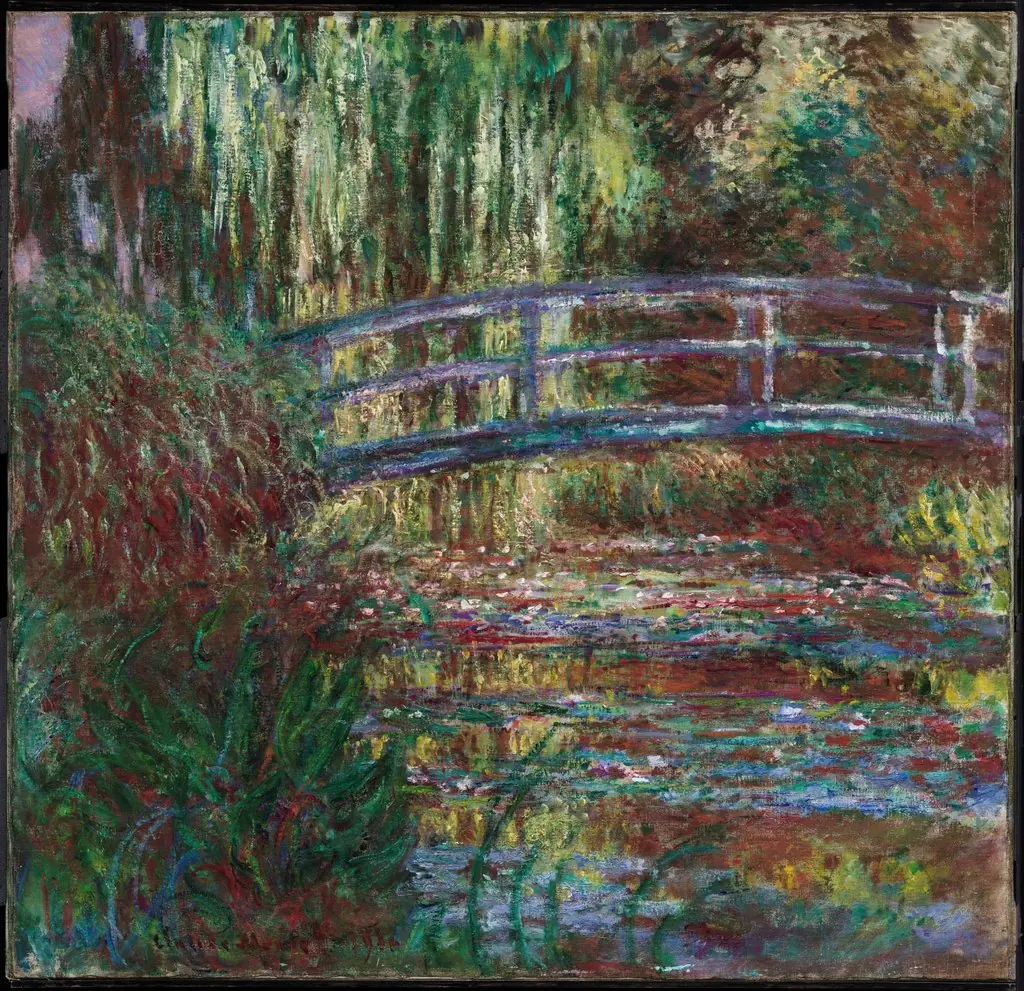
The painting shows a modest wooden footbridge arching over a shallow ornamental pond filled with floating water lilies. Monet renders the bridge as a simple structural element that frames the surrounding foliage, while the lilies, both in bloom and bud, occupy the surface and reflect the sky, creating a seamless blend of architecture and nature. The scene lacks narrative drama; instead it conveys an impression of tranquil observation, emphasizing the fleeting effects of light and atmosphere.
By isolating this private garden view, the work suggests a contemplative space where natural forms dissolve into color, inviting viewers to experience a quiet, almost meditative encounter with the landscape.
Technique & Style
The work is an oil painting executed on canvas, measuring roughly 93 × 74 cm and dated 1900. Monet applied oil paint with loose, rapid brushstrokes that create a shimmering surface and convey the reflective quality of water. The composition centers a Japanese-style bridge arching over a pond populated with water lilies, a motif he explored in his series of garden scenes.
Layered pigment and subtle tonal shifts give the picture a luminous, atmospheric effect typical of Impressionist handling. The painting remains on view at the Metropolitan Museum of Art. Formal elements include balanced placement of architectural and natural motifs, vibrant color modulation, and a focus on light-driven surface texture.
History & Provenance
Bridge over a Pond of Water Lilies is an oil-on-canvas landscape by Claude Monet dated 1900. The work was previously owned by Louisine Havemeyer, the American art collector who assembled one of the most significant private holdings of Impressionist works in the United States, before entering the Metropolitan Museum of Art, where it is currently held. The canvas measures 92.7 by 73.7 centimeters and depicts the Japanese-style footbridge and water-lily pond at Monet's Giverny estate, a subject he returned to repeatedly. No commission details, intermediate ownership transfers, or exhibition history are documented in the available sources.
Overview
Bridge over a Pond of Water Lilies, painted by Claude Monet in 1900, is a seminal work from his late Giverny series focusing on the water garden he cultivated in Normandy. The composition centers on a white Japanese-style bridge arching over a pond densely populated with water lilies. Monet employs a vibrant, non-naturalistic palette where the water reflects the surrounding foliage in strokes of green, pink, blue, and violet, creating a shimmering, choppy surface.
The background dissolves into an atmospheric tangle of willow and weeping cherry branches, rendered in loose, rapid brushwork that blurs the distinction between sky, water, and land. Executed in oil paint, the canvas demonstrates Monet's mature Impressionist technique, prioritizing the optical experience of light and color over precise linear definition. This work marks a pivotal moment in the artist's career, signaling his transition toward the large-scale, immersive decorative panels that would culminate in the Orangerie murals.
It encapsulates his lifelong exploration of perception, where the bridge serves not merely as a structural element but as a framing device that invites the viewer into a unified, all-encompassing visual field.
Own this work as a print
Artist & collection

Artist
Oscar-Claude Monet was a French painter and founder of Impressionism who is seen as a key precursor to modernism, especially in his attempts to paint nature as he perceived it.