Artwork
Water Lilies
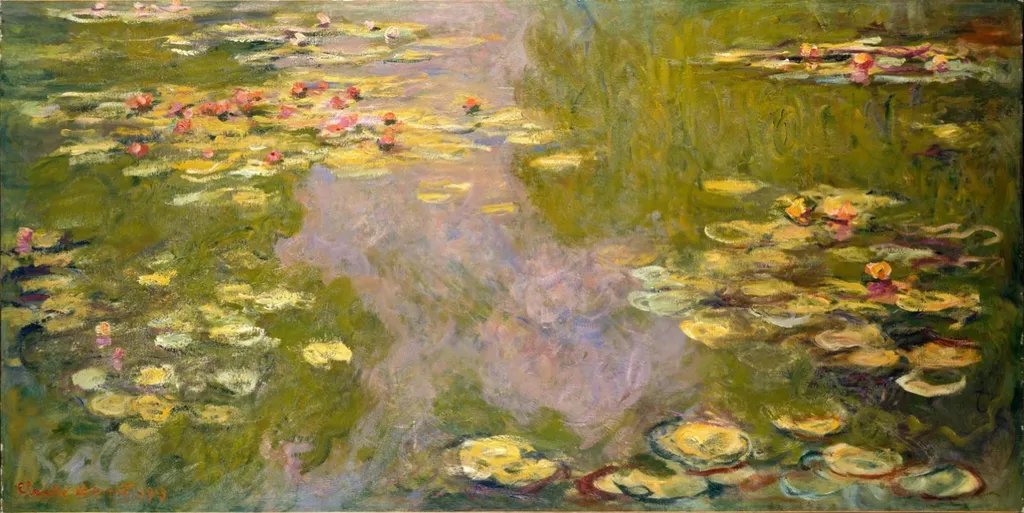
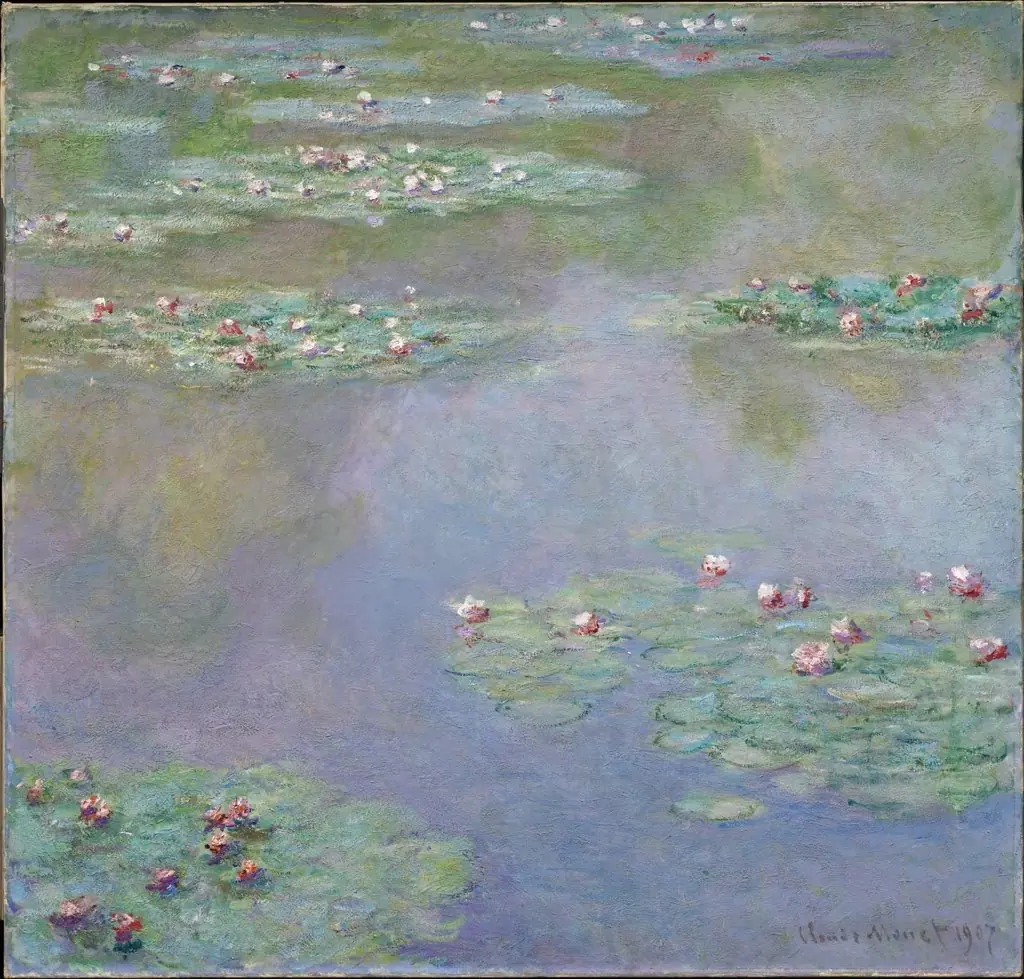
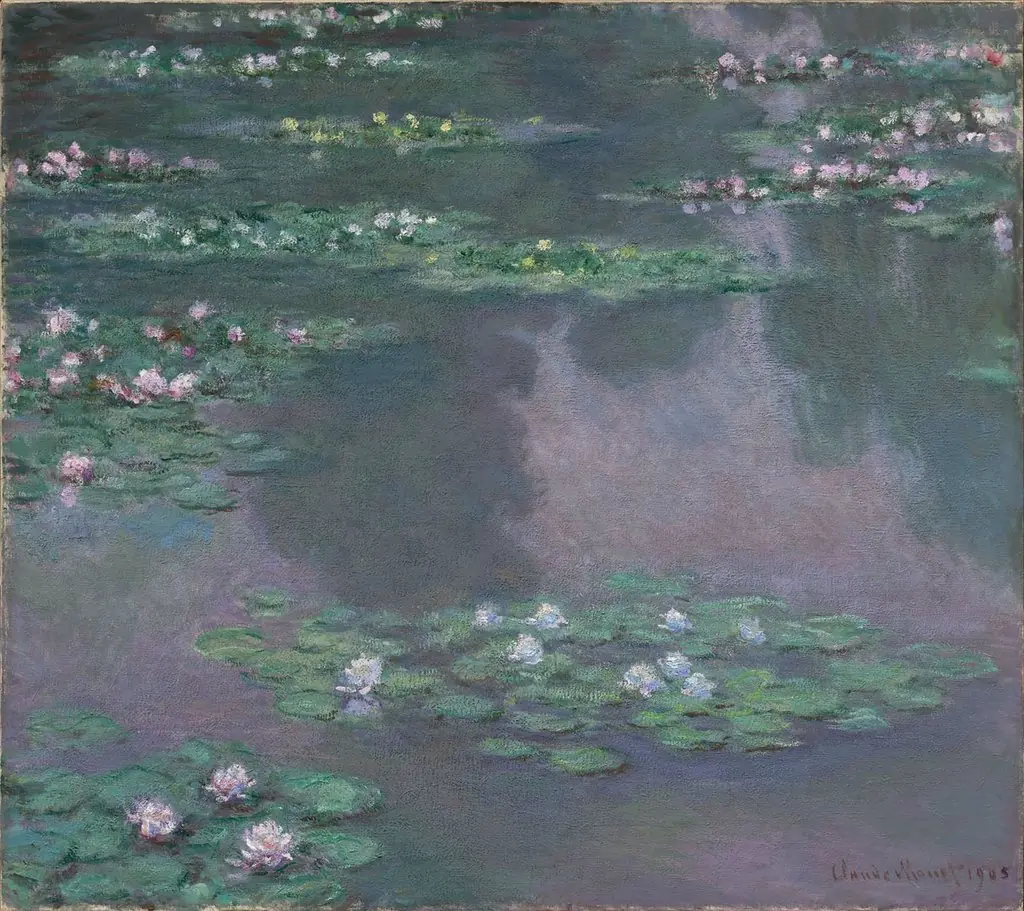
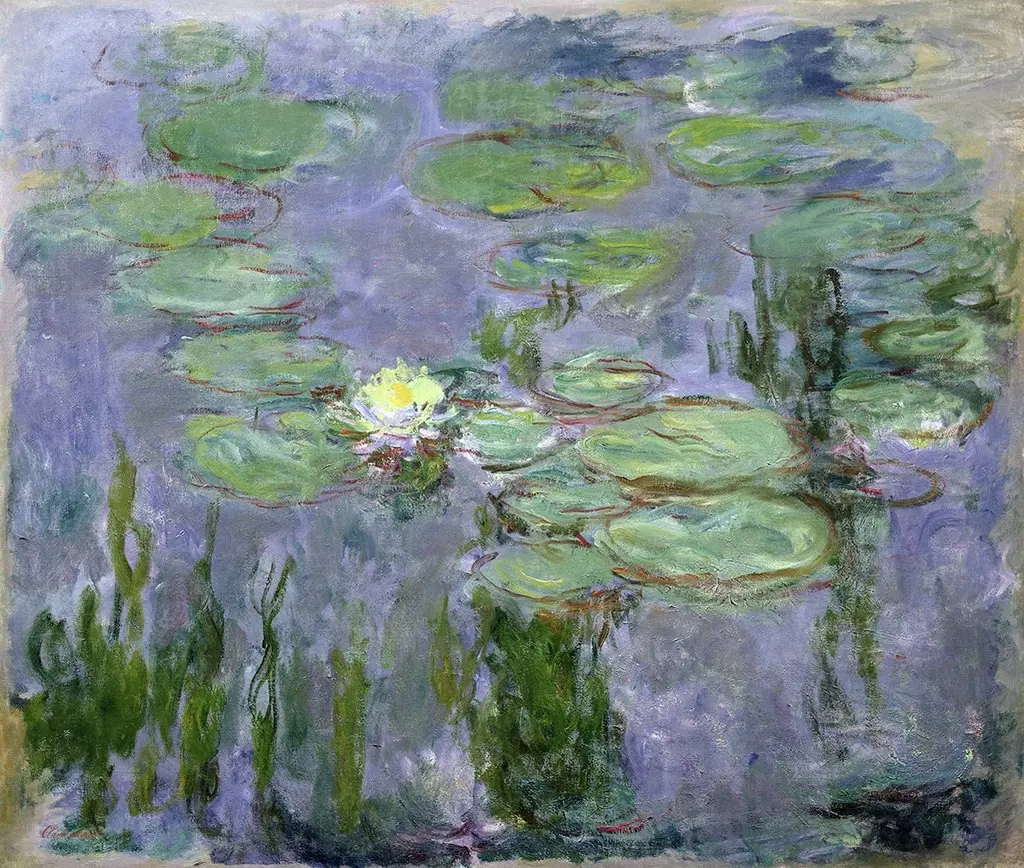
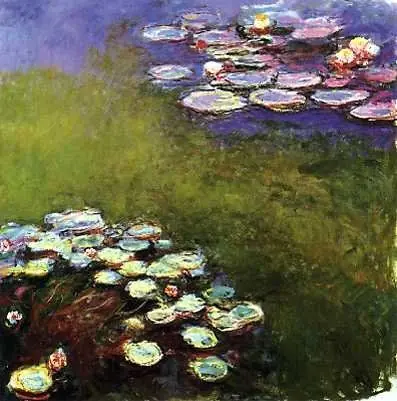
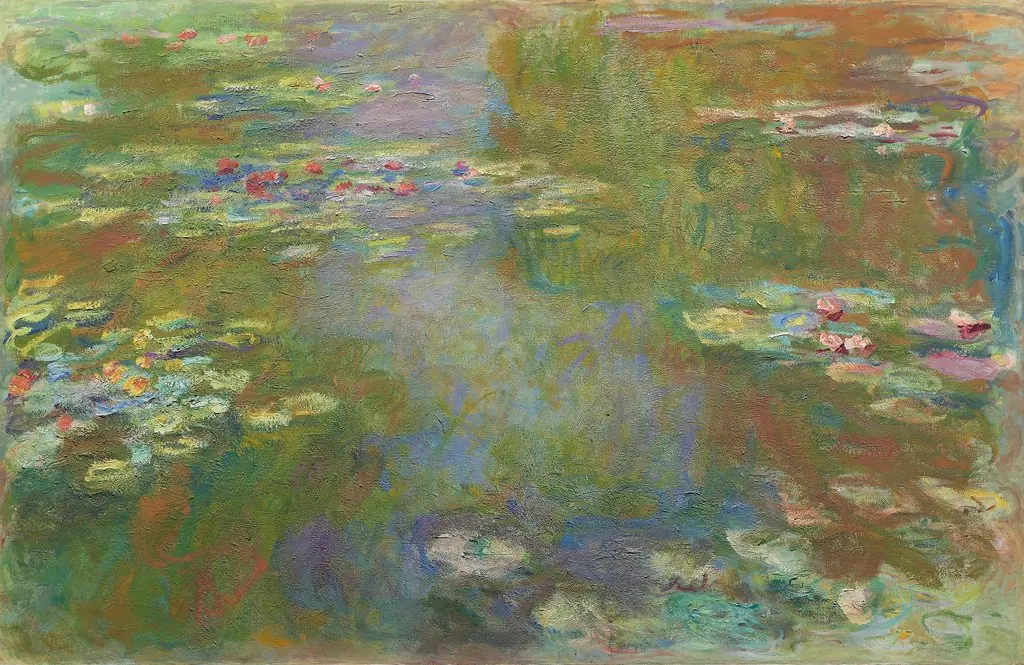
Water Lilies is an oil painting by the Impressionist artist Claude Monet. It dates from 1919 and is held in the collection of the Metropolitan Museum of Art.
About this work
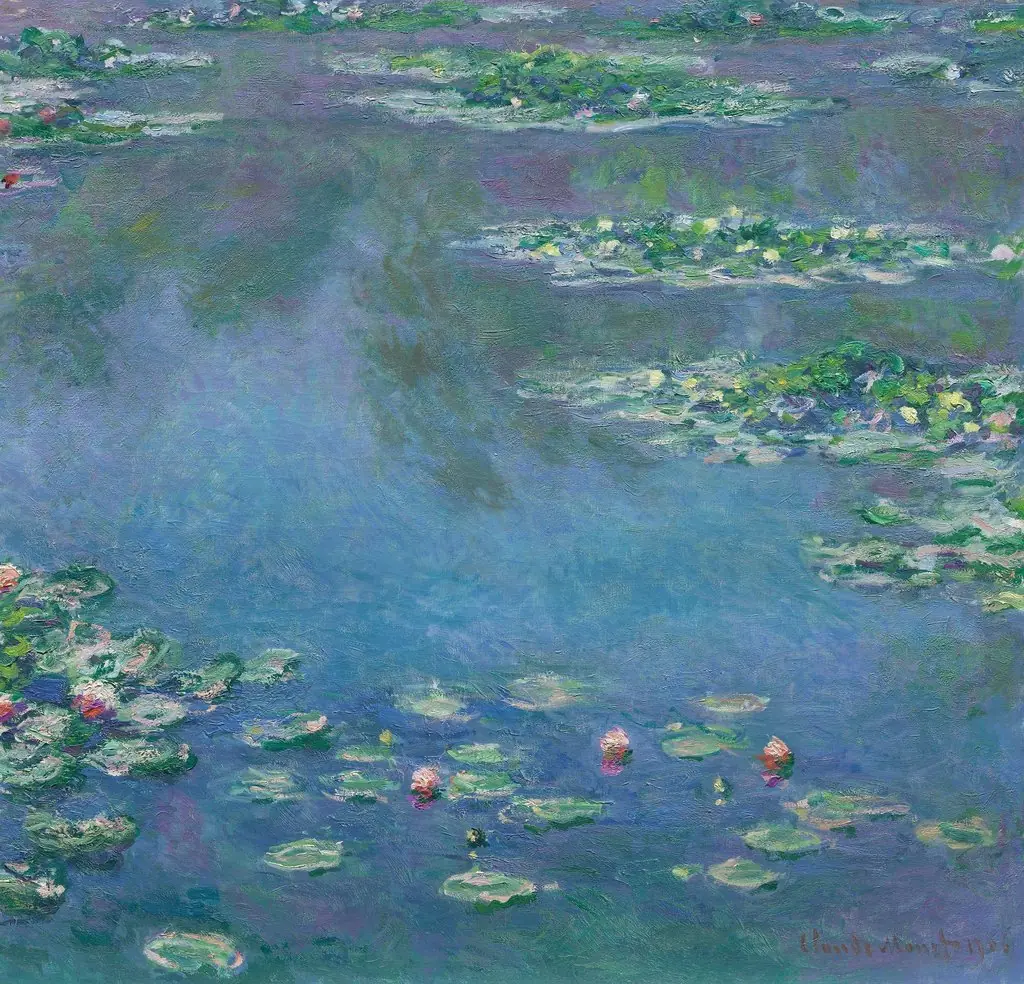
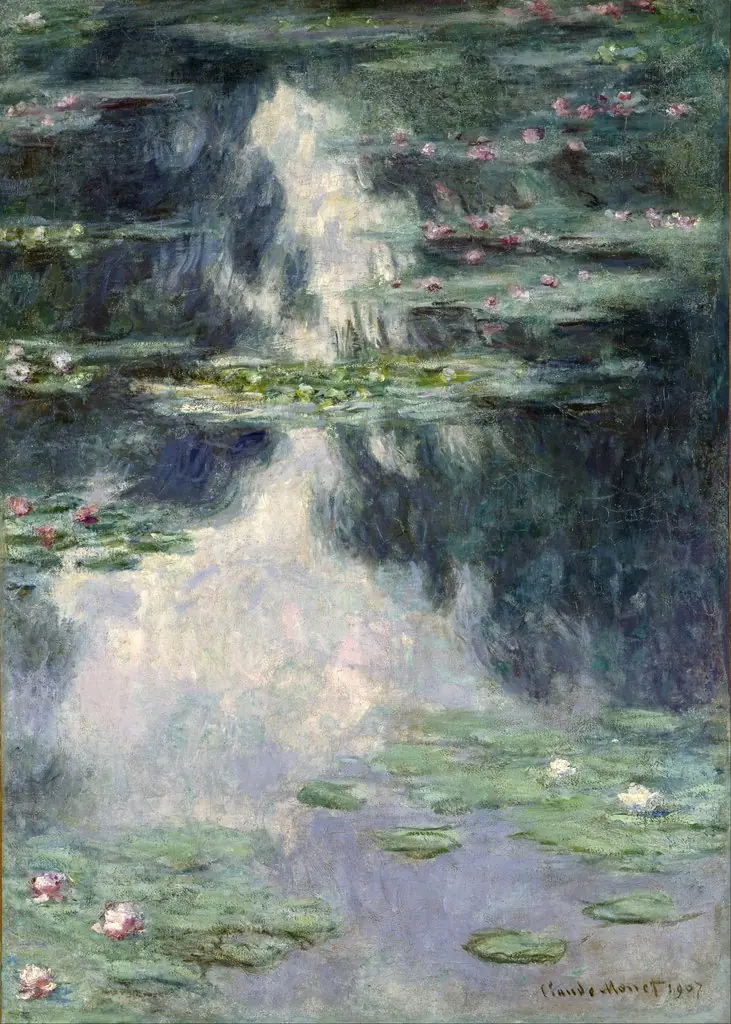
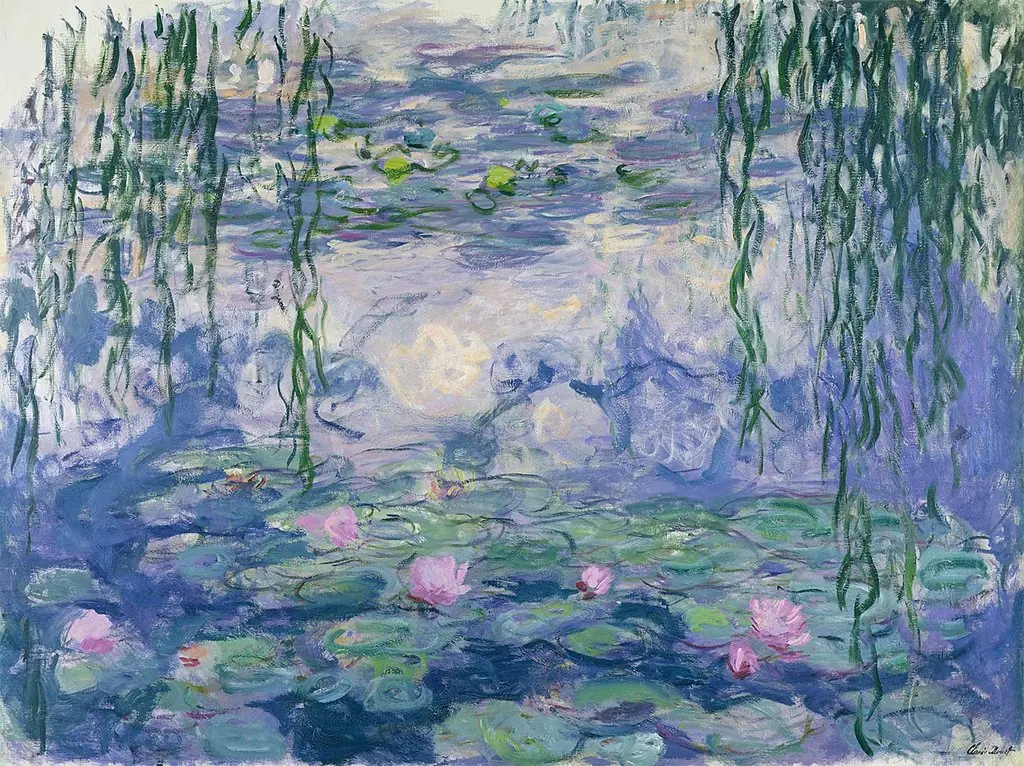
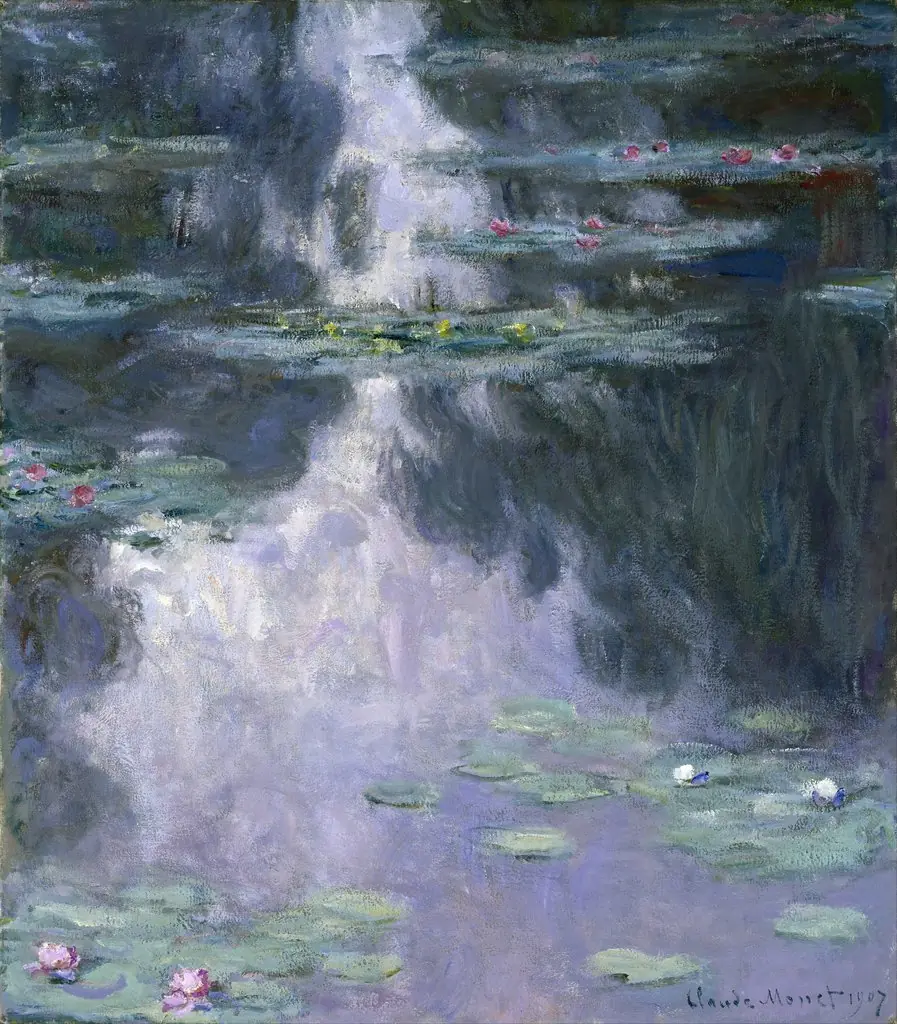
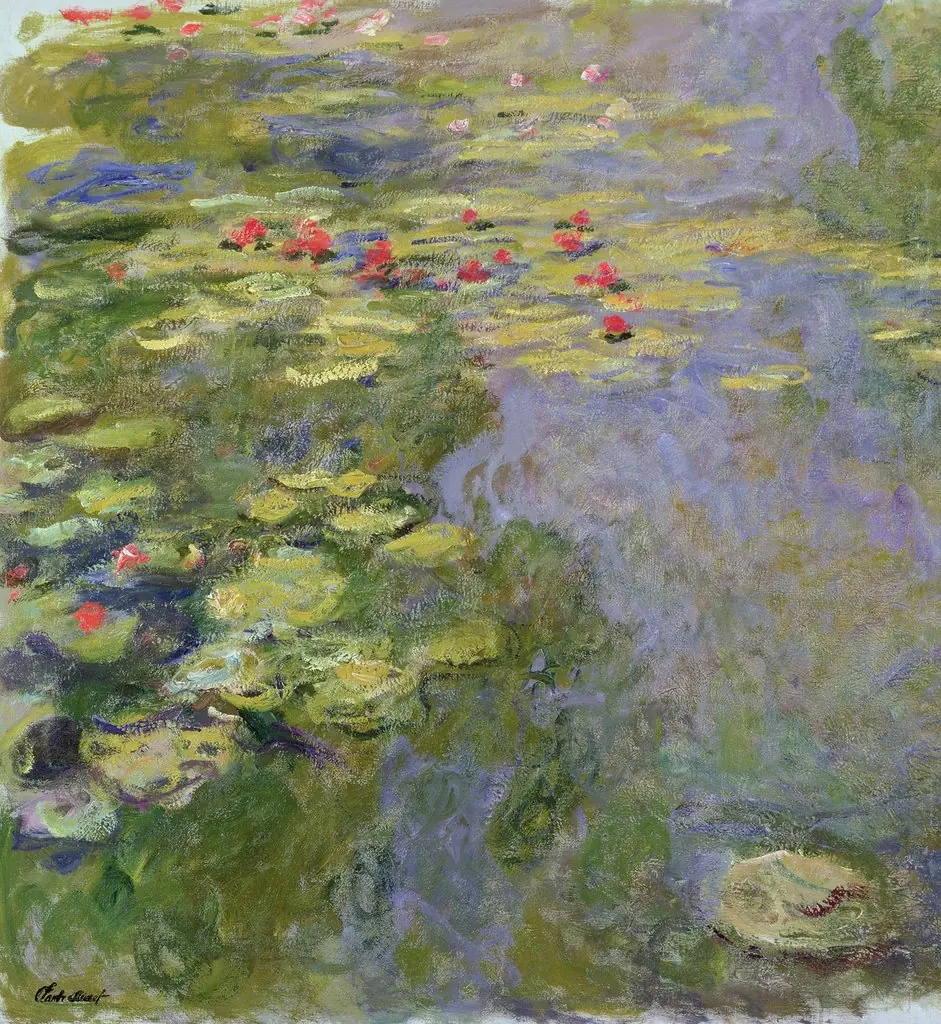
Water Lilies is the left-hand panel of a large pair from Monet's series of the same name. Painted in 1919, near the end of his life, it shows a French pond where light glints on the water and lilies float on the surface. Monet caught the shimmer in his impressionist style.
Subject & Meaning
As part of Monet's extensive series created during his later years, the work captures the transient effects of a sunset on the pond's surface.
The 1919 painting Water Lilies by Claude Monet depicts a specific scene from the artist's artificial pond in Giverny, France. The composition focuses on the surface of the water, featuring water lilies and leaves illuminated by light reflecting off the ripples. As part of Monet's extensive series created during his later years, the work captures the transient effects of a sunset on the pond's surface.
The imagery centers on the natural elements of the garden, including the water lilies and the play of light, rather than human figures or architectural structures, though the setting includes the artist's cultivated landscape. This depiction represents Monet's enduring fascination with his garden environment, emphasizing the atmospheric beauty of the water and its flora during the twilight hours.
Technique & Style
The 1919 Water Lilies is an oil‑on‑canvas painting measuring roughly 101 × 200 cm, created as the left panel of a pair within Monet’s series of pond scenes. Executed in oil paint on a stretched canvas support, the work exemplifies Impressionist technique through loose brushwork that captures the shimmering reflection of sunset light on the water’s surface and the floating water‑lily pads. Monet’s focus on natural motifs such as leaves, lilies, and the artificial pond is evident, while the composition’s expansive format emphasizes atmospheric depth.
The painting is housed in the Metropolitan Museum of Art in New York, having entered the collection through the bequest of Henri‑Edmond Canonne.
History & Provenance
Claude Monet created the 1919 oil painting Water Lilies during a period when he was nearly seventy years old and primarily focused on his garden pond at Giverny. This work serves as the left-hand panel of a large diptych depicting the artist's artificial pond, featuring water lilies and light reflections. The painting is currently held in the collection of the Metropolitan Museum of Art in New York.
Historical records indicate that the work was previously owned by Henri-Edmond Canonne. Monet, a central figure in the Impressionist movement, executed the piece on canvas, measuring 101 by 200 centimeters, capturing the serene landscape of his own property.
The painting is held at the Metropolitan Museum of Art in New York. Its accession number is 61.191. It was formerly in the collection of Henri-Edmond Canonne before entering the museum’s holdings. The work has been on public display at the Metropolitan Museum of Art since its acquisition.
Context
Created in 1919 by Claude Monet, this work stands as a significant component of his extensive Water Lilies series, reflecting the artist's late-career dedication to his Giverny garden pond. Executed during a period when Monet was an elderly figure with nearly seven decades of artistic practice, the painting exemplifies the Impressionist movement's focus on light and natural reflection. As the left panel of a large diptych, it contributes to the broader scholarly understanding of Monet's shift toward immersive, large-scale compositions that anticipate modern abstraction.
The piece, depicting water lilies and light on the water's surface, is currently held by the Metropolitan Museum of Art, cementing its status within the canon of French landscape painting and the artist's wider exploration of his private sanctuary.
Legacy
The 1919 canvas belongs to Monet’s late Water Lilies series, a body of work that defined his final years and reshaped ideas about light and reflection. Its placement in the Metropolitan Museum of Art situates the piece within a public collection that highlights Monet’s enduring reputation as a master of Impressionism. Contemporary accounts note that the painting’s expansive format and emphasis on atmospheric effects contributed to a broader appreciation of the series, influencing subsequent generations of artists who explored abstraction and the sensory qualities of nature.
Overview
This oil painting, titled Water Lilies, was created by Claude Monet in 1919. It forms the left component of a larger diptych within his extensive series dedicated to the aquatic flora of his garden pond. The work exemplifies Monet's sustained engagement with this subject matter during his later career. It is currently exhibited at The Metropolitan Museum of Art in New York.
Artist & collection
Artist
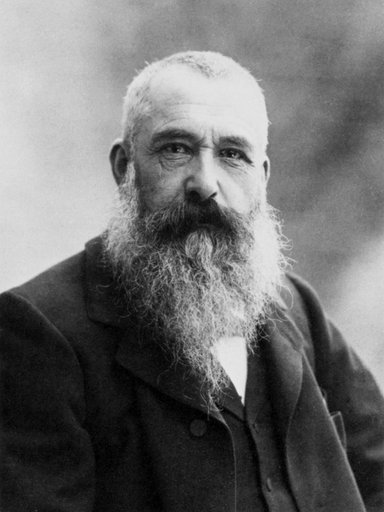
Oscar-Claude Monet was a French painter and founder of Impressionism who is seen as a key precursor to modernism, especially in his attempts to paint nature as he perceived it.