Artwork
Camille Monet (1847–1879) in the Garden at Argenteuil
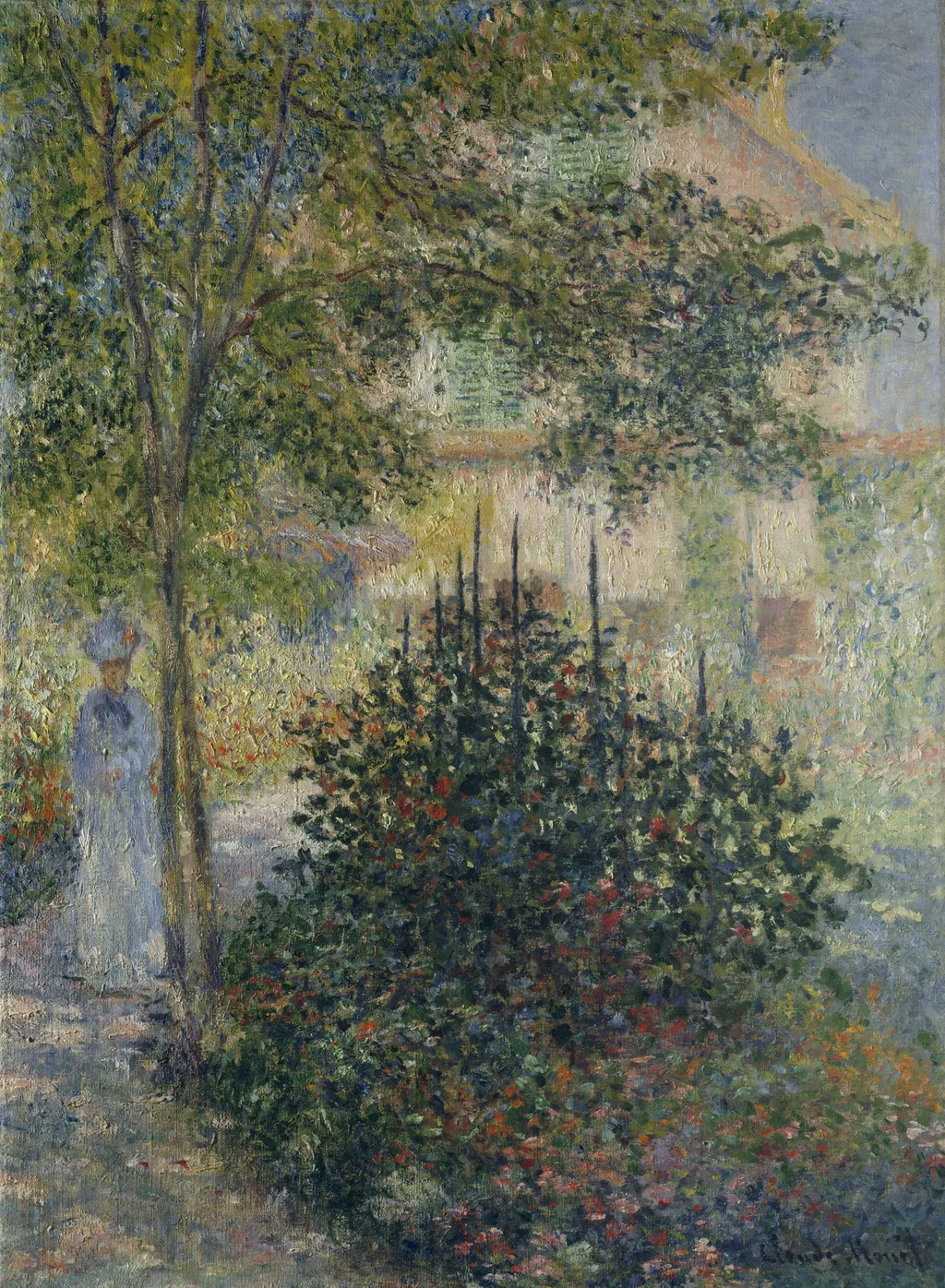
Camille Monet (1847–1879) in the Garden at Argenteuil is an oil painting by the Impressionist artist Claude Monet. It dates from 1888 and is held in the collection of the Metropolitan Museum of Art.
About this work
Subject & Meaning
The work captures a specific moment of Camille in this private space, emphasizing her presence amidst the natural and architectural features of the property.
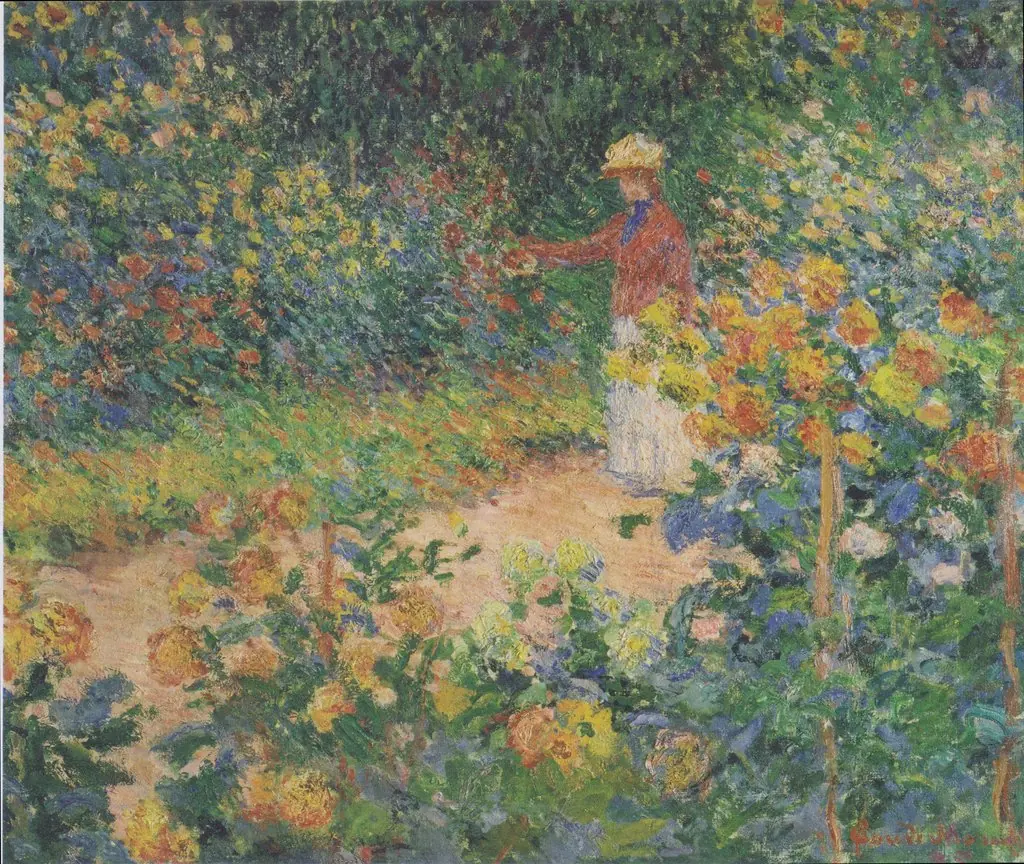
The painting depicts Camille Doncieux, the artist's wife, situated within a garden setting at Argenteuil. She is shown as a woman standing among trees and near a house, elements that establish the scene as a domestic, outdoor environment. The work captures a specific moment of Camille in this private space, emphasizing her presence amidst the natural and architectural features of the property.
While the composition focuses on the figure and her immediate surroundings, the inclusion of the house and garden suggests a representation of their family life in Argenteuil during the mid-1870s. The subject matter centers on the intimate portrayal of Camille within the context of her home.
History & Provenance
The painting is held by the Metropolitan Museum of Art, New York. It depicts Monet's first wife, Camille, in the garden of the family's home at Argenteuil, where the artist and his family lived during the mid-1870s. No detailed chain of ownership prior to the work's acquisition by the museum is documented in the available sources.
Overview
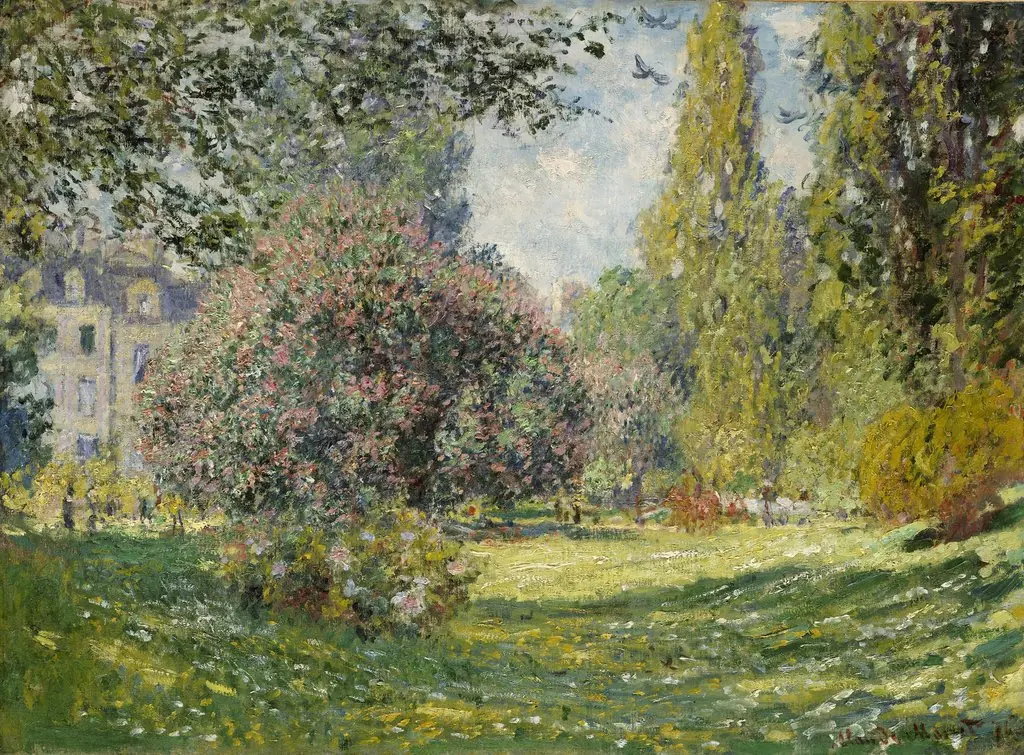
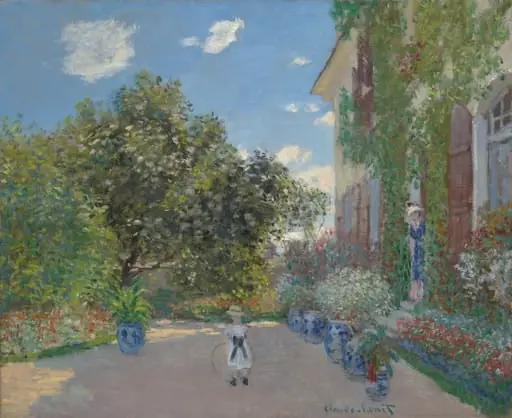
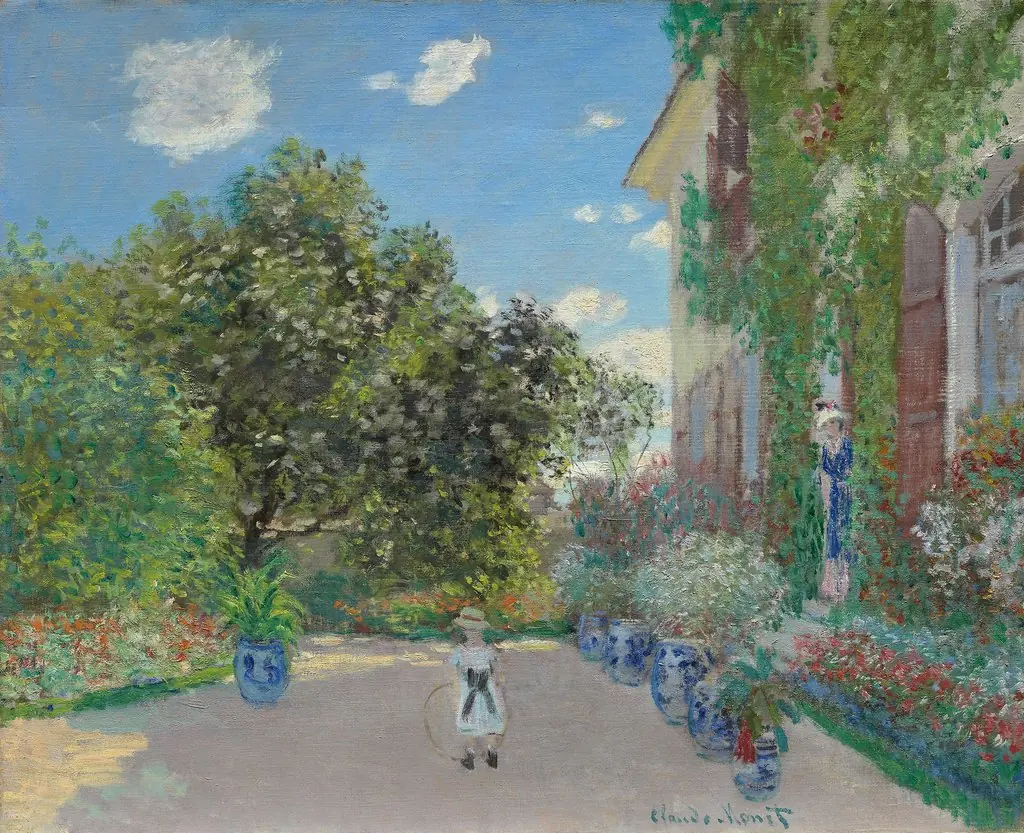
This oil painting, titled Camille Monet (1847–1879) in the Garden at Argenteuil, depicts a woman amidst a vibrant, sun-dappled garden. The artwork captures a serene moment, presenting a figure partially obscured by foliage, integrated into the natural environment. The composition emphasizes the interplay of light and color within a domestic garden setting, characteristic of the artist's focus on everyday scenes.
Technique & Style
Executed in oil paint, the artwork employs a distinctive application of pigment. The artist utilized thick, visible brushstrokes, particularly evident in the background's blurred greens and yellows, to convey the texture of foliage and the effect of sunlight filtering through branches. This technique, known as impasto, creates a tangible surface quality, allowing the viewer to perceive the physical presence of the paint itself.
Own this work as a print
Artist & collection
Artist
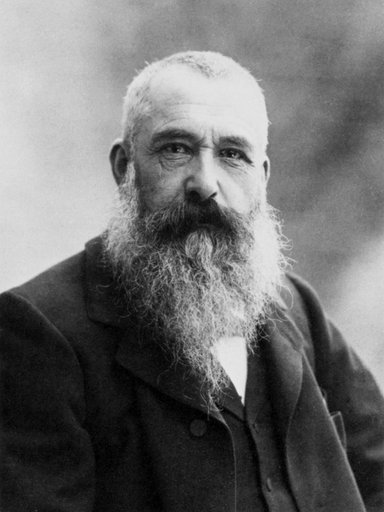
Oscar-Claude Monet was a French painter and founder of Impressionism who is seen as a key precursor to modernism, especially in his attempts to paint nature as he perceived it.