Artwork
Les arceaux de roses, Giverny
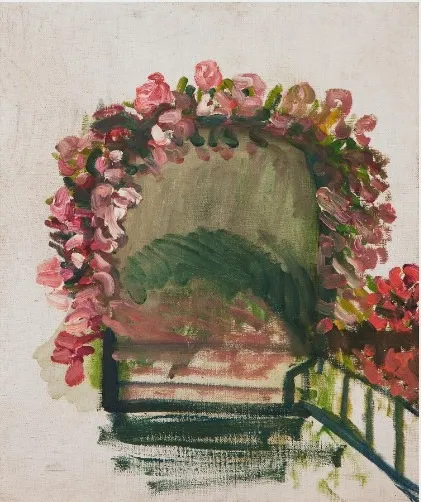
Les arceaux de roses, Giverny is an oil painting by the Impressionist artist Claude Monet. It dates from 1912 and is held in the collection of the Musée Marmottan Monet.
About this work
Overview
The composition centers on a stairway leading to a blooming structure, rendered with the artist’s characteristic attention to light and seasonal change.
Painted in 1912, Les arceaux de roses, Giverny is an oil work by Claude Monet that captures a garden archway at his property in Giverny. The composition centers on a stairway leading to a blooming structure, rendered with the artist’s characteristic attention to light and seasonal change. It belongs to a series of late works focused on the floral enclosures surrounding his home, reflecting his deepening engagement with natural forms in his final years.
Subject & Meaning
The painting depicts a stone staircase ascending toward an arbor thick with climbing roses and foliage. Rather than portraying a static scene, Monet emphasizes the organic proliferation of plants overtaking architectural elements. The structure appears less as a functional pathway and more as a vessel for nature’s encroachment, suggesting themes of growth, impermanence, and the quiet dominance of the natural world over human design.
Technique & Style
Monet applied paint in loose, layered brushstrokes, particularly in the floral canopy, where hues of pink and green blend dynamically to suggest movement and texture. The staircase and railing are rendered with quieter tones and firmer edges, creating spatial depth. The background’s pale beige washes recede softly, allowing the vibrant arch to dominate the visual field. This contrast between energetic florals and restrained architecture defines the painting’s visual rhythm.
History & Provenance
Created during Monet’s later years at Giverny, the painting remained in his personal collection until his death in 1926. It was later inherited by his son Michel and eventually entered the Musée Marmottan Monet’s holdings, where it is now preserved. The work is part of a broader group of late garden scenes that Monet painted with increasing abstraction, reflecting his evolving perception of nature through deteriorating eyesight.
Context
This painting emerged during a period when Monet was intensely focused on his water gardens and floral arches, subjects he returned to repeatedly after 1900. His garden at Giverny had become both sanctuary and studio, and these works represent a shift from landscape to immersive, almost abstract botanical studies. The arched structures, often framed by roses, served as natural frames through which he explored color and light without traditional perspective.
Legacy
Les arceaux de roses, Giverny exemplifies Monet’s late style, where form dissolves into pigment and perception. Though less widely exhibited than his water lilies, these garden arches influenced later artists interested in the emotional potential of color and texture over narrative. The work stands as a quiet testament to his lifelong pursuit of capturing fleeting natural phenomena, even as his vision changed.
Artist & collection
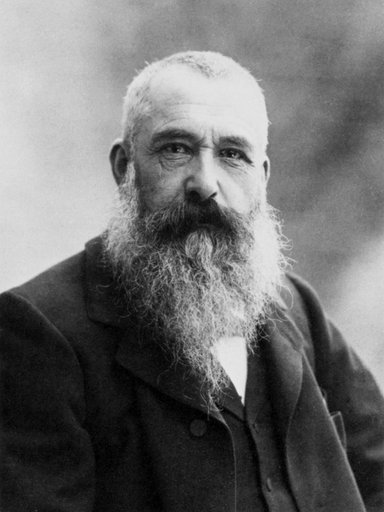
Artist
Oscar-Claude Monet was a French painter and founder of Impressionism who is seen as a key precursor to modernism, especially in his attempts to paint nature as he perceived it.