Artwork
Sandvika, Norway
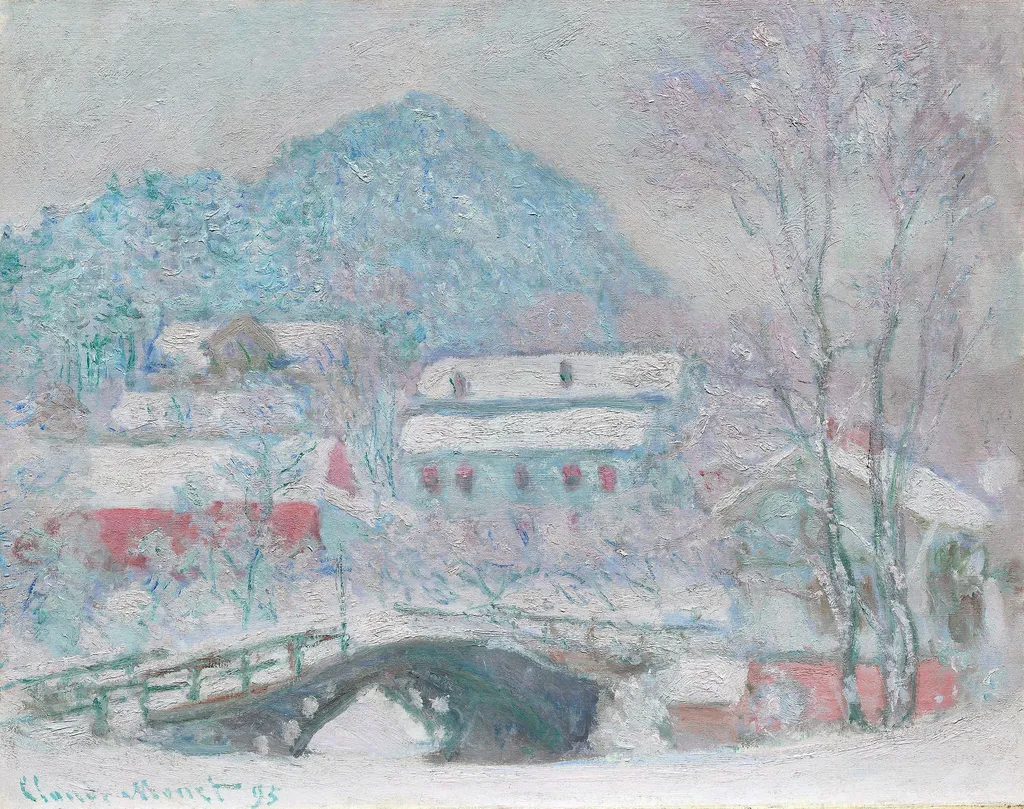
Sandvika, Norway is an oil painting by the Impressionist artist Claude Monet. It dates from 1898 and is held in the collection of the Art Institute of Chicago.
About this work
Subject & Meaning
As a landscape work, the piece functions as a direct representation of this specific winter scene rather than employing complex allegorical symbolism.
Claude Monet's painting depicts the Norwegian locality of Sandvika covered in snow. The composition is structured with the Løkke bridge situated in the foreground, leading the eye toward buildings in the middle ground and the Kolsås hill rising in the distance.
As a landscape work, the piece functions as a direct representation of this specific winter scene rather than employing complex allegorical symbolism. The title itself, sometimes referred to as Village de Sandviken sous la neige, explicitly defines the subject matter as a geographical record of the town under wintry conditions.
Technique & Style
The work is an oil painting on canvas, measuring 73.4 cm by 92.5 cm, depicting the Norwegian village of Sandvika under snow with the Løkke bridge in the foreground, buildings in the middle ground, and Kolsås in the distance. Monet executed it in 1895, initially offering it for sale at the Atelier Alfred Sisley exhibition in May 1899 at the Galerie Georges Petit, and it later entered the collection of the Art Institute of Chicago through a donation by Bruce Borland in 1961.
History & Provenance
The work titled Sandvika, Norway was painted by Claude Monet in 1895 as an oil on canvas landscape depicting snow-covered terrain in Norway. It was initially offered by Monet for a charity exhibition at the Atelier Alfred Sisley in May 1899, benefiting the children of Alfred Sisley, who died that January. The painting entered the collection of the Art Institute of Chicago in 1961 through the donation of Bruce Borland.
The work measures 73.4 cm in height and 92.5 cm in width and has been part of the museum’s holdings since its acquisition.
The painting Sandvika, Norway is held in the collection of the Art Institute of Chicago in the United States. It was acquired by the museum in 1961 as a gift from Bruce Borland. Prior to entering this public collection, the work was offered by Claude Monet for the Atelier Alfred Sisley exhibition and sale held in May 1899 at the Galerie Georges Petit in Paris. This event was organized to support the children of the late Impressionist painter Alfred Sisley.
Context
Claude Monet painted Sandvika, Norway in 1895, an oil landscape depicting snow-covered terrain with the Løkke bridge in the foreground and the Kolsås in the distance. The work was first exhibited at the Atelier Alfred Sisley sale in May 1899 at Galerie Georges Petit, sold to benefit Alfred Sisley's children after his January death that year. Monet later donated the painting to the Art Institute of Chicago, where it remains in the collection.
The piece is noted for its horizontal format and its representation of a specific Norwegian locale, reflecting Monet's engagement with landscape subjects beyond France.
The painting's provenance includes a 1961 donation by Bruce Borland, and it has been part of exhibitions such as Atelier Alfred Sisley at the Art Institute of Chicago.
Scholarship on the work emphasizes its role within Monet's broader exploration of atmospheric effects and his interest in northern European scenery, situating it alongside other impressionist landscapes that capture fleeting natural conditions.
Legacy
The painting has been recognized for its atmospheric depiction of a Norwegian winter scene and has influenced later artists exploring similar landscapes. It was first exhibited at the Atelier Alfred Sisley sale in 1899 and subsequently entered the collection of the Art Institute of Chicago through the bequest of Bruce Borland in 1961, where it remains on view. Reproductions of the work appear in major references on Impressionist landscapes and the history of Nordic subjects in French art.
The legacy of the piece is tied to its role in introducing Scandinavian winter motifs to Impressionist audiences and its continued presence in scholarly discussions of Monet’s late landscapes.
Overview
Claude Monet’s 1898 oil painting titled “Sandvika, Norway” presents a winter scene of a small Norwegian town. The composition captures a frozen river crossed by an arched bridge, flanked by leafless trees under a sky of muted blues and pinks. The work is part of the permanent collection of the Art Institute of Chicago, where it is displayed among the museum’s Impressionist holdings.
Own this work as a print
Artist & collection
Artist
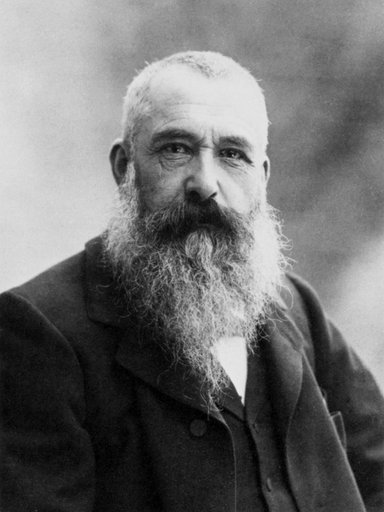
Oscar-Claude Monet was a French painter and founder of Impressionism who is seen as a key precursor to modernism, especially in his attempts to paint nature as he perceived it.


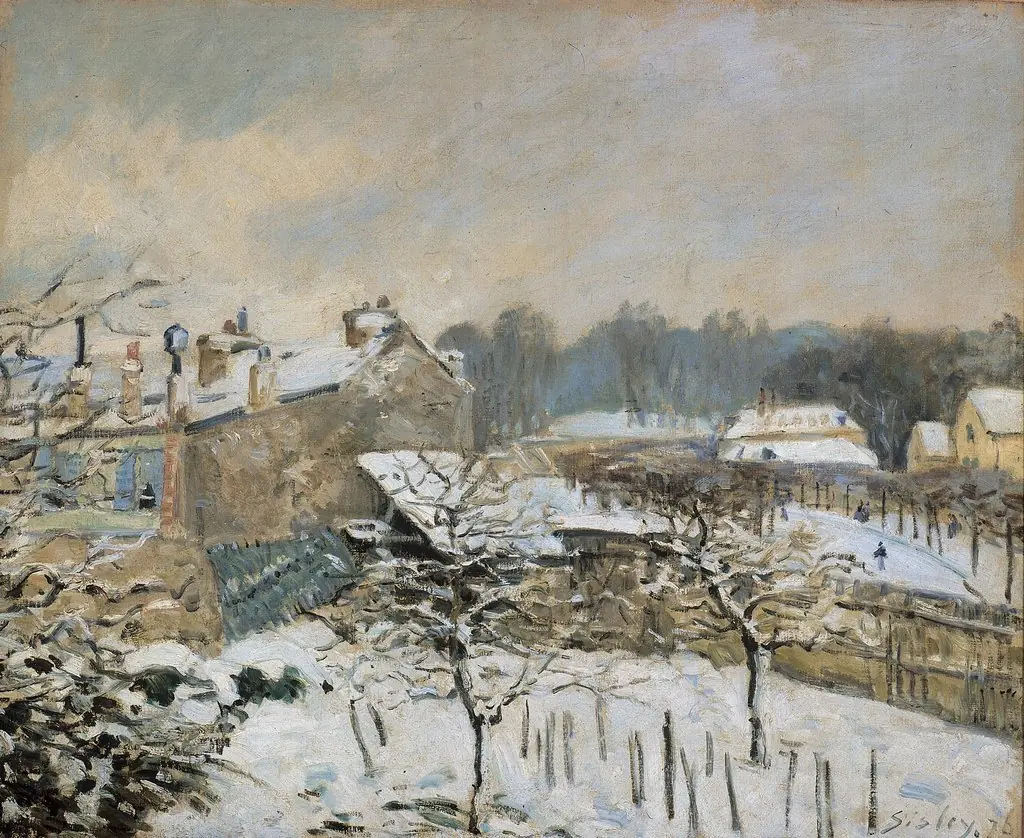 Snow Effect in Louveciennes
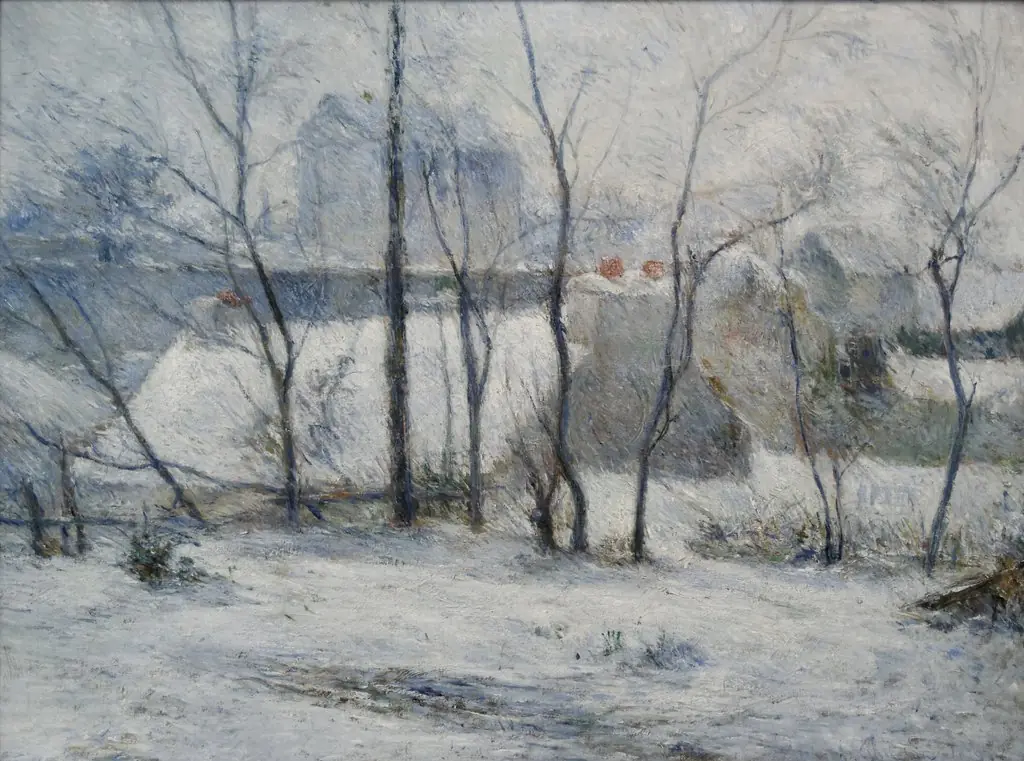 Garden under Snow
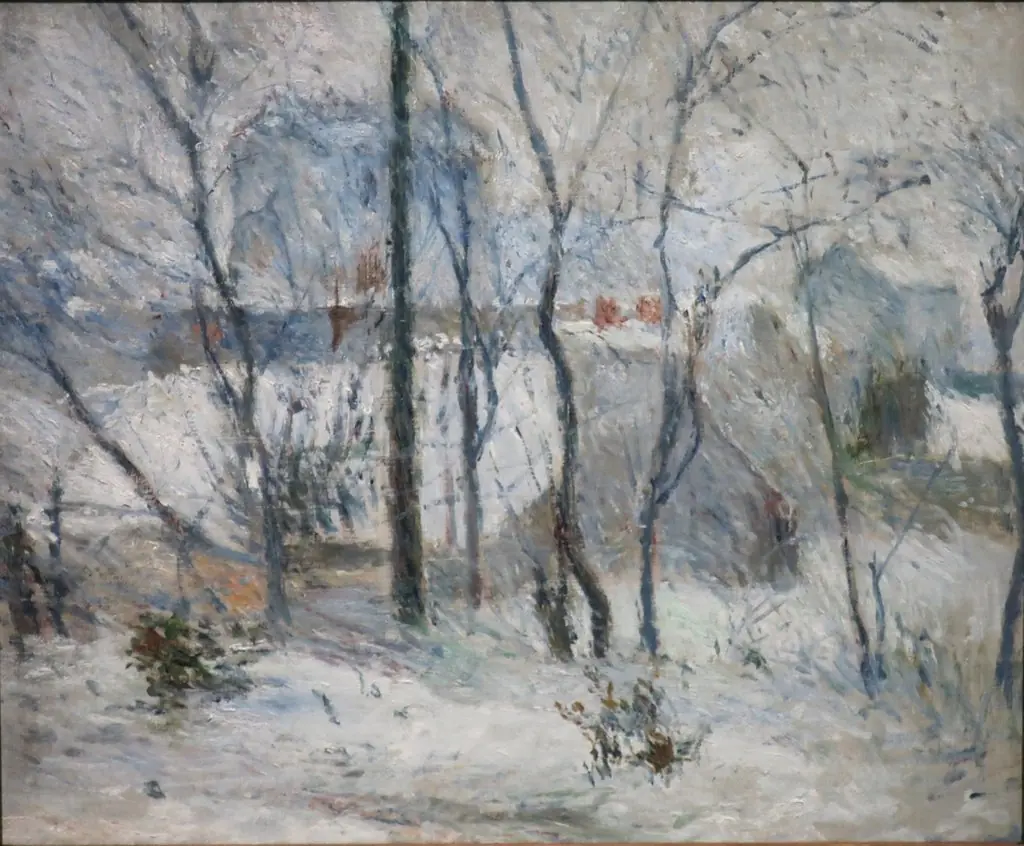 Garden in Snow
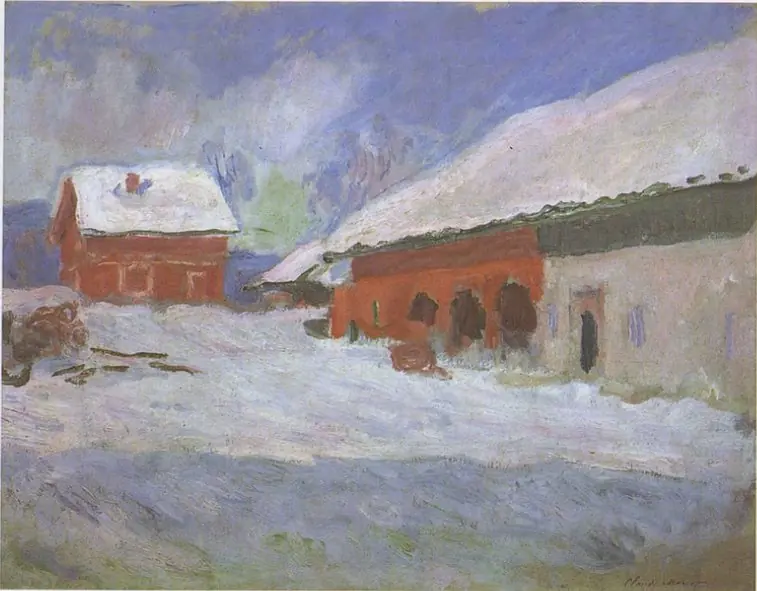 Norvège, les maisons rouges à Björnegaard
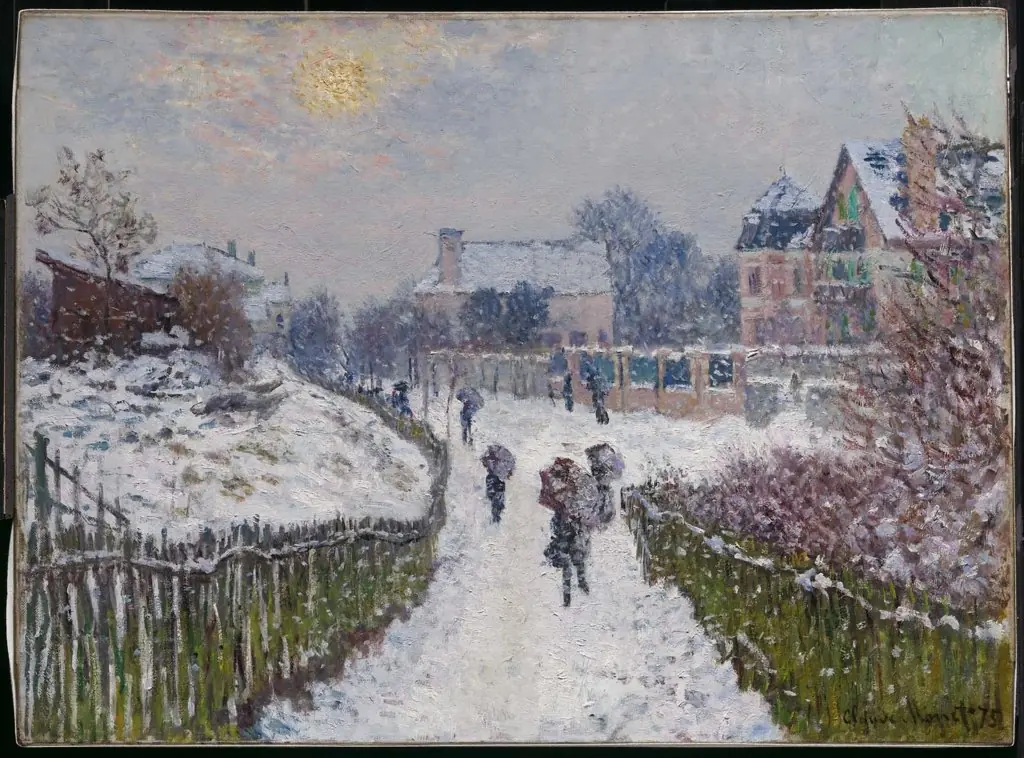 Boulevard Saint-Denis, Argenteuil, in Winter
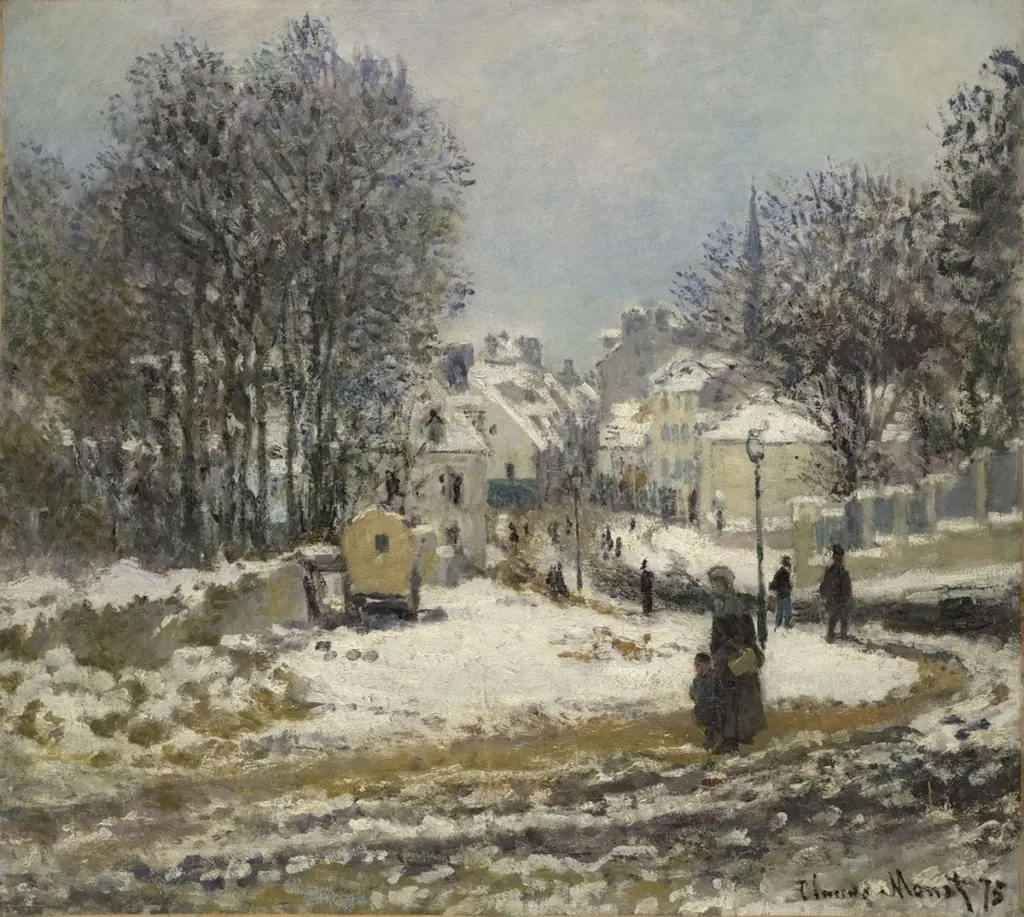 L'Entrée de la Grande Rue à Argenteuil, l'hiver
 Rabbit Warren at Pontoise, Snow
 Rue Eugène Moussoir at Moret: Winter
 Rabbit Warren at Pontoise, Snow
 Effet de neige, soleil couchant
 Winter at Portland
- Sandvika, Norway