Artwork
The Bridge of Fear
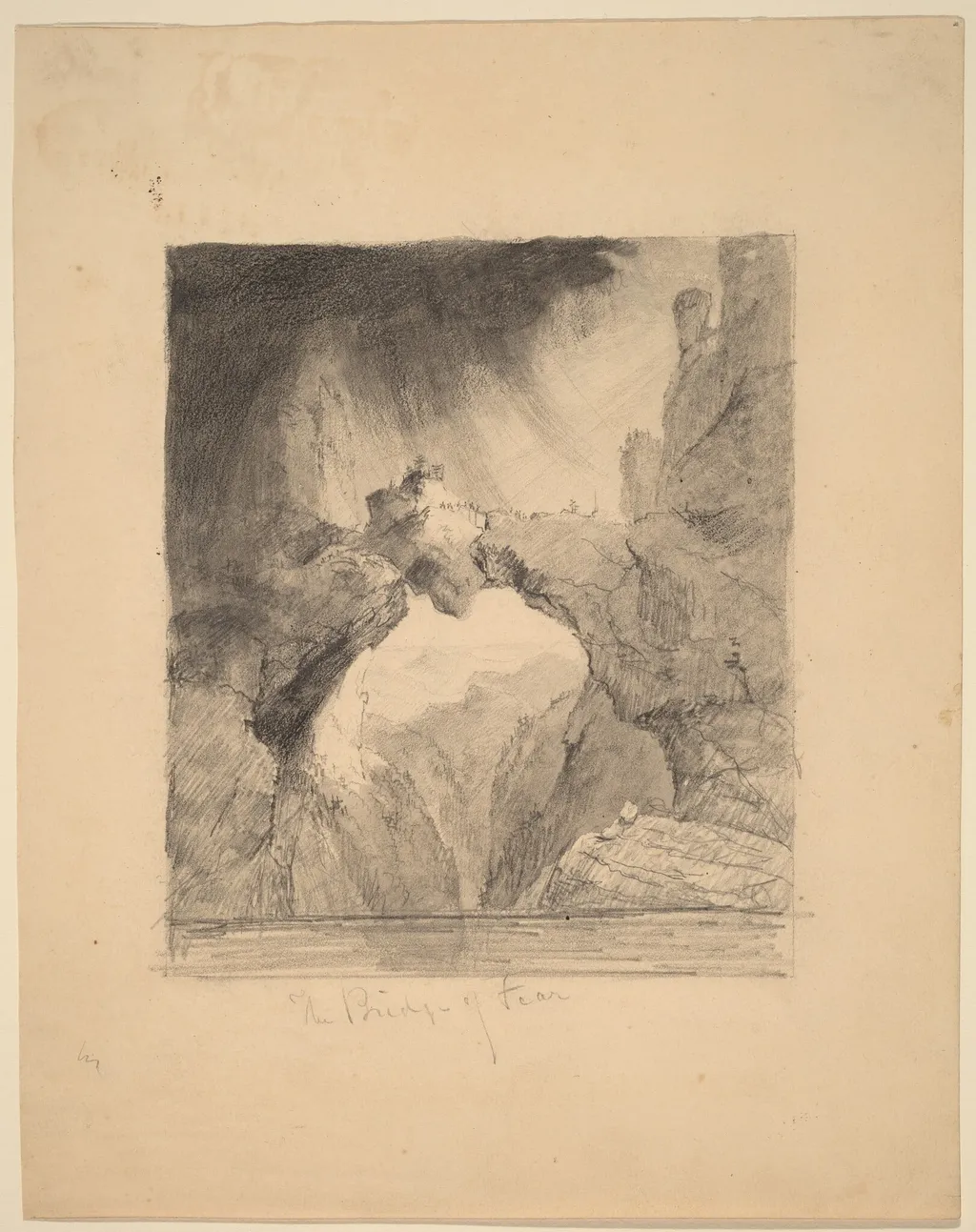
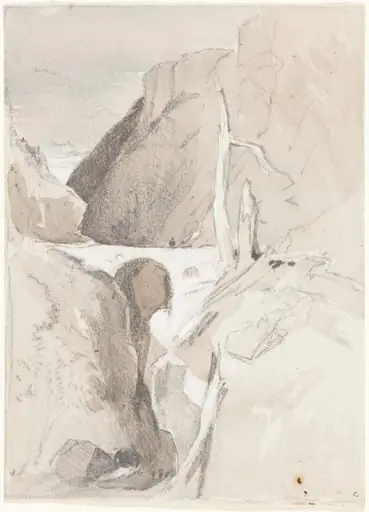
The Bridge of Fear is a graphite drawing by the Romanticist artist Thomas Cole. It dates from 1824 and is held in the collection of the National Gallery of Art.
- Inscription
- Inscribed:by unknown hand, across bottom: The Bridge of Fear; in Hatch's hand, center verso: (purchase notes)
About this work
Overview
Thomas Cole’s 1824 drawing, titled The Bridge of Fear, is executed in graphite, black crayon, and a gray wash on wove paper. The composition presents a nocturnal bridge spanning a river, its arches rendered as dark silhouettes. A solitary figure stands at the bridge’s edge, gazing into the dim landscape, evoking a sense of isolation and tension.
Subject & Meaning
The work centers on a solitary individual confronting an imposing, shadowy bridge that arches over a barely discernible river. The title suggests an emotional response rather than a literal narrative, inviting viewers to contemplate fear, uncertainty, and the psychological weight of crossing an unknown threshold.
Technique & Style
Cole employs loose, sketchy strokes of graphite and black crayon, complemented by a muted gray wash that softens edges and deepens the atmosphere. The drawing’s rough handling of line and tone aligns with Romantic sensibilities, emphasizing mood and the sublime over precise detail.
History & Provenance
Created in 1824, The Bridge of Fear belongs to the early period of Cole’s career, preceding his later landscape paintings. The drawing remains part of the artist’s documented oeuvre, though specific ownership history after its creation is not extensively recorded.
Own this work as a print
Artist & collection
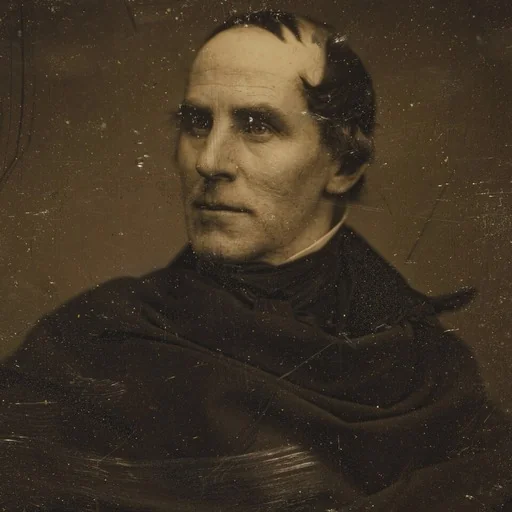
Artist
Thomas Cole (February 1, 1801 – February 11, 1848) was an Anglo-American artist who founded the Hudson River School art movement.