Artwork
Fittleworth Mill, Sussex
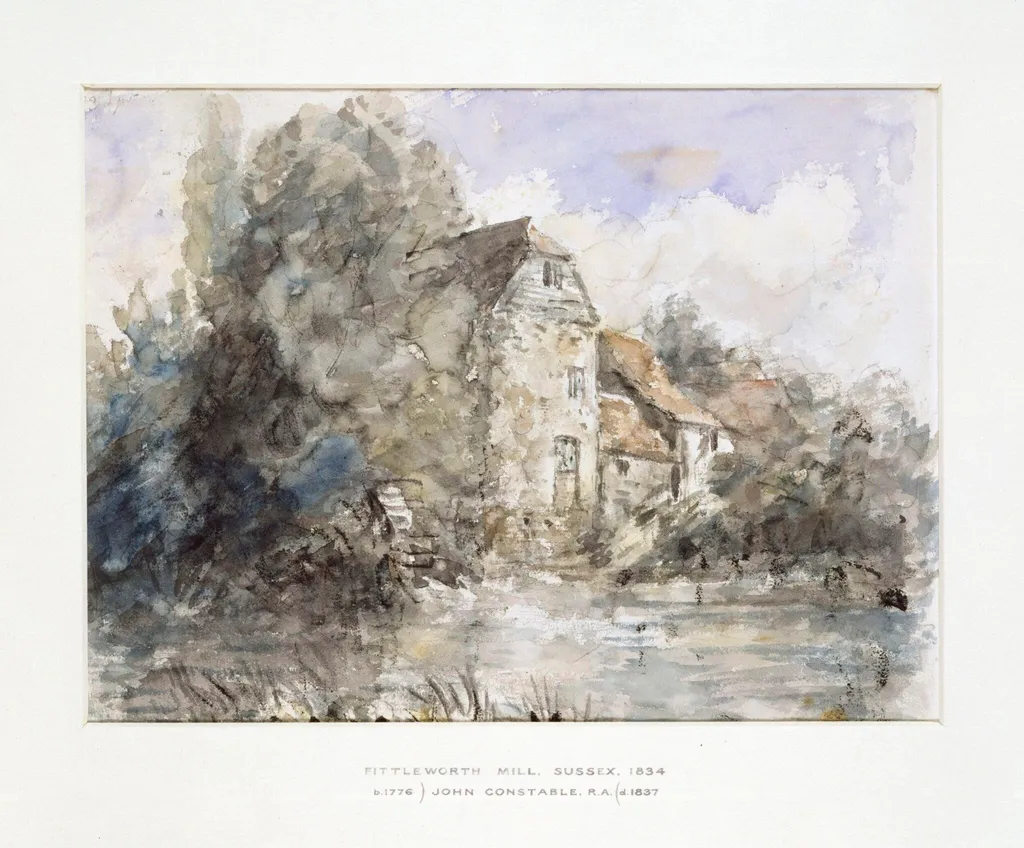
Fittleworth Mill, Sussex is a watercolor work on paper by the Romanticist artist John Constable. It dates from 23 and is held in the collection of the Victoria and Albert Museum.
About this work
Overview
John Constable’s watercolour of Fittleworth Mill captures a quiet rural scene in Sussex, rendered with delicate washes and subtle tonal shifts.
John Constable’s watercolour of Fittleworth Mill captures a quiet rural scene in Sussex, rendered with delicate washes and subtle tonal shifts. The mill, constructed of stone with a sloped roof, stands nestled among dense vegetation. A shallow body of water in the foreground, lined with reeds and grasses, reflects the muted atmosphere.
The work exemplifies Constable’s habit of integrating observational sketches into his landscape studies, blending topographical detail with atmospheric sensitivity.
Subject & Meaning
The mill, a functional element of the local landscape, is not idealized but presented as part of a living environment. Surrounding foliage and water suggest seasonal change and ecological interdependence. The inclusion of botanical studies on the reverse indicates Constable’s commitment to recording nature with precision, treating plants not as decoration but as integral components of place. The scene conveys quiet continuity rather than drama, reflecting his deep engagement with the English countryside.
Technique & Style
Constable employed loose, fluid brushwork to suggest the texture of leaves and the movement of water, avoiding sharp definition in favor of atmospheric cohesion. Muted greys, browns, and soft greens dominate, reinforcing the subdued light of an overcast day. The watercolour medium allowed for layered transparency, enabling subtle gradations that enhance the sense of depth and humidity.
The technique prioritizes sensory impression over polished finish, aligning with his broader approach to landscape as an experiential record.
History & Provenance
The watercolour was exhibited at the Royal Academy in 1834, alongside other works including views of Old Sarum and Stoke Poges Church. Its creation coincided with Constable’s travels to Arundel and Petworth, regions rich in historic architecture and natural detail. The presence of botanical studies on the reverse suggests it was part of a series of on-site studies, possibly intended for personal reference or future compositions rather than public display.
Context
In the 1830s, Constable increasingly turned to watercolour as a medium for direct observation, moving away from large-scale oil paintings. His focus on modest, everyday sites like Fittleworth Mill reflected a broader interest in the vernacular landscape, distinct from grand Romantic vistas. This period saw him deepening his study of local flora and topography, aligning his practice with emerging scientific interests in natural history while maintaining a poetic sensibility.
Legacy
Fittleworth Mill exemplifies Constable’s later watercolours, where technical restraint and close observation merge to convey the quiet rhythm of rural life. Though less celebrated than his oil paintings, these works influenced later generations of British landscape artists who valued direct engagement with nature. The integration of botanical detail also anticipates the interdisciplinary approach of naturalist art in the Victorian era.
Own this work as a print
Artist & collection
Artist
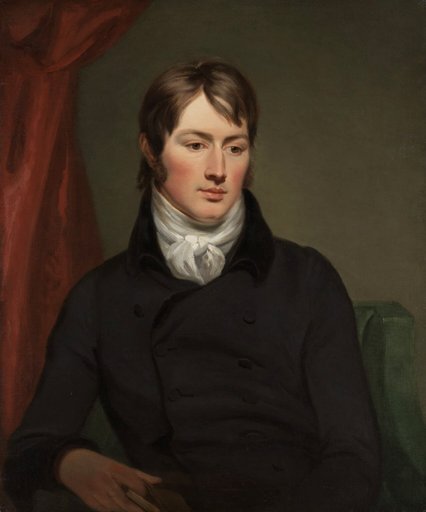
John Constable was an English landscape painter in the Romantic tradition. Born in Suffolk, he is known principally for revolutionising the genre of landscape painting with his pictures of Dedham Vale, the area on the…

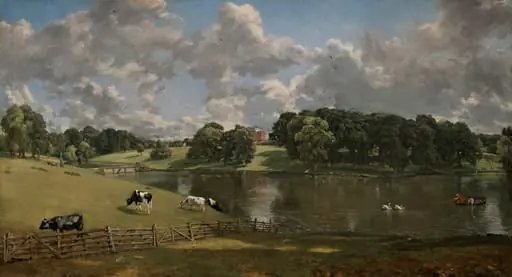
- A cottage with a red-tiled roof, by a wood
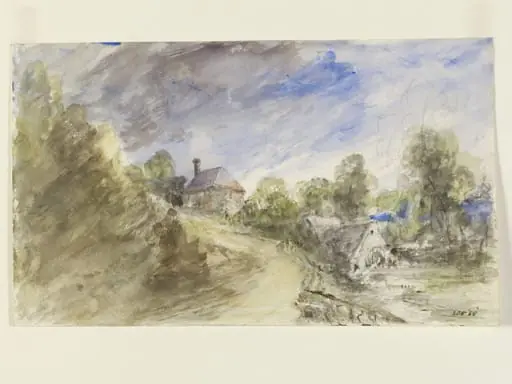 A cottage and water-mill at Bignor
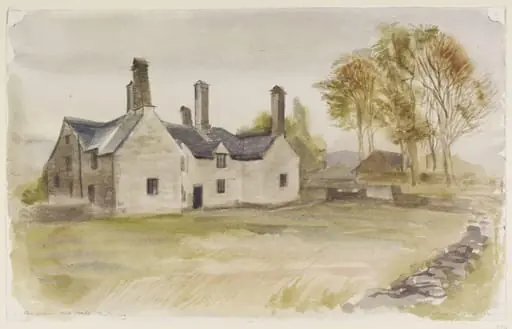 Pengwern Old Hall, Festiniog, Merionethshire
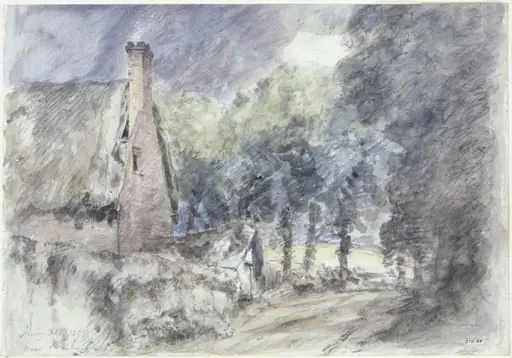 A cottage and Trees near Salisbury
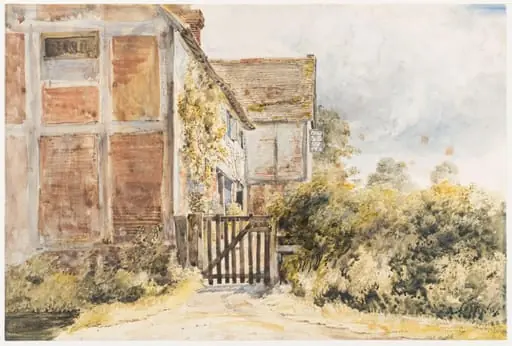 Cottage at Tring
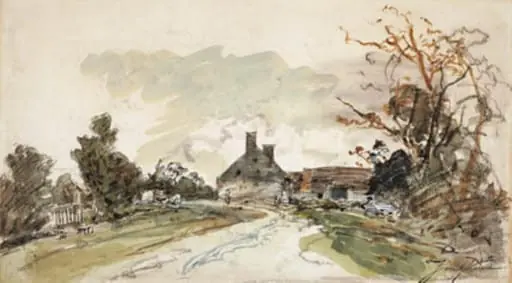 Vejen gennem Côte-Saint-André ved Grenoble
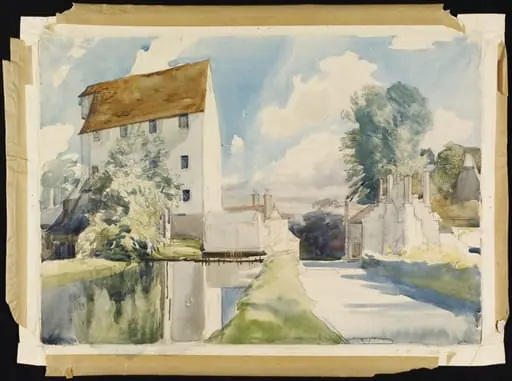 Wickambreux Mill
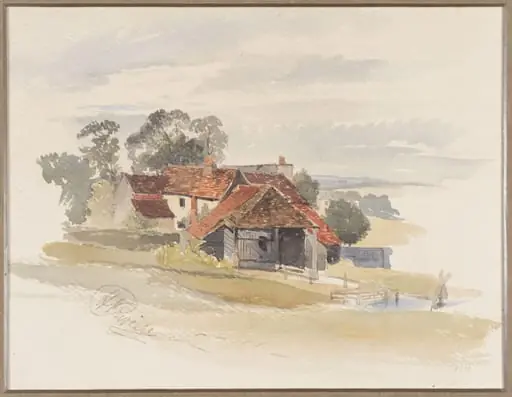 Cottages
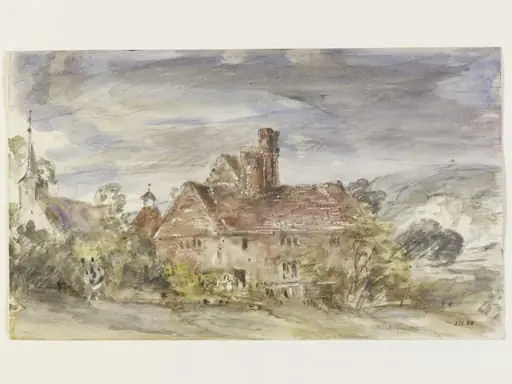 A farmhouse and church at Houghton, Sussex
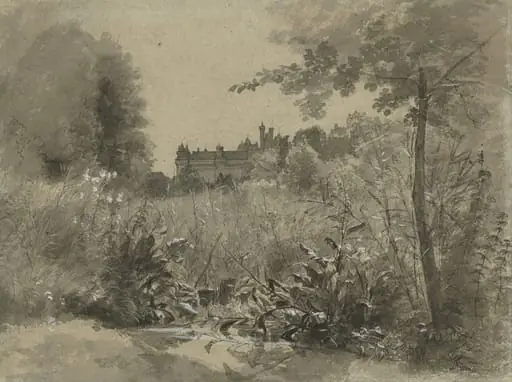 View of the Château of Pierrefonds
 The Maltings, Saffron Walden
 A Mill at Braintree