Artwork
Der Künstler und der Tod II (The Artist and Death II)
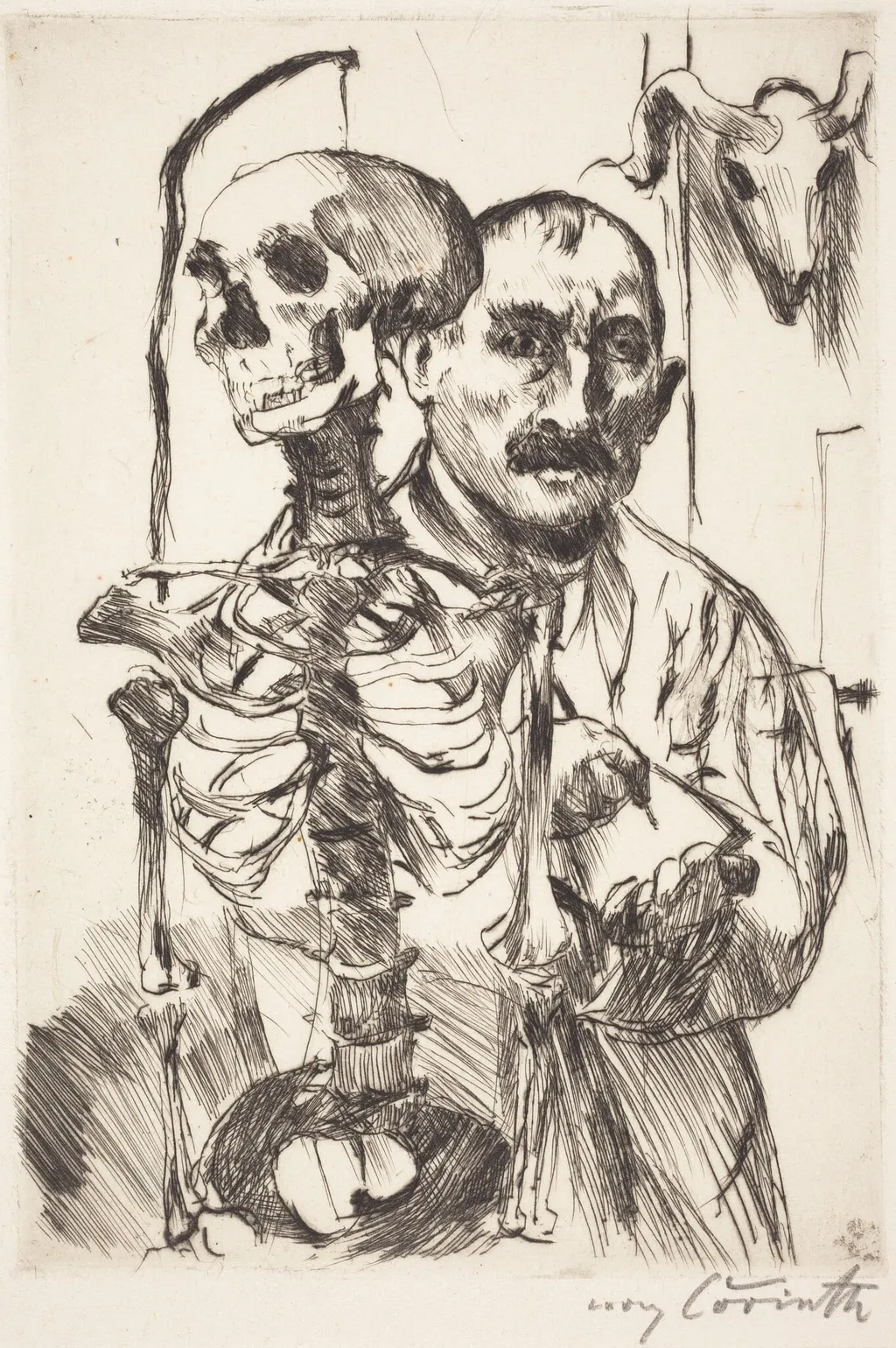
Der Künstler und der Tod II (The Artist and Death II) is an ink print by Lovis Corinth. It dates from 1916 and is held in the collection of the National Gallery of Art.
- Inscription
- Inscribed:lower right in graphite: Lovis Corinth; lower left verso in graphite by unknown hand: Schw. 239
About this work
Overview
It belongs to a series exploring the artist’s confrontation with mortality, produced after a stroke in 1911 that transformed his artistic approach.
Created in 1916, Der Künstler und der Tod II is a drypoint print by Lovis Corinth on wove paper. It belongs to a series exploring the artist’s confrontation with mortality, produced after a stroke in 1911 that transformed his artistic approach. The work reflects a shift from naturalism to a more expressive style, characterized by heightened emotional intensity and simplified forms. Its monochromatic palette and incised lines emphasize psychological depth over decorative detail.
Subject & Meaning
The print shows a bearded man in a white shirt standing beside a skeleton, both facing the viewer. The man’s direct gaze suggests self-confrontation, while the skeleton looks away, evoking detachment or inevitability. The pairing symbolizes the artist’s awareness of death as an inescapable companion.
Unlike allegorical depictions of death as a threat, this image presents it as a quiet, persistent presence, neither menacing nor comforting, but undeniably present.
Technique & Style
Corinth employed drypoint to create rich, velvety black lines with a tactile quality, allowing subtle variations in tone through pressure and burr. The background is minimally defined, using sparse dark strokes to suggest depth without detail. The figures are rendered with bold contours and minimal shading, focusing attention on their posture and gaze. This restrained technique enhances the emotional gravity, aligning with his post-stroke expressionist tendencies.
History & Provenance
Corinth produced this print during World War I, a period of personal and national upheaval. He had been a leading figure in the Berlin Secession since 1910, and his work increasingly turned inward after his 1911 stroke. While specific early ownership records are sparse, the print entered public collections in the 20th century as part of broader recognition of his graphic work. It remains a key example of his late printmaking phase.
Context
In early 20th-century Germany, artists grappled with existential themes amid political instability and medical advances that exposed human vulnerability. Corinth’s series on death reflects a broader cultural preoccupation with mortality, influenced by his own physical decline. Unlike symbolic or religious treatments, his approach was personal and unadorned, resonating with contemporary shifts toward psychological realism in art.
Legacy
Corinth’s Der Künstler und der Tod II contributed to the redefinition of printmaking as a vehicle for intimate, psychological expression. Its directness and emotional restraint influenced later artists exploring self-portraiture and mortality. Though less widely known than his paintings, the print endures as a quiet testament to his ability to convey existential themes through minimal means, bridging naturalism and expressionism in German art.
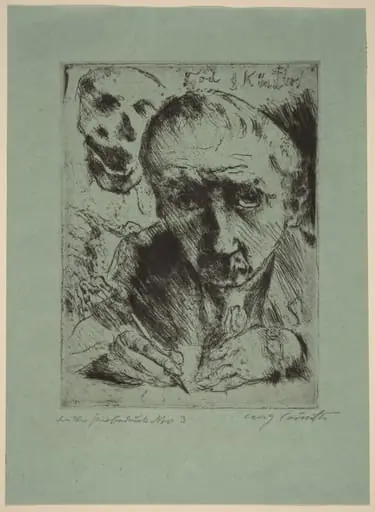
Own this work as a print
Artist & collection
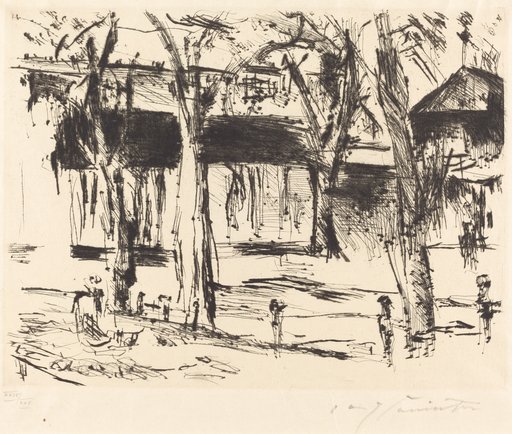
Artist
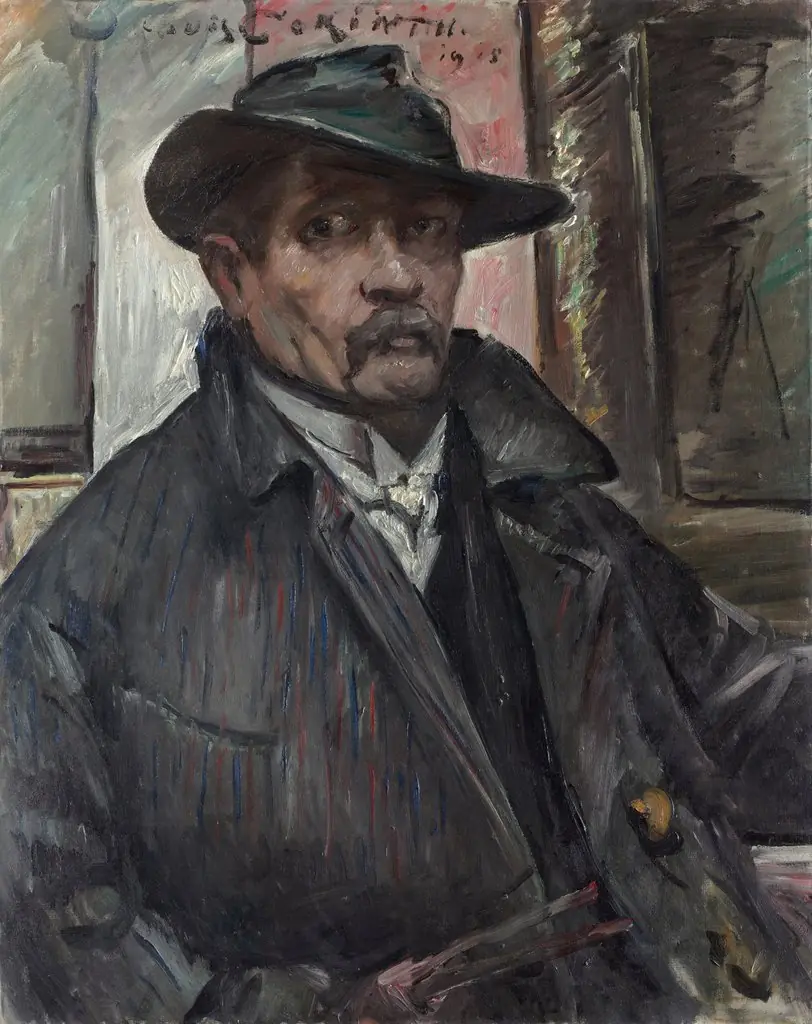
Lovis Corinth (21 July 1858 – 17 July 1925) was a German artist and writer whose mature work as a painter and printmaker realized a synthesis of impressionism and expressionism.

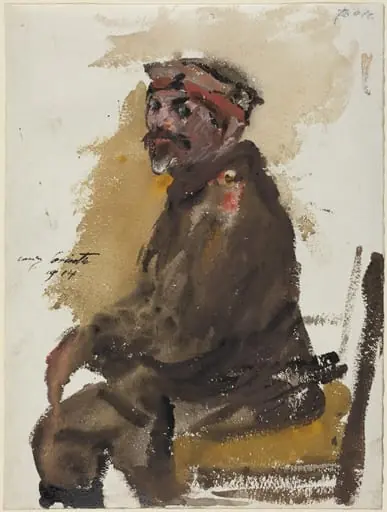
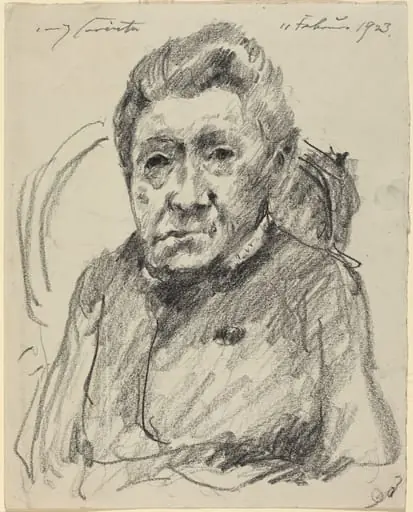
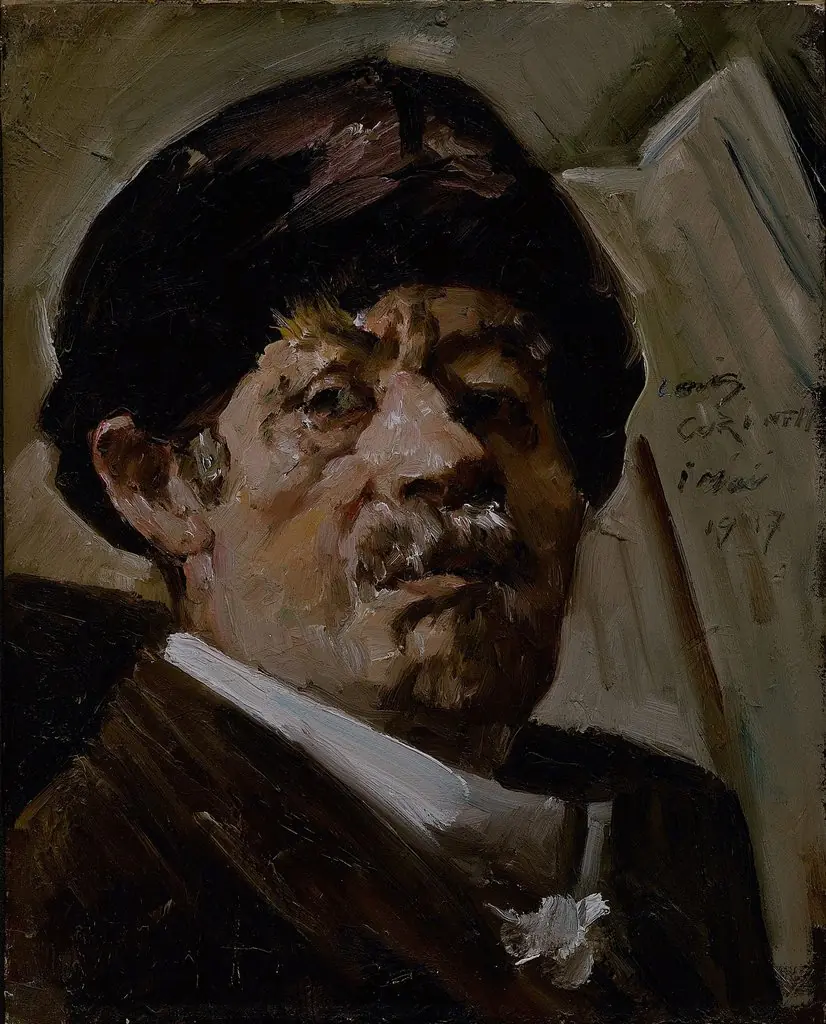
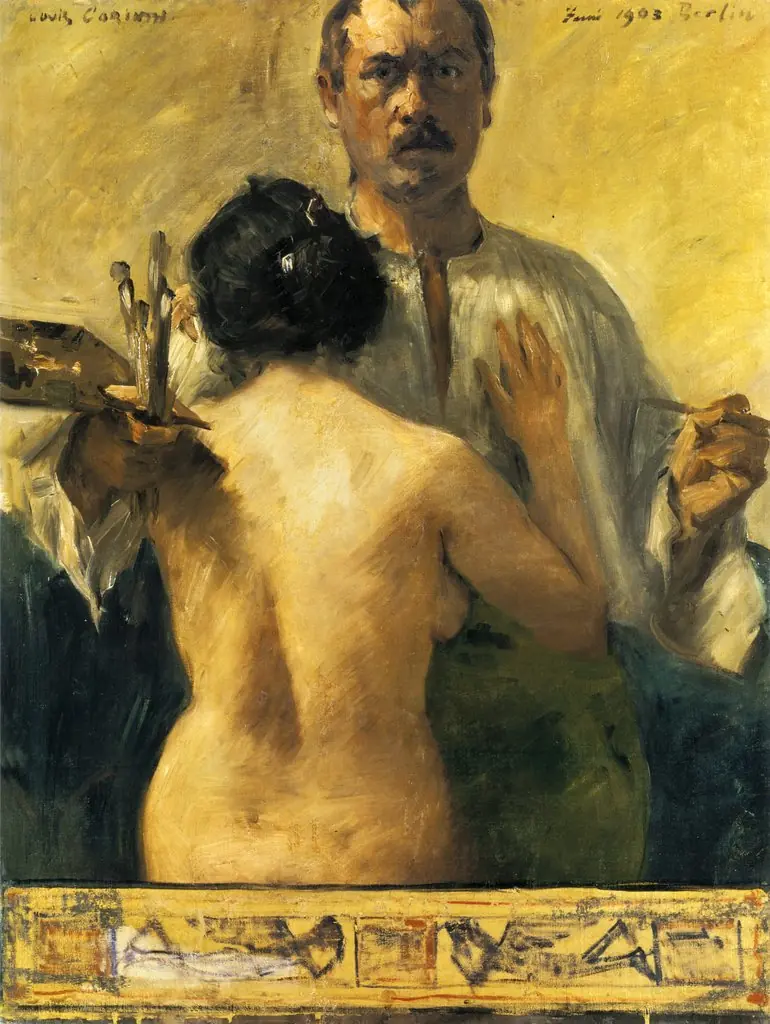
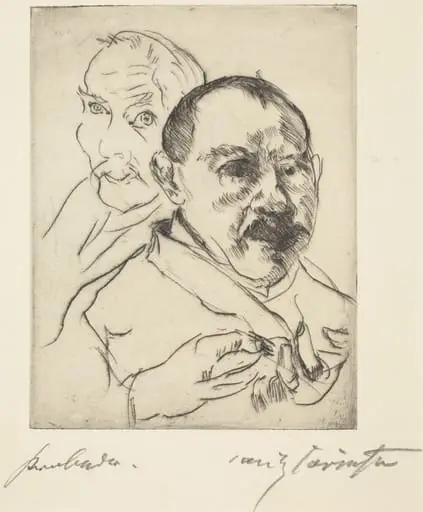 Zwei Männliche Studienköpfe—Selbstbildnisse (Sketch of Two Male Heads—Self-Portraits)
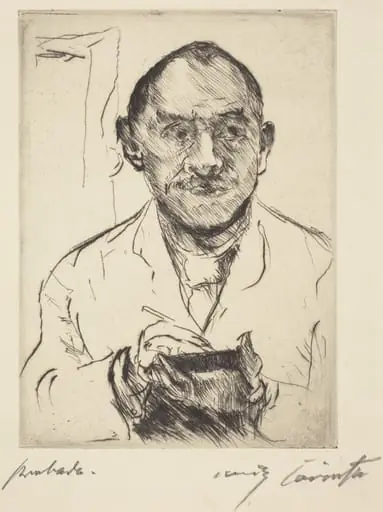 Selbstbildnis (Self-Portrait)
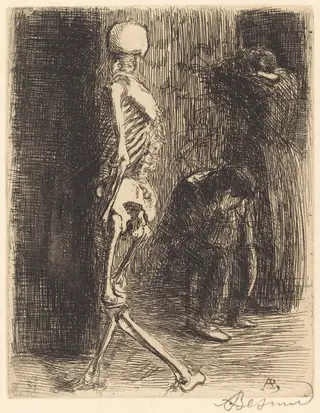 After the Visit (Après sa visite)
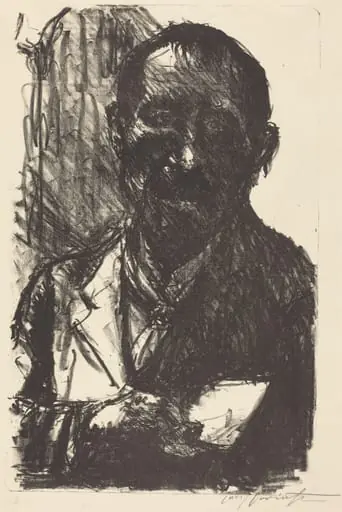 Selbstbildnis 1919 (Self-Portrait 1919)
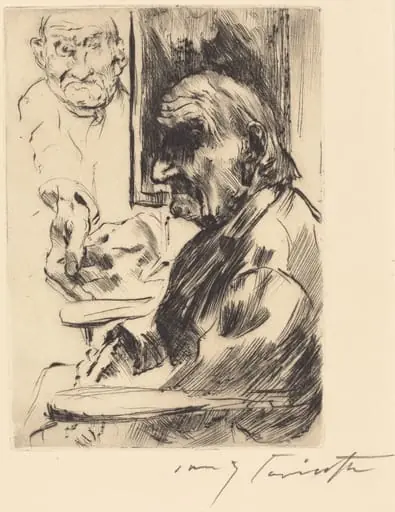 Alter Mann (Old Man)
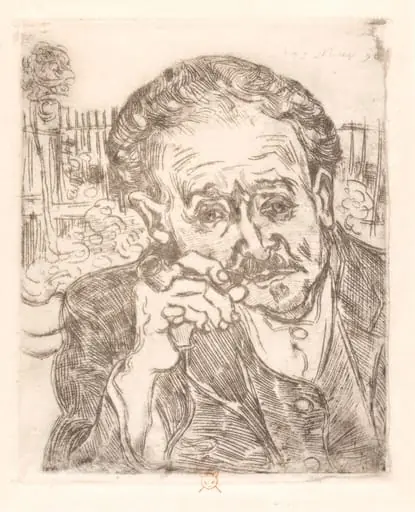 L'Homme à la Pipe
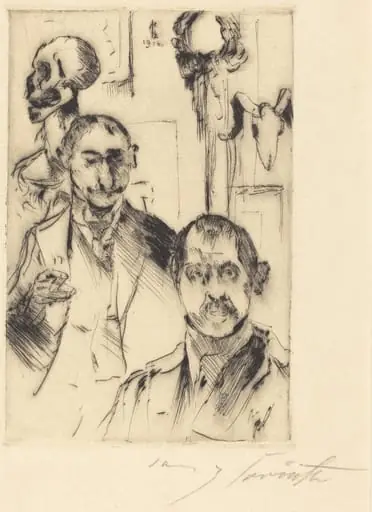 Doppelbildnis mit Skelett (Double Portrait with Skeleton)
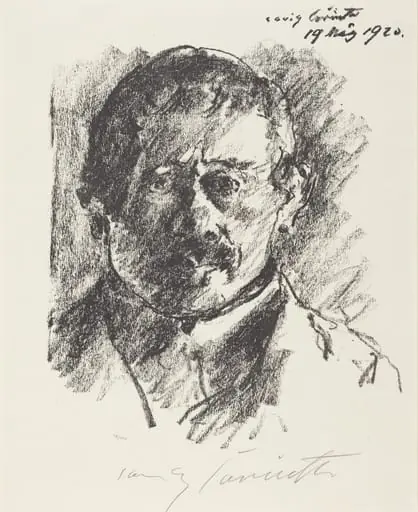 Selbstbildnis (Self-Portrait)
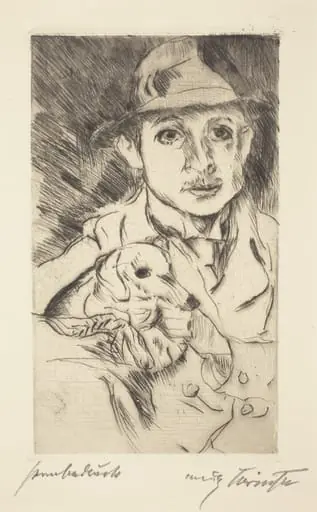 Knabe mit Hund (Boy with Dog)
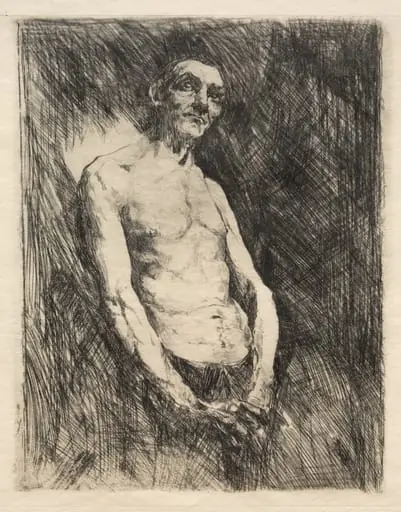 Half Nude Figure of a Man
- Death and the Artist (Tod und Künstler)
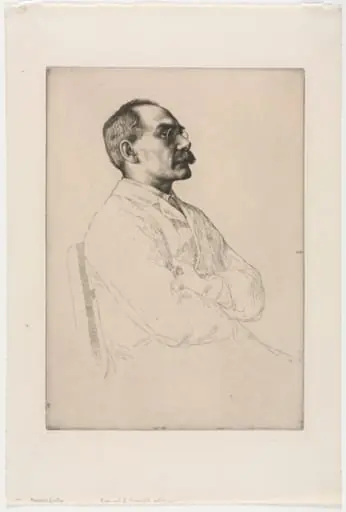 Sir Rudyard Kipling