Artwork
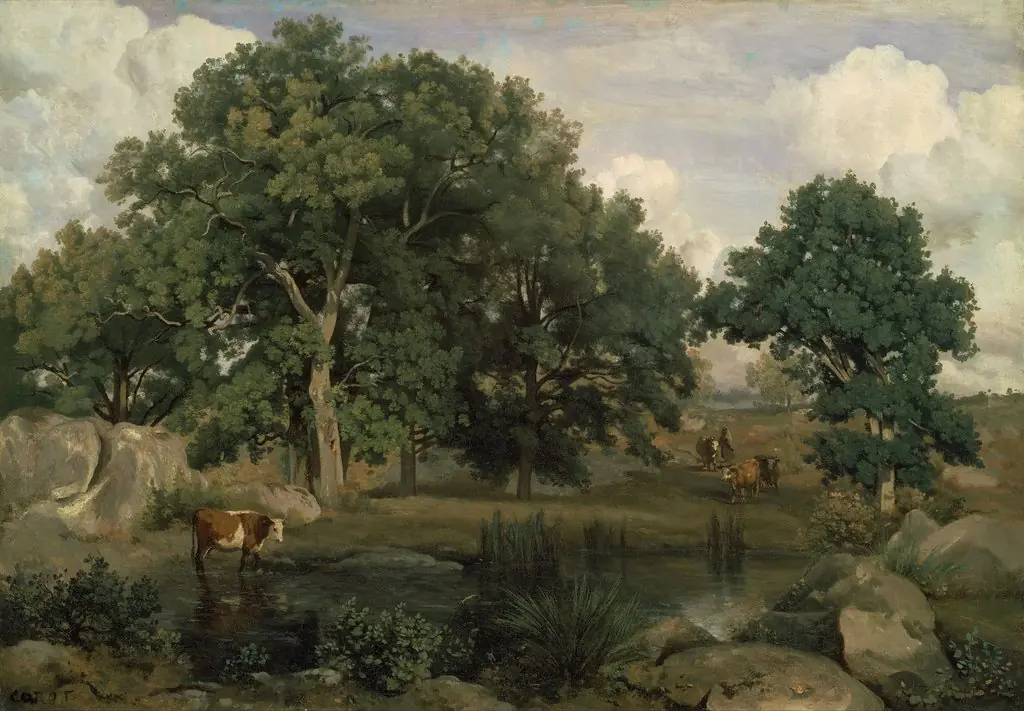
Forest of Fontainebleau
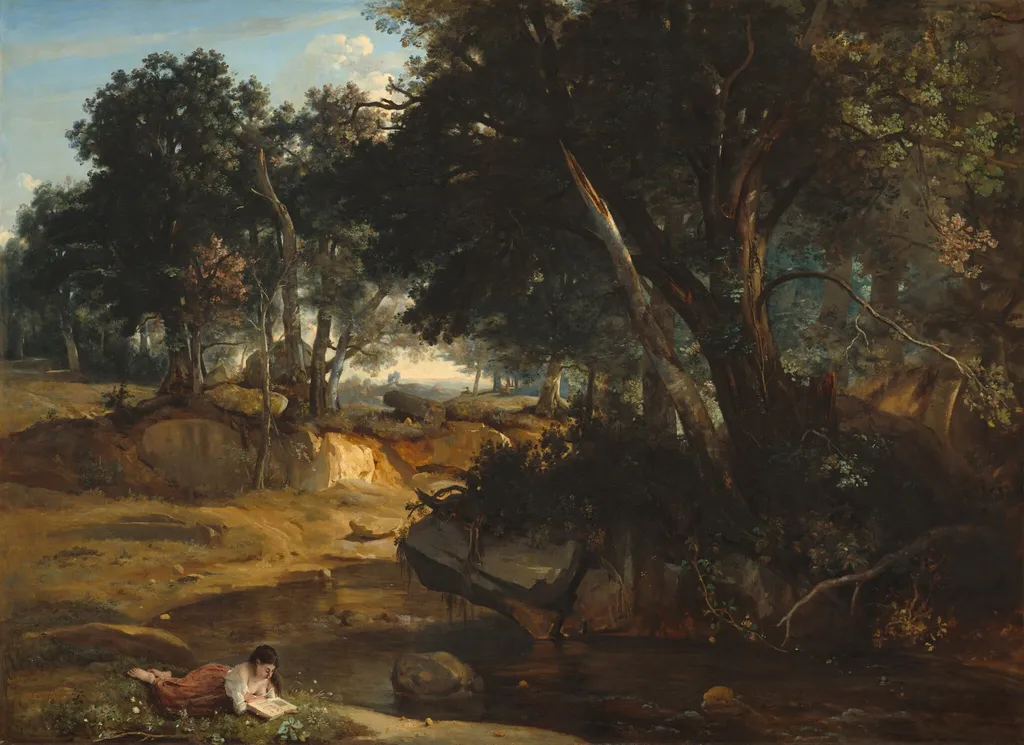
Forest of Fontainebleau is an oil painting by the Barbizon school artist Jean Baptiste Camille Corot. It dates from 1834 and is held in the collection of the National Gallery of Art. This oil painting by Jean-Baptiste-Camille Corot, created in 1834, captures a specific natural setting.
- Inscription
- Inscribed:lower left: COROT
About this work
Subject & Meaning
Painted in 1834, this work depicts the Forest of Fontainebleau, a specific woodland area near the town of Fontainebleau in France.
Painted in 1834, this work depicts the Forest of Fontainebleau, a specific woodland area near the town of Fontainebleau in France. Classified as a landscape, the composition focuses on trees as its primary visual subject. The painting represents a direct observation of this French forest, distinguishing itself from other views of the same location that Corot exhibited at the Salon in 1831.
By presenting this specific site at the Salon of 1834 held at the Louvre, the work functions as a formal record of the terrain. While later narratives have explored the symbolism of trees generally, the available records define the piece's meaning through its topographical identification and its role within Corot's series of Fontainebleau studies exhibited during the 1830s.
History & Provenance
Forest of Fontainebleau, an 1834 oil on canvas by Jean‑Baptiste‑Camille Corot, was first shown at the 1834 Salon at the Louvre. The work entered the collection of Louis‑Alfred Binant by 1855 and was sold at Hôtel Drouot in Paris on 20 April 1904. It then passed to the dealer Bernheim‑Jeune, later to Léon Orosdi (after 1913) and Galerie André Weil before being sold to Chester Dale on 25 June 1934.
Dale bequeathed the painting to the National Gallery of Art in 1963. The painting measures 175.6 × 242.6 cm and was created in 1834.
The painting is held by the National Gallery of Art, Washington, DC, accessioned as 1964.10.1. It was first exhibited at the Salon of 1834 in Paris. The work entered the collection through the bequest of Chester Dale in 1963.
Earlier provenance includes ownership by Louis-Alfred Binant by 1855, sale at Hôtel Drouot, Paris, 20 April 1904, and subsequent passages through Bernheim-Jeune, Léon Orosdi, Galerie André Weil, and Étienne Bignou before Dale’s acquisition in 1934.
Context
Painted in 1834, Forest of Fontainebleau was exhibited at the Salon of 1834 at the Louvre, marking a significant moment in Jean-Baptiste-Camille Corot's career as a landscape painter. The work is frequently distinguished from an earlier, similar view of the same location shown at the Salon of 1831, a distinction scholars note to clarify the artist's evolving treatment of the site. While the painting's provenance traces through prominent Parisian dealers and collectors before entering the National Gallery of Art in Washington, D.C., its historical importance lies in its role within 19th-century French landscape tradition.
Art historical literature, including surveys of pre-Impressionist French painting, cites the work as a key example of Corot's mature style, bridging Romantic sensibility with the observational rigor that would later influence the Impressionists.
Legacy
Forest of Fontainebleau, painted by Jean-Baptiste-Camille Corot in 1834, was first shown at the Salon of that year and later entered the National Gallery of Art in Washington, where it remains on view. Its inclusion in Robaut’s 1905 catalogue and subsequent ownership records (Hôtel Drouot sale, Bernheim-Jeune, Chester Dale) underscore its significance within Corot’s oeuvre. The work’s presence in a major public collection has contributed to ongoing scholarship on Corot’s role in mid‑nineteenth‑century landscape painting, reinforcing the painting’s reputation as a representative example of the genre.
Overview
This oil painting by Jean-Baptiste-Camille Corot, created in 1834, captures a specific natural setting. It presents a tranquil depiction of the Forest of Fontainebleau, a well-known wooded area in France. The work exemplifies Corot's early engagement with landscape painting, focusing on direct observation and a serene atmosphere.
Technique & Style
Corot employed a palette of subdued colors and delicate light effects to convey the peaceful ambiance of the forest. The artist paid close attention to textural details, such as the rugged surfaces of the tree trunks, enhancing the painting's realism. This early work demonstrates his developing style, characterized by a commitment to rendering natural forms with an understated yet precise hand.
Own this work as a print
Artist & collection
Artist
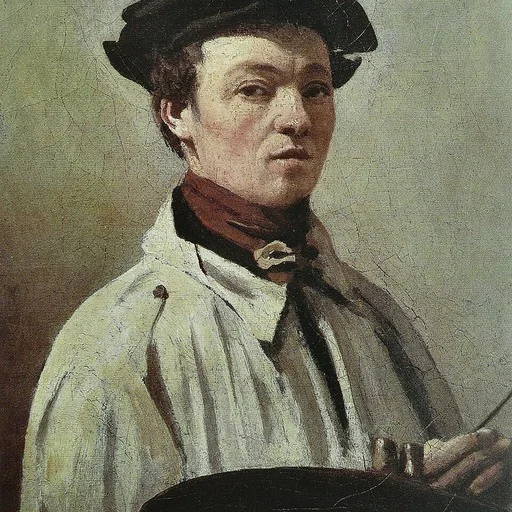
Jean-Baptiste-Camille Corot (UK: KORR-oh, US: kə-ROH, kor-OH; French:; 16 July 1796 – 22 February 1875), or simply Camille Corot, was a French landscape and portrait painter as well as a printmaker in etching.

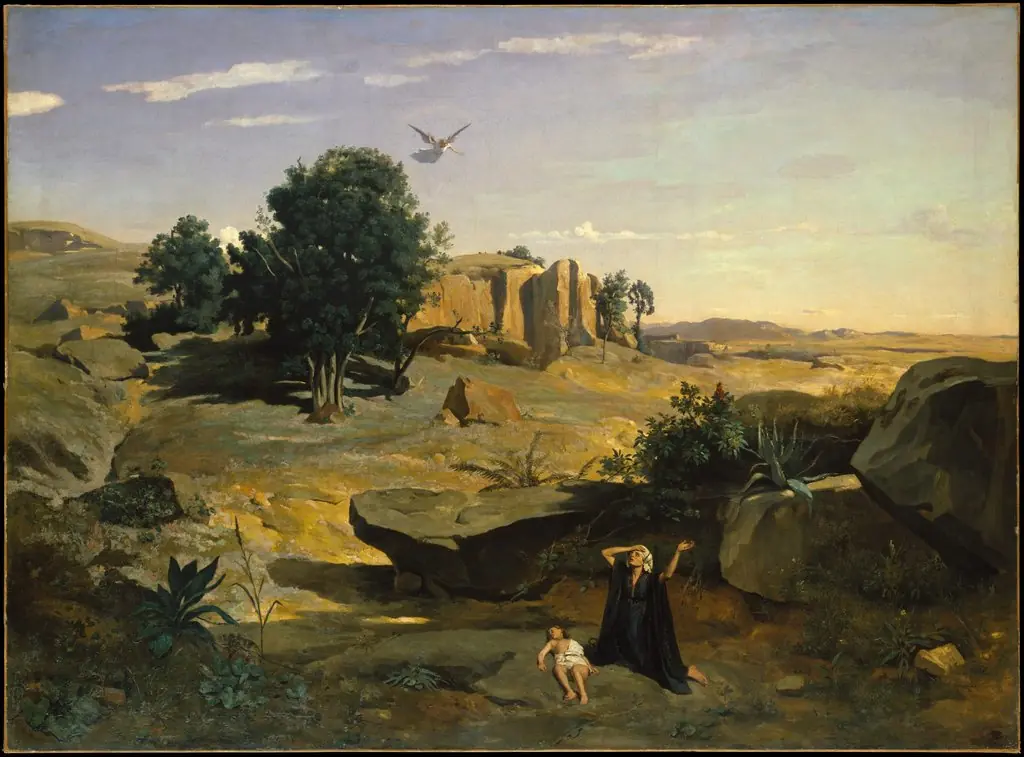
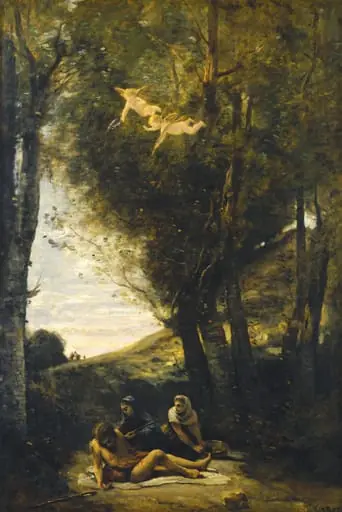
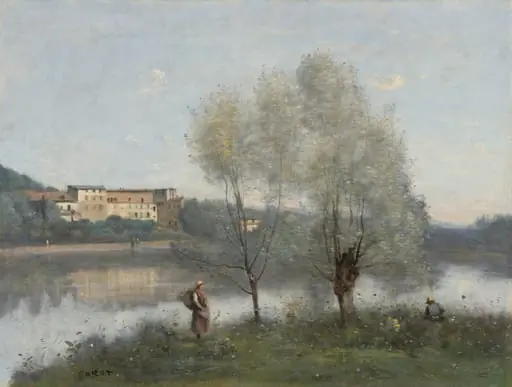
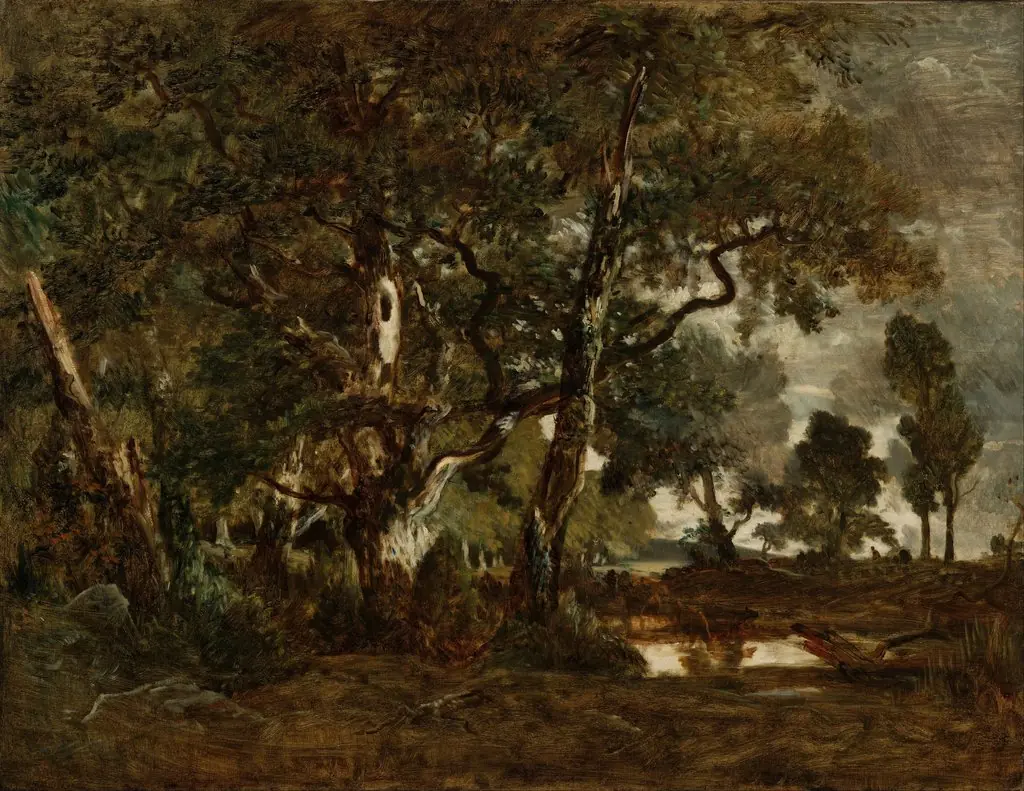
- Forest of Fontainebleau, Cluster of Tall Trees Overlooking the Plain of Clair-Bois at the Edge of Bas-Bréau
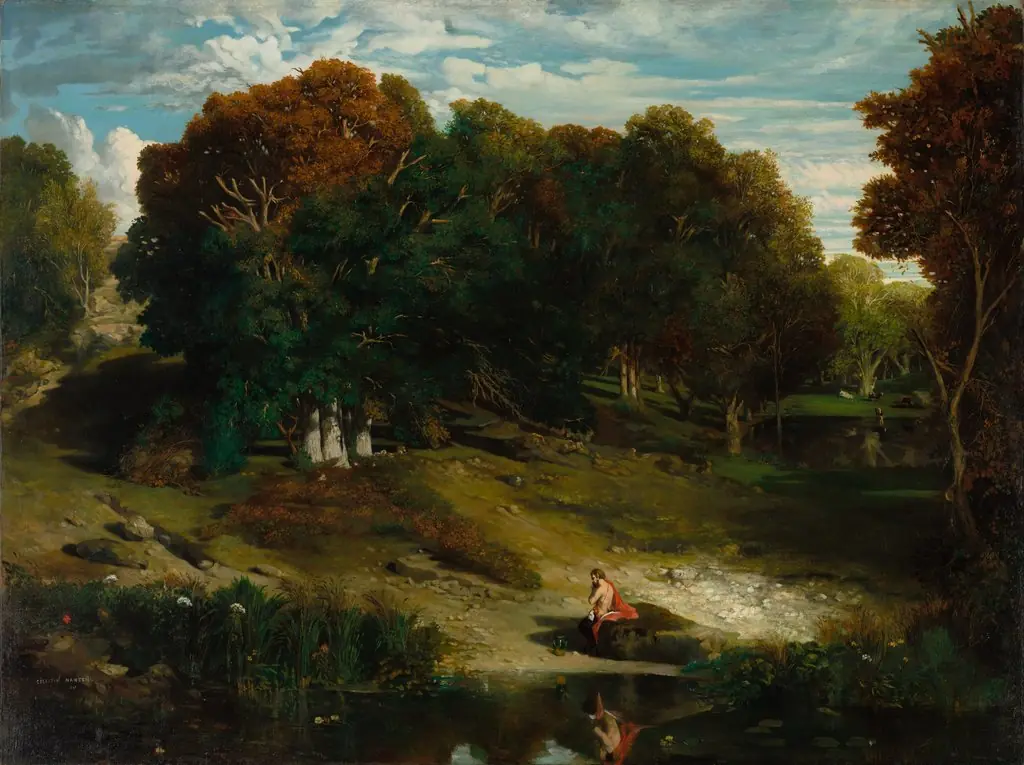 In the Forest
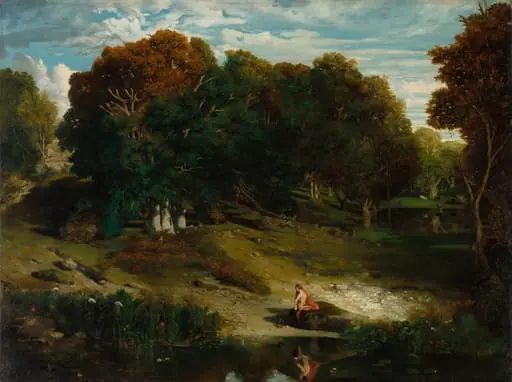 In the Forest
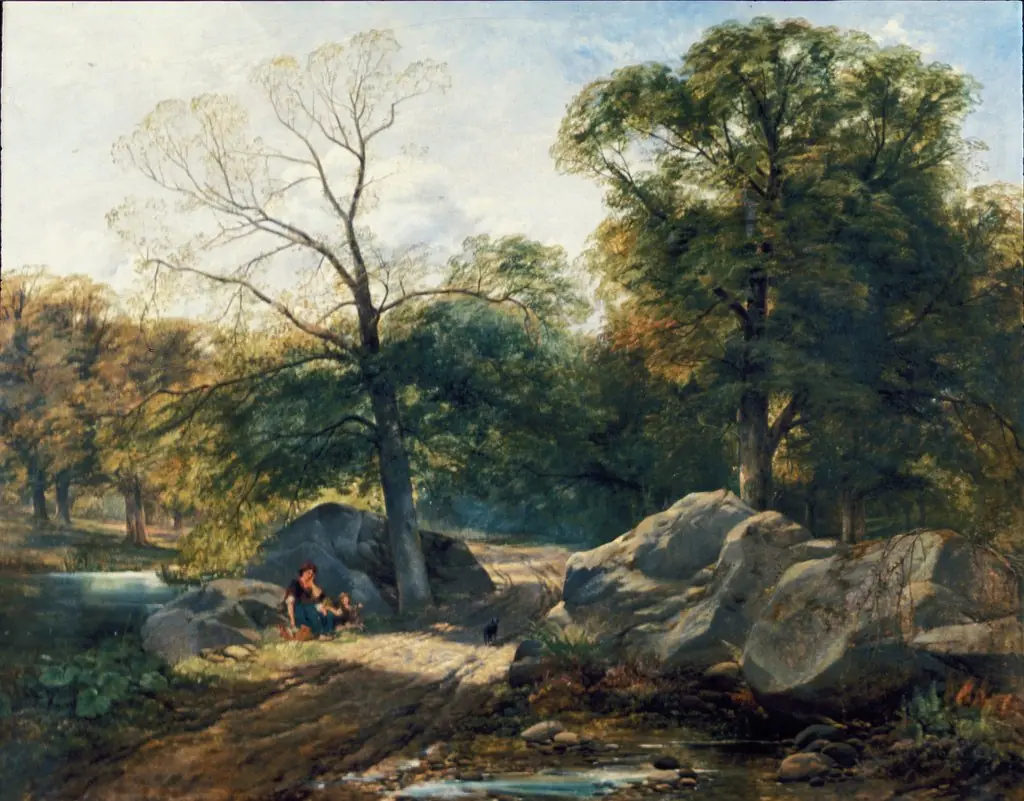 Rest by the Way
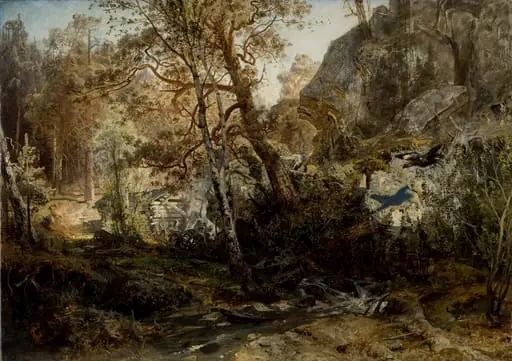 Suomalainen metsämaisema
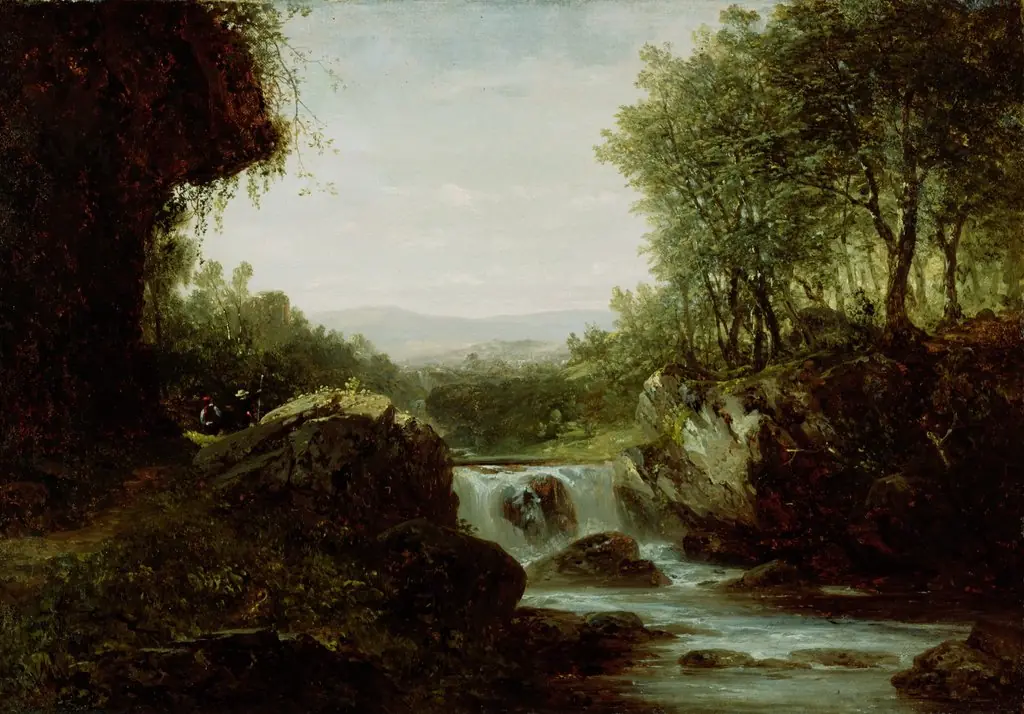 The Walking Tour
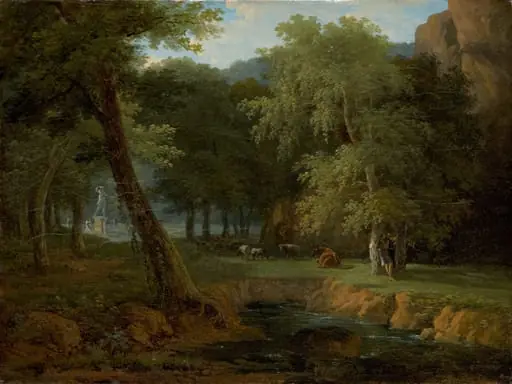 Woodland Scene with Nymphs and a Herm
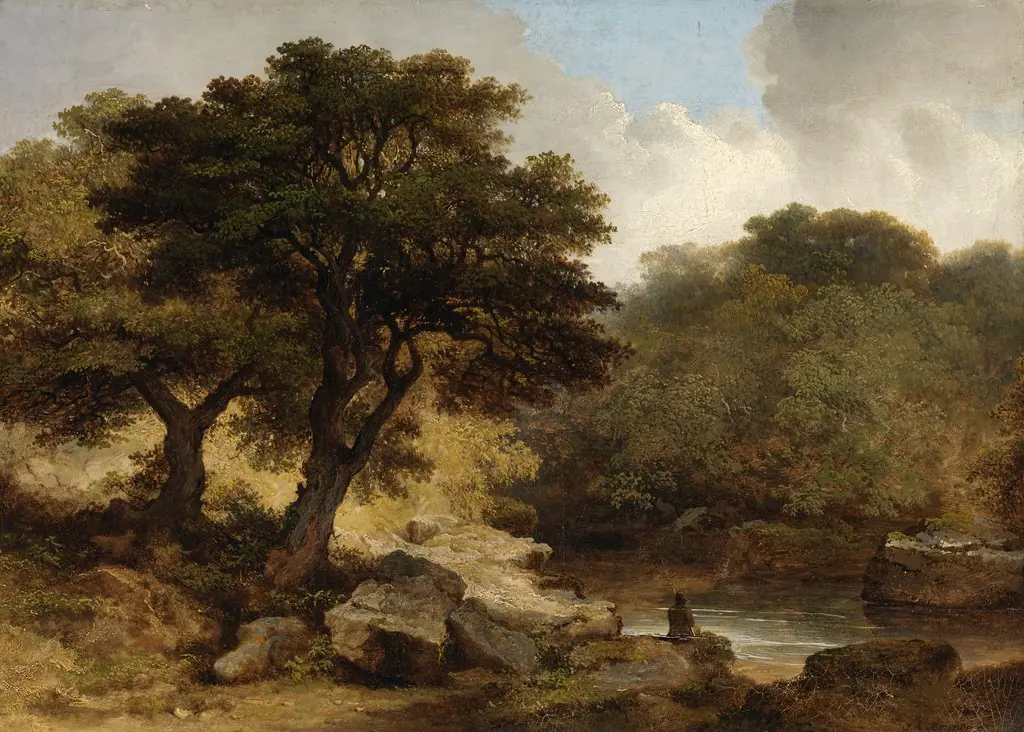 A View of the Glen of the Dargle
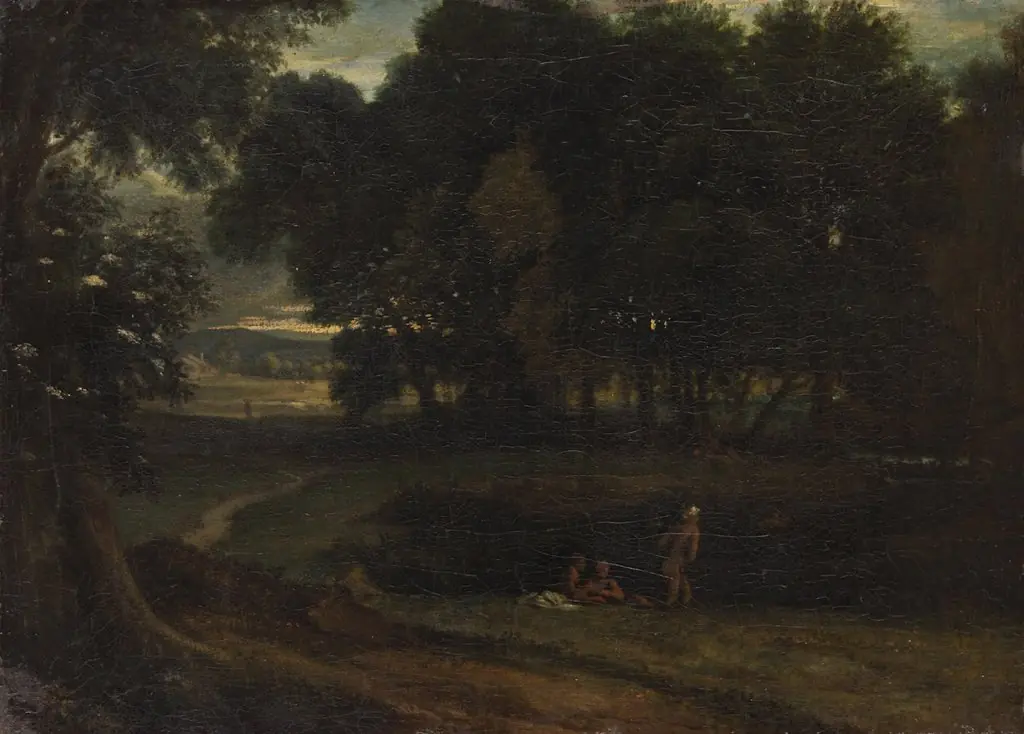 Waldlandschaft mit Badenden
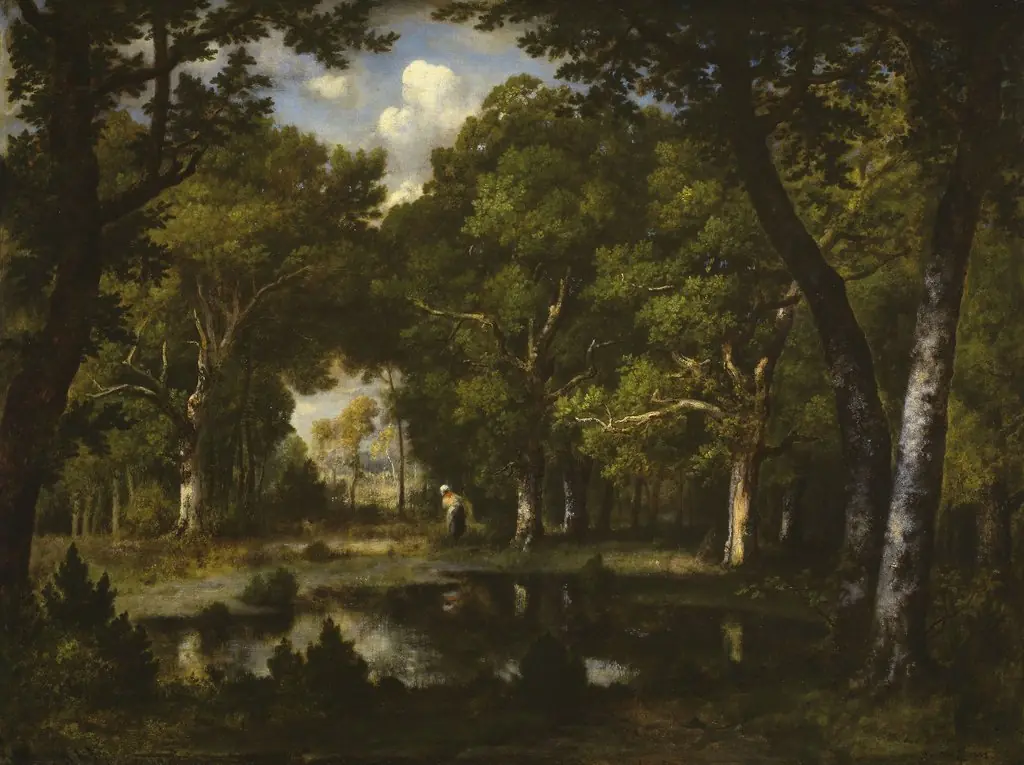 Pond in the Woods
 The Stream (Le Ruisseau du Puits-Noir; vallée de la Loue)
 Forest of Fountainbleu