Artwork
Dance under the Trees at the Edge of the Lake
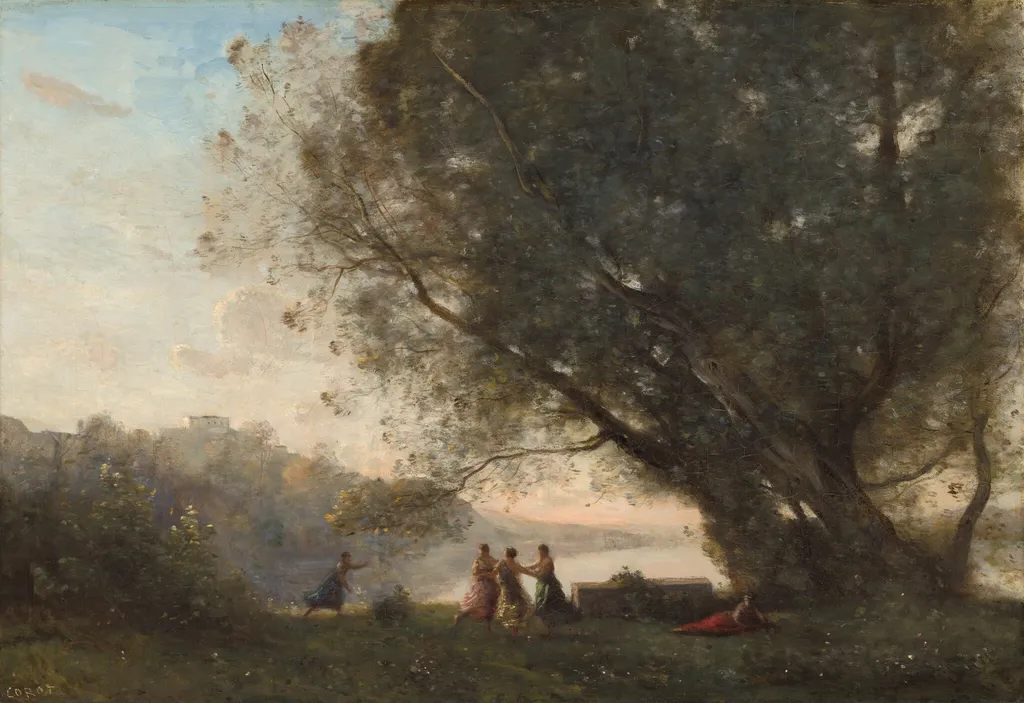
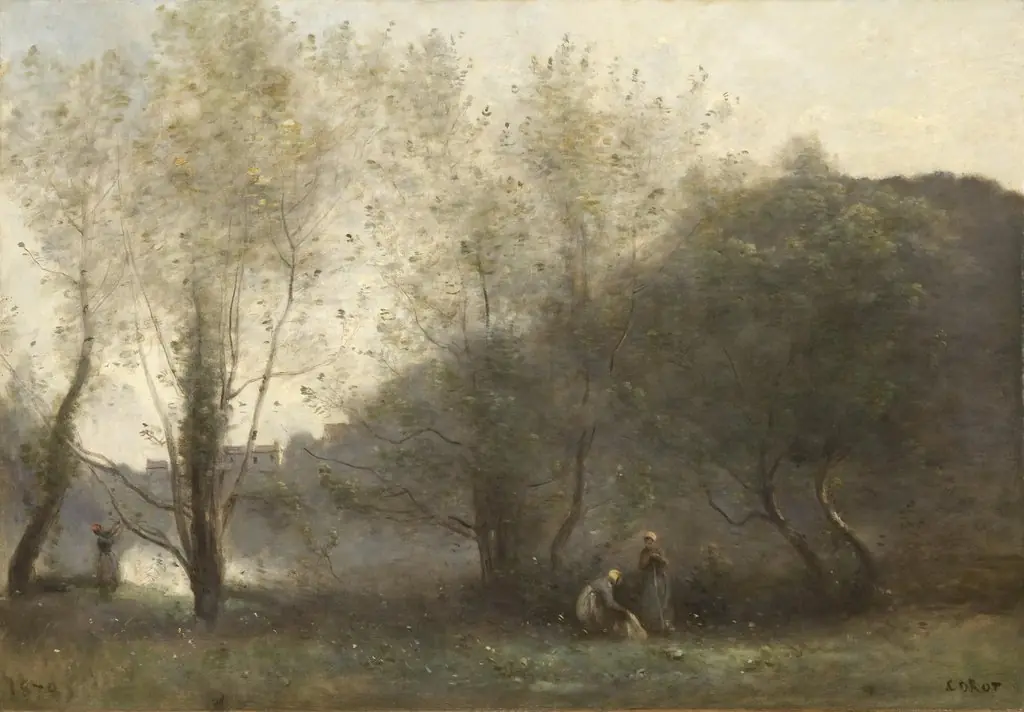
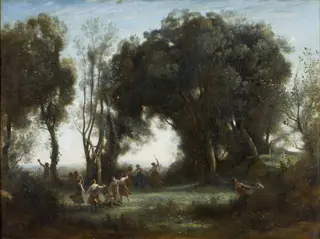
Dance under the Trees at the Edge of the Lake is an oil painting by the Barbizon school artist Jean Baptiste Camille Corot. It dates from 1868 and is held in the collection of the National Gallery of Art.
- Inscription
- Inscribed:lower left: Corot
About this work
Subject & Meaning
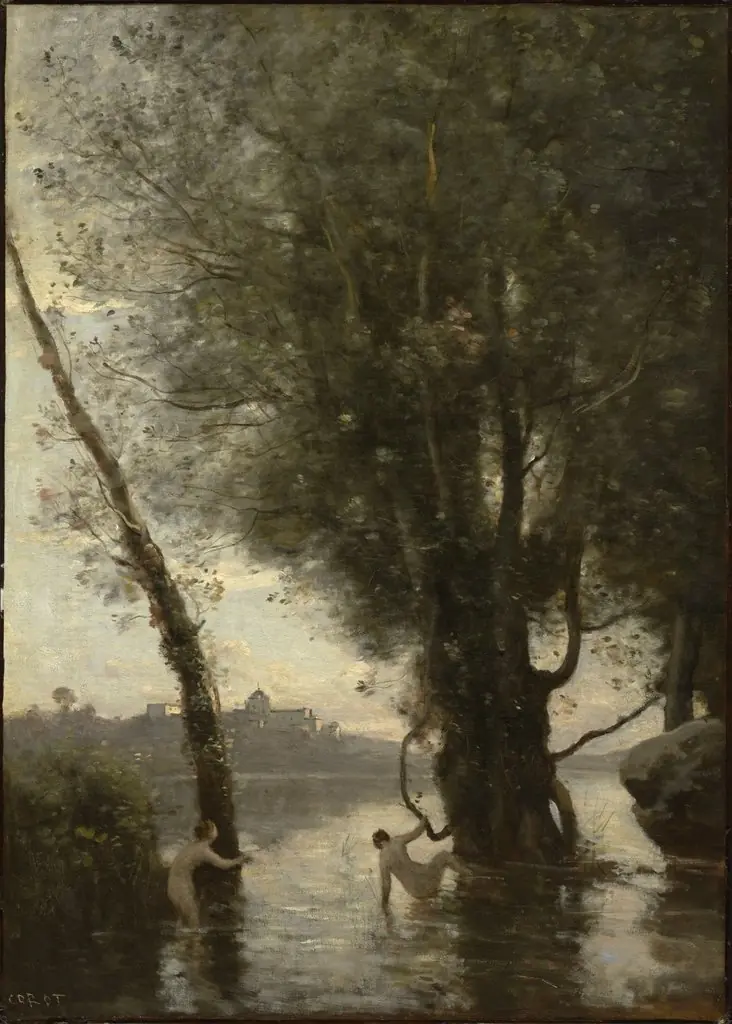
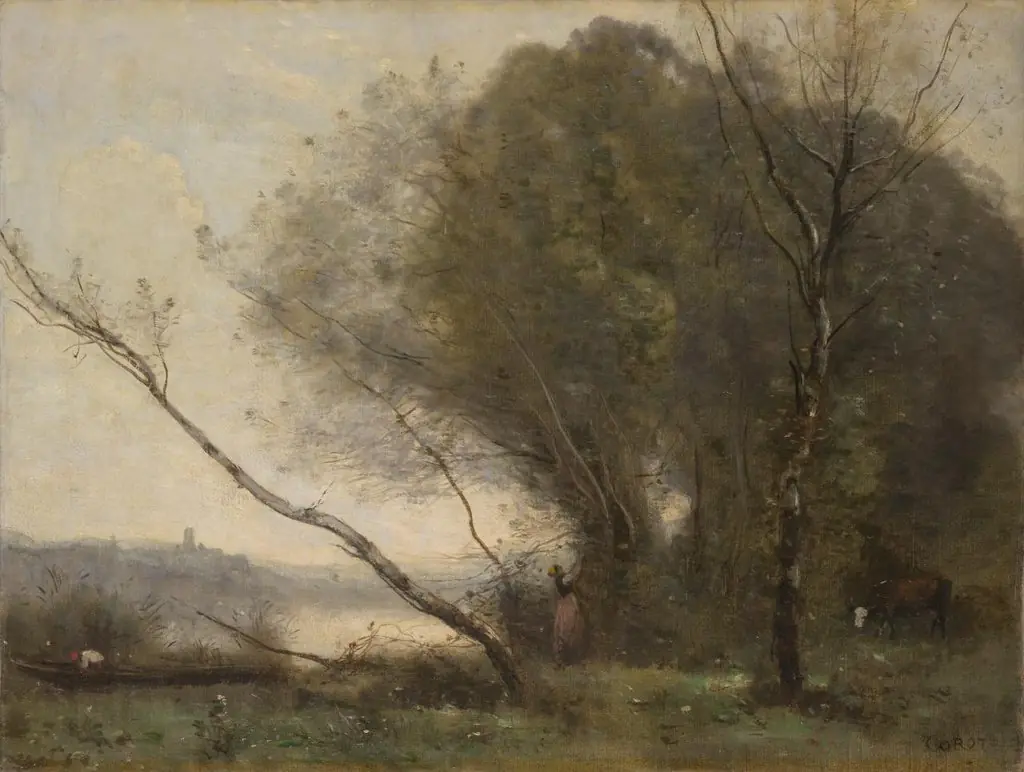
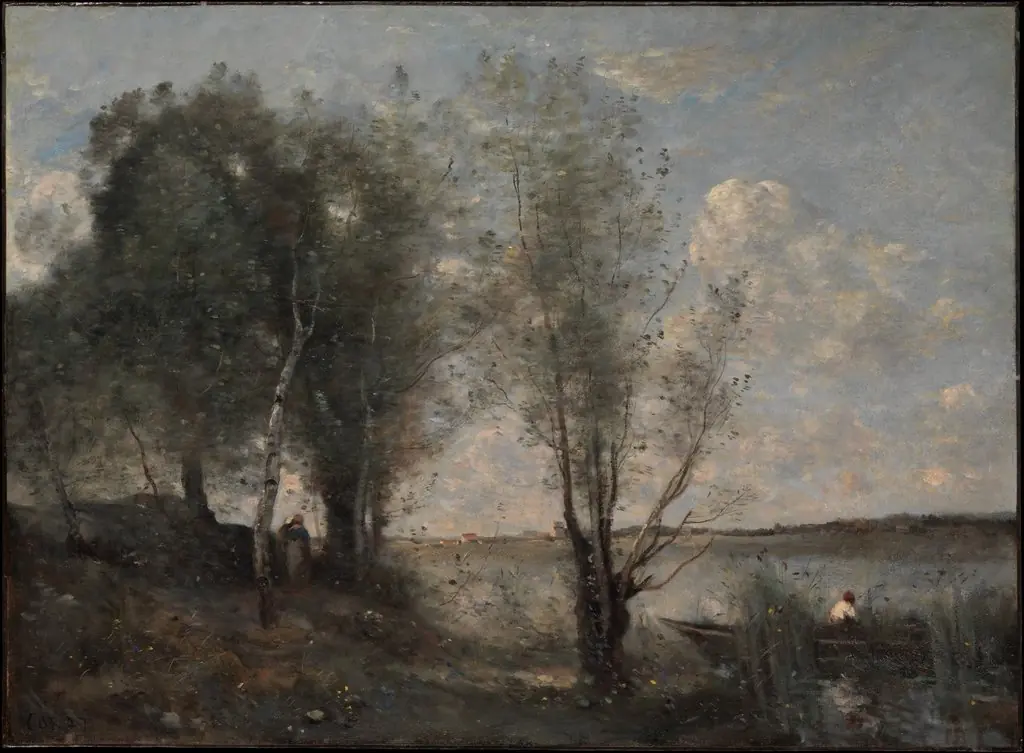
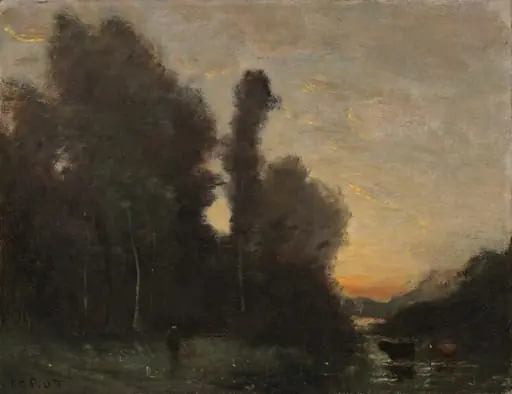
The painting depicts a tranquil landscape where figures engage in a leisurely dance beneath a canopy of trees at the edge of a lake, evoking an idyllic, pastoral scene that reflects the contemplative harmony between humanity and nature characteristic of mid‑19th‑century French art, a mood reinforced by the soft, diffused lighting and the gentle movement of the dancers. The work's subject and symbolic meaning draw on classical ideals of rural serenity, suggesting a timeless, almost mythic realm rather than a specific narrative, thereby inviting viewers to interpret the scene as an allegory of peaceful communion with the natural world.
Technique & Style
The handling is characterized by delicate, feathery brushwork that blends color and light, a technique central to his plein-air-informed studio practice.
Dance under the Trees at the Edge of the Lake is executed in oil on canvas, a medium Corot employed consistently in his late works to achieve luminous effects and subtle tonal gradations. The handling is characterized by delicate, feathery brushwork that blends color and light, a technique central to his plein-air-informed studio practice. Compositionally, the scene unfolds in gently modeled masses of foliage and figures, with the figures rendered through soft, blended strokes that dissolve into the surrounding landscape rather than asserting sculptural form.
The palette relies on silvery greens and earthy browns, punctuated by touches of brighter color in the dresses, reinforcing the tranquil, dappled light filtering through the trees.
The painting’s dimensions (55.9 × 80.0 cm) and horizontal format support its panoramic, contemplative mood, with the distant lake and sky anchoring the composition in a restrained recession. The condition is reported as stable, with no significant losses or restorations noted in institutional records.
History & Provenance
Painted in 1867, the work passed through the Roussel collection in Paris by 1905. It was sold at the Roussel collection sale held by Galerie Georges Petit, Paris, from 25–28 March 1912 (lot 28).
By 1919 it was handled by Arnold & Tripp and John Levy Galleries in New York before being purchased that year by William A. Clark, New York. Clark bequeathed it to the Corcoran Gallery of Art, Washington, in 1926. The Corcoran transferred the painting to the National Gallery of Art, Washington, in 2014.
Dance under the Trees at the Edge of the Lake has been held at the National Gallery of Art in Washington, D.C. since 2014, when the institution acquired it from the Corcoran Gallery of Art. It had entered the Corcoran in 1926 as part of the bequest of William A. Clark (1839–1925), who purchased the painting in 1919 through John Levy Galleries in New York. Earlier in its provenance, the work passed through Arnold & Tripp in Paris and was sold at the Roussel collection sale at Galerie Georges Petit, Paris, on 25–28 March 1912 (lot 28).
Alfred Robaut had recorded it in the Roussel collection by 1905 in L'Oeuvre de Corot (vol. 3, no. 1698). The painting's acquisition by Clark was noted in the contemporary press, including American Art News in December 1919.
The source corpus does not provide an inventory or accession number, nor any record of exhibition history beyond the documented provenance transfers.
Overview
The canvas presents a horizontal landscape where several light‑skinned women, clad in bright robes, move in a circle beneath a stand of trees beside a tranquil lake. The composition balances the animated figures with a calm horizon of hills and distant buildings, creating a unified scene of leisure and nature.
Context
The scene likely draws on a real location in the Fontainebleau region, an area the artist frequently visited for plein‑air studies. The choice of a lakeside grove reflects the 19th‑century fascination with pastoral leisure and the harmonious relationship between humanity and the French landscape.
Legacy
By integrating figure painting with a lyrical treatment of light, the work anticipates later developments in atmospheric landscape art. Its synthesis of genre scene and natural setting contributed to the evolving dialogue between realism and poetic impression in mid‑century French painting.
Own this work as a print
Artist & collection
Artist
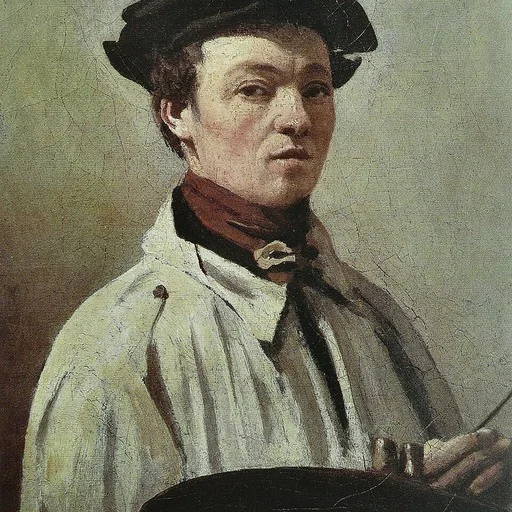
Jean-Baptiste-Camille Corot (UK: KORR-oh, US: kə-ROH, kor-OH; French:; 16 July 1796 – 22 February 1875), or simply Camille Corot, was a French landscape and portrait painter as well as a printmaker in etching.