Artwork
offering of Iphigenie (?)
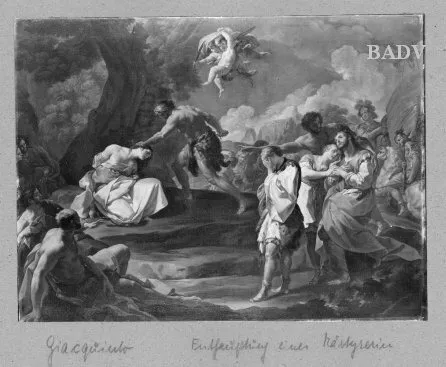
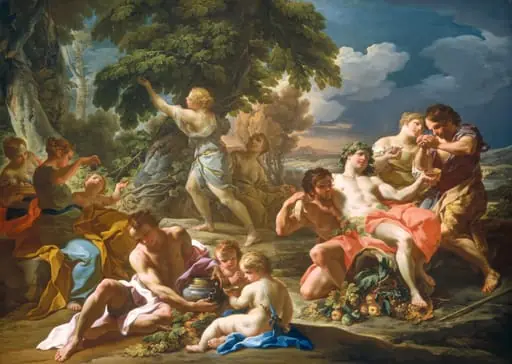
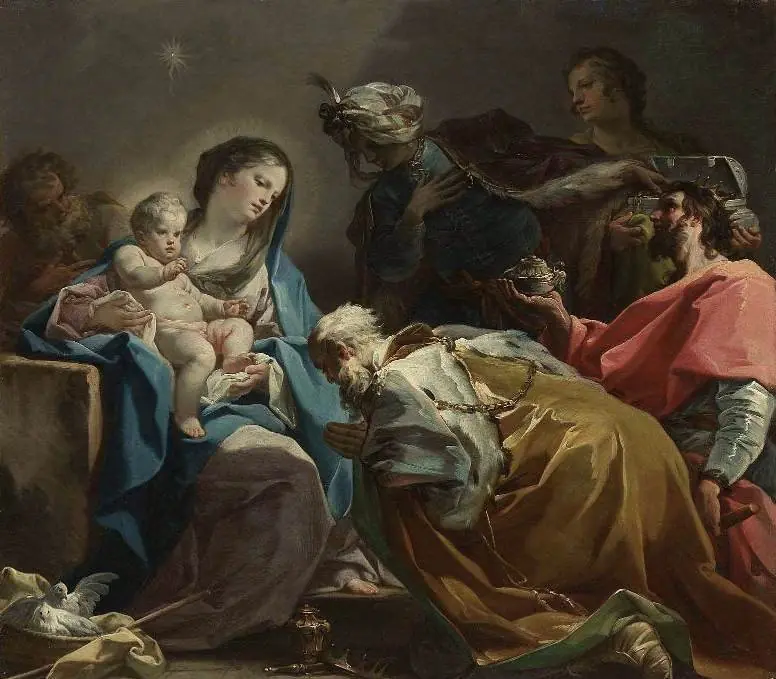
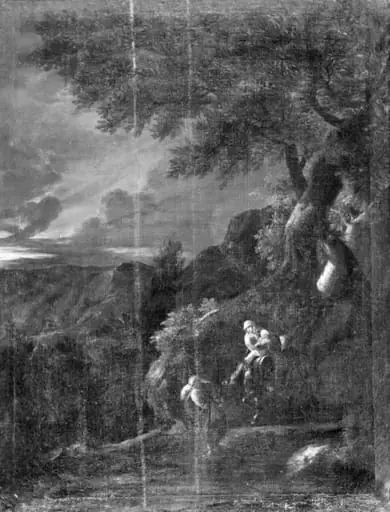
offering of Iphigenie (?) is an oil painting by the Rococo painting artist Corrado Giaquinto. It dates from 1725 and is held in the collection of the Gemäldegalerie Berlin.
About this work
Overview
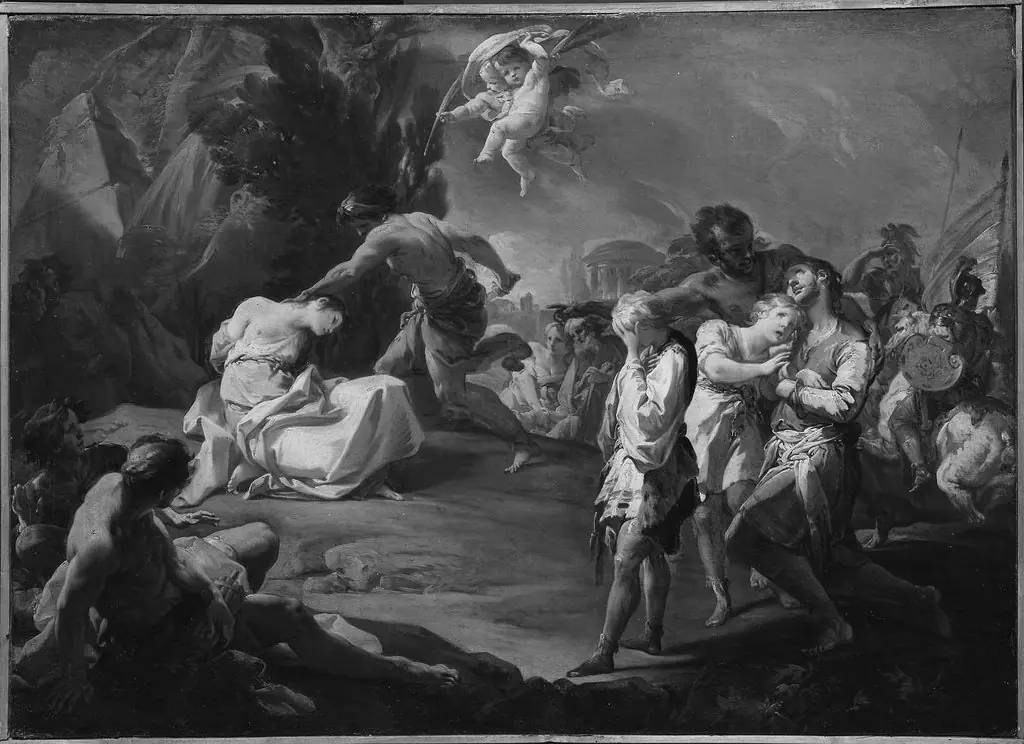
Created in 1725, this oil painting by the Italian Rococo artist Corrado Giaquinto depicts a scene traditionally identified as the offering of Iphigenia. Though the exact narrative remains uncertain, the work is classified as a religious composition and is part of the collection of the Gemäldegalerie in Berlin.
Subject & Meaning
The image presents a moment of sacrificial devotion, likely drawing on the mythic tale of Iphigenia’s offering, which was often reinterpreted in a Christian moral framework during the 18th century. The composition emphasizes piety and the tension between duty and divine will, inviting contemplation of self‑sacrifice.
Technique & Style
Executed in oil on canvas, Giaquinto employs the luminous palette and graceful figures characteristic of the late Baroque transitioning toward Rococo. Soft chiaroscuro models the forms, while delicate brushwork renders drapery and flesh with a sense of movement and emotional subtlety.
History & Provenance
The painting entered the Berlin Gemäldegalerie’s holdings in the 19th century, though earlier ownership records are sparse. Its attribution to Giaquinto has been affirmed through stylistic comparison with documented works from his Roman period.
Context
During the early 1720s Giaquinto was active in Rome, producing works for both ecclesiastical patrons and private collectors. This piece reflects the period’s fascination with blending classical mythology and Christian allegory, a common practice among artists seeking to appeal to sophisticated, learned audiences.
Artist & collection

Artist
Corrado Giaquinto was an Italian Rococo painter who worked in Naples, Rome, Turin and Madrid.

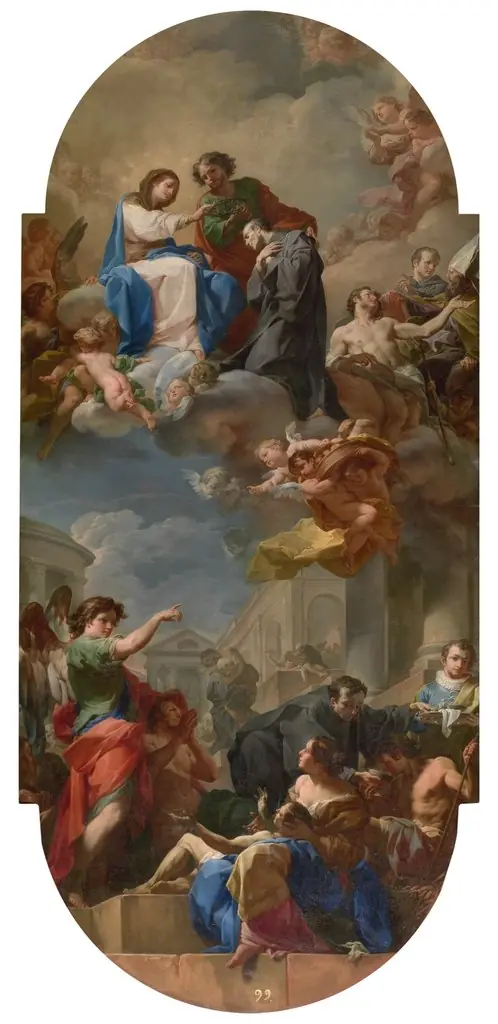
- Triumph of three Saints
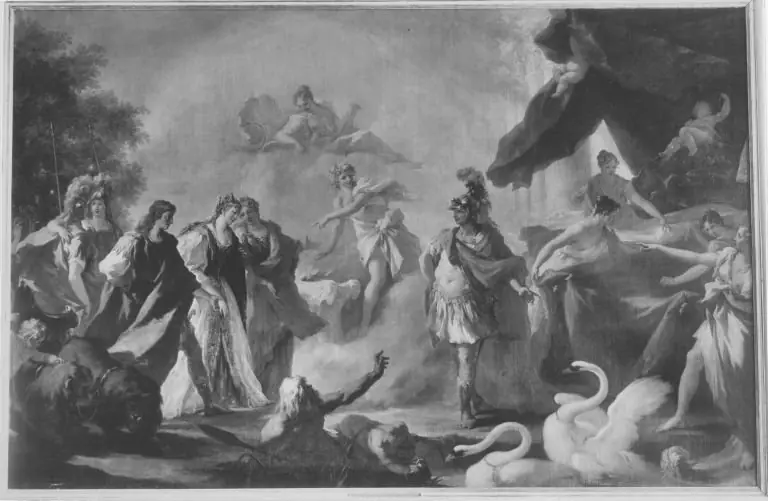 Beilager des Kurfürsten mit Maria Luisa
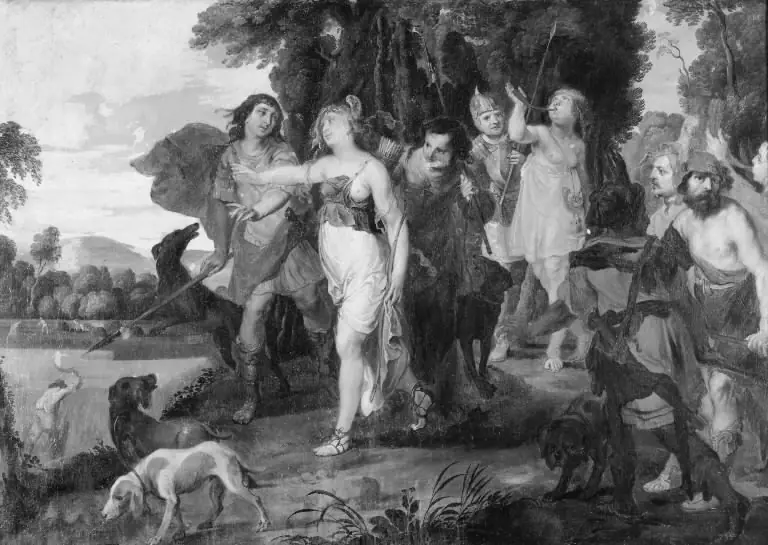 Hunting Party with Diana
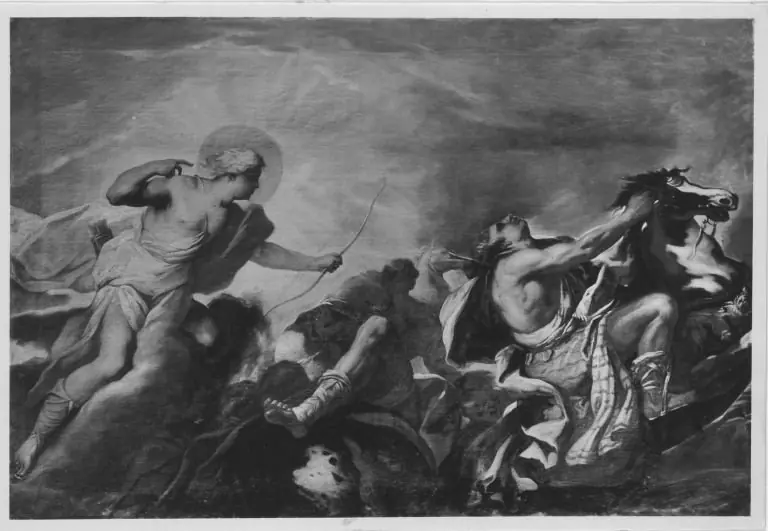 Apollo tötet die Kinder der Niobe
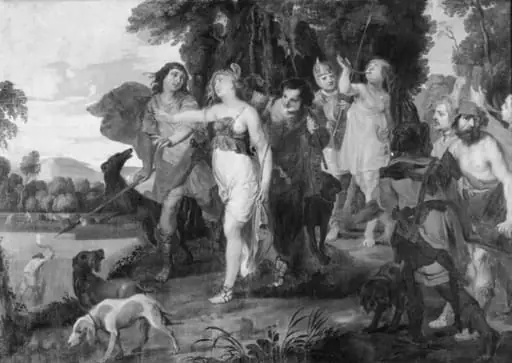 Hunting Party with Diana
 Hermes befaler Kalypso at frigive Odysseus
 Hermes befaler Kalypso at frigive Odysseus
 Martyrdom of Saint Marta
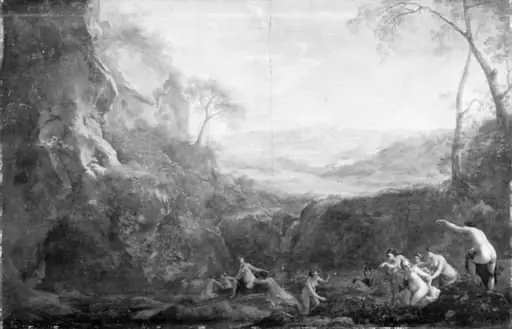 Landscape with Diana and Nymphs
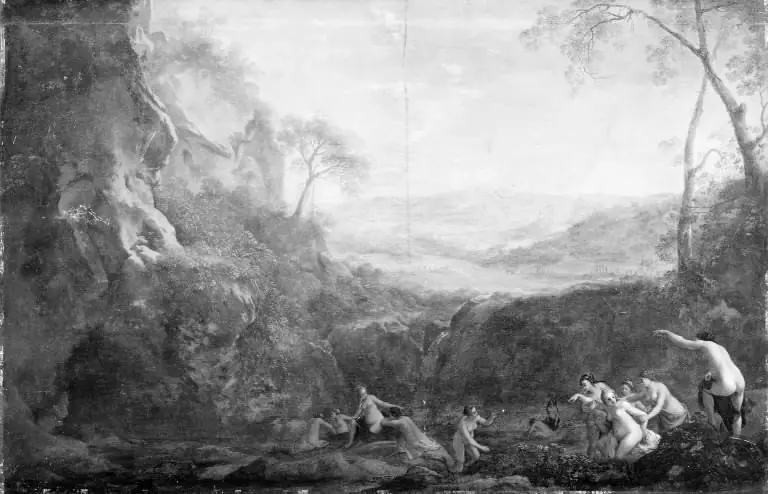 Landscape with Diana and Nymphs
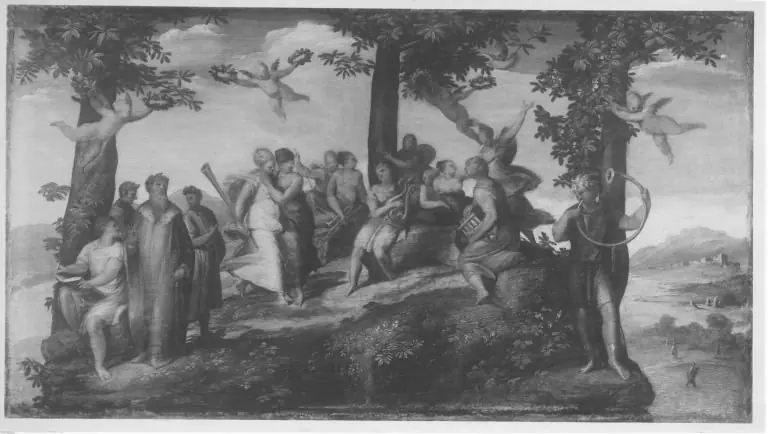 Der Parnass
 The Flight into Egypt