Artwork
Christ Appearing to His Mother
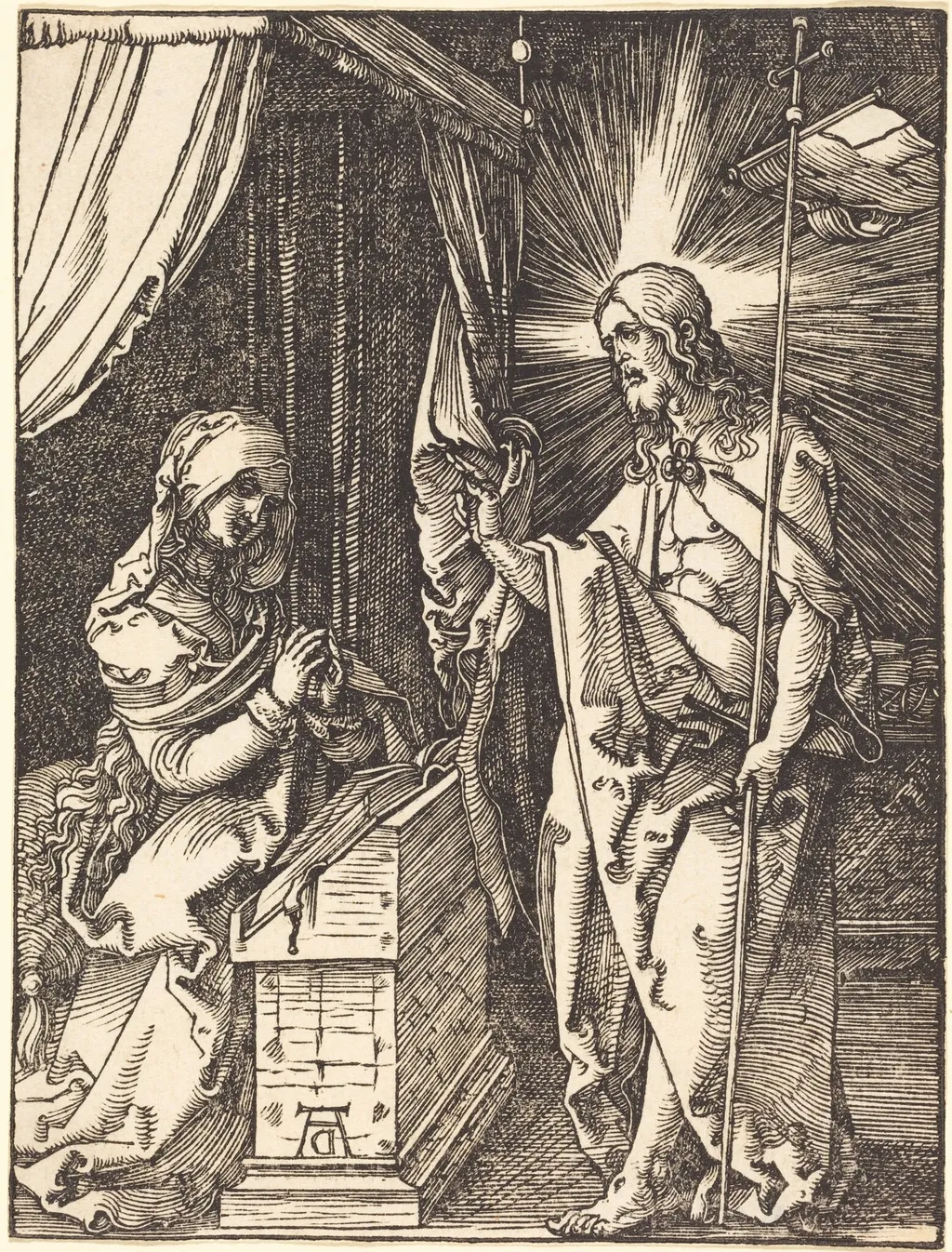
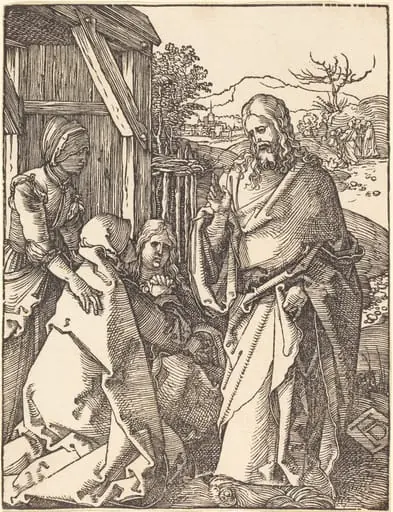
Christ Appearing to His Mother is an ink print by the Northern Renaissance artist Albrecht Dürer. It dates from 1510 and is held in the collection of the National Gallery of Art.
- Inscription
- Inscribed:in block, lower left: AD [artist's monogram] [reversed D]; verso, lower center, in graphite by a later hand: 627; verso, bottom left, in graphite by a later hand: 46; verso, bottom center, in graphite by a later hand: 31
About this work
Subject & Meaning
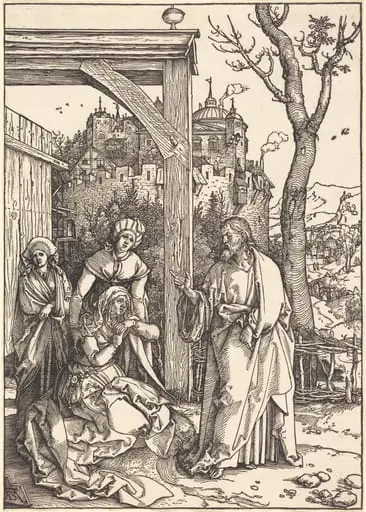
Dürer's woodcut depicts the apocryphal subject of the resurrected Christ appearing to his mother Mary, a scene drawn from tradition rather than the canonical Gospels. The composition belongs to the artist's Little Passion series, a devotional cycle that translated key moments of Christ's life and Passion into small-scale prints intended for private contemplation. By focusing on the tender encounter between the risen Christ and the Virgin, the image emphasizes themes of consolation, maternal grief transformed into joy, and the affirmation of the Resurrection as witnessed first by Mary before the disciples.
The work's religious character is reinforced by its grounding in the New Testament narrative tradition, presenting the encounter as a moment of intimate revelation central to Christian iconography of the Passion and aftermath.
Technique & Style
The handling of the woodcut medium allows for the detailed rendering of the figures within the small format typical of the series.
Albrecht Dürer executed Christ Appearing to His Mother in 1509 as a woodcut printed on laid paper. This work belongs to the German Renaissance movement and is part of the Little Passion series. The print measures 12.7 cm in height and 9.7 cm in width.
Stylistically, the piece is a religious composition depicting the biblical scene of Jesus Christ appearing to the Virgin Mary. The handling of the woodcut medium allows for the detailed rendering of the figures within the small format typical of the series.
History & Provenance
Christ Appearing to His Mother is a woodcut print created by Albrecht Dürer in 1509 as part of his Little Passion series. The work depicts the biblical moment of Jesus appearing to the Virgin Mary and belongs to the German Renaissance movement, classified under religious art. It measures 12.7 cm in height and 9.7 cm in width.
Provenance traces from Joseph Daniel Böhm in Vienna to Robert Scholtz in Budapest, then to William Schab in New York, before being acquired by Lessing J. Rosenwald in 1940. Rosenwald later gifted the print to the National Gallery of Art in Washington, D.C., in 1943.
The print was created between 1509 and 1511, reflecting Dürer’s exploration of devotional imagery during the early phase of his career. Its subject draws from New Testament narratives, emphasizing the divine manifestation to Mary. The work has been held in major institutions, including the National Gallery of Art and the British Museum, as part of the Rosenwald Collection.
Christ Appearing to His Mother is recognized as a significant example of early Northern Renaissance printmaking, noted for its technical precision and emotional depth in depicting sacred encounters.
This woodcut by Albrecht Dürer is held in the collection of the National Gallery of Art in Washington, D.C., specifically within the Rosenwald Collection. The work entered the museum's holdings in 1943 as a gift from Lessing J. Rosenwald, who had purchased the print in 1940 from the dealer William Schab in New York. Prior to Rosenwald's ownership, the sheet belonged to Robert Scholtz of Budapest and Joseph Daniel Böhm of Vienna.
While the National Gallery of Art serves as a primary location for this impression, other examples of the print are also recorded in the collections of the British Museum. The provided sources do not list specific public exhibitions or loan history for this particular object.
Overview
Albrecht Dürer’s woodcut entitled Christ Appearing to His Mother dates from around 1510. Executed on laid paper, the print presents a compact, intimate encounter between the risen Christ and the Virgin Mary. The composition is restrained yet precise, reflecting Dürer’s mature approach to religious subjects during the later phase of his career.
Own this work as a print
Artist & collection
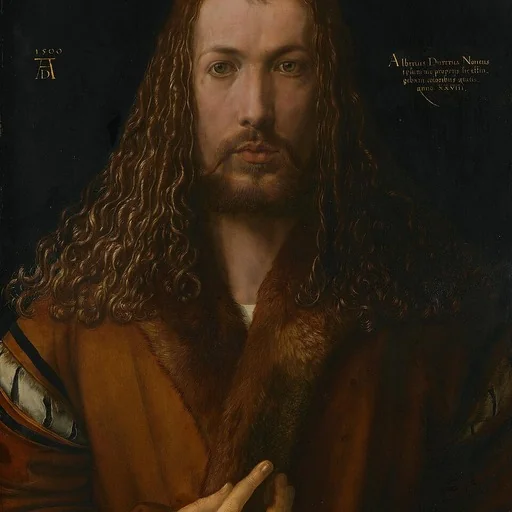
Artist
Albrecht Dürer spent his life in Nuremberg, a busy German city where artists traded prints like currency.

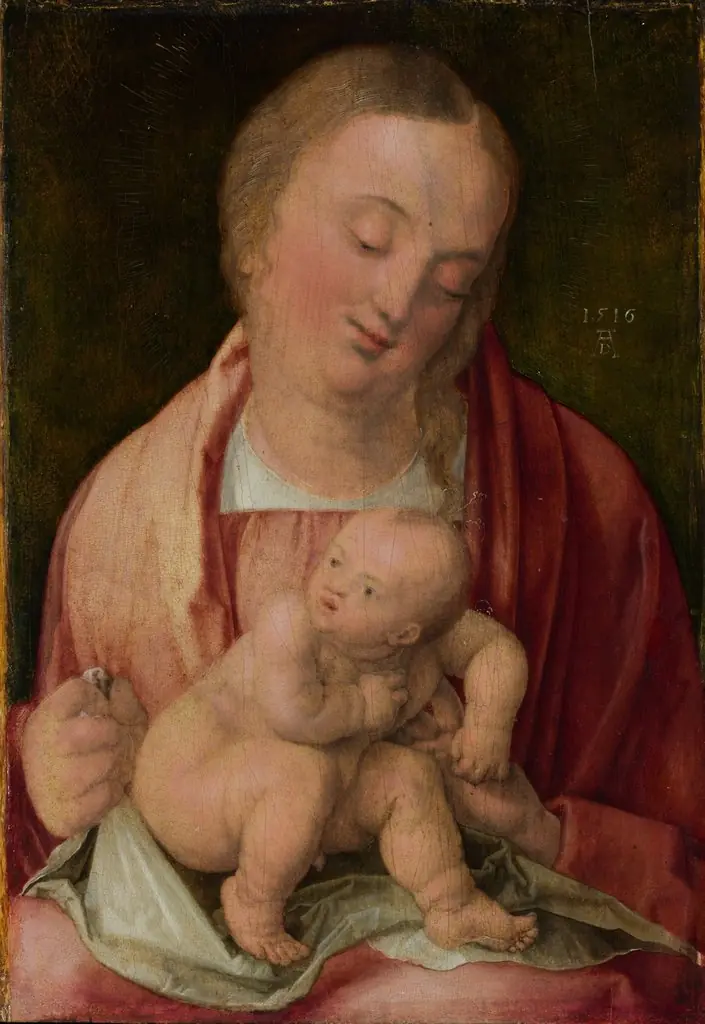
![Madonna and Child [obverse], by Albrecht Dürer](https://artifactworldgallery.com/img/albrecht-durer--madonna-and-child-obverse--d7b8ebf05d22ebe5-w320.webp)
![Lot and His Daughters [reverse], by Albrecht Dürer](https://artifactworldgallery.com/img/albrecht-durer--lot-and-his-daughters-reverse--b4ebf9b282faa17a-w320.webp)