Artwork
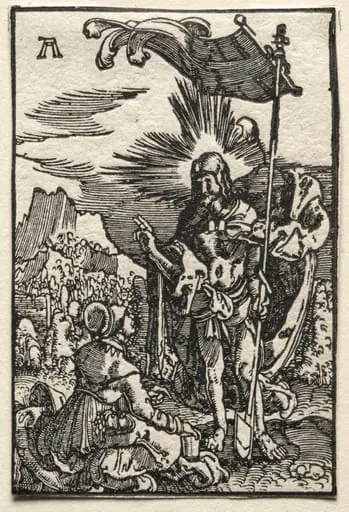
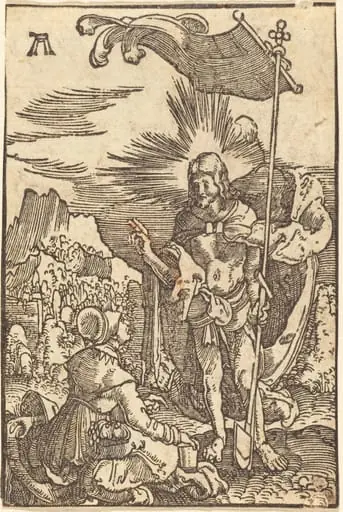
Christ Appearing to Mary Magdalene
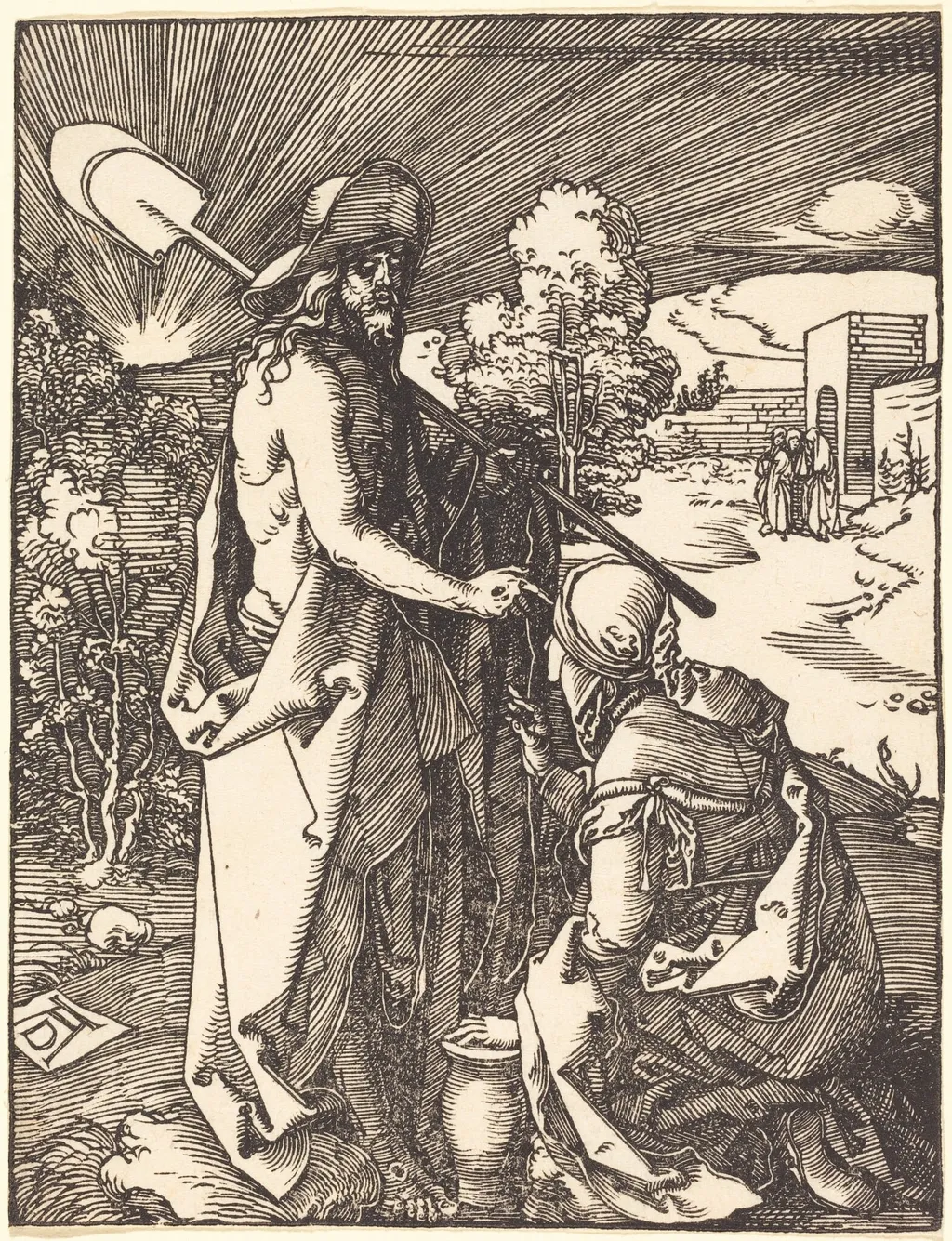
Christ Appearing to Mary Magdalene is an ink print by the Northern Renaissance artist Albrecht Dürer. It dates from 1510 and is held in the collection of the National Gallery of Art.
- Inscription
- Inscribed:in block, lower left, on sheet: AD [artist's monogram]; verso, lower left, in graphite by a later hand: 627; verso, bottom left, in graphite by a later hand: B [erased] 47; verso, lower left, in graphite by a later hand: 32
About this work
Subject & Meaning
Dürer's woodcut depicts the New Testament episode known as the Noli me tangere, in which the resurrected Christ appears to Mary Magdalene.
Dürer's woodcut depicts the New Testament episode known as the Noli me tangere, in which the resurrected Christ appears to Mary Magdalene. The scene belongs to the artist's Little Passion series, a body of small-scale devotional prints produced during the German Renaissance, and is classified as religious art. The subject derives from the New Testament account of the morning after the Crucifixion, when Mary Magdalene, having come to the tomb, encounters the risen Christ and initially mistakes him for a gardener before recognizing him.
The print's iconography centers on this moment of recognition and revelation, a theme that resonated with early sixteenth-century devotional practice by emphasizing the Magdalene as the first witness to the Resurrection. By placing the encounter at the heart of a widely circulated Passion cycle, Dürer frames the image as both a narrative illustration and a meditation on faith, sight, and the transition from grief to belief.
Technique & Style
Executed in 1509, this work is a woodcut printed on laid paper. As a print from the German Renaissance, it employs the linear precision characteristic of Albrecht Dürer's technique to render the religious subject of Christ appearing to Mary Magdalene. The composition focuses on the narrative moment known as Noli me tangere, derived from the New Testament.
The handling of the medium demonstrates the artist's mastery of the woodcut process, utilizing fine lines to define form and texture on the paper support.
History & Provenance
Albrecht Dürer created this woodcut, titled Christ Appearing to Mary Magdalene, in 1509 as part of his Little Passion series. The work's documented ownership history begins with Joseph Daniel Böhm of Vienna, followed by Robert Scholtz of Budapest. It subsequently passed through the hands of William Schab in New York before being acquired by Lessing J. Rosenwald of Jenkintown, Pennsylvania, in 1940.
Rosenwald donated the print to the National Gallery of Art in Washington, D.C., in 1943, where it remains part of the Rosenwald Collection.
The woodcut is part of the National Gallery of Art’s collection in Washington, D.C., where it has been held since its acquisition in 1943. Its accession record traces provenance through Joseph Daniel Böhm, Robert Scholtz, William Schab, and Lessing J. Rosenwald before the gift to the museum. The work has appeared in exhibitions drawn from the Rosenwald Collection, including a 1943 presentation at the National Gallery of Art.
Overview
Christ Appearing to Mary Magdalene is a woodcut executed by Albrecht Dürer in 1510, depicting the biblical moment of the Noli me tangere. The composition centers on the resurrected Christ standing within a walled garden, his right hand raised in a gesture of blessing or restraint, while Mary Magdalene kneels before him in an attitude of reverence. Dürer renders the figures with precise linear definition characteristic of his mature printmaking style, utilizing fine hatching to model volume and convey the soft quality of morning light.
The background features dense, dark foliage and architectural elements that frame the intimate encounter, contrasting with the luminous treatment of the protagonists. Created during the height of Dürer's career following his second journey to Italy, this work exemplifies the German Renaissance synthesis of Northern European detail with Italianate spatial coherence and humanist sensibility. The print demonstrates the artist's mastery of the woodcut medium, transforming a traditional religious subject into a psychologically resonant scene through careful attention to gesture, drapery, and atmospheric depth.
Own this work as a print
Artist & collection
Artist
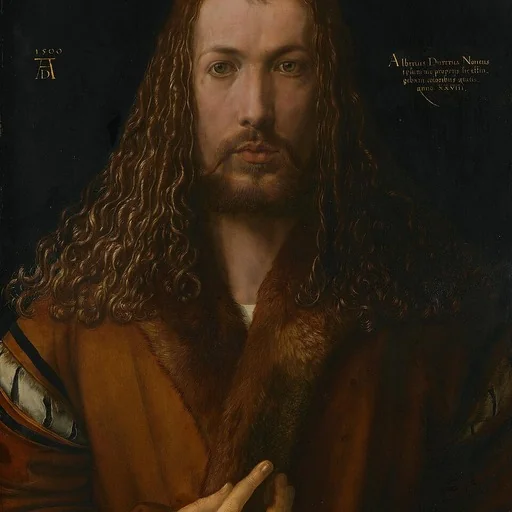
Albrecht Dürer spent his life in Nuremberg, a busy German city where artists traded prints like currency.

![Madonna and Child [obverse], by Albrecht Dürer](https://artifactworldgallery.com/img/albrecht-durer--madonna-and-child-obverse--d7b8ebf05d22ebe5-w320.webp)
![Lot and His Daughters [reverse], by Albrecht Dürer](https://artifactworldgallery.com/img/albrecht-durer--lot-and-his-daughters-reverse--b4ebf9b282faa17a-w320.webp)
 The Fall and Redemption of Man: Christ Appearing to St. Mary Magdalen
 Noli me Tangere
 The Resurrection
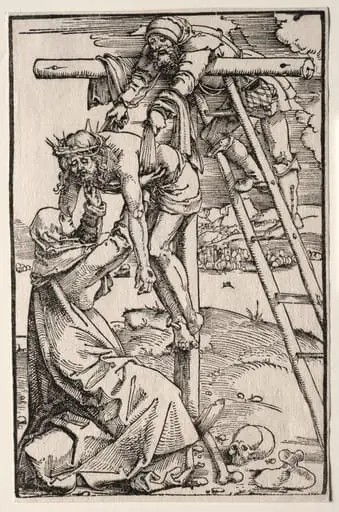 Descent from the Cross
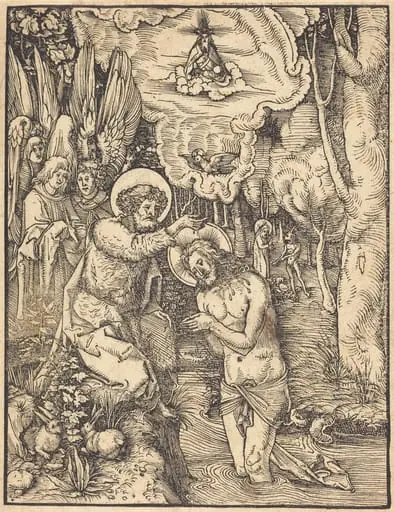 Baptism in Jordan
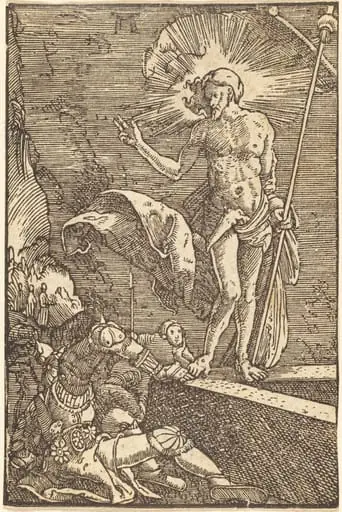 The Resurrection
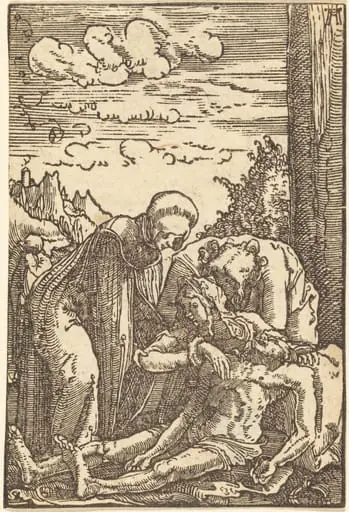 The Lamentation of Christ
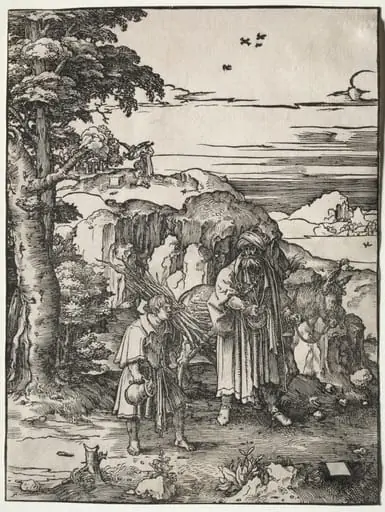 Abraham Going to Sacrifice Isaac
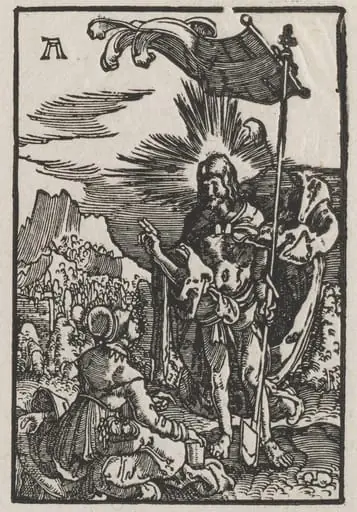 The Fall and Redemption of Man: Christ Appearing to St. Mary Magdalen
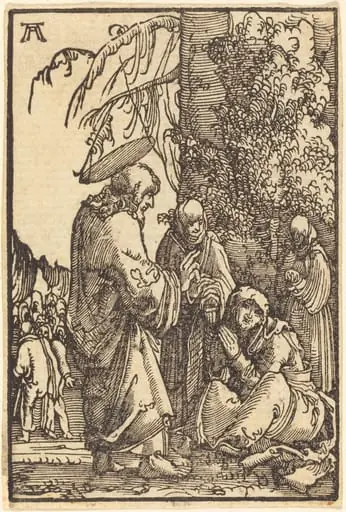 Christ Taking Leave of his Mother
- Christ Appearing to His Mother
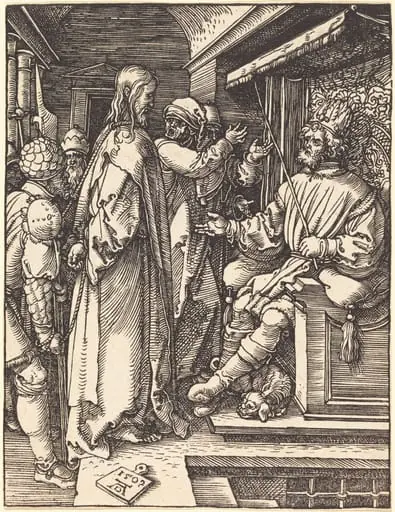 Christ before Herod