Artwork
Christ's Entry into Jerusalem
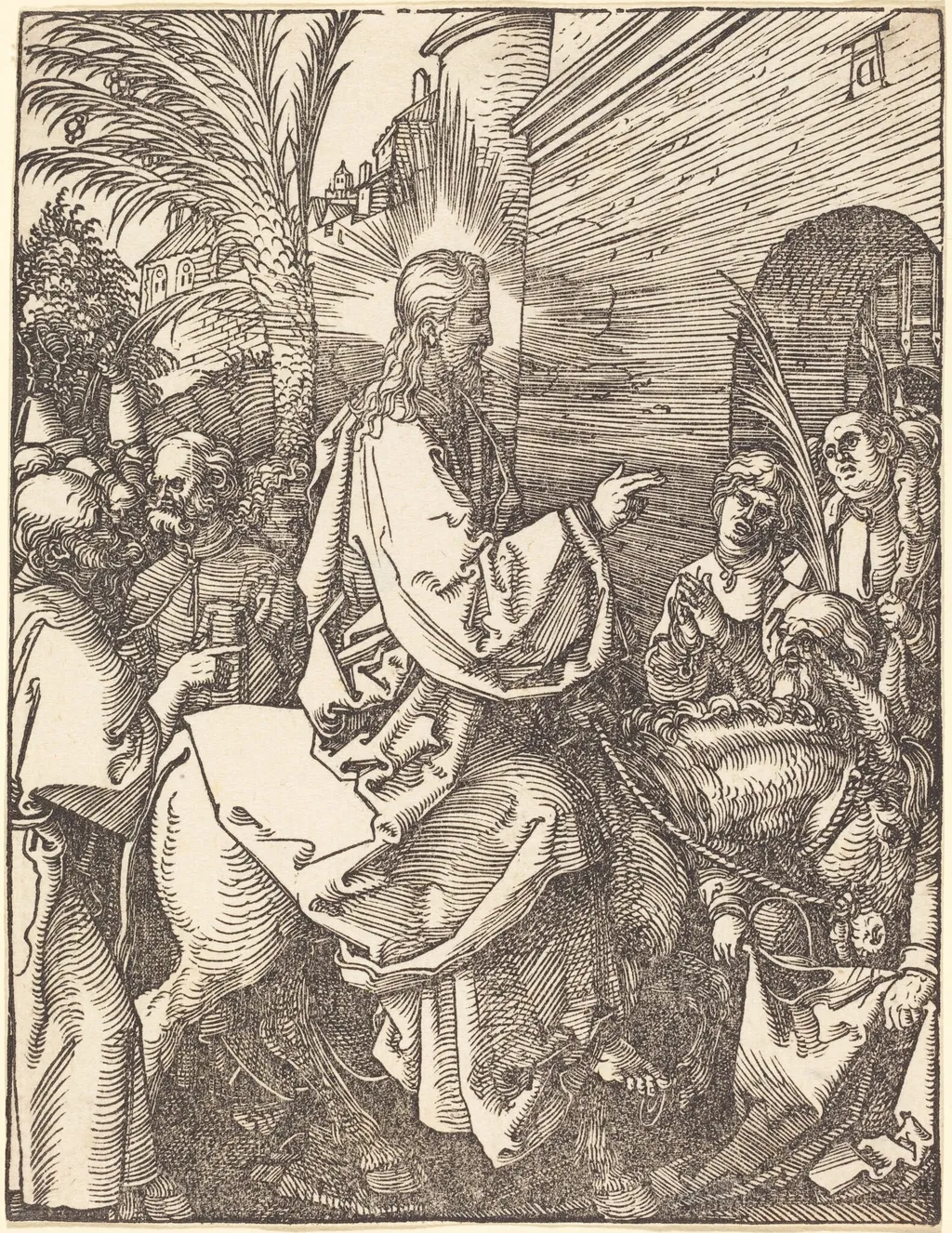
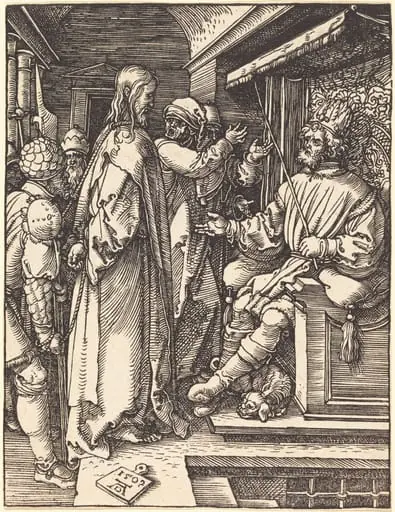
Christ's Entry into Jerusalem is an ink print by the Northern Renaissance artist Albrecht Dürer. It dates from 1510 and is held in the collection of the National Gallery of Art.
- Inscription
- Inscribed:in block, top right, on city gate: AD [artist's monogram] [reversed D]; verso, lower right, in graphite by a later hand: 627; verso, lower left, in graphite by a later hand: B22; verso, bottom right, in graphite by a later hand: 7
About this work
Dürer used sharp lines to show light and shadow, making the scene feel real and crowded.
Albrecht Dürer’s 1510 woodcut shows Jesus riding a donkey into Jerusalem. Crowds wave palm branches while children toss cloaks ahead. The city’s gate looms behind them, tiny but sharp.
This is a bold print, not a painting. Dürer used sharp lines to show light and shadow, making the scene feel real and crowded. The donkey looks tired, the people look excited.
It’s the kind of image you’d hang in a town square to tell a story. Look up woodcut prints next.
Subject & Meaning
Albrecht Dürer's 1509 woodcut depicts the triumphal entry of Jesus Christ into Jerusalem, a narrative event drawn directly from the New Testament. As part of the Little Passion series, the work illustrates the religious genre typical of the German Renaissance. The composition focuses on the main subject of Christ's procession, capturing the moment of his arrival in the city as described in biblical scripture.
This print serves as a visual representation of the biblical account, emphasizing the theological significance of the event within Dürer's devotional cycle.
Technique & Style
Albrecht Dürer executed Christ's Entry into Jerusalem in 1509 as a woodcut printed on laid paper. This work belongs to the series known as the Little Passion and reflects the stylistic characteristics of the German Renaissance. The print measures 12.7 cm in height and 9.8 cm in width.
Dürer's handling of the medium demonstrates the technical precision typical of his printmaking, utilizing the woodcut process to render the religious narrative of the triumphal entry into Jerusalem with clarity and detail.
The physical condition of the impression held in the National Gallery of Art's Rosenwald Collection suggests the durability of the laid paper support and the quality of the original ink application, preserving the formal composition established by the artist.
History & Provenance
Albrecht Dürer created this woodcut in 1509 as part of his Little Passion series. The work's documented ownership begins with Joseph Daniel Böhm of Vienna, followed by Robert Scholtz of Budapest. It subsequently passed through the New York dealer William Schab before being acquired by Lessing J. Rosenwald in 1940.
Rosenwald donated the print to the National Gallery of Art in Washington, D.C., in 1943, where it remains part of the Rosenwald Collection.
Albrecht Dürer's woodcut Christ's Entry into Jerusalem is held in the Prints and Drawings department of the National Gallery of Art in Washington, D.C., as part of the Rosenwald Collection. The work entered the institution in 1943 as a gift from Lessing J. Rosenwald, who had originally acquired it in 1940. Prior to its arrival in the United States, the print passed through the hands of Joseph Daniel Böhm in Vienna and Robert Scholtz in Budapest.
While the provided sources confirm its current location and acquisition path, they do not list specific exhibition histories for this particular impression.
Overview
Christ's Entry into Jerusalem is a woodcut print created by Albrecht Dürer around 1510, depicting a pivotal religious scene.
Context
Typical of religious art intended for public dissemination, this print's style and medium suggest it was designed for widespread viewing, potentially in communal spaces.
Legacy
As a characteristic example of Dürer's woodcut technique, the piece contributes to the artist's influence on religious imagery and the development of printmaking as an artistic medium.
Own this work as a print
Artist & collection
Artist
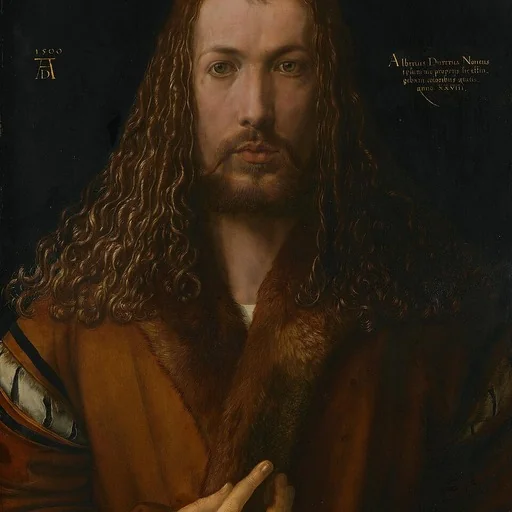
Albrecht Dürer spent his life in Nuremberg, a busy German city where artists traded prints like currency.

![Madonna and Child [obverse], by Albrecht Dürer](https://artifactworldgallery.com/img/albrecht-durer--madonna-and-child-obverse--d7b8ebf05d22ebe5-w320.webp)
![Lot and His Daughters [reverse], by Albrecht Dürer](https://artifactworldgallery.com/img/albrecht-durer--lot-and-his-daughters-reverse--b4ebf9b282faa17a-w320.webp)