Artwork
The Last Supper
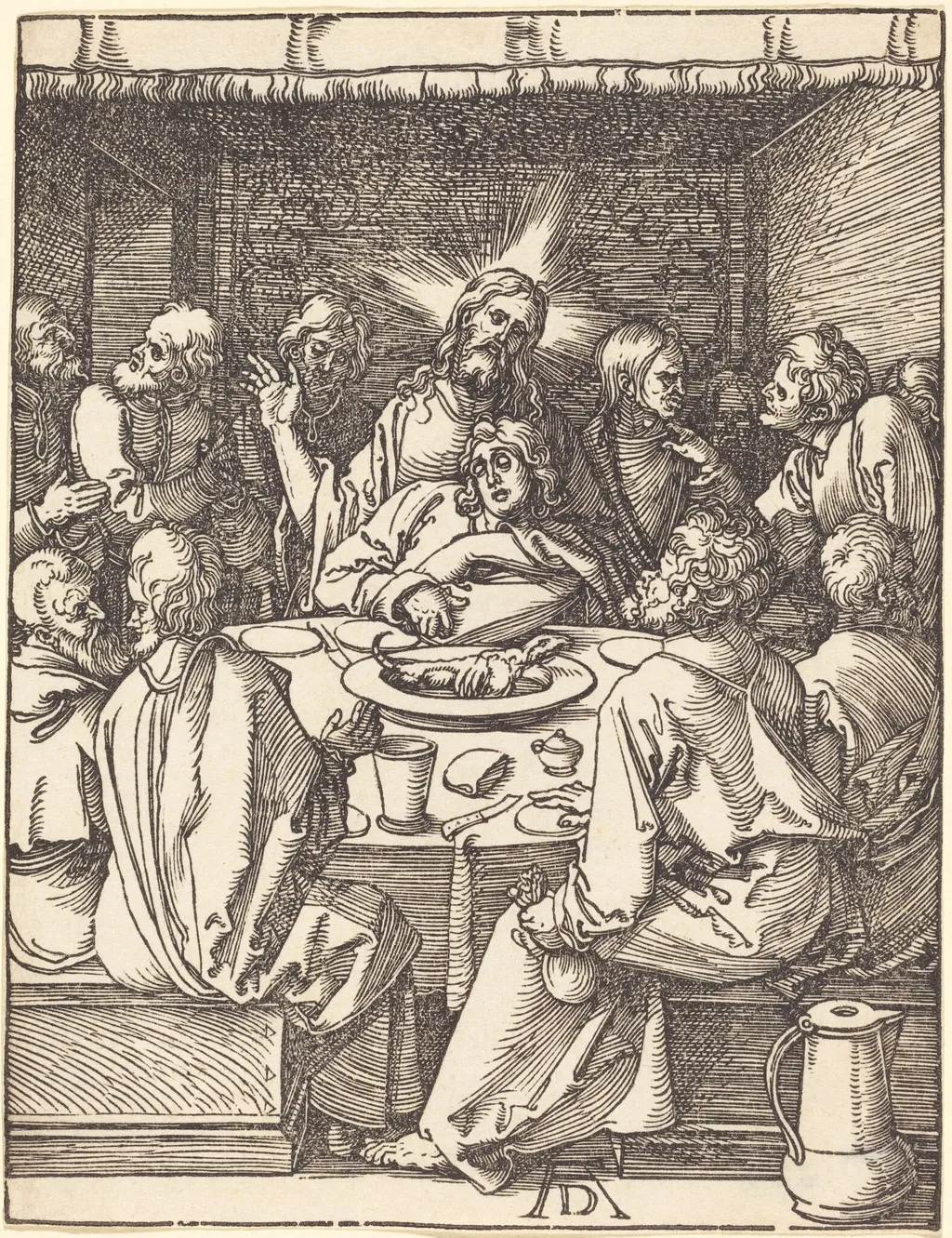
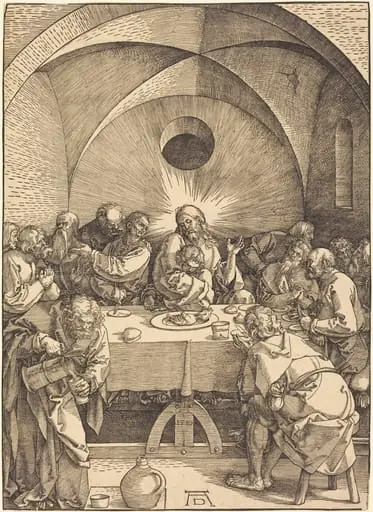
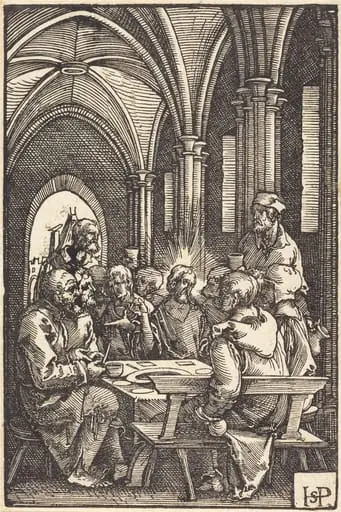
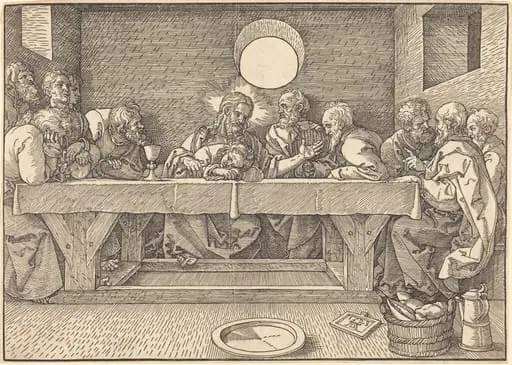
The Last Supper is an ink print by the Northern Renaissance artist Albrecht Dürer. It dates from 1510 and is held in the collection of the British Museum.
- Inscription
- Inscribed:in block, bottom center, on ground: AD [artist's monogram]; verso, lower center, in graphite by a later hand: 627; verso, lower left, in graphite by a later hand: B 24 [faded]; verso, lower left, in graphite by a later hand: [indecipherable] verso, bottom center, in graphite by a later hand: 9
About this work
Subject & Meaning
The composition emphasizes the emotional reactions of the apostles, highlighting themes of unity and impending sacrifice.
The print portrays the moment of Christ's final meal with his disciples, set at a table where he announces betrayal. The composition emphasizes the emotional reactions of the apostles, highlighting themes of unity and impending sacrifice. Symbolic details such as the lamb on the platter and the chalice reference Christian Eucharist and foretell the crucifixion, reinforcing the work's focus on redemption and divine purpose.
History & Provenance
Albrecht Dürer created The Last Supper as part of his Little Passion series in 1509 using woodcut on laid paper. The work entered the collection of Joseph Daniel Böhm in Vienna by 1794, later passed to Robert Scholtz in Budapest, and was held by dealer William Schab in New York before Lessing J. Rosenwald acquired it in 1940. Rosenwald subsequently gifted the print to the National Gallery of Art in 1943.
This sequence of ownership reflects a documented provenance spanning collectors and dealers in Central Europe and the United States prior to institutional acquisition.
The Last Supper is held in the collection of the National Gallery of Art in Washington, D.C. Its accession record traces a provenance from Joseph Daniel Böhm [1794-1865] of Vienna (Lugt 271) to Robert Scholtz [1834-1912] in Budapest (Lugt 2241), then to William Schab in New York, and finally to Lessing J. Rosenwald [1891-1979] of Jenkintown, PA (Lugt 1760b and Lugt 1932d), who acquired it in 1940; Rosenwald gifted the work to the National Gallery of Art in 1943.
The print is part of the Rosenwald Collection and is listed in the holdings of the National Gallery of Art, the Metropolitan Museum of Art, the British Museum, and the Cleveland Museum of Art.
Exhibition history is documented through its inclusion in the National Gallery of Art's collection displays, with records indicating its presence in exhibitions focused on German Renaissance prints and the broader Rosenwald Collection.
Legacy
The Last Supper, a woodcut print created by Albrecht Dürer in 1509, has left a significant mark on art history through its role in the German Renaissance and its influence on religious imagery. As part of Dürer's Little Passion series, the work helped standardize visual interpretations of Christ's final meal, shaping subsequent depictions across Northern European art. Its technical mastery and emotional depth contributed to Dürer's enduring reputation, while its inclusion in major collections like the National Gallery of Art and the British Museum underscores its lasting scholarly and cultural relevance.
The print's provenance, including ownership by Joseph Daniel Böhm and Lessing J. Rosenwald, reflects its integration into the canon of seminal religious works.
Overview
Created in 1510, Albrecht Dürer's woodcut The Last Supper depicts the biblical moment of the Eucharist, featuring Christ seated at a long table surrounded by the twelve apostles. Executed on laid paper, the work utilizes the artist's mastery of line to render complex emotional reactions and spatial depth without the use of color. The composition captures the immediate aftermath of Christ's announcement of betrayal, with figures displaying distinct gestures of shock, doubt, and agitation; some apostles point toward the bread, while others clutch their chests or lean in toward one another.
Dürer employs sharp contrasts between black ink and white paper to define volume and dramatic lighting, characteristic of his mature printmaking style during the German Renaissance. This specific print serves as a significant example of Dürer's ability to translate monumental religious narratives into the reproducible medium of the woodcut, maintaining the theological gravity of the scene while demonstrating technical precision in the rendering of individual expressions and drapery. The work stands as a key component of Dürer's extensive output of religious prints, bridging late Gothic detail with emerging Renaissance humanism.
Technique & Style
Dürer employed the woodcut process, carving the image into a single block of wood, inking its surface, and pressing it onto laid paper. His precise incising produces crisp shadows and sharply defined folds in the garments, giving the scene a vivid three‑dimensional quality despite the medium’s inherent flatness.
Own this work as a print
Artist & collection
Artist
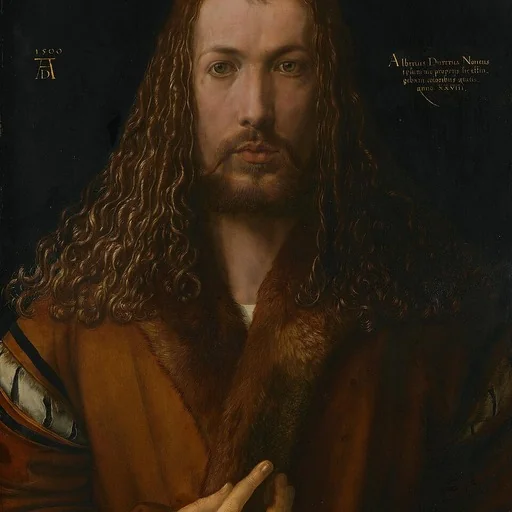
Albrecht Dürer spent his life in Nuremberg, a busy German city where artists traded prints like currency.

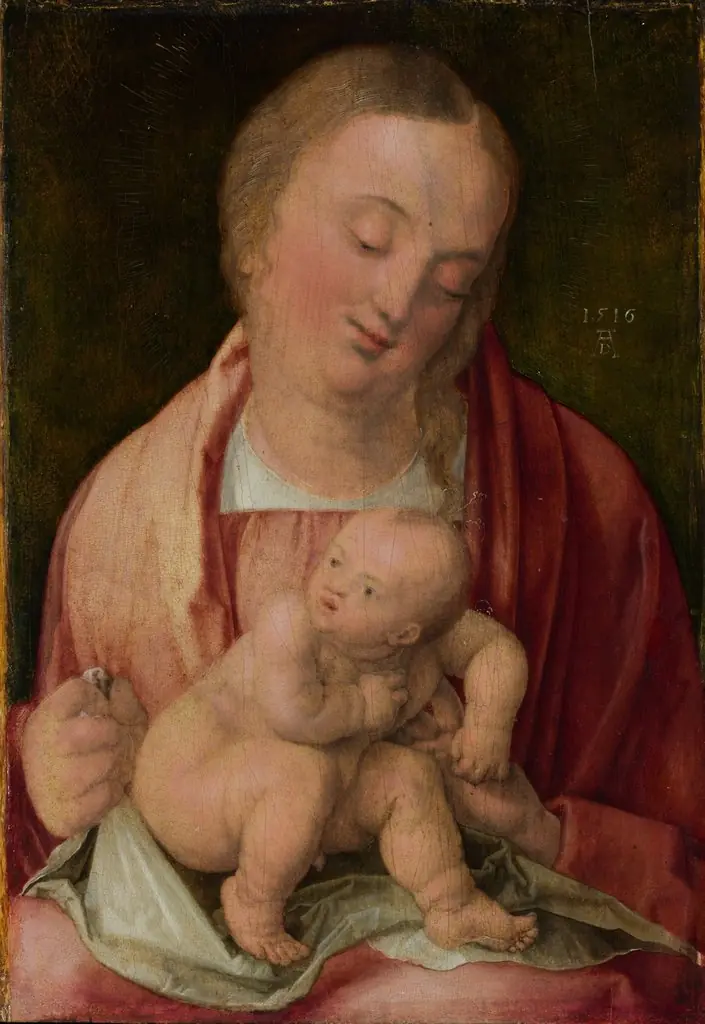
![Madonna and Child [obverse], by Albrecht Dürer](https://artifactworldgallery.com/img/albrecht-durer--madonna-and-child-obverse--d7b8ebf05d22ebe5-w320.webp)
![Lot and His Daughters [reverse], by Albrecht Dürer](https://artifactworldgallery.com/img/albrecht-durer--lot-and-his-daughters-reverse--b4ebf9b282faa17a-w320.webp)